For a routine inspection, keep up ordinary maintenance and report repair or safety problems. The Residential Tenancies Authority (RTA) says routine inspections are not housework inspections.
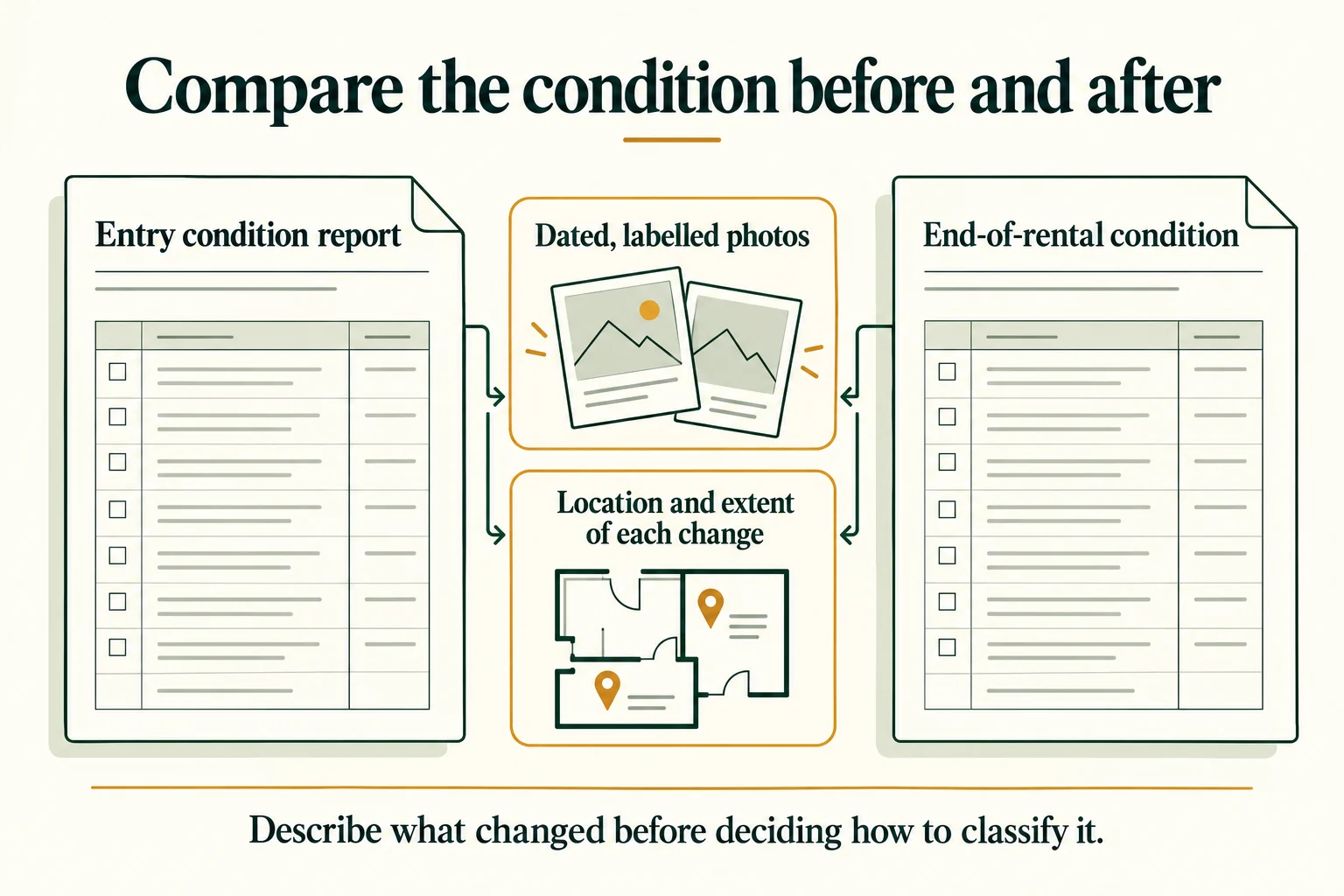
When moving out, compare the property with the entry condition report, which records its condition at the start of the tenancy. Clean each room and photograph the property’s condition.
Prepare for a rental inspection
Use the same route through the property each time so you do not miss rooms or outdoor areas. For a move-out inspection, find your entry condition report and any original photos or videos first. Compare the condition with those records and allow for fair wear and tear, meaning ordinary deterioration from everyday use.
- Check the inspection notice and any instructions from the property manager. RTA guidance says routine inspections must be at least three months apart unless you agree in writing to more frequent inspections. They require at least seven days’ notice using an Entry notice (Form 9).
- Record maintenance issues, damage or changes to discuss. Report maintenance problems promptly; put non-urgent reports in writing.
- Take clear, dated photos or video of relevant conditions. Take one wide image of the room or area, followed by close-ups of particular marks, damage or fixtures. Keep the original files with your reports and correspondence.
For a routine inspection, ordinary cleaning and tidying are enough preparation. The RTA suggests removing surface mould and keeping gardens and outdoor areas tidy. A move-out clean needs a thorough check of each room.
Entry and hallways
Check doors, walls, ceilings and floors or floor coverings. Inspect windows, screens, blinds or curtains. Also check light fittings, fans and power points, along with stairs or railings where fitted. Check keys, locks, remotes and security devices.
- Photograph the overall condition of the area.
- Take close-ups of marks, stains, cracks, damaged screens, loose fittings or flooring problems.
Living and dining rooms
Check walls, ceilings, floors and doors. Inspect windows, screens and window coverings too. Look at fans, lights, air-conditioning units and power points. For a move-out, clean surfaces and fittings, and check for marks or damage.
- Photograph visible marks or flooring issues.
- Photograph damaged window coverings or fixtures, and any air-conditioning problem.
Kitchen and meals area
Check benchtops, tiles, cupboards and drawers, along with the sink and taps. Look over the cooktop, oven, grill and rangehood; check the dishwasher if supplied. Also check the floors, windows, lights, fans and power points.
- For a move-out, clean the oven and the inside of cupboards and drawers.
- Photograph appliance condition, benchtop or tile damage, leaks and faults.
- Note any appliance that does not work and report the problem.
Bedrooms and wardrobes
In each bedroom, check doors, walls, ceilings, floors, windows, screens and window coverings. Look at lights, fans, power points and air-conditioning if fitted. Check wardrobe doors, drawers and shelves, and note the smoke alarm’s condition.
- Photograph marks or flooring issues and any damaged fittings.
- For a move-out, photograph wardrobe interiors after cleaning.
Bathroom and toilet
Check the bath, shower, screen, basin, vanity, mirror, cabinets, toilet, cistern, taps, towel rails, exhaust fan and lights. Look for mould, leaks, damaged seals and other visible problems. During a routine inspection, remove surface mould as part of ordinary preparation. Report leaks or other maintenance issues rather than relying on a photo alone to explain them.
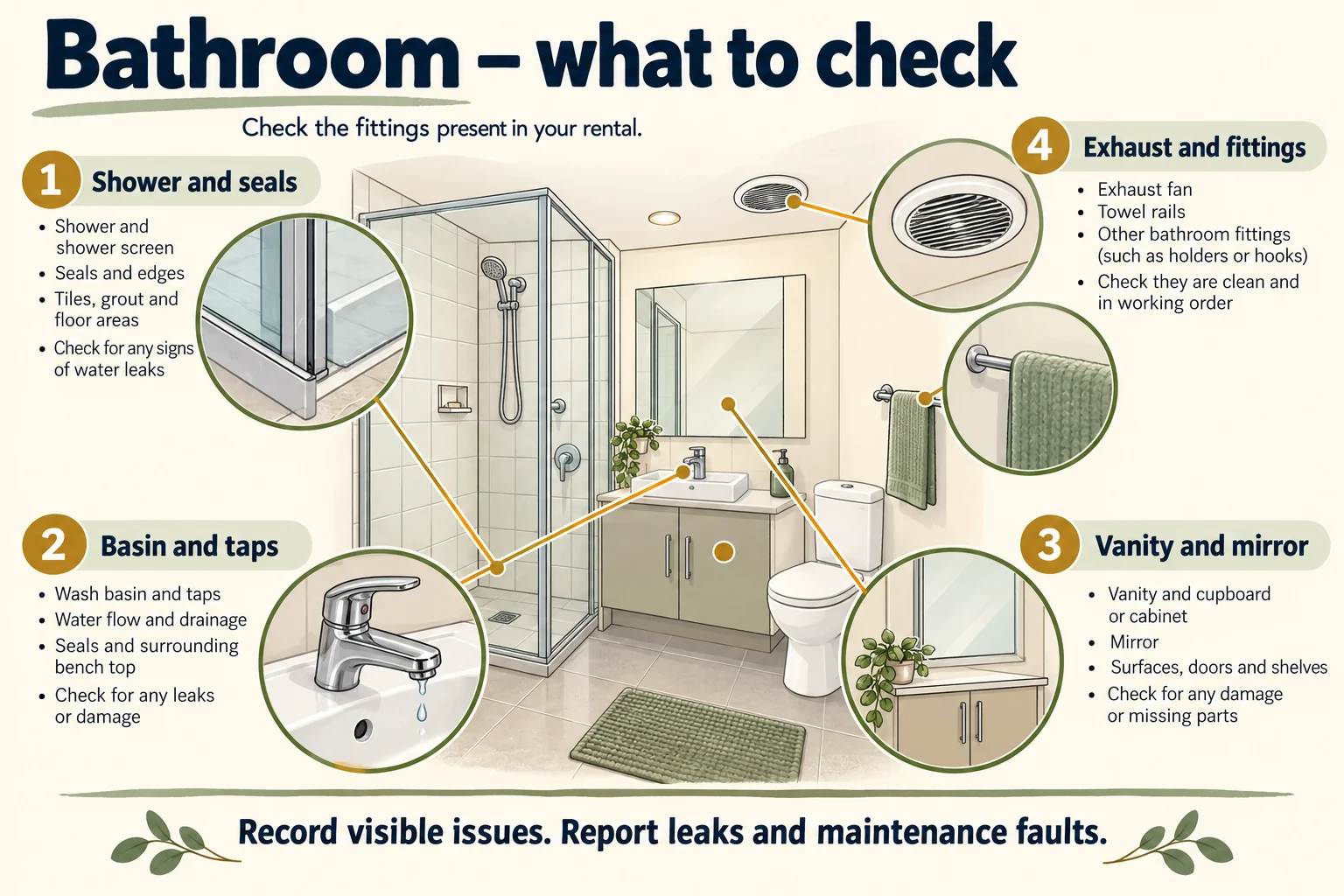
- Photograph leaks, mould, damaged seals or fittings.
- For a move-out, photograph the relevant areas after cleaning.
Laundry and supplied appliances
The wash tub and taps need checking, along with the washing machine or dryer if supplied. Inspect the doors, walls, ceiling and floor, as well as the windows and screens. Also check the lights, fans and power points.
- Photograph appliance condition, leaks or damage.
- For a move-out, photograph the area after cleaning.
Safety and general fixtures
Check smoke alarms, security devices and electrical safety switches. Look over the hot-water system, keys, locks and remotes. Do not try to repair a fault yourself; record it and tell the property manager.
For a move-out, record the water-meter reading if relevant, particularly if it was recorded at the start of the tenancy. The RTA recommends recording meter readings in both entry and exit reports to help prevent disputes.
Balcony and outdoor areas
Check the areas and inclusions that apply to your rental, including outdoor structures and surfaces such as a balcony, porch, deck, paving, pergola, external walls and awnings. Also check storage and access areas: garage, carport, storeroom, shed, gates and fences. Inspect the garden and lawn, plus paths and the driveway. Check external taps, the hose and clothesline, plus bins and the letterbox. If included, check pool equipment, sprinklers or solar panels.
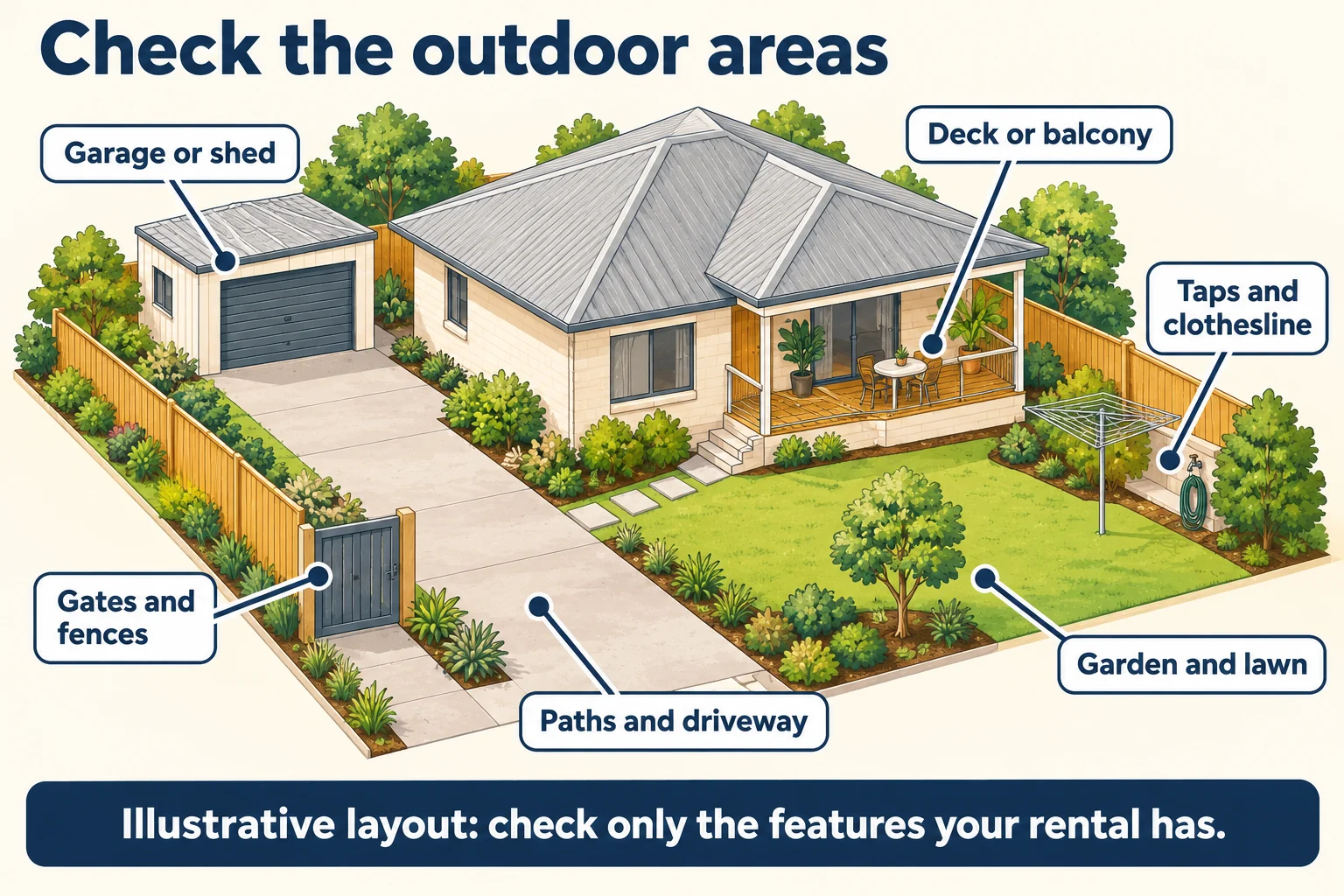
- For a routine inspection, mow the lawn and tidy gardens, decks and patios as needed.
- For a move-out, clean balconies and leave gardens and lawns in the required condition.
- Photograph each outdoor area in a wide view, then take close-ups of relevant damage or condition issues.
Move-out checks
The RTA’s Exit condition report (Form 14a) records the condition of a general tenancy at the end and is compared with the entry report. Use the form for a house, unit or townhouse tenancy; rooming accommodation and moveable dwellings have separate forms.
- Remove your belongings and rubbish.
- Clean room by room. Include window tracks, skirting boards, light fittings, fans, air-conditioning vents or filters, and cupboard interiors.
- Compare the finished condition with the entry report and original photos, allowing for fair wear and tear.
- Complete Form 14a. Note any disagreement or additional items, then keep a copy with your photos and correspondence.
The RTA says to give Form 14a to the lessor or agent rather than sending it to the RTA. Its guidance says the lessor or agent must return a signed copy within three business days. Following a checklist helps create a clear record, but does not guarantee a particular inspection result or bond outcome.