If you are planning a Tasmania trip, choose overnight bases by region rather than trying to cover the whole island from one city. Hobart, Launceston and coastal towns suit different parts of the state. The main travel areas are Hobart and the south-east, the East Coast, the north around Launceston, the north-west coast, and the west and south-west. The Great Eastern Drive follows the East Coast rather than circling the island.
National parks, reserves and UNESCO World Heritage areas cover about 40% of the state, according to Discover Tasmania. The Parks and Wildlife Service groups parks by region, but access roads, walking tracks, facilities and conditions vary by park.
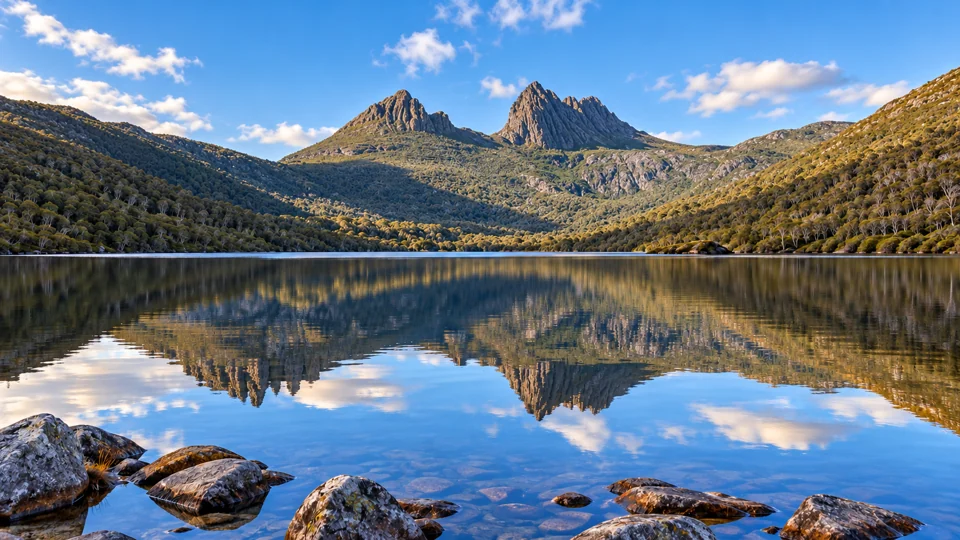
Cradle Mountain lies in the central highlands, inland from the north-west coast, within Cradle Mountain–Lake St Clair National Park. Treat it as a mountain destination with its own accommodation and travel time, rather than adding it to a north-west coastal trip. Coastal destinations such as Rocky Cape National Park and the Arthur-Pieman Conservation Area have a different landscape and travel pattern.
Tourism Australia lists direct flights to Hobart and Launceston from Melbourne, Sydney and Brisbane. The Spirit of Tasmania vehicle ferry travels between Geelong and Devonport, making Devonport a practical arrival point for visitors bringing a car.
Hobart and the south-east
Hobart works well as a base for Mount Field National Park inland in the Derwent Valley and the Tasman Peninsula to the south-east. Mount Field offers forest and waterfalls; the peninsula combines high coastal cliffs with convict-era history.
Russell Falls is a 1.4 km return walk from the visitor centre. Parks and Wildlife Service Tasmania rates the walk Grade 1 and advises that wheelchair users may complete it with assistance. Visitors need a valid parks pass.
Tasman National Park covers parts of the Tasman Peninsula and nearby islands. At Eaglehawk Neck, Tasman Arch and Devil’s Kitchen reveal high cliffs and sea-carved rock formations. For a longer walk, take the Cape Hauy Track from Fortescue Bay. Before setting out, use the Parks and Wildlife Service alerts for track and road changes.
Port Arthur Historic Site sits outside Tasman National Park. The settlement began as a convict station in 1830 and is now a World Heritage-listed historic site, as Horizon Guides notes. Pairing Port Arthur with a coastal walk gives visitors time with both Tasmania’s convict history and exposed southern coastline.
The East Coast
On Tasmania’s East Coast, beach walks and inland bushland sit alongside the region’s island history. Freycinet National Park is the best-known stop. The Wineglass Bay lookout walk looks over the bay, white sand and clear water; Discover Tasmania lists it among the park’s signature experiences.
Maria Island National Park suits a day trip or overnight stay. Ferries leave from Triabunna and take visitors to Darlington’s convict settlement, the Fossil Cliffs and walking tracks where wombats, kangaroos and birds are common. There are no cars, shops or cafés on the island, so bring food and other supplies. Confirm ferry times and ticket arrangements before travelling. East Coast Tasmania outlines access and attractions.
For a change from the coastal route, travel inland from Bicheno to Douglas Apsley National Park. Douglas Apsley has dry eucalypt forest, rivers and walking tracks, while Freycinet has granite headlands and beaches. Farther north, Mount William National Park, north of St Helens, has coastal heath, birdlife and Forester kangaroos.
North of St Helens, the Bay of Fires follows long beaches and granite boulders coloured orange by lichen. Binalong Bay is a useful base for exploring this coast and fits well with Freycinet, Douglas Apsley and Mount William.
A Tasmania Parks and Wildlife Service parks pass is required for national park entry, and the official page lists current fees. Maria Island ferry tickets are separate. Distances between stops add up, so plan several overnight bases rather than treating the East Coast as a day trip from Hobart.
Launceston and the north
Launceston is a main flight gateway and a useful base for northern Tasmania. Tourism Australia lists direct flights from Melbourne, Sydney and Brisbane.
Narawntapu National Park runs from Greens Beach at the mouth of the Tamar to Bakers Beach. Discover Tasmania lists walks ranging from short strolls to a 21 km coastal traverse.
Ben Lomond National Park offers another northern park option. Mount William National Park also reaches into the north-east and works best as part of an East Coast route from St Helens.