For Australians, Anzac Day on 25 April began as a commemoration of the 1915 Gallipoli landing. ANZAC stands for the Australian and New Zealand Army Corps, whose troops landed on the peninsula during the First World War.
The Allied campaign at Gallipoli failed to achieve its military aims. Over time, Australians gave the landing a wider meaning, and Anzac Day became a national day of remembrance for those who served and died in wars and peacekeeping operations.
The first Anzac Day
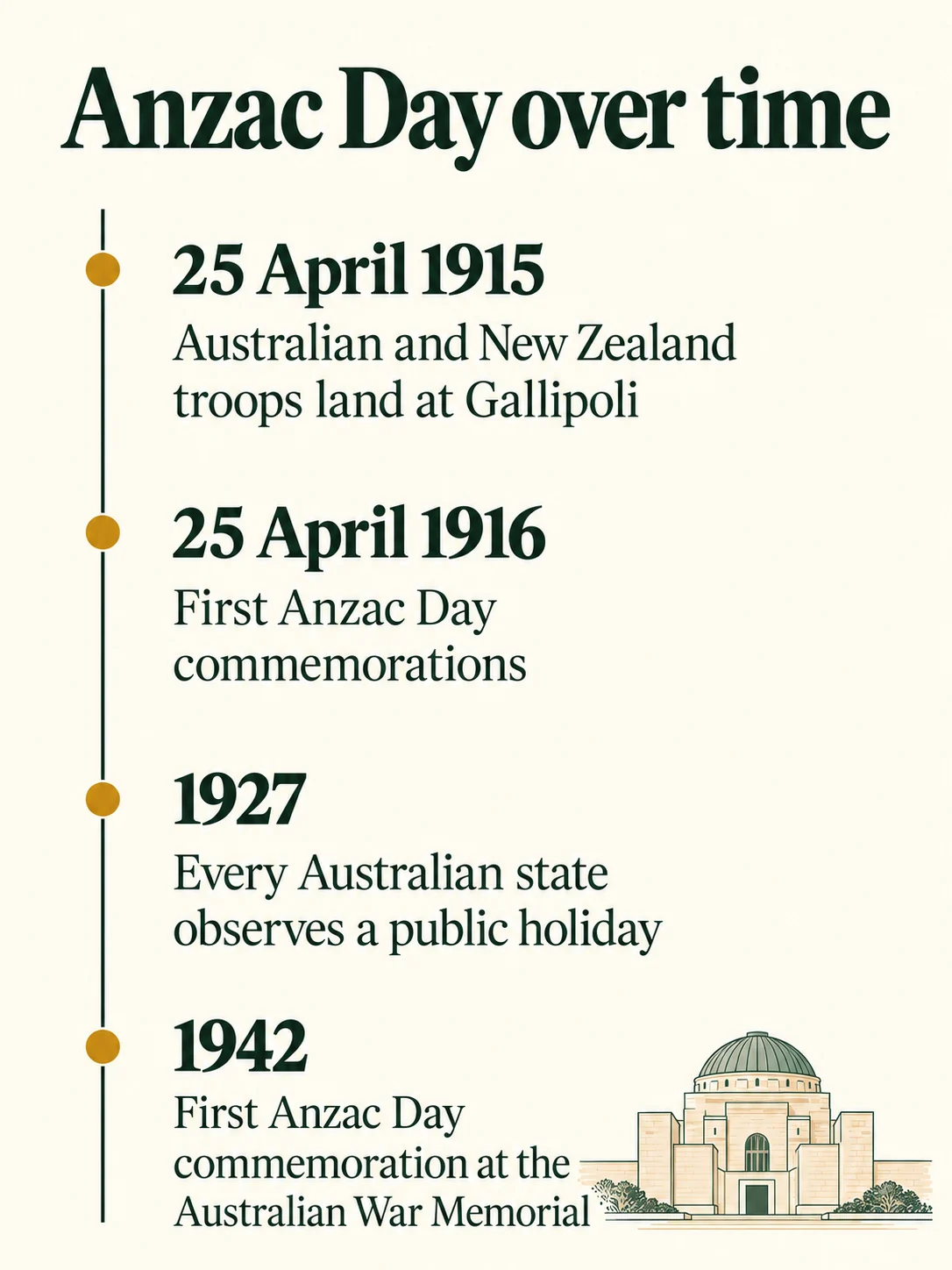
The first anniversary of the Gallipoli landing was marked on 25 April 1916, both in Australia and among Australian troops overseas. Acting Prime Minister and Defence Minister George Pearce officially named the date Anzac Day. It was not yet a public holiday.
Early observances varied by community. Communities held services and marches, and some observances included fundraising, pageantry or celebration. People disagreed about whether festivities suited a day of remembrance, and wartime rallies used the occasion to encourage patriotic support and enlistment. As the National Museum of Australia’s history of the first Anzac Day shows, the solemn ceremonies familiar today developed over time.
By 1927, every state observed some form of public holiday on Anzac Day. The day had become an established national commemoration, including for the more than 60,000 Australians who died during the First World War.
Gallipoli campaign and the Anzac legend
Gallipoli was part of an Allied operation to force the Dardanelles and capture Constantinople, now Istanbul. The operation aimed to open the strait to Allied naval forces. On 25 April 1915, Australian and New Zealand troops landed on the peninsula amid steep terrain and strong Ottoman resistance. The National Museum of Australia estimates that 16,000 Australian and New Zealand troops landed at Anzac Cove; around 2,000 were killed or wounded on landing day.

The Allies failed to achieve their objectives. After months of fighting and stalemate, they evacuated the peninsula at the end of 1915. The Australian War Memorial’s account of the campaign describes a costly operation, while the National Museum notes the heavy losses suffered by Ottoman defenders.
Australians later associated the troops with courage, endurance and mateship, shaping the campaign’s place in national memory. Official war correspondent Charles Bean helped shape this interpretation, which became part of the “Anzac legend”. The legend describes how Australians remembered the campaign, while the military outcome remained unchanged and Australians have held different views of its significance. Some people see Anzac Day as a way to honour those who died. Others question the emphasis placed on a campaign fought within the British Empire’s war effort.
How Anzac Day services developed
Dawn observances took place in several locations before the familiar format became established. The Australian War Memorial records a dawn requiem mass in Albany in 1918 and a dawn commemoration in Toowoomba in 1919. The Department of Veterans’ Affairs also records an Albany service led by Reverend Arthur White in 1923. Sydney’s Cenotaph held its first official dawn wreath-laying in 1928, a milestone often associated with the start of organised dawn services.
By the mid-1930s, dawn vigils, marches, moments of silence, wreath-laying and reunions had become familiar parts of the day. Canon David Garland helped spread commemorative rituals and supported services designed to include different Christian denominations.
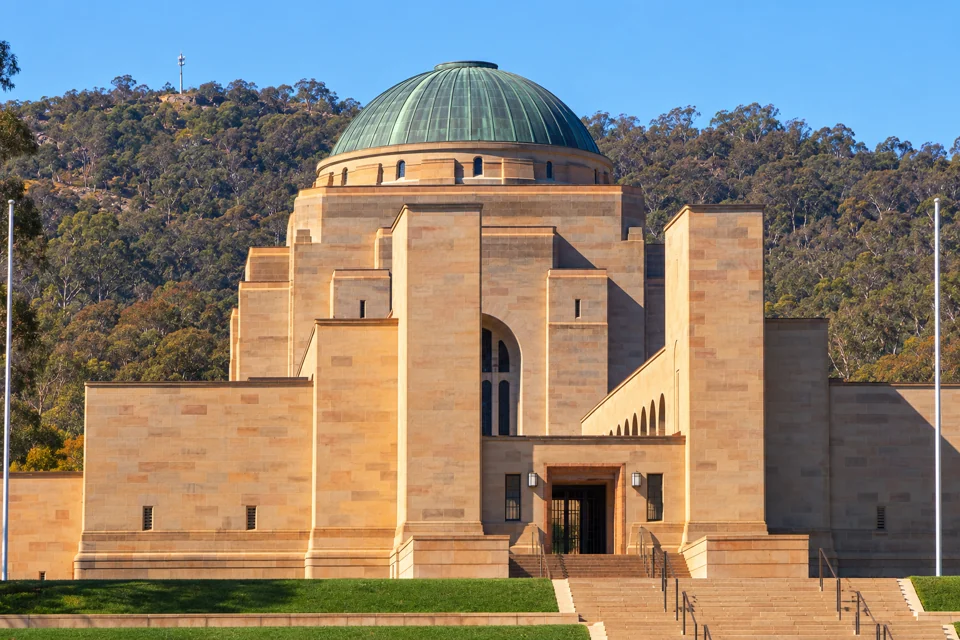
The Australian War Memorial held its first Anzac Day commemoration in 1942, during the Second World War, when restrictions limited large gatherings. After that war, remembrance widened to include Australians who died in the Second World War and later conflicts and peacekeeping operations. Today, dawn services and marches remain prominent forms of observance, although local ceremonies do not all follow the same order. At the Memorial’s Canberra ceremony, for example, the programme includes a march, an address, wreath-laying, hymns, the Last Post and a minute’s silence.
How participation in Anzac Day changed
Participation in Anzac Day has changed. Between the wars, women were excluded from some dawn services, even as women grieved and marked the day in other ways. Indigenous community marches became more visible from 2007, adding public recognition of Indigenous service and experience to commemorations.
The National Museum of Australia records declining interest from the 1960s to the 1980s, followed by renewed activity, including at Gallipoli. Prime Minister Bob Hawke’s visit to Gallipoli for the 75th anniversary in 1990 was one prominent moment in that renewed attention.
Who takes part, and whose experiences are recognised, has changed over time. Local ceremonies, marches and memorials offer different ways to remember, and Anzac Day’s history includes debate over its meaning alongside its commemorative rituals.