
An Anzac Day dawn service in Australia is a quiet gathering before sunrise, usually at a war memorial or commemorative site. It remembers those who served and died in war, and commonly includes wreath-laying, The Last Post, a period of silence and Reveille.
The order, length and local instructions vary. Stand and keep quiet during the Ode of Remembrance. Follow the service leader’s cues, and prepare for an early outdoor ceremony.
Why services begin at dawn
Dawn connects the ceremony with the landing at Gallipoli on 25 April 1915, which took place around first light. It also recalls the military practice of waking soldiers before sunrise to prepare for a possible attack. The Australian Department of Veterans’ Affairs explains both associations as part of the meaning of the dawn ceremony.
The tradition grew through several early commemorations. The Australian War Memorial describes dawn observances in Toowoomba in 1919 and Albany in 1923, followed by the Sydney Cenotaph service in 1928. Accounts differ on which service should be called the first official dawn service. The tradition developed over time rather than beginning at one settled point.
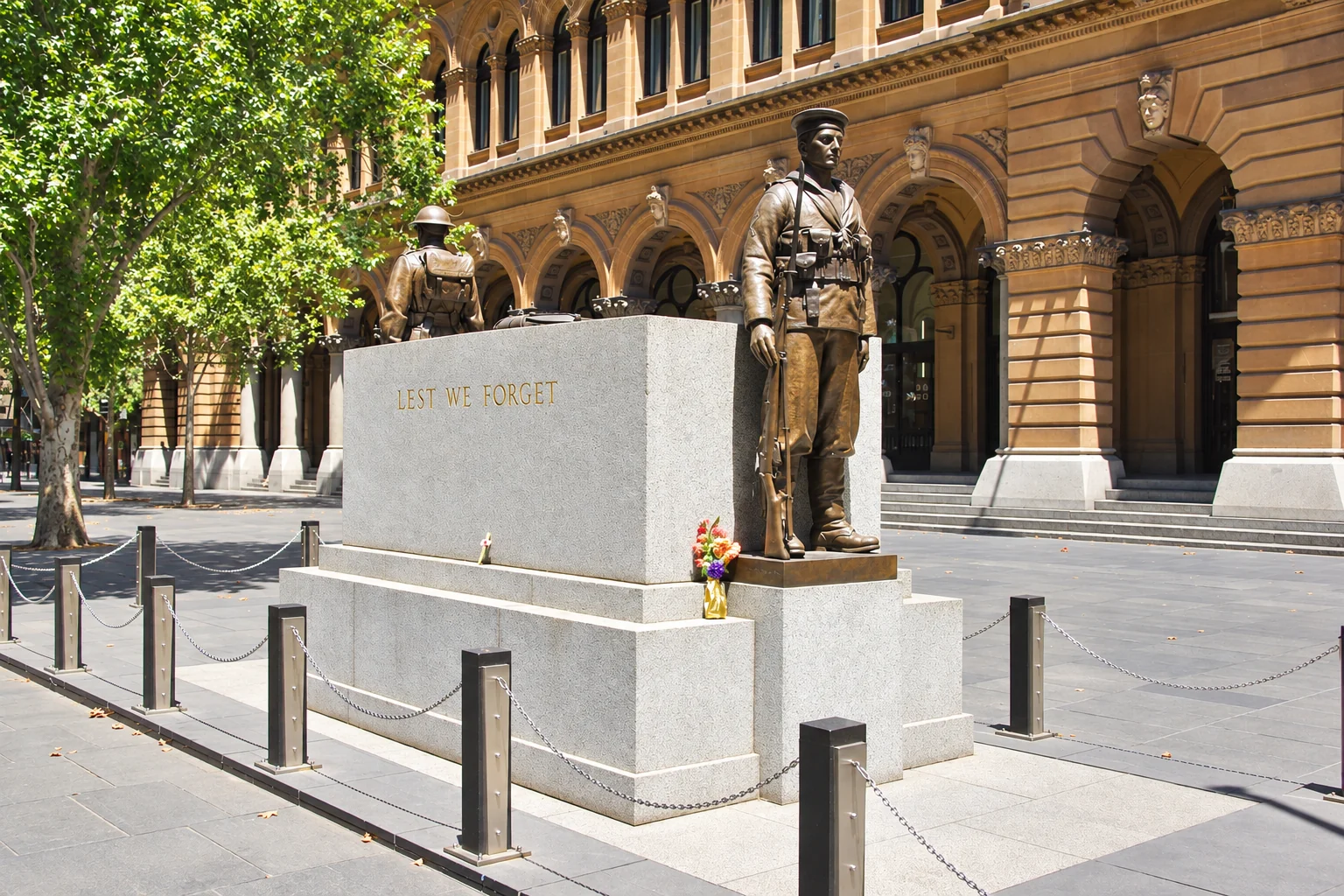
What happens at an Anzac Day dawn service
A service often begins with people gathering in darkness or half-light. A welcome, address, prayer, reading or music may follow, with wreaths laid in remembrance. The sequence differs between locations and organisers; there is no single nationwide order.
The central rites commonly include the Ode of Remembrance, The Last Post, a period of silence and Reveille. The bugle call of The Last Post is followed by silence in the Department of Veterans’ Affairs’ suggested order. Reveille follows the silence in its suggested dawn-service sequence and can accompany the raising of flags.
The Department’s planning guidance gives 30 to 60 minutes as an indicative duration for a commemorative event; individual services may run for a different length. The silence also varies: its general guidance describes two minutes as traditional at a dawn service, while the Australian War Memorial’s 2026 Canberra order specified one minute. Follow the local program for the service you attend.
How to behave respectfully
During the Ode of Remembrance, the Department of Veterans’ Affairs advises attendees to stand, remove headwear and refrain from talking. For other parts of the ceremony, follow the speaker’s or service leader’s cues. Remain quiet during ceremonial pauses and avoid blocking other people’s view.
Arrive with enough time to find a place. Silence your phone and avoid disruptive photography. Organisers set local requirements for seating, accessibility and site access, so check their instructions before you go. Dawn services take place outdoors and begin early. Dress for the conditions, and allow time to reach the venue safely.