If you are choosing when to visit Australia, match your dates to the destination and experience you want, then compare local climate data. Australia has no single best month for every trip. Summer runs from December to February, autumn from March to May, winter from June to August, and spring from September to November. Conditions differ sharply by region, so no national measure identifies one month as the best, quietest or cheapest time to travel.
Use Bureau of Meteorology climate averages for the exact destination. A weather station records conditions at one location, so figures for one city do not describe an entire state.
Use Perth as an example
Perth Metro’s average daily maximum is 31.4 °C in January and 18.5 °C in July. Rainfall averages 15.9 mm in January and 144.3 mm in July, according to the Bureau of Meteorology’s Perth Metro climate averages.
January suits travellers seeking warm, dry weather, although Perth averages 7.7 days at or above 35 °C during the month. July is cooler and much wetter.
These figures are long-term averages, not forecasts for specific travel dates. They describe Perth Metro, not all of Western Australia. Choose January if you are comfortable with very hot days. Choose July if cooler weather matters more than avoiding rain.
Plan for northern Australia’s wet season
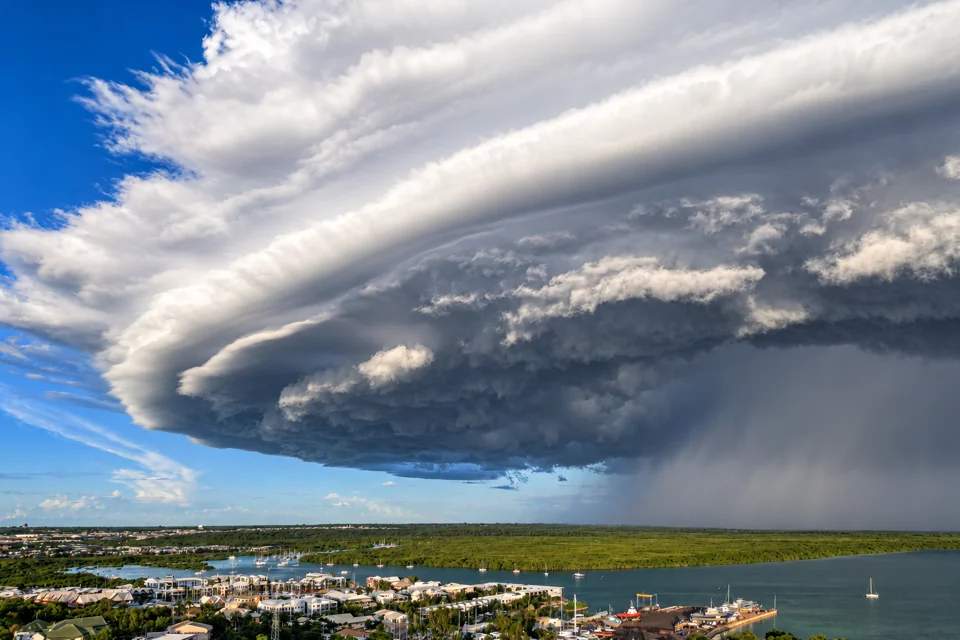
Northern Queensland, the Top End and parts of northern Western Australia have a different seasonal pattern from southern cities. After the dry season, humidity rises and showers and thunderstorms become more frequent. The Australian-region tropical cyclone season runs from 1 November to 30 April. Since 1980–81, the Bureau of Meteorology has recorded an average of about 10 tropical cyclones per season, though the number varies widely between years (tropical cyclone information).
Cyclone season brings a higher risk of disruption, especially for road, air and boat travel. It does not predict that a cyclone will affect a particular destination or travel date. Keep northern itineraries flexible during these months, and check forecasts, warnings and local road conditions before departure and during the trip.
For the 2026–27 season, the Bureau’s northern rainfall-onset outlook gives northern and eastern Queensland and the Top End a 55–80% chance of later-than-normal onset. It gives much of Western Australia and western and central parts of the Northern Territory a 60% to greater than 80% chance of earlier-than-normal onset.
Northern rainfall onset is the date when rainfall accumulated after 1 September first reaches 50 mm. The outlook compares the likely onset date with the historical average at each location. It estimates whether onset is likely to be earlier or later; it does not forecast total wet-season rainfall (northern rainfall-onset outlook).
Allow for school holidays
School holiday dates differ across Australian states and territories. Tourism Australia notes that destinations are often busier when local families travel during these breaks. Check dates for both your home state and the state or territory you plan to visit.
For Term 2 in 2026, school holidays run from 27 June to 12 July in Queensland and Victoria. In New South Wales, they run from 6 July to 17 July. For other 2026 terms and locations, check Tourism Australia’s school holiday calendar.
These dates indicate periods of potentially higher demand, not fixed price changes. A school break does not raise fares or accommodation rates at every destination. No national monthly data identifies one universally cheapest or most expensive time to visit Australia.
See turtles and whales
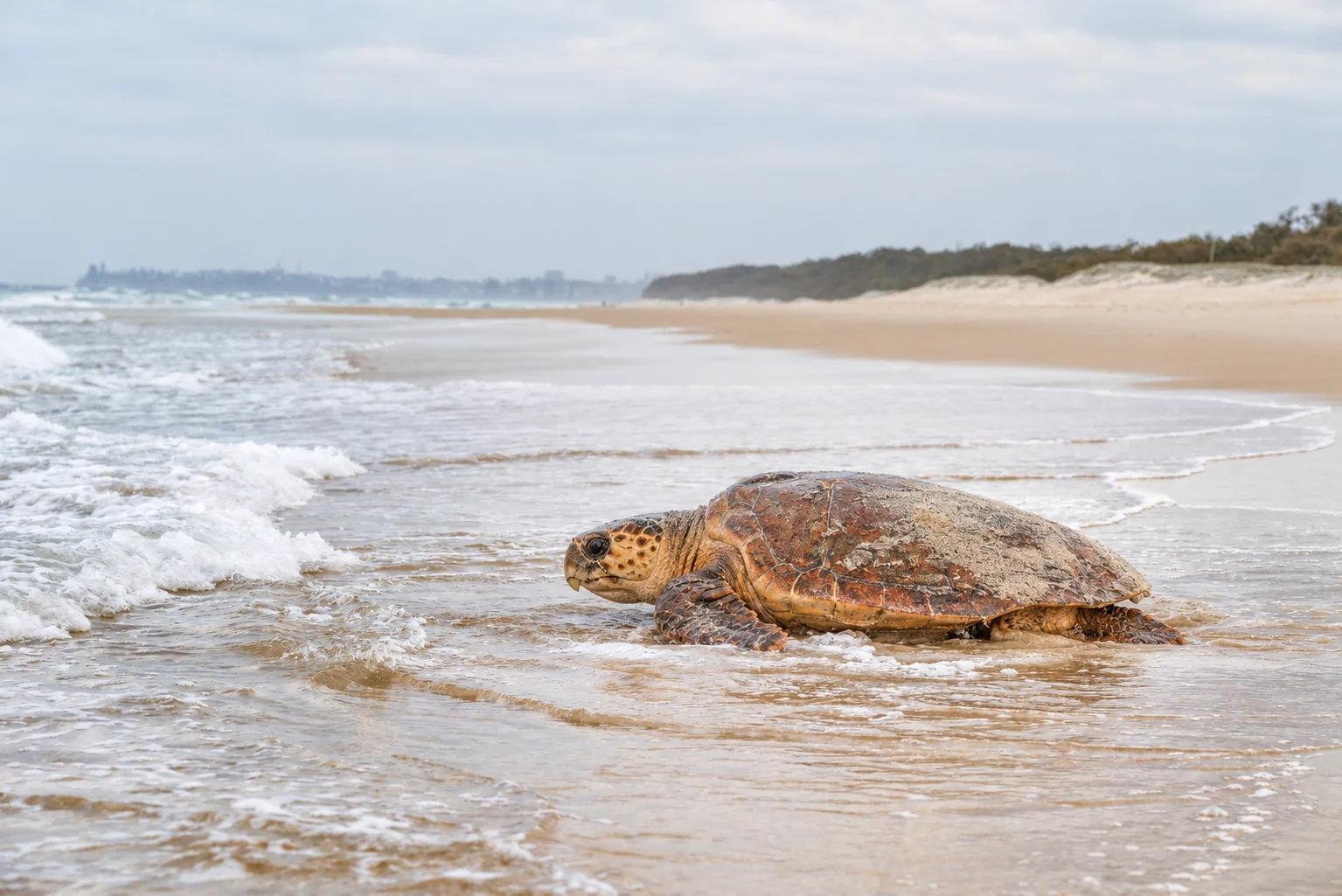
Plan a South East Queensland visit between November and April if sea turtle nesting is a priority. Watergum’s TurtleWatch information identifies this as the nesting season and states that incubation takes about two months. Hatchlings emerge after the eggs incubate, so the best time to see nesting turtles differs from the likely hatching period. Visiting during the season creates an opportunity for a sighting but does not guarantee one.
For humpback whales, Tourism Australia identifies winter as the main viewing period at Hervey Bay, where whales pause during their migration. Its winter wildlife guide also identifies seasonal wildlife experiences in other regions. Use these periods to choose where and when to travel. Tourism calendars identify seasonal visitor opportunities; they do not predict animal numbers, guarantee an encounter or measure wildlife populations.

Check conditions before travel
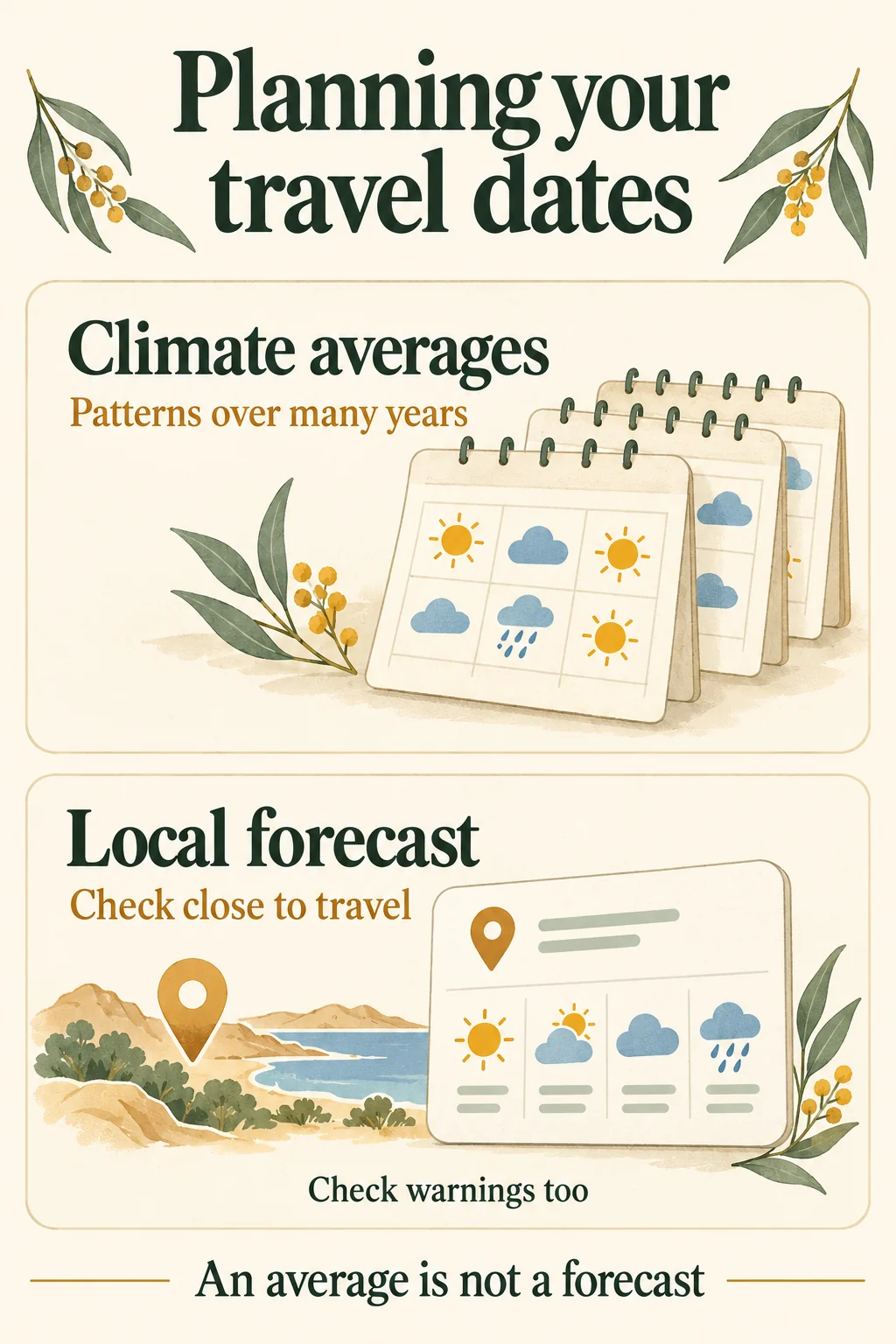
Climate averages and seasonal patterns guide your choice of travel dates, but they do not describe conditions on the day you travel. Before leaving, check the Bureau of Meteorology’s current warnings and forecast for your destination.
If you are driving, check the relevant state or territory road authority for road closures and access conditions. Check again during the trip if weather changes or warnings are issued. A national climate summary or seasonal outlook does not confirm local weather, road access or whether your planned route is open.