If you are planning a move to Sydney, this page explains how rent, commuting and location shape a realistic household budget and day-to-day routine.
Sydney living costs
Housing takes a large share of a Sydney budget, and the suburb you choose affects both rent and travel costs. For the week ending 12 October 2026, SQM Research reported average asking rents of $915.61 a week across all dwelling types: $1,159.28 for houses and $749.18 for units. Asking rent is the advertised price, so it does not represent the rent paid by every tenant.
Wise estimates that a single person needs $5,349 a month to live in Sydney in 2026. It also lists living costs of $1,810 a month excluding rent, but does not explain how that figure relates to the total. Treat both figures as commercial estimates rather than a household budget. Wise estimates that a one-bedroom apartment costs $3,538.87 a month in the city centre and $2,399 outside the centre. These are estimates, not official rent medians.
The ABS rental analysis, covering data to April 2025, found that rents in Sydney’s inner-city suburbs were rising faster than rents in suburbs farther from the CBD. Individual properties vary, but location shapes both rent and commuting time.
Broader price rises also add to household costs. The ABS reports that living-cost indexes rose by 3.7% to 4.7% across household types in the year to June 2026. The index measures a weighted average across Australia’s eight capital cities, so it provides national context rather than a Sydney-specific result.
Compare likely rent with regular bills and the cost of travelling to work, study and other commitments before choosing a suburb. A home closer to the city may cost more each week. A lower-rent home farther out may add transport costs and travel time. Use advertised rents and online estimates as a starting point, then budget for the household and properties you are considering.
Choosing where to live
The right suburb depends on your budget, household size, work or study location, transport needs and the places you use each week. Living closer to work, family, friends or regular activities often costs more. Moving farther out may reduce housing costs or provide more space, while adding time and expense to regular trips.
Match the suburb to your routine
Compare likely rent or mortgage repayments with the time and cost of travelling to work, study and regular commitments. Then assess the home itself: whether it has enough bedrooms and storage, and whether your household needs shops, parks, schools, childcare or the coast nearby.
For each shortlisted address, use Transport for NSW’s Trip Planner to check public transport, walking and cycling routes to your usual destinations. Search at your usual travel times, allowing for the walk to the stop or station, waiting time and transfers, as well as the trip home. A suburb’s distance from the CBD does not show what a daily commute will involve.
Before signing a lease or making an offer, visit the street at different times of day. Try the commute and walk to local shops. Spend time in nearby parks or other places your household expects to use. The area around a home often affects daily life more than a suburb’s general reputation.
What personal accounts can show
Personal accounts can help you identify the routine you want, but they do not represent every resident’s experience. In a BBC Travel interview, one Sydney resident described Burwood as a place to experience the city’s multicultural character and food scene. Another described making beach visits part of daily life, including walks from Bondi to Bronte.
These accounts reflect different priorities: access to food and cultural life, or easy access to beaches and coastal walks. Use such examples to clarify what matters to you, then check whether a specific address suits your budget and regular journeys.
Getting around Sydney
Sydney’s public transport network includes metro, trains, buses, ferries and light rail. Once you have narrowed down an address, use Transport for NSW’s Trip Planner to compare routes, timetables and expected travel times for less frequent trips as well as your daily commute.
Check Transport for NSW travel alerts for planned works and disruptions before relying on an unfamiliar route. Its fare and payment information sets out current fares and ticket options, which vary by service and journey. Factor these costs into the housing budget, especially if a lower-rent address requires frequent transfers or longer trips.
Sydney lifestyle and location
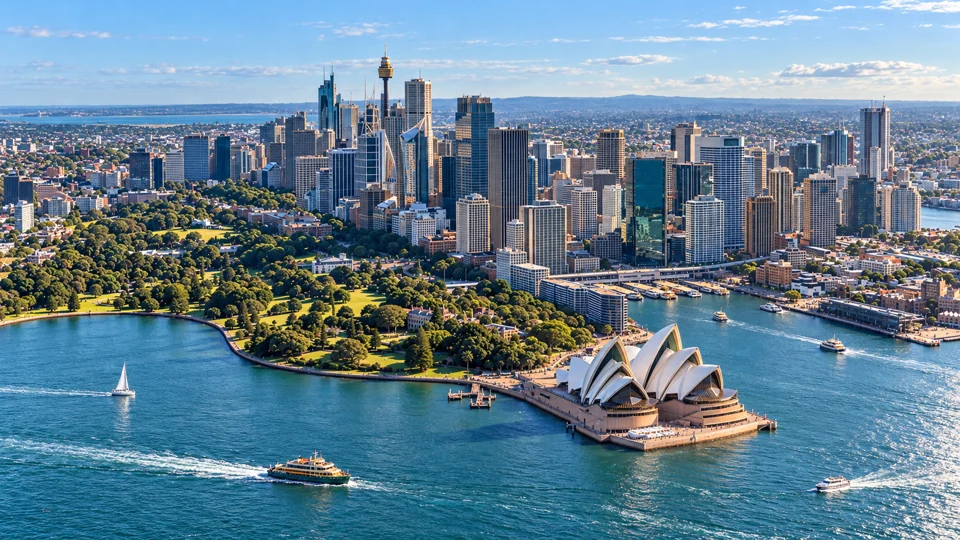
Sydney’s harbour, beaches, parks, food precincts and cultural venues are easier to use regularly when they are close to home or work. Your housing budget, location and weekly commitments determine the time and money available for these trips. A resident near the coast or harbour may fit a swim, walk or ferry trip into an ordinary week. From outer suburbs, the same outing may require a long drive or several public transport connections. The NSW National Parks and Wildlife Service manages tracks and outdoor areas across Sydney and New South Wales, while Visit NSW highlights the city’s harbour and coastal attractions.
Sydney ranked fourth in the Economist Intelligence Unit’s 2026 Global Liveability Index. The index rates cities across stability, healthcare, culture and environment, education, and infrastructure. Sydney also placed fifth in Monocle’s 2026 Quality of Life Survey, which uses different measures. Neither ranking shows whether a household can afford to live near work, family commitments or the activities it values.
Housing costs and travel distance shape how available Sydney’s attractions feel in everyday life. Paying more to live near valued places reduces travel time and makes regular outings easier. Living farther away may lower housing costs while making trips to beaches, the harbour and inner-city venues harder to fit into the week.