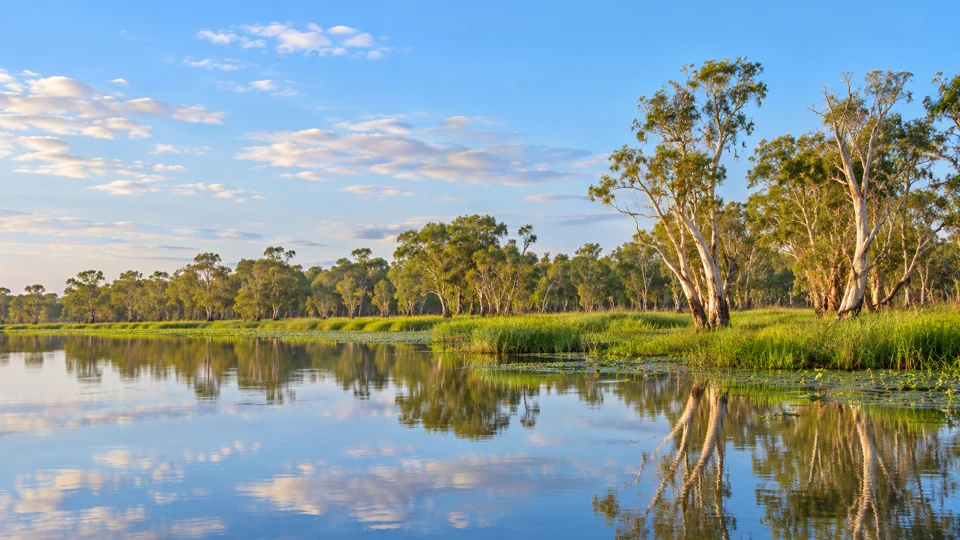
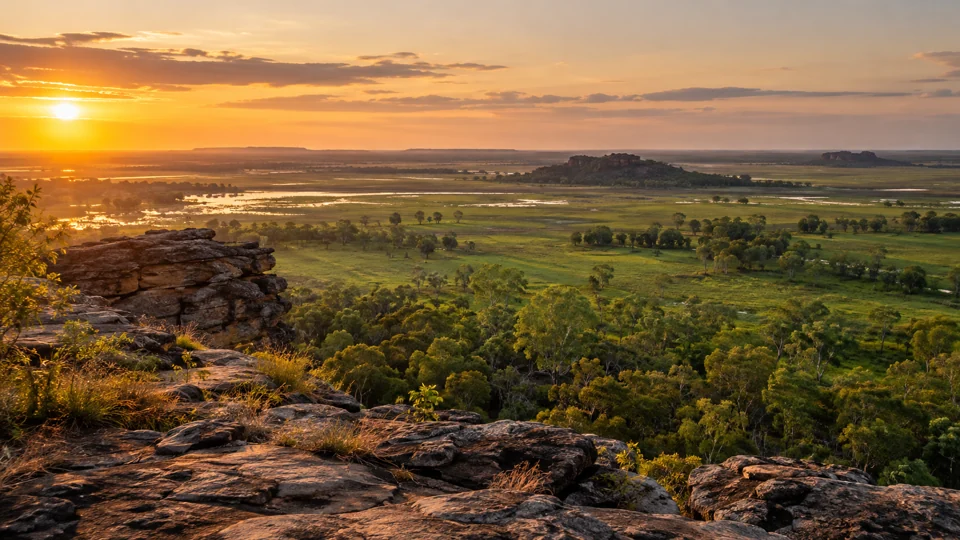
Ubirr is a rock art site in the East Alligator region of Kakadu National Park, Northern Territory, close to the Arnhem Land boundary. A short walking loop takes visitors past painted rock shelters and up to a lookout above the Nadab floodplain. Kakadu is a Commonwealth reserve of about 20,000 square kilometres, jointly managed by Traditional Owners and the Director of National Parks. It holds UNESCO World Heritage listing for its natural and cultural values, and Ubirr is one of the places that supports the cultural listing.
Plan a first visit around four points. You need a park pass to enter Kakadu. Opening times change with the season. The road from Jabiru can close in the wet season. The walk is a 1 km loop with a steep climb at the end, so time it for the cooler part of the day. Heat and crocodiles both need planning for.
What the rock art shows
Kakadu’s rock art, known locally as kunbim, is described by Parks Australia as one of the longest historical records of any group of people in the world. More than 5,000 art sites are recorded in the park. The paintings tell of creation ancestors and of how the landscape changed over thousands of years. The best-known galleries are at Ubirr and Burrungkuy (Nourlangie), and Ubirr is the one in the park’s far north-east.
The subjects at Ubirr include naturalistic paintings of animals, early contact paintings and x-ray art. X-ray art is a style that shows the internal bones and organs of an animal as well as its outline. A Parks Australia note on Ubirr lists fish, waterfowl, mussels and wallabies among the animals painted, which reflects the food that the surrounding floodplain and rock country supplied. The park’s visitor guide also refers to paintings recording early contact with non-Aboriginal people, so the galleries cover a long span of time rather than a single period.
The Rainbow Serpent has a prominent place here. The Parks Australia page on Ubirr says the Rainbow Serpent creator painted her image at Ubirr as she passed through the country. The painting is part of a living story. The people who look after this land still hold its meaning. The paintings are more than decoration.
Two things affect how you look at the art. Some paintings are sacred and restricted to senior people, while others can be seen by everyone, so the paintings you can view are a deliberate selection. Many older paintings are also covered by younger ones, which means the surface you see is one layer in a long sequence. The older paintings are fragile, and rock art can be damaged by natural processes, which is part of why barriers are in place. Stay behind them and do not touch the paintings.
If you want the meaning behind what you see, a ranger talk or an Aboriginal-led tour gives it. The galleries make more sense with a guide, particularly for the story of the Rainbow Serpent and the way layers of paint record different periods. Both options are covered below.
The walk and the sunset lookout
The Ubirr walk is a 1 km circular track that passes several rock art sites and ends with a climb to a lookout. The visitor guide describes a moderately steep climb of about 250 m up a rocky outcrop. The Parks Australia walk page calls the climb steep and describes 360-degree views over Arnhem Land and the Nadab floodplain.
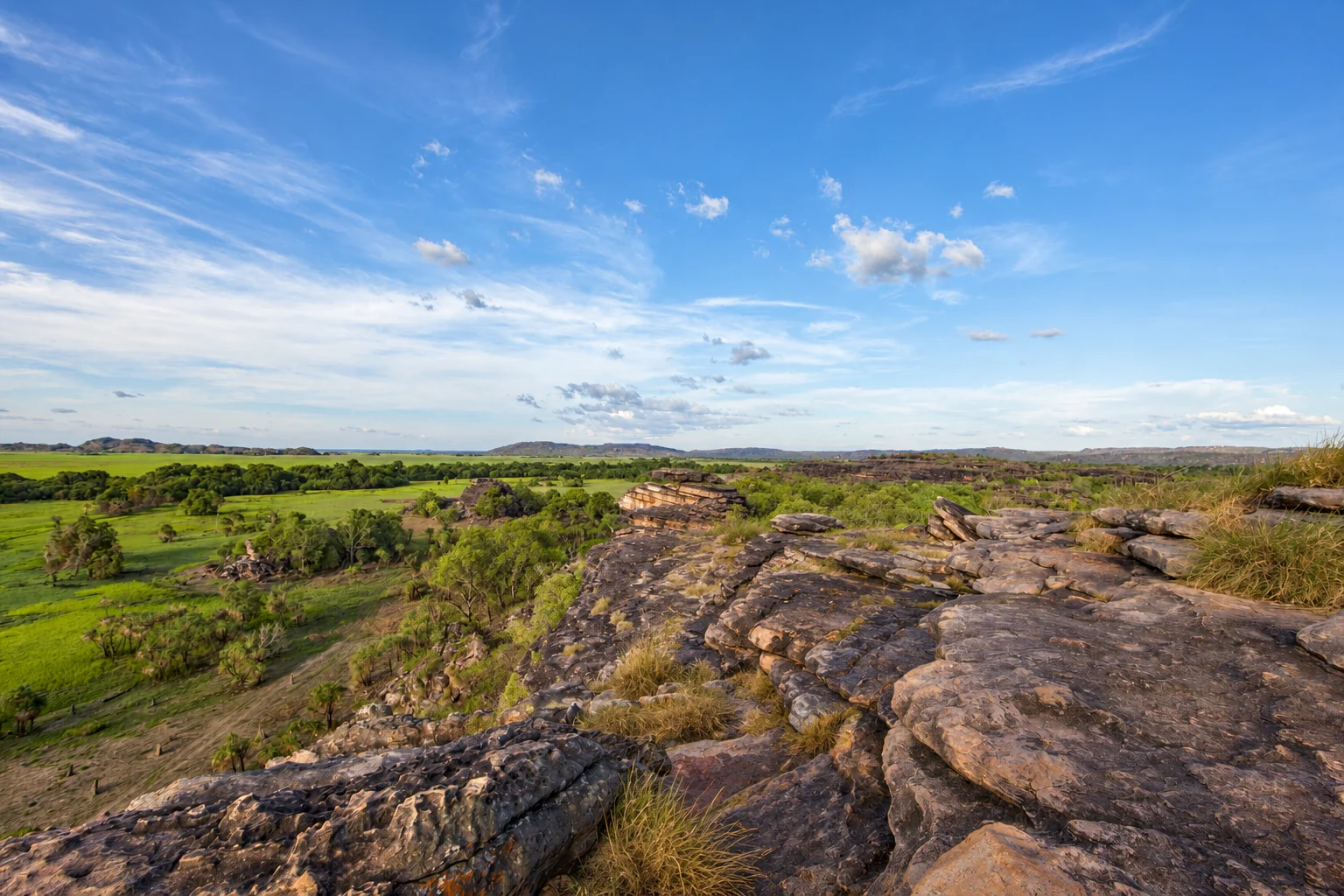

Allow at least an hour for the whole loop, and more if you want to sit at the top. Tourism NT describes the hour-long walk as needing moderate fitness and puts the climb to the lookout at about 30 minutes. Parks Australia grades its walks, and a Grade 2 walk suits most ages with a hardened surface and occasional steps, while Grade 3 is for people with some bushwalking experience, with short steep hills, rough surfaces and many steps. The walk page describes the climb as steep without assigning it a grade. Wear shoes with grip, because the rock is uneven and slippery when wet.
The lookout is the reason many visitors arrive late in the day. The floodplain stretches out below, and the view is at its best around sunset. The official dry-season itinerary in the visitor guide places the Ubirr art site and sunset lookout after a stop at Cahills Crossing, which makes a sensible sequence for one afternoon. The Cahills Crossing viewing platform is described as a good place to spot crocodiles.
Sunset also affects the drive back. The site closes at sunset, and the visitor guide advises against driving at night because of wildlife collisions on park roads. Check the sunset time for your date, start the climb early enough to enjoy the view, and plan the drive back to Jabiru so it finishes before full dark. Because the walk ends with the climb, see the galleries first and reach the lookout in the last hour of daylight.
Wheelchair access and limited mobility
The area around the main art site is flat and accessible to wheelchairs, according to the visitor guide, and the Parks Australia walk page says the same. The lookout is a steep climb, and neither official source describes a wheelchair route to it. Visitors who cannot manage steep rock steps should plan on the main gallery and the flat approach, and can still see a good selection of the art there. Bowali and Warradjan visitor centres are also listed as accessible, which helps if you want to add cultural context before or after the site visit. If you have specific access needs, phone Bowali Visitor Centre on (08) 8938 1120 before you travel.
Getting there from Jabiru
The Jabiru region map in the visitor guide labels the route to Ubirr and East Alligator as 32 km from Jabiru. Tourism NT gives about 40 minutes of driving from Jabiru and about 3.5 hours from Darwin. Jabiru is the park’s main service town, with fuel and a medical centre, so it makes a practical base. The Kakadu Guide Ubirr page adds that the road is sealed and suits a 2WD vehicle, that fuel is available at Jabiru, and that there is no public transport inside the park. Without your own vehicle, you need a tour or a hire car.
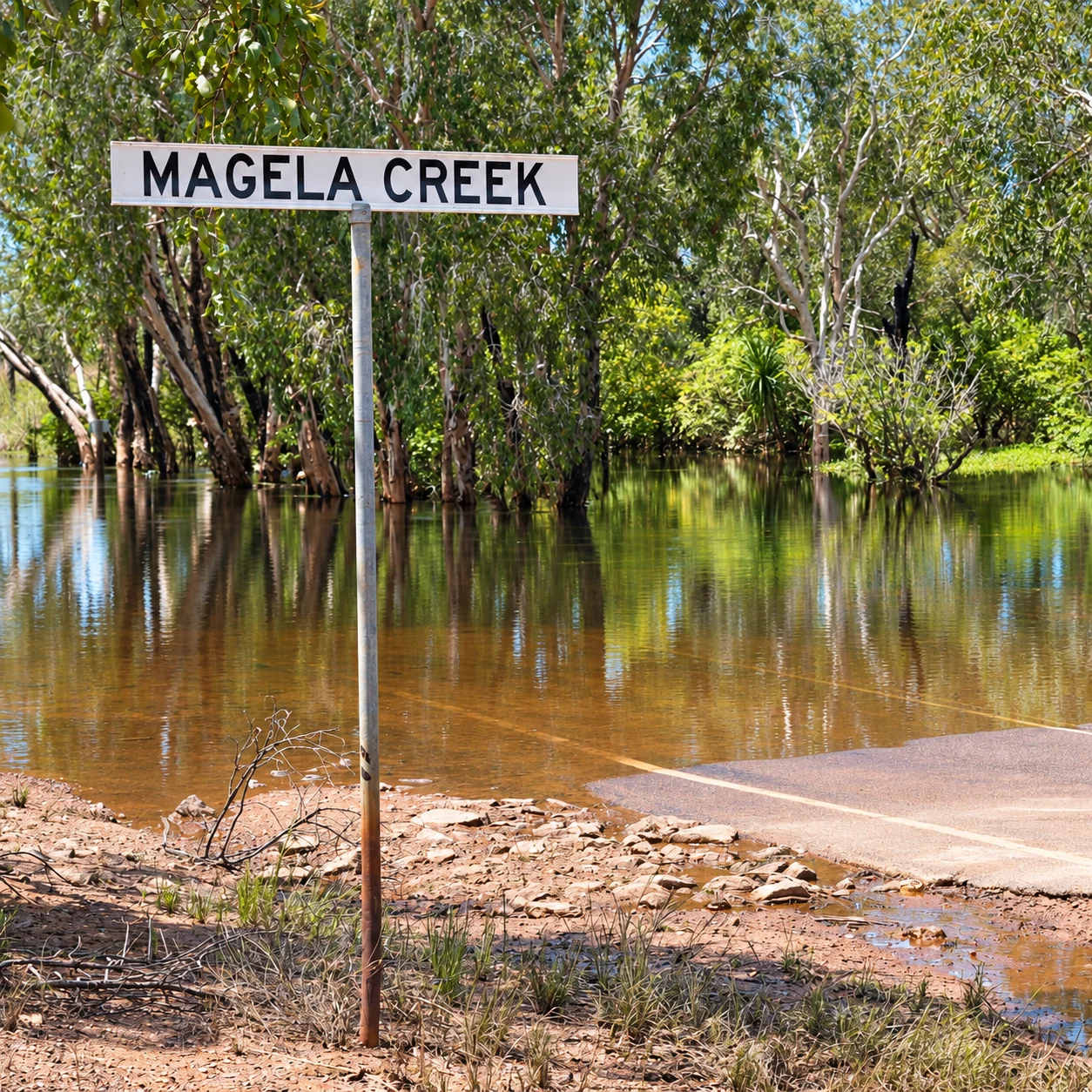
The road can close. The Parks Australia note on Ubirr says the road may be closed, and Tourism NT says heavy rain can make it inaccessible from December to April. Parks Australia’s pass schedule defines the tropical summer, or wet season, as 1 November to 14 May, so the closure risk covers a wide window. Flooding in March 2026 made parts of the Arnhem Highway impassable, as Straya’s Darwin to Kakadu guide reports from ABC News coverage, so closures on the approach roads also matter if you are driving from Darwin.
The visitor guide tells drivers to check road access daily with Bowali Visitor Centre on (08) 8938 1120, or on the park’s access page at kakadu.gov.au/access. Do this on the morning you plan to go, and again if rain has fallen overnight. Never drive through floodwater, since depth and current are hard to judge and crocodiles can be present.
If the road is flooded, the Parks Australia walk page says Ubirr can still be visited on a Magela boat cruise. That gives wet-season visitors a fallback, though it means booking a tour rather than driving yourself.
A first-time visitor staying in Jabiru can follow a simple plan. Leave in the early afternoon, stop at Cahills Crossing, then continue to the Ubirr car park for the galleries and lookout. Fill the tank in Jabiru before you go, since there is no fuel in the East Alligator area. Carry water from the start. Do not drink water from campground taps. Bring your own.
Opening hours and park pass
Opening hours change with the season. From 1 April to 30 November the site opens at 8:30 am. From 1 December to 31 March it opens at 2:00 pm. In both periods it closes at sunset. The visitor guide gives these hours and tells visitors to check seasonal access and opening times before travelling, and the Parks Australia note matches them. Some other sites list different times, so rely on the Parks Australia hours. The 2:00 pm summer opening means a visit in those months falls in the hottest part of the day, so carry extra water and take the climb slowly.
Bowali Visitor Centre, where you can ask about conditions and buy a pass, keeps its own hours. In the dry season (April to October) it is open 9:00 am to 5:00 pm, and in the wet season (November to March) it is open 10:00 am to 4:00 pm. Buy your pass before you leave Jabiru if you arrive outside those hours. You can buy it online or at Bowali, and you need it to enter Ubirr.
A park pass is needed to enter Kakadu, and it covers Ubirr along with ranger-guided activities and information. The passes page says the pass is valid for 7 days and can be bought online or at Bowali on arrival. Standard prices depend on the season:
- Dry season, 15 May to 31 October: adult $40, child $20, family (2 adults and 2 or more children) $100, concession $30.
- Tropical summer, 1 November to 14 May: adult $25, child $12.50, family $65, concession $19.
Parks Australia ran temporary reduced prices for 1 July to 31 October 2026, announced on 25 June 2026. That period has ended, so the standard prices above apply. Confirm the current figure on the passes page before you book, since Parks Australia sets prices and can change them.
Northern Territory residents are not charged for a Kakadu pass. The NT Parks Visitor Pass does not apply in Kakadu, as the Tourism NT passes and permits page explains, so holding one does not replace a Kakadu pass. A separate permit may apply to special activities such as commercial filming or drone use, which are listed on the Kakadu permits page. Drones are not permitted for ordinary visitors, so leave yours at home.
Ranger talks and guided tours
Ranger talks are the most direct way to learn what you are looking at. The visitor guide says that during the dry season rangers give talks on Aboriginal art and culture at Ubirr, and it directs visitors to Bowali Visitor Centre for details. It also describes art site talks, walks, cultural activities and night-time slide shows led by rangers and Traditional Owners across the dry season. These activities are included in the park pass, so they add no cost beyond entry.
Because the schedule changes through the season, ask at Bowali for the current timetable on the day you plan to visit. The guide notes that seasonal activities are popular and recommends arriving before the start time to secure a place. If you arrive just as a talk begins, the group may already be full.
Paid tours add transport, longer interpretation and other places. The visitor guide lists Aboriginal-led operators, though it gives no prices, so ask each operator directly:
- Ayal Aboriginal Tours Kakadu offers rock art and wildlife with a local Aboriginal guide, on (08) 8979 0483.
- Animal Tracks Safari combines culture and wildlife, including bush food gathering, on 0429 676 194.
- Kakadu Cultural Tours runs the Arnhemlander 4WD Tour, the Magela Cultural and Heritage Tour and the Guluyambi Boat Tour, on 1800 525 238.
The Guluyambi Cultural Cruise runs on the East Alligator River in the dry season and on Magela Creek in summer, with guides explaining local culture. The river is the boundary with Arnhem Land, so the cruise adds a view of the country beyond the gallery. The Magela boat cruise is also a route to Ubirr when the road floods, so consider booking one if you travel in the wet season.
Choose a tour if you do not have a vehicle, want a guide for the whole day, or want a Traditional Owner’s account of the stories. Choose the free ranger talk if you are driving yourself and want context at the galleries. Many first-time visitors do both on different days, combining a self-drive trip to the site with a cruise or cultural tour.
Respect for Traditional Owners shapes how you move around the area. The visitor guide asks visitors not to photograph Bininj/Mungguy people without permission, and to respect restricted areas. It also says some areas may close at short notice for cultural reasons at the request of Traditional Owners. A closure is a decision about the land. Follow the signs and do not go around them.
Heat, crocodiles and site rules
Heat is the most common problem on the walk. The visitor guide treats temperatures of 36°C or above as extreme and advises limiting activity to the cooler parts of the day, walking before 11:00 am where possible, walking with another person, and staying on the track. Carry and drink at least 1 litre of water per person for every hour you walk. Most people need 4 to 8 litres a day, according to Kakadu.net.au, and coffee, tea and alcohol do not count towards that total.
Early signs of heat illness include thirst, heavy sweating, headache, dizziness and nausea. The first response is shade and small sips of water, and anyone who cannot keep water down needs medical help. The Jabiru medical centre number is (08) 8979 2018. Emergency Call Devices are located at Ubirr, and you can press the device or dial 000. Wear a hat, sunscreen, sunglasses and loose long-sleeved clothing, and use insect repellent if mosquitoes are biting.
Estuarine (saltwater) crocodiles live in the rivers and billabongs of the East Alligator region, and the visitor guide says they have attacked and killed people in Kakadu. Obey every warning sign and keep well back from the water’s edge. Crocodiles can attack in knee-deep water, and if there is no sign you should assume they are present. Official advice is that the safest place to swim is a public or hotel pool, and never to swim alone. This applies at Cahills Crossing, where the viewing platform exists for watching crocodiles from a safe distance.
Cliffs are the other hazard at Ubirr. Keep well away from edges, especially when the rock is wet, and stay on marked tracks. The lookout has open drops, so keep children close and avoid standing near the edge for photos, even at sunset when the light is good.
The remaining rules are short. Stay on public roads and marked walking tracks, stay behind barriers, and do not touch paintings. Do not feed or disturb wildlife, and leave pets at home. Alcohol may be drunk only in licensed venues and managed campgrounds, so do not take a drink to the lookout.
Key Takeaways
- Buy a Kakadu park pass first: Entry to Ubirr needs a pass, valid for 7 days. Standard adult prices are $40 in the dry season and $25 in the tropical summer, and Northern Territory residents are not charged.
- Match your visit to the opening hours: The site opens at 8:30 am from 1 April to 30 November and at 2:00 pm from 1 December to 31 March, closing at sunset in both periods.
- Check the road on the day: Phone Bowali Visitor Centre on (08) 8938 1120 or use kakadu.gov.au/access. If the road is flooded, a Magela boat cruise can still reach Ubirr.
- Allow at least an hour for the 1 km loop: The final 250 m lookout climb is steep. The flat area around the main art site is wheelchair accessible, but no official source describes a wheelchair route to the lookout.
- Plan around heat and crocodiles: Carry 1 litre of water per hour, walk before 11:00 am where you can, and keep well back from the water’s edge. Finish the drive back before dark.