Allow three or four days for a first visit from Darwin. Kakadu covers almost 20,000 square kilometres, so shorter trips work best when you focus on a few places in the same area rather than crossing the park each day.
The Arnhem Highway is the most direct route from Darwin to Jabiru and Bowali Visitor Centre, about 250 km and three hours before stops. Cooinda is about 315 km from Darwin via Jabiru, a drive of roughly three and a half hours. The southern route follows the Stuart Highway to Pine Creek, then the Kakadu Highway. It is about 375 km to Cooinda and takes around four and a half hours. Fuel stops, meal breaks and road conditions add time, so check Parks Australia’s directions before leaving Darwin.
Travel within Kakadu also takes time. Parks Australia estimates 20 minutes from Jabiru to Ubirr, 30 minutes from Jabiru to Cooinda, and one hour from Ubirr to Burrungkuy (Nourlangie). The drive from Cooinda to Jim Jim Falls takes about one and a half hours when the road is open. Check park drive times and allow time for walks, lookouts and rock-art sites.
There is no public transport within Kakadu. Drive your own vehicle, hire one or join a bus or 4WD tour. Day tours from Darwin cover selected highlights but leave less time at each stop. A 2WD reaches many popular places, while remote sites may require a 4WD. Before booking, check current road conditions and your hire-car agreement, especially rules for unsealed roads and water crossings.
Kakadu stays open year-round, but rain, flooding, roadworks, crocodile management and seasonal reopening work close individual sites at different times. Check the access and alerts page shortly before travel and during your stay. Never drive through floodwater.
Visitors other than Northern Territory residents need a Kakadu park pass, which is valid for seven days. Visits from 1 July to 31 October 2026 use reduced prices of $25 per adult, $12.50 per child aged 5–15, $65 per family and $19 for concession holders. Check the Kakadu pass page before buying, as prices and conditions change.
From 1 November to 14 May, the published tropical-summer rates are also $25 for adults, $12.50 for children, $65 for families and $19 for eligible concession holders. Northern Territory residents receive free entry. Check the official pass page before purchasing.
Choose Kakadu regions
Choose regions that match your available time and vehicle. Long distances, walking times and changing road conditions limit how many places fit into a day. Check the Parks Australia drive-time guide before adding a distant waterfall or gorge, then consult the access report shortly before departure.
Allow time at rock-art sites for walks and cultural interpretation. A dry-season itinerary may not suit other times of year because flooding, rain and roadworks change access.
Jabiru and Ubirr
Jabiru is a practical base for Ubirr and the northern floodplains. Ubirr is about 20 minutes’ drive from Jabiru when the road is open.
The walking circuit passes Aboriginal rock-art galleries and ends at a lookout over the Nadab floodplain. Allow time to read the site interpretation and join a ranger-guided talk where available. Check the Ubirr visitor guide and access report before driving, as flooding can close the road or site.
Burrungkuy and Cooinda
Burrungkuy, also known as Nourlangie, has rock art, walking tracks and shaded shelters. It is about 25 minutes’ drive from Bowali Visitor Centre. Anbangbang Billabong and Nawurlandja lookout fit well with a Burrungkuy visit if you allow time for the walks.
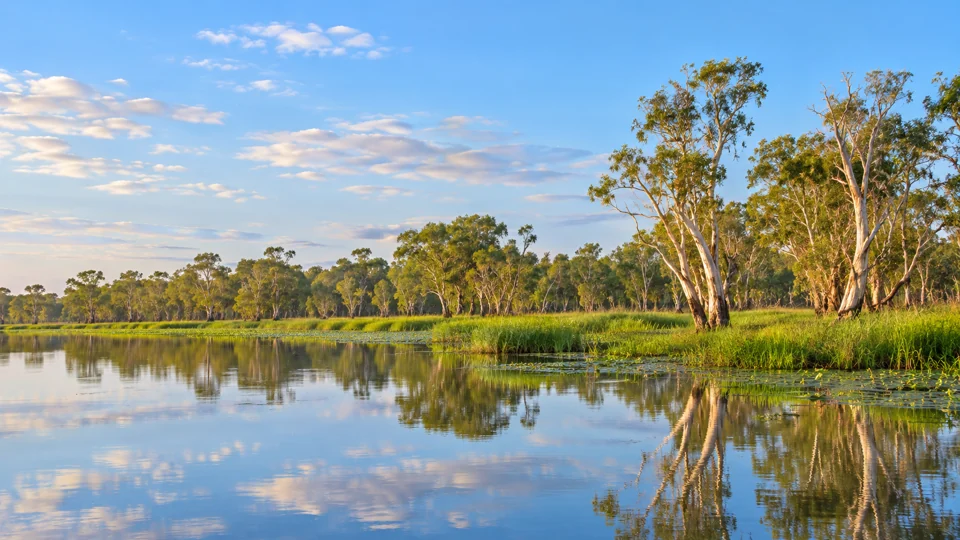
Cooinda provides access to Ngurrungurrudjba (Yellow Water) Billabong and the Warradjan Aboriginal Cultural Centre. A Yellow Water cruise provides guided views of wetlands and wildlife; check the operator’s timetable and book directly. Warradjan explains Bininj and Mungguy culture, so it suits a visit before or after a cruise.
Kakadu has accommodation ranging from managed campgrounds to commercial lodges, with options in Jabiru and near Cooinda. Check the park’s accommodation listings for current facilities, opening dates and booking details.
Southern waterfalls and gorges
Jim Jim Falls and Twin Falls, including Karnamarr campground, are closed throughout 2026 for road and infrastructure upgrades. Parks Australia lists the closure in its 1 June 2026 closure notice. Do not include these sites in a 2026 itinerary.
Southern attractions require more travel time and depend heavily on seasonal road access. Jim Jim Falls, Twin Falls, Maguk and Jarrangbarnmi involve remote roads, and several routes require a 4WD when open. Some sites also have permit requirements or access restrictions. Confirm park advice and your vehicle-hire conditions before setting out.
The drives are long. Bowali Visitor Centre to Jim Jim Falls takes about two hours and 10 minutes, while Cooinda to Gunlom takes about two hours when routes are open. Add time for fuel stops, walks and road conditions.
Do not assume a waterfall pool is open or safe for swimming. Follow current park instructions for each site, including closures, swimming advice and crocodile warnings.
Choose your trip length
Allow three or four days for a first self-drive trip from Darwin if you want to visit more than one part of Kakadu without spending most of the trip driving. In two days, focus on one or two nearby areas, such as Ubirr and the East Alligator region. Leave the southern waterfalls for another trip.
With three or four days, add a wetland experience such as a Yellow Water cruise. If the road is open and your vehicle is suitable, set aside a separate day for a longer southern drive. A week gives you time to adjust for changing access, walk during cooler parts of the day and stay in different parts of the park.
Heat, crocodiles, flooding and remote roads affect daily plans. A road closure removes a planned destination, while high heat makes long walks unsafe or unpleasant in the middle of the day. Follow park directions near waterways and on unsealed roads. Use the official heat and crocodile safety advice when planning each day.
Choose when to visit
Kakadu’s dry season broadly runs from May to October, with warmer days and cooler nights. Tropical summer, from November to April, brings heat and humidity, as well as thunderstorms and heavy rain. More attractions are generally accessible in the dry season, although individual site status still matters. Safety work, crocodile management, repairs and local conditions close areas at any time.
Bininj and Mungguy describe the year through six seasons, identified through changes in weather, plants and animals. Kakadu Seasons expands on this calendar. Parks Australia’s six-season explanation outlines this cultural calendar.
During tropical summer, rain and flooding close roads and sites. Keep plans flexible, check the access report before travelling, and never drive through floodwater. Use the Bureau of Meteorology’s Northern Territory forecasts and warnings for current conditions; seasonal patterns do not predict the weather on a particular day.
Match each walk and drive to the group’s ability, the day’s heat and the facilities at each stop. In hot conditions, travel or walk during the cooler parts of the day and carry sufficient water.
Families and mobility
Ubirr and Burrungkuy include shorter walks, but paths may have uneven surfaces and little or no barrier. Supervise children closely near water. Ubirr is partly accessible to wheelchairs and prams, but access varies along the walk. Check site details and current conditions against your group’s mobility needs before travelling.