If you are planning a Great Ocean Road visit, this page explains what the Twelve Apostles are, how long to allow and how the precinct’s booked parking and future entry fee affect a visit.
What are the Twelve Apostles?
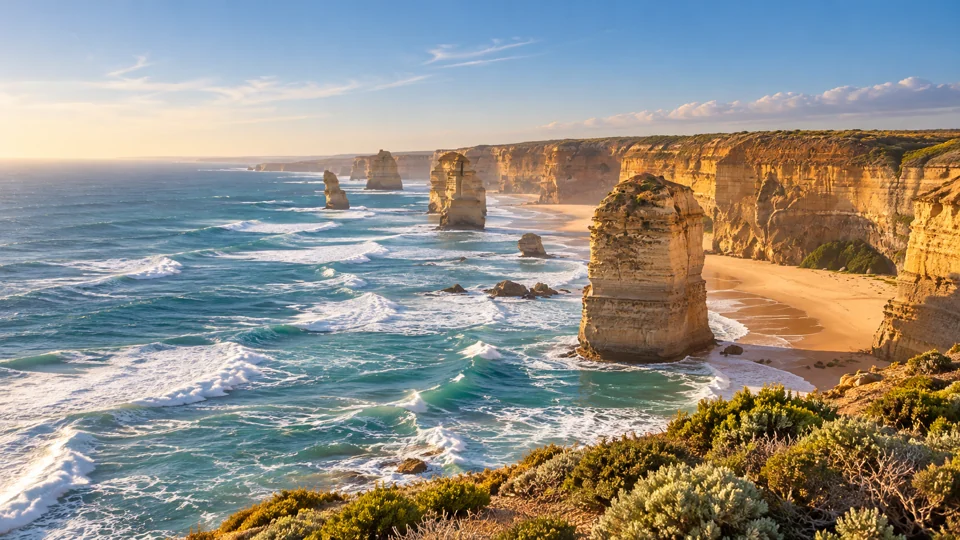
The Twelve Apostles are limestone stacks offshore from Victoria’s Great Ocean Road in Port Campbell National Park. Parks Victoria describes seven remaining stacks, down from nine.
Shells and other marine material settled on the sea floor, then compacted and cemented into limestone over millions of years. The Southern Ocean then cut into the coastal cliffs, enlarging cracks into caves and caves into arches. When an arch collapsed, it left a stack separated from the land. Collapses in 2005 and 2009 reduced the stacks from nine to seven, according to Parks Victoria.
Erosion continues to reshape the coast. Waves wear down the cliffs and stacks, while wind and rain erode them too, and erosion may eventually separate another section of headland into a new stack. The Great Ocean Road Coast and Parks Authority explains how the stacks formed and continue to change.
Gibson Steps and Loch Ard Gorge are nearby, but each needs separate time. Gibson Steps provides beach access when conditions allow. Loch Ard Gorge has its own walking tracks, lookouts and sheltered cove. Check conditions before descending Gibson Steps, because access closes in hazardous weather.
The precinct is being redeveloped with Eastern Maar Aboriginal Corporation, which represents the area’s Traditional Owners. The proposed Keerray Woorroong Visitor Centre uses the Eastern Maar name for the Twelve Apostles. Plans include exhibition, dining and retail spaces. A rooftop observation deck and a Welcome Garden recognising Eastern Maar culture are also planned. Plans also include changes to roads and parking. The Great Ocean Road Coast and Parks Authority project page states that the redeveloped precinct is due to open on 16 October 2026. Booked parking sessions will begin then, and a booking fee is scheduled from April 2027.
Twelve Apostles lookout and marine park
The main Twelve Apostles lookout sits in Port Campbell National Park. Formed clifftop paths and viewing platforms look across the offshore stacks. Visitors who need step-free access should check current precinct information before travelling, particularly while redevelopment work changes access, parking and mobility arrangements.
From 16 October 2026, visitors will need to book a parking session for the Twelve Apostles precinct. Visits remain free until April 2027, when a booking fee is scheduled to begin.
The Twelve Apostles Marine National Park protects waters offshore. It is separate from the lookout precinct, its car parks and visitor facilities. The published parking and fee arrangements apply to the precinct, not the marine park.
Stay on marked paths and behind barriers. Coastal cliffs erode and can collapse without warning. Beaches and nearshore waters also bring hazards from waves, tides and rapidly changing weather. Before travelling or heading to a beach, check official safety advice and current access updates rather than relying on older closure notices.
Getting there and visit time
Allow about four hours of driving each way from Melbourne. Allow extra time for traffic, roadworks and weather. Leave room in the schedule for fuel and stops. The Great Ocean Road follows the coast through beach towns and lookouts, making the drive part of the visit. An inland route via Colac is more direct. Check live road conditions and navigation before leaving, especially during school holidays and long weekends. The Visit Great Ocean Road Melbourne-to-Apostles itinerary includes route ideas and suggested stops. It also lists Port Campbell accommodation options.
A direct return trip fills a day and leaves little time for coastal stops, so stay overnight in Port Campbell or another town along the route if you plan to visit beaches, lookouts or walking tracks. An overnight stop also avoids a late return to Melbourne after a long day on winding coastal roads.
Allow about an hour at the main Twelve Apostles viewpoints. Add time for parking, queues, photographs and nearby stops such as Gibson Steps and Loch Ard Gorge.
Without a car, a guided coach tour from Melbourne is the simplest one-day option. Public transport requires regional train and bus connections. Check the PTV journey planner before committing to the trip, especially if you want to visit more than the main lookout.
Viewpoints and best light
Sunset brings changing light across the limestone stacks and the Southern Ocean and draws the largest crowds, especially during school holidays and peak travel periods. Arrive early enough to park and find space on the viewing platforms. Tour coaches add to visitor numbers.
Sunrise lights the coast from the opposite direction and tends to be quieter. It requires an early drive in the dark or an overnight stay nearby. Cloud cover and visitor numbers still shape the view and the atmosphere at the lookout.
Wind, rain and sea spray affect comfort and visibility at either time. Cloud cover affects both as well. Sunrise and sunset times change through the year. Check the Bureau of Meteorology forecast for Port Campbell before setting out.