
Stanley is a small fishing town of about 538 people on Tasmania’s north-west coast. The Nut, a 143 m volcanic plug that rises directly behind the main street, is the main reason to visit. Two to three nights is enough to ride or climb The Nut, walk both beaches, watch little penguins come ashore at dusk and see the historic buildings.
Three timing points shape the trip. The Nut chairlift closes over winter, from after 9 June until the first Thursday in September. Highfield Historic Site opens on weekdays only, from June to August. Penguin viewing is best from September to March. Most visitors drive the roughly 1.5 hours from Devonport.
The Nut and its chairlift
The Nut is a remnant of an ancient volcano’s solidified core, according to the Stanley tourism operator. It stands at 143 m, and the flat plateau on top has a walking circuit with views over Bass Strait, the town and both beaches. The Nut State Reserve is managed by the Parks & Wildlife Service Tasmania.
The chairlift is the easy way up. Tasmania.com describes a ride of about 5 minutes that rises 95 m over 250 m. The Parks & Wildlife Service describes the return chairlift trip as about 15 minutes and notes it gives views and may make the attraction accessible for some visitors. The lift shuts down in high winds, so a calm morning is the best time to ride in a place known for gusts.

Fares
The chairlift’s price page lists these fares:
| Ticket | Adult | Child | Family |
|---|---|---|---|
| Return | $23 | $15 | $55 |
| One way | $15 | $10 | $40 |
A one-way ticket suits anyone who wants to ride up and walk down, or the reverse. Walking down is steep, and one reviewer described the scramble down as dizzying, so riding at least one leg eases the descent.
Hours and winter closure
The lift operates from the first Thursday in September until 9 June. Standard hours are 9.30am to 4.15pm. Extended hours of 9.30am to 5.15pm apply from 1 December until the end of daylight saving. It runs seven days a week, weather permitting, except Christmas Day, Boxing Day and Good Friday.
From after 9 June until the first Thursday in September the lift is closed for maintenance. Anyone visiting in June, July or August should plan to reach the top on foot or skip the summit. Fares and hours change, so check the operator’s price page before you go and its Facebook page on the day for operating changes. The operator’s phone number is +61 3 6458 1482, and the lift is on Browns Road, Stanley.
Wildlife on the reserve
The reserve is home to pademelons, Tasmanian devils, eastern barred bandicoots, brushtail possums and ringtail possums, all recorded on the summit and slopes. Because wildlife is common, Bushwalk Tasmania advises against driving in the reserve at night.
Walking The Nut Summit Circuit
The Nut Summit Circuit is a 2.7 km loop around the plateau. The Parks & Wildlife Service rates it as more moderate and allows about an hour. Discover Tasmania grades it 3 and lists it among Tasmania’s 60 Great Short Walks. The Stanley operator quotes 45 minutes for the walk around the top, so a fit walker who stops only for photos finishes faster, while anyone lingering at lookouts needs the full hour.
The climb to the plateau is the hard part. The Parks & Wildlife Service calls the track to the plateau short and steep, and describes the Zig Zag Track as very steep and not suitable for most mobility-impaired people. One hiking site records a total ascent of 236 m. Reviewers describe a concrete, handrailed climb with seats about every 150 m, which breaks the climb into short stages.
At the top, expect wind and cold even on a warm day in town. Carry water, wear sturdy footwear and bring a windproof layer.
Access with limited mobility
The Summit Circuit does not cater for people with access needs, according to Discover Tasmania, and Bushwalk Tasmania lists the chairlift as the accessible route to the top. At ground level, the Parks & Wildlife Service lists a 440 m pathway with seating between Godfreys Beach and The Nut carpark. It also lists a 51 m all-access track from the carpark to the sandstone obelisk at the base of the Zig Zag Track.
Other walks in town
The Stanley Heritage Walk is a self-guided loop through the historic centre. It starts at the Marine Park on Wharf Road, runs to Pearse Street, detours to Godfreys Beach and returns along Alexander Terrace. The map can be downloaded to a phone, and QR codes at sites bring the architecture to life.
For a longer, flatter outing, the Tatlows Beach Loop Walk takes about 90 minutes along the Tatlows Beach Conservation Reserve and returns past the Stanley Golf Course. Oystercatchers and lapwings are among the shorebirds along the route. It pairs well with an afternoon when wind keeps you off The Nut.

Godfreys and Tatlows beaches
Stanley has a beach on each side of The Nut. Godfreys Beach lies on the north side and is a popular surf beach that is also good for fishing. Tatlows Beach lies on the south side. It is long, shallow and calm, which suits families with young children.
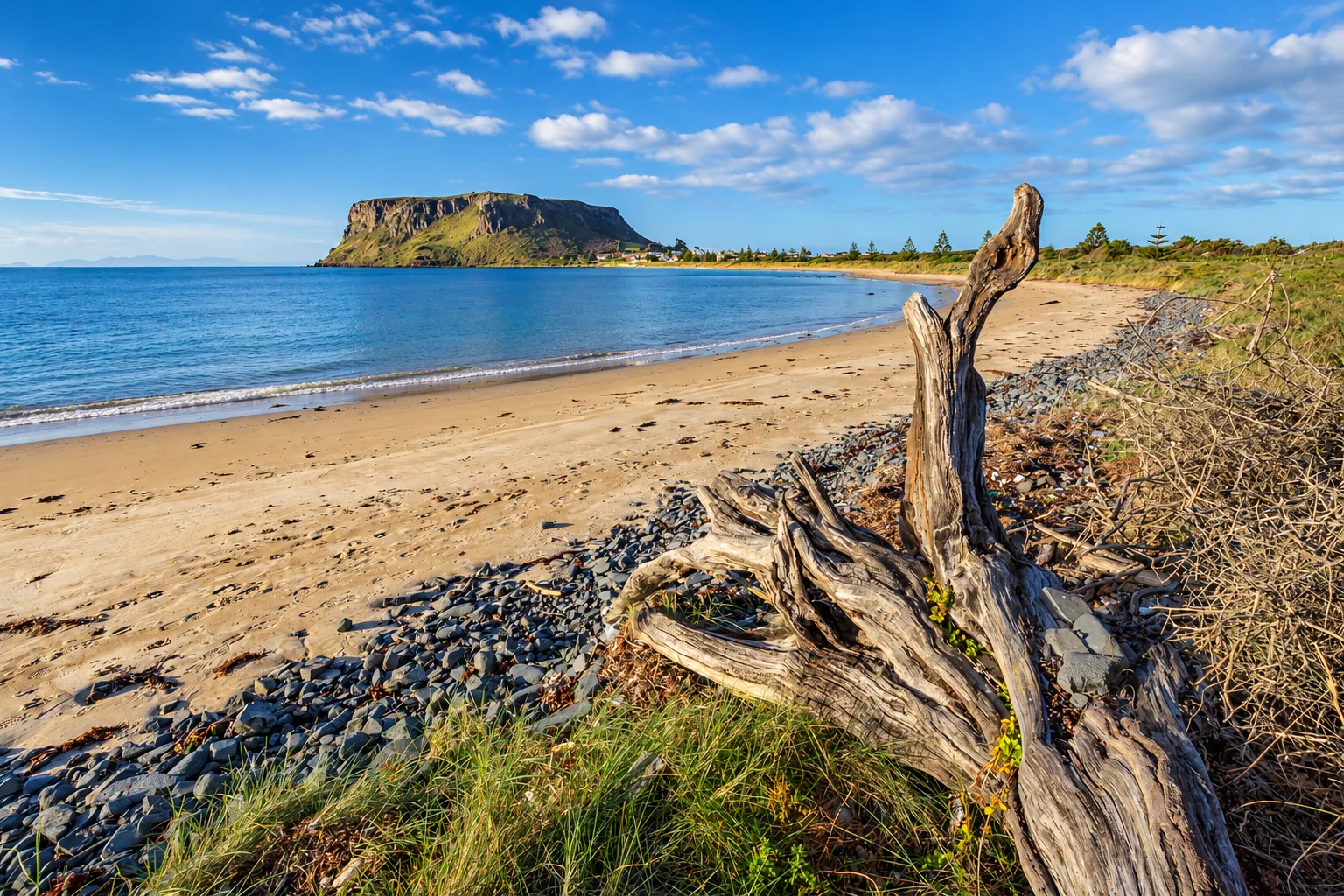
On either beach you can walk the sand, explore rock pools and collect shells. The Stanley cemetery sits below The Nut near Godfreys Beach, so the beach walk can include a short look at the old headstones. Bass Strait water stays cool through summer, so paddling and walking are better choices than long swims.
Watching little penguins
Little penguins come ashore around Stanley after dark, and a purpose-built viewing platform at Godfreys Beach lets you watch them. The operator gives September to March as the best period, with fewer birds in winter.
The platform is lit with red light and carries signs explaining penguin behaviour and viewing guidelines. It is raised, and it is wheelchair and pram accessible, and free to enter. Arrive around dusk and stay on the platform. Keep quiet and leave the flash off. Red light is used because white light disturbs the birds, so avoid torches and phone lights as well.
Highfield Historic Site
Highfield, on Green Hills Road, was the original headquarters of the Van Diemen’s Land Company. The site includes the homestead, church, classroom, stables, barn and gardens, and it is state-government owned and registered as a historic site. Visitors can explore on their own or join staff-guided tours in period costume, and entry is listed as free.
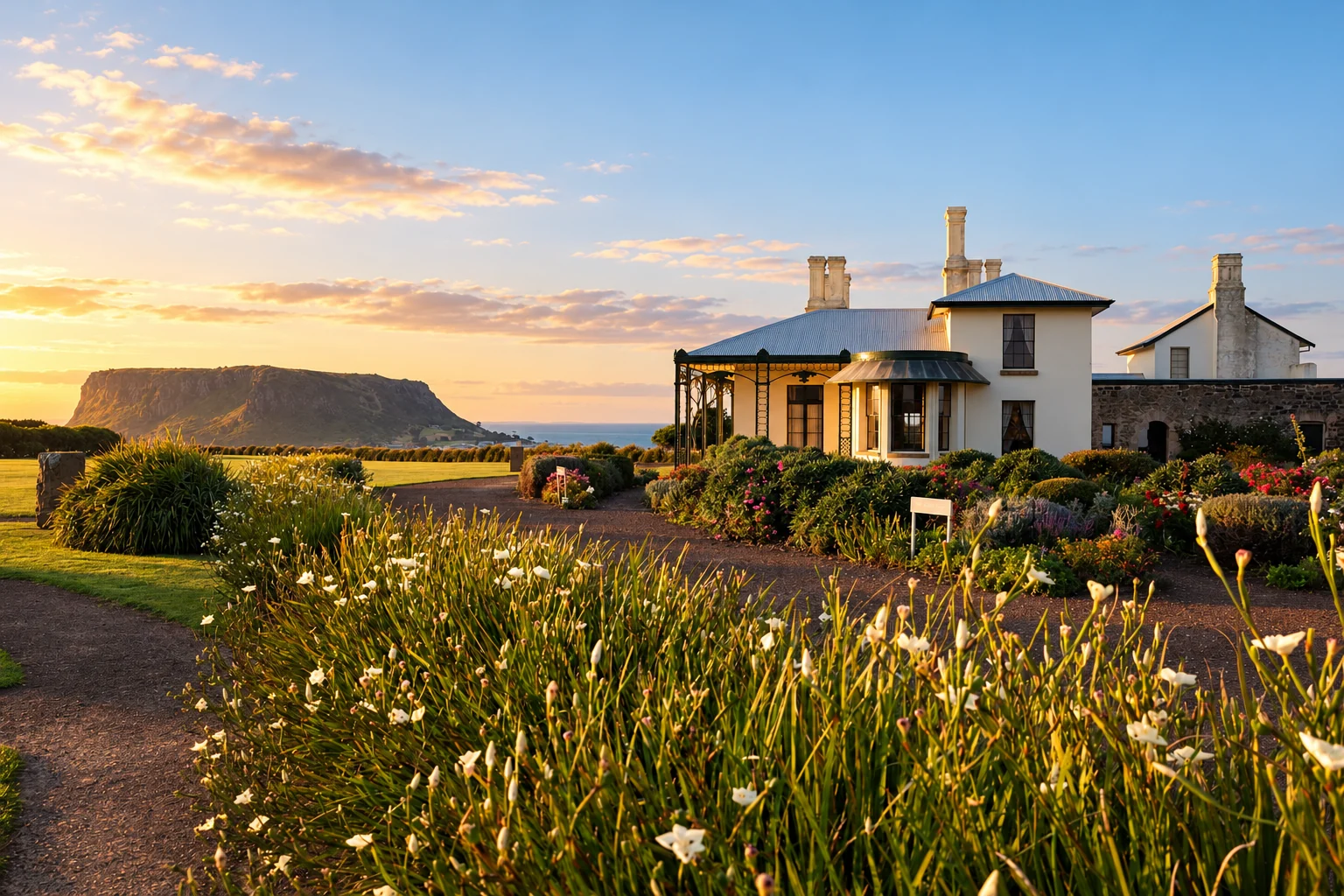
Highfield is open daily from 9.30am to 4.30pm from September to May and on weekdays only from June to August. The gates are closed on winter weekends. The site’s phone number is 6458 1100.
Getting to Stanley
Driving
A car is the practical way to reach Stanley and the only way to see anything outside the town centre. The drive times below are approximate, and winding Tasmanian roads can stretch them.
| From | Distance | Drive time |
|---|---|---|
| Devonport | about 125 to 127 km | about 1.5 hours |
| Launceston | about 225 to 231 km | about 2.5 to 3 hours |
| Hobart | about 400 km | about 4.5 to 5 hours |
From Devonport, take the Bass Highway west, then turn onto the B21 toward The Nut and Stanley. Hobart drivers also follow the Bass Highway, and the drive is scenic and rewards a slow pace. Launceston to Stanley takes about 3 hours without stops, but the Tasmania.com itinerary suggests breaking the trip at Woolmers Estate, Brickendon Estate, Longford, Westbury, Deloraine, Penguin, Burnie and Table Cape. Wildlife on the road slows travel, particularly at night.
By ferry
Devonport is the Tasmanian port for the Spirit of Tasmania across Bass Strait. Arriving without a vehicle, you need to hire a car and allow about 1.5 hours to drive to Stanley.
By bus
Buses reach Stanley through Burnie. For Devonport to Stanley, the route runs via the Devonport Interchange to the Burnie Interchange, then on to Stanley Primary School. The estimate is about 3 hours 12 minutes including transfers, at $15 to $24, with Kinetic listed as the operator. The Devonport to Burnie leg takes about 53 minutes, with a bus roughly every 2 hours at $6 to $10.
From Launceston, Kinetic buses leave from Charles Street, opposite Launceston General Hospital. The trip takes about 5 hours 42 minutes at $18 to $29. From Hobart there is no direct bus. The average journey is about 9 hours 37 minutes from $33, which makes the bus the cheapest option and driving the fastest. Confirm times with the operator before you travel, because services run infrequently.
By air
There are regular flights into Burnie/Wynyard, Devonport, Launceston and Hobart airports, and Qantas is among the carriers. Burnie/Wynyard is the closest, and every airport requires a hire car or bus connection onward.
Getting around Stanley
The historic centre is compact. The Nut, the penguin platform, Highfield, the wharf and most restaurants are within walking distance of each other, so you can park once and leave the car there.
Rocky Cape National Park, the Tarkine, Arthur River and Woolnorth Wind Farm are not walkable from town and need a car. Anyone planning a day out to those places should arrive with a vehicle or arrange one in Burnie or Devonport.

Where to stay
Stanley’s accommodation is mostly cottages, village apartments, houses and a few historic inns, so book ahead for summer.
The Stanley Hotel group lists four properties: Bond Store, Stanley Hotel, Stanley Village Accommodation and Stanley Holiday Houses. Discover Tasmania’s visitor centre listings include "@ the beach", which has three two-bedroom self-catering cottages and a lofted studio apartment in the village with views of The Nut, as well as Angel’s Aisle Cottages and Café and the Stanley Hotel, whose rooms have views. Ship Inn Stanley is a yellow-painted inn with nine suites, said to date from the 1800s.
Booking-site listings show stays from AU$88, and the June to August off-peak period brings lower accommodation prices. Self-catering cottages work well for families and for longer stays, and hotel or inn rooms suit a single night.
Two to three nights is the recommendation from a local accommodation operator, and two nights is the minimum suggested by another. A day trip is too short, and at least one whole day in town is a sensible floor.
When to visit
Summer, from December to February, is the most popular period, and autumn from March to May is quieter. Average temperatures range from about 13°C in August to about 21°C in February. Annual rainfall is about 898 mm, with July the wettest month at about 106 mm and February the driest at about 49 mm. The climate data rates December to March as the best months.
The calendar of attractions points to September to May for a full visit. In that window the chairlift runs, Highfield opens daily and penguins are most reliable (best from September to March). Extended chairlift hours from 1 December to the end of daylight saving give the longest days at the top. Winter visitors get lower prices and quiet streets but lose the lift and Highfield’s weekend opening.
A Stanley and Tarkine Forage Festival has been held in November at Circular Head, so check the current year’s dates if a festival suits your plans.
Tips for first visits
Start with the chairlift and the weather. Check the operator’s Facebook page on the day, and go in the morning when the wind is usually lower. If the lift is closed for wind or winter, the Tatlows Beach Loop and the Heritage Walk fill the day.
For the summit circuit, allow about an hour, carry water and wear sturdy shoes. Anyone with limited mobility should use the chairlift and the 440 m pathway from Godfreys Beach, since the Zig Zag Track is not suitable for most people with mobility impairments.
Save the penguin platform for dusk and book your accommodation so you do not have a long drive afterwards. Time Highfield around its hours, remembering the weekday-only winter schedule.
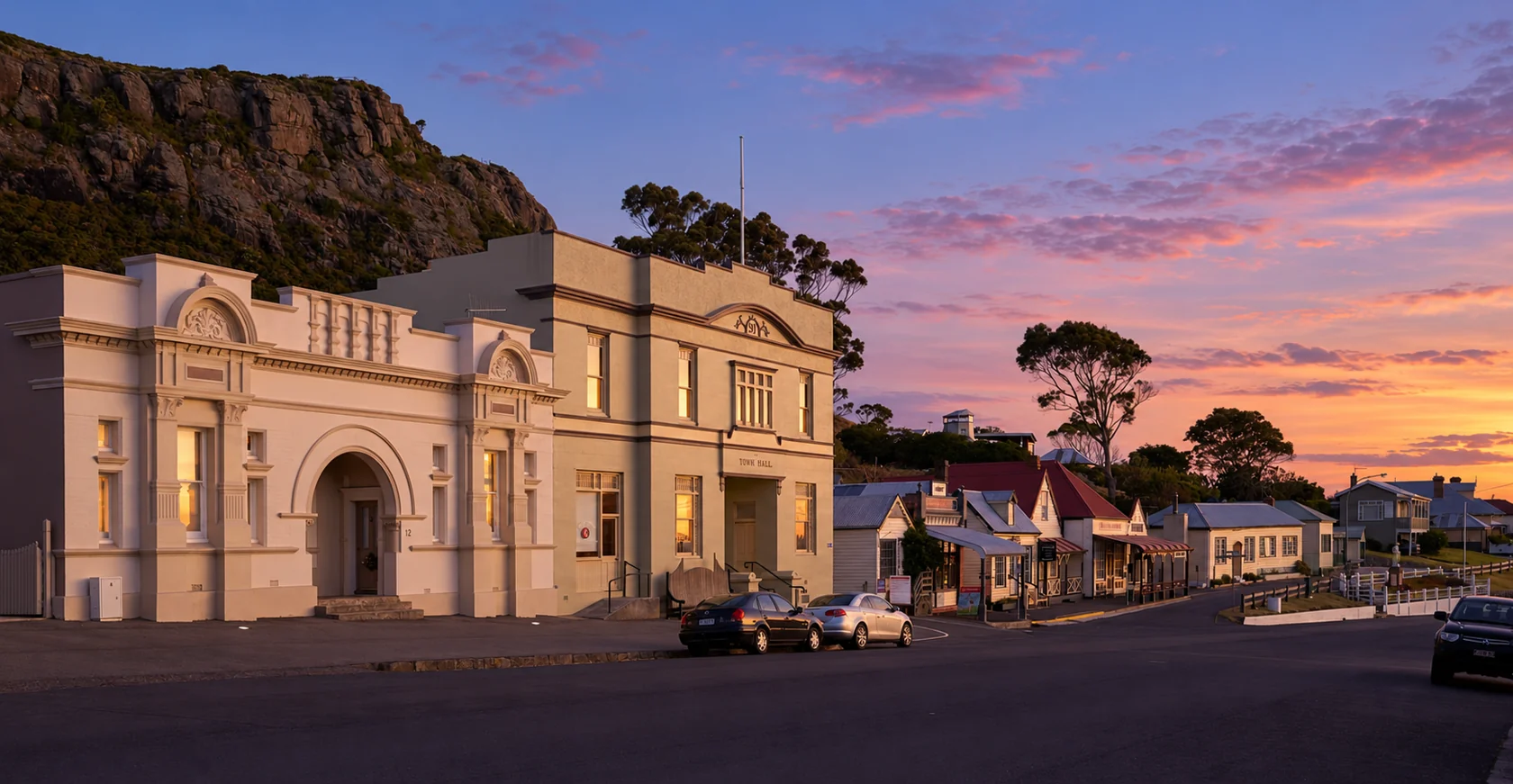
The Stanley Visitor Centre is at 10 Church Street in the historic Stanley Town Hall. It is an unmanned pop-up centre where you can pick up visitor guides, local maps and brochures. Circular Head Council lists hours of 8am to 6pm daily, and notes the centre does not cater for people with access needs. It has a car park, coach parking and RV parking. The nearest staffed centre is the Smithton Visitor Centre at 12 Nelson Street, Smithton, about 15 minutes away.
Finally, allow extra time on the road. Winding roads and wildlife slow the drive, particularly after dark, and a car is needed for anything beyond the town centre.