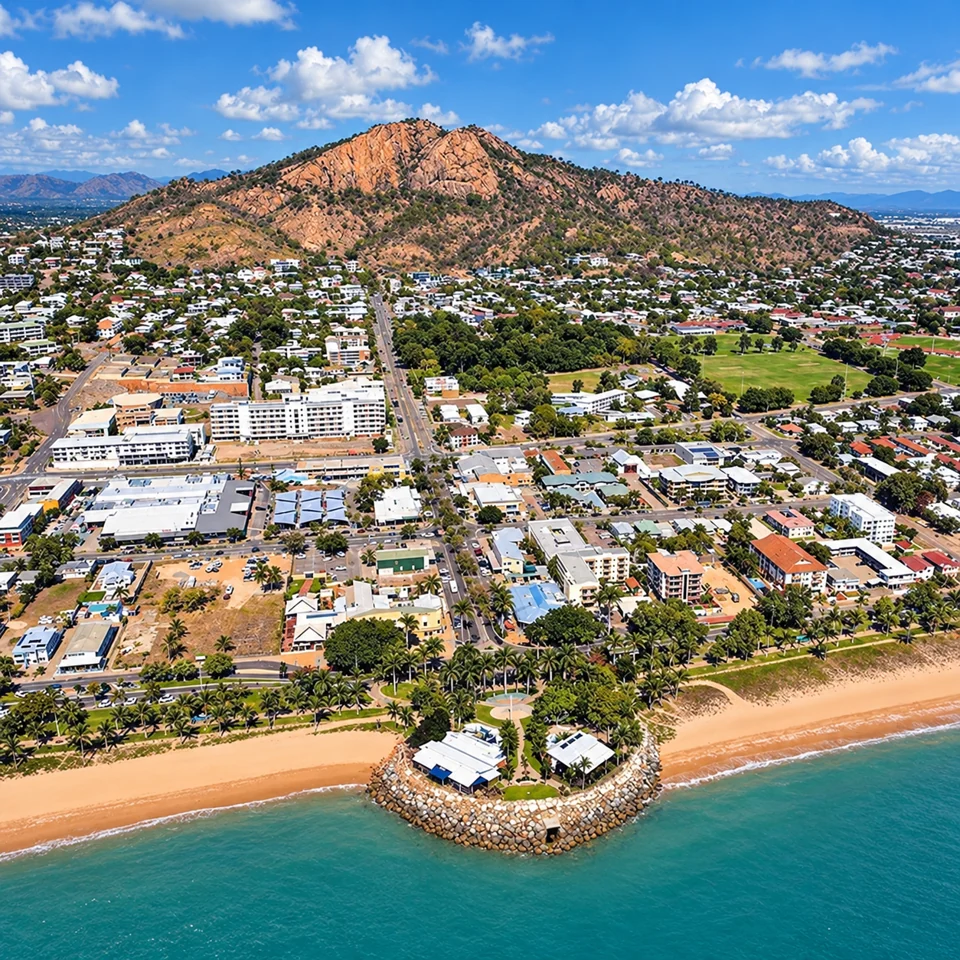
Townsville is a city on the north Queensland coast, about 347 km south of Cairns, and it is the usual base for visiting Magnetic Island (Yunbenun), a national park island a short ferry ride offshore. The city’s social centre is the Strand, a waterfront promenade with a swimming area, rockpool, playgrounds, cafes and markets. Behind it, Castle Hill gives views over the city and coast.
A first trip works best when it fits three decisions together. The first is season: the wet months of December to March bring most of the year’s rain, and May to October is drier and cooler. The second is where to base yourself, since the airport, ferry terminal and Strand are all on different sides of the city centre. The third is how to spend your days, which for most visitors means a mix of Strand time, a climb up Castle Hill and a day on Magnetic Island.
When to visit Townsville
The Bureau of Meteorology (BOM) publishes monthly climate averages for Townsville. Townsville gets 1,072 mm of rain a year, and most of it falls from December to March. Climate-zone classifies the climate as tropical savanna, which means warm weather all year with a clear dry season.

| Month | Avg max (°C) | Avg min (°C) | Avg rainfall (mm) |
|---|---|---|---|
| Jan | 31.7 | 24.7 | 250 |
| Feb | 31.5 | 24.6 | 292 |
| Mar | 31.3 | 23.3 | 110 |
| Apr | 30.0 | 21.2 | 75 |
| May | 28.0 | 18.2 | 33 |
| Jun | 25.9 | 15.1 | 19 |
| Jul | 25.3 | 14.0 | 14 |
| Aug | 26.2 | 14.9 | 21 |
| Sep | 28.1 | 17.8 | 12 |
| Oct | 29.7 | 21.1 | 26 |
| Nov | 30.8 | 23.1 | 79 |
| Dec | 31.8 | 24.5 | 141 |
February is the wettest month at 292 mm, followed by January at 250 mm. July and September are the driest, at 14 mm and 12 mm. Overnight lows stay above 23 °C from December to March, so the wet months are hot and humid as well as rainy.

For a first visit focused on walking the Strand, climbing Castle Hill, snorkelling and taking the ferry, May to October is the easier choice. Daytime maximums run from 25.3 °C in July to 29.7 °C in October, and monthly rainfall is low in every month from May to October, with May the highest at 33 mm. September combines the least rain (12 mm) with a pleasant 28.1 °C maximum, and October is only slightly warmer and still dry.
April and November sit between the two seasons. April averages 75 mm of rain with a 30.0 °C maximum, and November averages 79 mm at 30.8 °C. Both are warmer than the winter months and get much less rain than the peak wet months. They suit travellers who want heat and have flexible plans.

Visitors who book December to March should plan activities with a wet-weather alternative and keep ferry and day-trip bookings flexible where the operator allows. The mornings suit outdoor activity best in every season. At Towers Hill, the early morning is the best time for wildlife, and it also avoids the afternoon heat in the hotter months.
Getting to Townsville
Most first-time visitors fly. Rome2rio lists hourly flights from Brisbane (BNE) to Townsville (TSV) with Jetstar, Virgin Australia and Qantas, and Townsville Airport has daily flights from all major Australian cities. Flying is the practical choice from Brisbane. The road trip covers 1,352 km, about a couple of days’ drive.
Rail suits travellers who want a long scenic journey. Queensland Rail runs services from Brisbane and Cairns to Townsville, and the Spirit of Queensland is the train from Brisbane. Rome2rio gives the frequency of the Brisbane (Roma Street) to Townsville service as four times a week, so check the days before you commit to a date. The same aggregator lists a Proserpine to Townsville rail trip, also four times a week. That leg is useful if you are combining Townsville with the Whitsundays region.
Coaches connect Townsville to Cairns and Brisbane. Greyhound Australia runs Cairns to Townsville, and Rome2rio lists four services a day taking 5 hours 30 minutes, with fares from $65 to $140. FlixBus Australia runs services from the Brisbane Coach Terminal to Townsville, and Rome2rio puts the Brisbane to Townsville bus journey at about 23 hours. A coach from Brisbane is a budget choice for people with time to spare, since the flight is a fraction of the duration.
Driving suits visitors combining Townsville with Cairns. The road distance is 347 km and takes about 4 hours 30 minutes, which is a comfortable single day with stops. If you plan to hire a car for the whole trip, collect it at the airport. A car also helps with the mainland day trips described below, where public transport options are limited.
Timetables, fares and frequencies change, so check with Queensland Rail, Greyhound, FlixBus or the airlines before you book.
Getting around and choosing where to stay
Townsville Airport is in Garbutt, about 5 km northwest of the city centre. A taxi to the centre costs about $24. Townsville Shuttle Services runs between the airport, hotels and the Magnetic Island ferry terminal. McMillans Bus Charters offers airport transfers in vehicles seating 5 to 33 people, which suits groups.
The cheapest option is TransLink route 205. It runs hourly from the Meenan Street hail ‘n’ ride stop to Percy Street at Cutheringa Park, with a 50 cent fare, and reaching the stop involves a walk of about 10 minutes from the terminal. That page also says Townsville has no express airport shuttle bus to the city, unlike other major Australian airports. With luggage, a taxi or pre-booked shuttle is simpler.
Local buses are run by Sunbus under the TransLink banner, with routes around Townsville and Magnetic Island. TransLink provides a journey planner and timetables, and printed timetables are available at Visitor Information Centres, several shopping centres, Townsville CityLibraries, the SeaLink ferry terminal, CQUniversity, James Cook University and on board Sunbus services.
Townsville’s bus ticketing uses paper tickets. TransLink’s 50 cent fare table lists a flat 50 cent fare across all zones, with adult singles at $0.50, daily tickets at $1.00 and weekly tickets at $5.00 on paper tickets. The go card, the electronic card used in south-east Queensland, is not available in Townsville or on Magnetic Island. Those fares are several years old, so check current prices with TransLink or the driver. Most first-time visitors stay inside the City zone.
Where you stay shapes how much transport you need. Staying close to the Strand puts the swimming area, rockpool, markets, cafes and sunset walks within easy reach. A walk to the northern end reaches Jezzine Barracks. A base in the city centre brings you closer to the laneway bars and street art, and the SeaLink ferry terminal sits within a walk of the centre; the terminal’s secure car park at Metro Quays is described as a 20-minute walk through the city centre. A base near the airport saves little, since the airport is only 5 km from the centre. Stay overnight on Magnetic Island if you want beaches and bushwalks at dawn and dusk. The last ferry back to the mainland sets your evening limit.
Walking the Strand
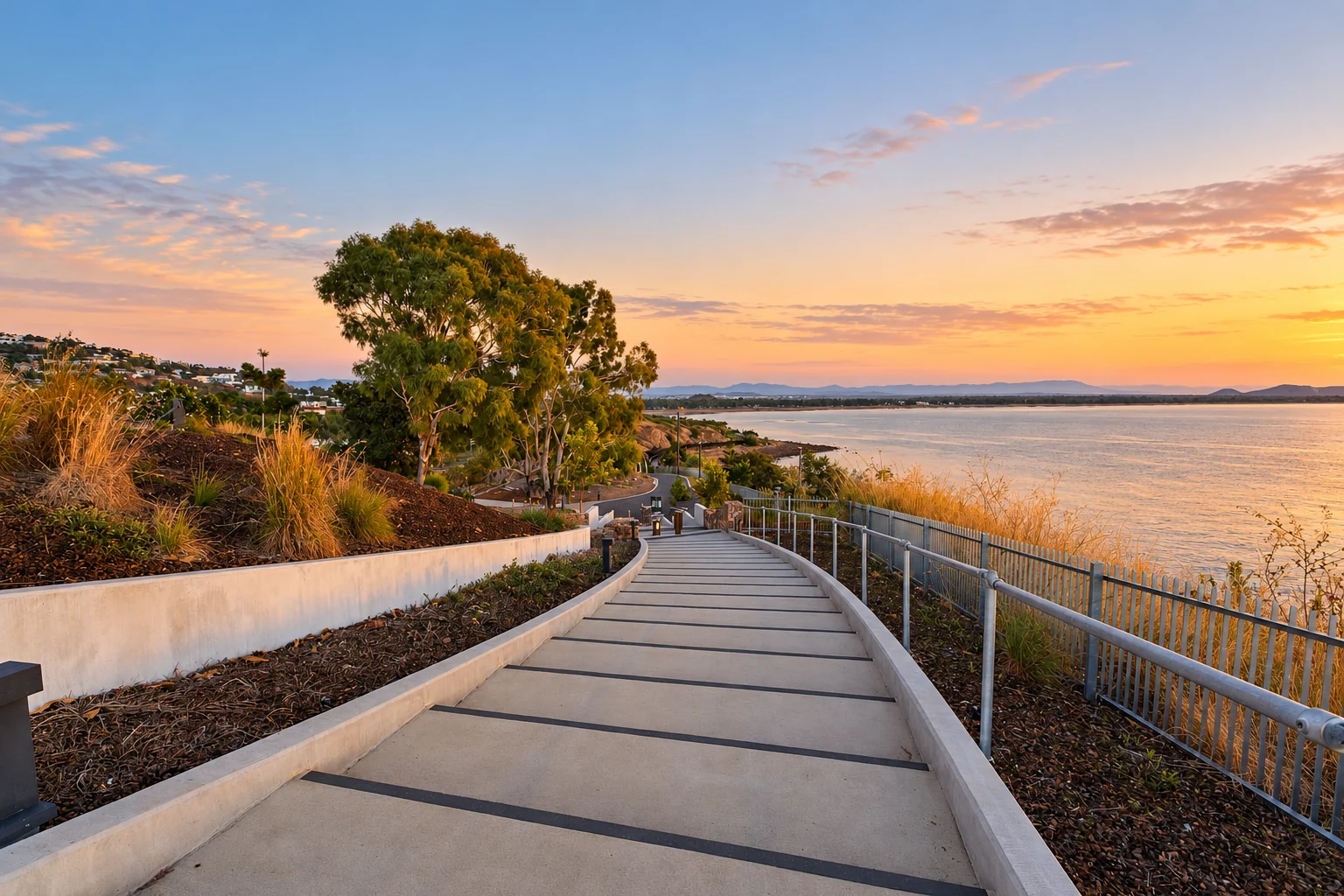
The Strand is a waterfront parkway. Estimates of its length range from 2.2 km to 2.5 km. A relaxed walk end to end takes about an hour. With stops for swimming, coffee or the playground, it can take half a day. Early morning and late afternoon are the cooler walking times in the warmer months.
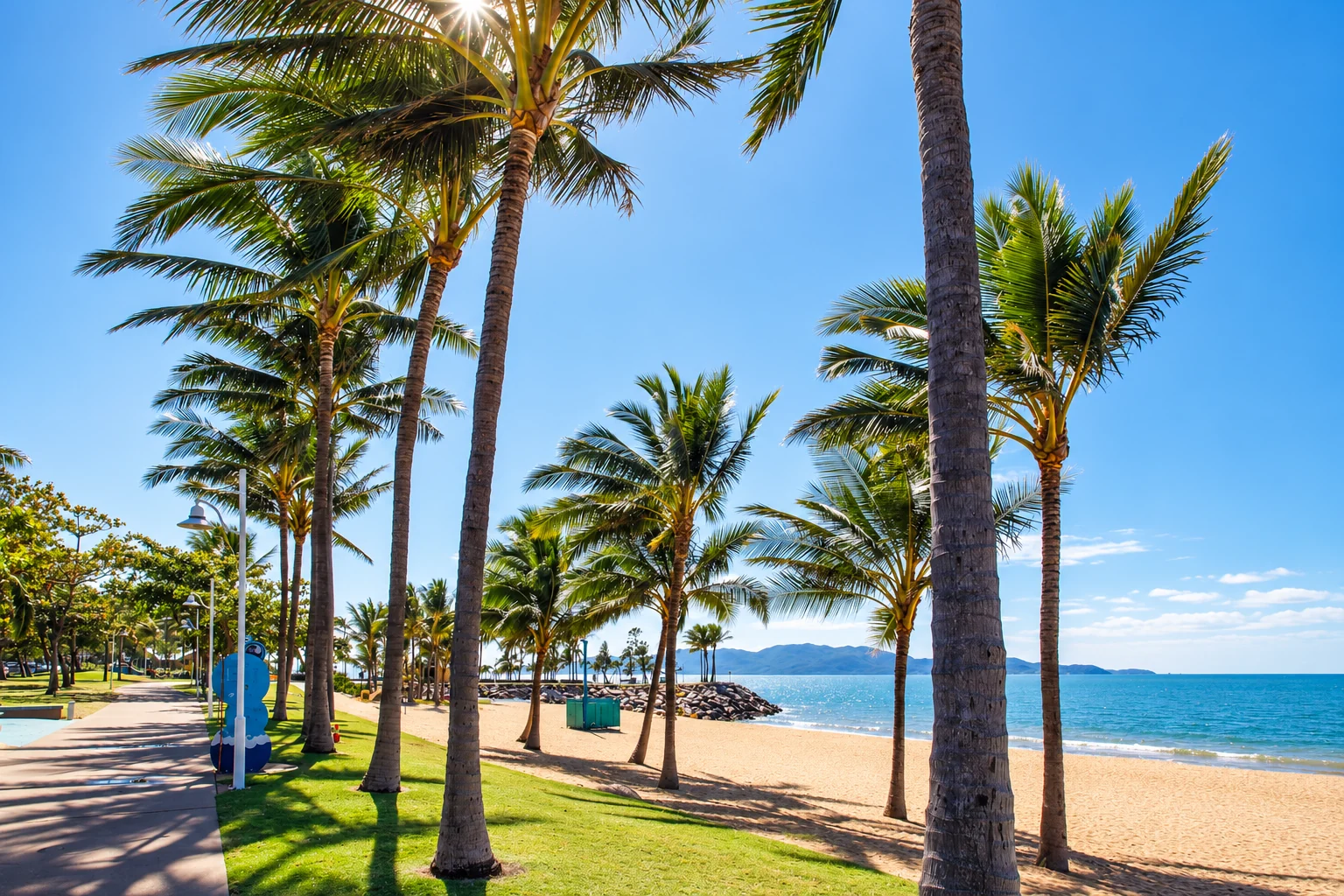
Swimming is the main draw. Queensland.com says the Strand has a protected swimming area and an oceanfront rockpool. The Rock Pool is a public swimming lagoon described as very popular. Families can use the free water adventure playground, a favourite with families. The Strand Waterpark is another option for children.
Swimming in tropical north Queensland needs a safety check. Before you swim, check beach suitability and its marine stinger safety guide. Stingers are venomous marine jellyfish. The protected swimming area is the best place for first-time visitors to start, but read the local advice and signs on the day.
Food and drink line the route. The walk has cafes, restaurants and barbecue areas, and Longboard’s is a waterfront bar on the Strand, which works well for a sunset drink. The Strand Night Markets run in Strand Park, with food stands, homewares, fashion and crafts. Check market dates before you plan an evening around them.
Two cultural stops sit along the foreshore. At the northern end, Jezzine Barracks is home to the Army Museum of North Queensland, on a site with a military presence of more than 120 years. A coastal public-art boardwalk links Rowes Bay to the Strand and covers the Aboriginal and military heritage of Kissing Point Headland, so it adds context to the headland walk.
Look out from the Strand Jetty to see Ocean Siren, a sculpture by Jason deCaires Taylor and part of the Museum of Underwater Art. It changes colour with Great Barrier Reef water-temperature data. The museum’s second installation, the Coral Greenhouse, sits at John Brewer Reef about 80 km offshore, and Australian Traveller reports a trip of roughly two hours by boat. That makes it a full-day boat excursion rather than a Strand add-on.
Castle Hill, street art and other sights in town
Castle Hill is the best first view of Townsville. A trek to the top gives 360-degree views of the city and coast, and Tourism and Events Queensland calls the sunset from the top memorable. Take water in the warmer months and start the climb early enough to be back down before dark.
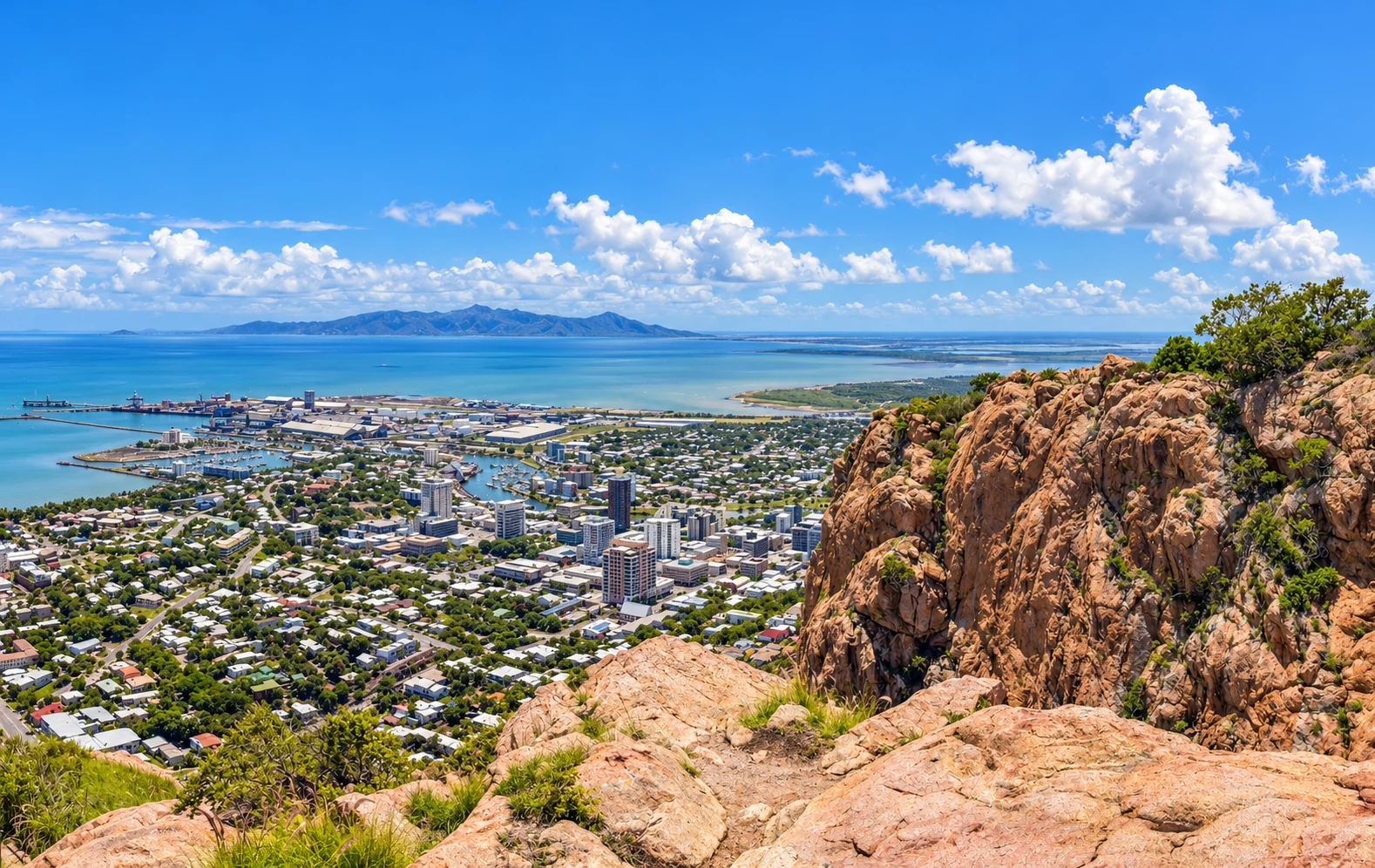
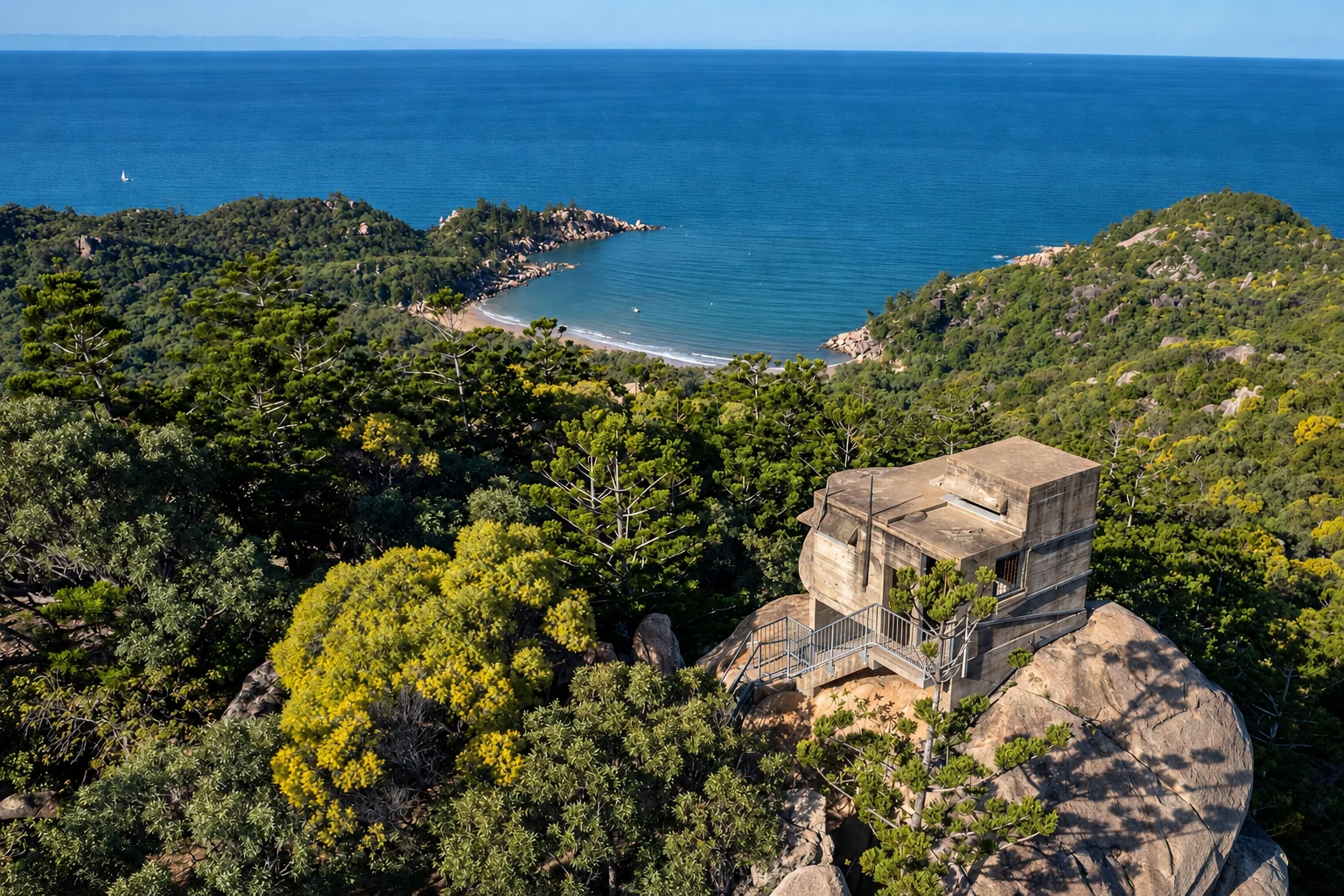
Towers Hill Lookout and Amphitheatre has about 30 WWII bunkers, with one restored about halfway up. The summit track leads to the ruins of the Pyrites Works. Early morning suits wildlife watching, when Wedge-tailed Eagles can be seen hunting. The combination of wartime history and birdlife makes it a good morning walk for visitors who want something beyond the beach.
In the city streets, about 25 council-commissioned artworks cover walls in the laneways and streets. A walk through the centre picks up most of the street art on the way between the Strand and the ferry terminal. City Lane has laneway bars and restaurants, which makes it the natural dinner stop after a day of walking.
On the water, sunset sails and jet-ski tours are available for visitors who want to see the coastline from offshore. A sunset sail suits a first evening, and a jet-ski tour suits a morning when the weather is clear.
Billabong Sanctuary, an interactive Australian wildlife experience, sits about 20 minutes outside Townsville. Townsville Guide also directs families to it. It suits a half-day with children, and the drive means a hire car or tour transfer is the simplest way to reach it.
A three-day plan fits these pieces together without rushing. Spend the first day on the Strand, the Rock Pool and an evening at City Lane. Use the second day for Magnetic Island, and give the third to Castle Hill at sunrise or sunset, the street art and a mainland excursion if you have a car. Reorder the days around the weather, and put the walking-heavy plans in the morning.
Magnetic Island and other day trips
Magnetic Island is the standard day trip. Queensland.com lists 23 palm-fringed beaches, national park trails and koalas, and Tourism and Events Queensland adds activities such as topless car hire, snorkelling, jet-skiing, wakeboarding, kayaking and horse riding. Many visitors hire a small open-top car or take the island bus to get between beaches.
The SeaLink passenger ferry takes about 20 minutes to cross, with up to 17 return services a day. Ferries leave from the Breakwater Ferry Terminal in Townsville City and arrive at Nelly Bay Ferry Terminal. The first sailing leaves Townsville at 5:30am Monday to Saturday, and departures run roughly hourly from 7:00am to 6:00pm daily. The last sailing from Townsville is at 10:30pm Wednesday to Saturday and 9:20pm other days, so check the island return time before you plan a dinner there. SeaLink also notes that some services may not run on public holidays and that timetables can change without notice.
The timetable page does not list fares, so these figures come from resellers. Jonnymelon gives around $42 for a SeaLink return ticket. A FIT Travel package lists an adult return at $44, a child return (5 to 14) at $22 and a family return at $95, but that package includes one drink on each ferry and a day of car hire, so it is not a standalone fare.
Arrive at least 15 to 20 minutes before departure and buy tickets at the sales counter. Parking at the Townsville terminal costs from $10 per day, and the car park is lit but unfenced, with vehicles left at the owner’s risk. Luggage lockers measure 80 cm by 45 cm by 55 cm and cost from $10 per 24 hours, though they are accessible only during terminal opening hours. SeaLink’s FAQ says a terminal shuttle runs seven days a week and should be booked ahead with Townsville City Shuttle. Vehicles cross on the car barge, which leaves from Ross Street, South Townsville, and takes 40 to 45 minutes. See this local island guide for details.
On the mainland, Paluma Range National Park is a short drive from town, with rainforest, waterfalls and natural rock pools. Pallarenda Beach offers calm water and picnic views, and Wallaman Falls is described by Queensland.com as the highest single-drop waterfall in Australia. All three suit a hire car or guided tour more than public transport.
Key Takeaways
- Visit between May and October if you can: Monthly rainfall is lowest from May to October, and September is driest at 12 mm with a 28.1 °C average maximum.
- Plan the Strand around swimming and sunset: The 2.2 km waterfront has a protected swimming area, a rockpool, a free water playground and night markets, but read the local marine stinger advice before entering the water.
- Book Magnetic Island around the last ferry: The crossing takes about 20 minutes, and the last sailing from Townsville is 10:30pm Wednesday to Saturday and 9:20pm other days.
- Choose your base by what you will use most: The Strand suits swimmers and families, the city centre suits ferry trips and laneway dining, and a hire car makes Paluma, Wallaman Falls and Billabong Sanctuary easier to reach.
- Confirm fares and timetables before you travel: TransLink’s published bus fares date from January 2020, and rail, coach and ferry schedules change.