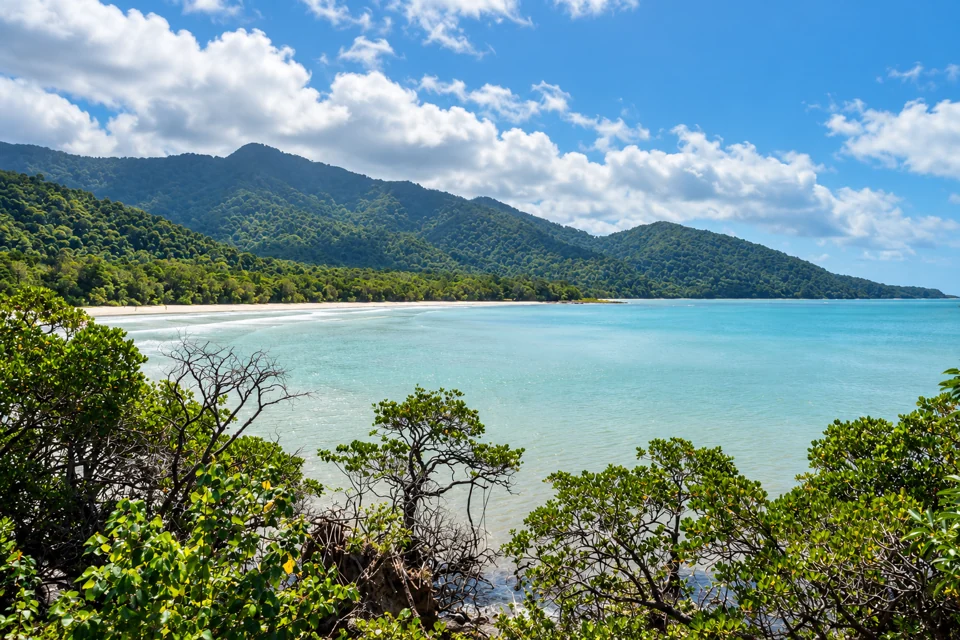
Port Douglas is a coastal town in Tropical North Queensland, about 65 to 70 km north of Cairns Airport. Most visitors fly into Cairns and transfer by shuttle, private car or hire car. Day trips to the Great Barrier Reef, swimming at Four Mile Beach and drives north into the Daintree rainforest are the main draws, and timing matters most. The dry months from about May to September suit most plans. The wet season brings heavy rain, marine stingers and road closures north of the Daintree River.

The reef trip adds a government reef charge. Four Mile Beach has a stinger enclosure. The road to Cape Tribulation includes a cable ferry crossing.
Getting from Cairns Airport to Port Douglas
The drive is 65 to 70 km. A direct private car takes about 60 to 75 minutes. Shared and private options differ mainly in cost, travel time and flexibility.
Shared shuttle
Tropic Wings runs a daily shared coach from the airport through Cairns City and Palm Cove to Port Douglas. The trip takes about 1 hour 45 minutes via the Captain Cook Highway because of the Palm Cove stop and hotel drop-offs. The driver meets passengers in the arrivals hall, and each passenger may bring one standard suitcase and one carry-on at no extra charge. The operator says it has run since 1981.
One-way fares per person, as last updated in June 2026, are below. Children aged 2 to 14 pay half, and infants under 2 travel free on a lap.
| Period | Adult | Child (2 to 14) |
|---|---|---|
| Mon to Fri, 7am to 6pm | $66 | $33 |
| Mon to Fri, 6pm to 7am | $70 | $35 |
| Sat and Sun, all times | $73 | $36.50 |
| Public holiday, all times | $76 | $38 |
The indicative airport departures run from 07:00 (arriving 08:45) to 20:00 (arriving 21:45), with exact times confirmed at booking. Morning departures are 07:00, 09:10, 10:00, 10:30 and 11:15. Midday and afternoon departures are 12:15, 12:45, 13:45, 14:30, 15:45 and 16:45. The later ones are 17:45 and 19:00. The operator advises arriving at least 75 minutes before a domestic flight and 2.5 hours before an international one. If a flight is delayed, the operator monitors arrivals and moves passengers to the next available departure at no extra cost.
The same operator sells shorter legs. From the airport, shorter legs to Palm Cove and Cairns City are also available, with higher evening, weekend and public holiday rates. Hotel-to-hotel shuttles that skip the airport start from $45 for Cairns to Palm Cove, $50 for Palm Cove to Port Douglas and $70 for Cairns to Port Douglas.
Private transfer, taxi and rideshare
A private sedan transfer is quoted from $179 fixed, with flight tracking, and another operator quotes from around $170 for up to four passengers. Child seats cost $30 to $50 each and are arranged on request. A private car suits families and groups, since the price is per vehicle and the trip goes straight to the accommodation.
Metered taxis are estimated at $160 to $220 from the airport depending on traffic and route, with surcharges on public holidays and after hours. Taxis queue at a designated rank at both terminals, 24 hours a day. A taxi into Cairns City is $25 to $35 metered. Rideshare is quoted from about $78, though surge pricing and driver availability vary.
Hire car
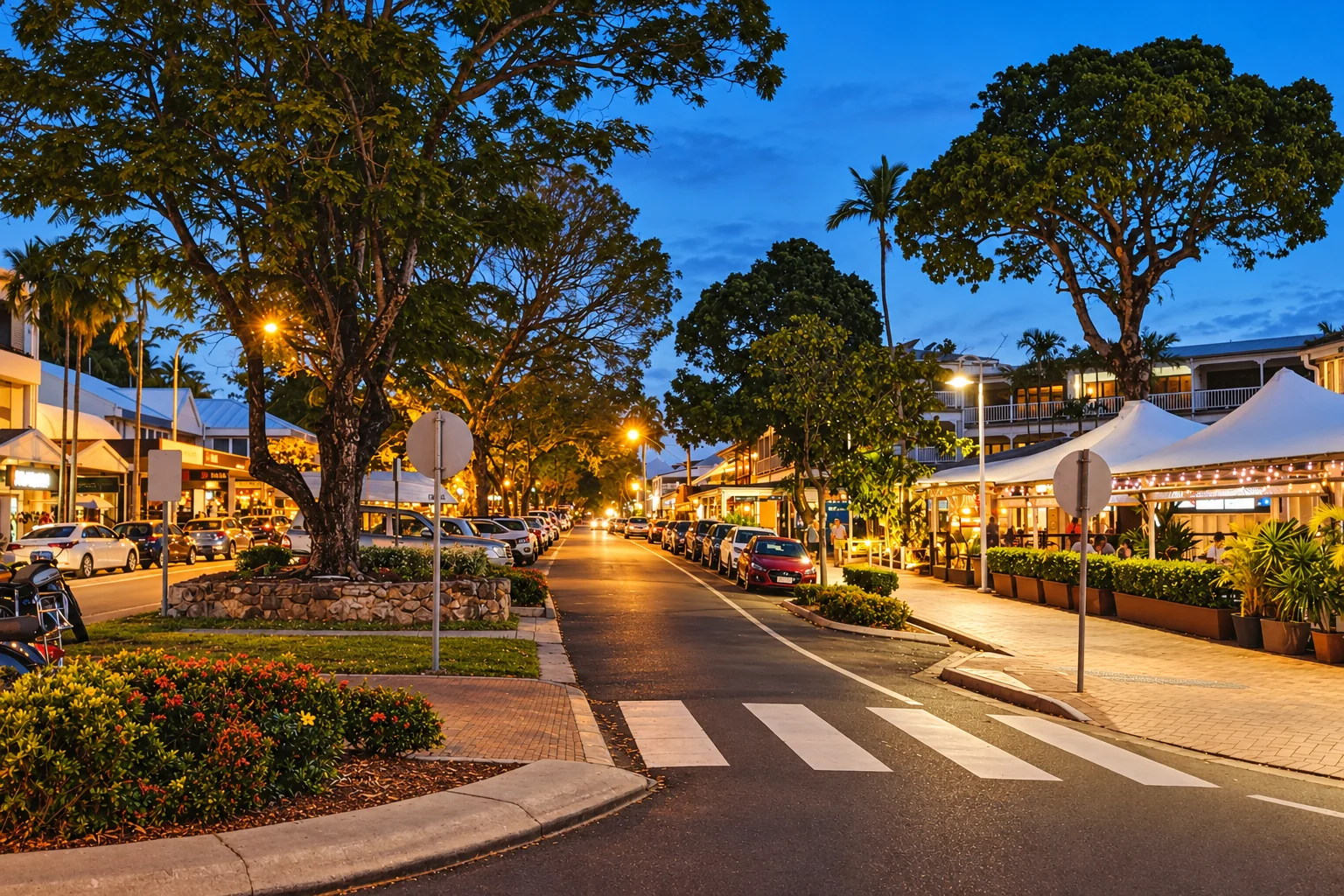
Self-drive hire is about $50 to $90 per day plus fuel. A hire car costs more than a shuttle for a short stay confined to town, but it pays off for anyone planning the Daintree drive or several beach and rainforest stops. Port Douglas itself is compact, and Four Mile Beach is a short walk from Macrossan Street, the main street.
When to visit Port Douglas
The Bureau of Meteorology publishes long-term averages for Port Douglas, which show a hot, wet summer and a mild, dry winter.
| Month | Mean max (°C) | Mean min (°C) | Mean rainfall (mm) | Days with 1 mm or more |
|---|---|---|---|---|
| Jan | 30.3 | 23.7 | 395.8 | 13.8 |
| Feb | 30.1 | 23.5 | 422.0 | 14.2 |
| Mar | 29.5 | 22.8 | 429.4 | 14.4 |
| Apr | 28.3 | 21.5 | 203.3 | 11.2 |
| May | 26.7 | 19.5 | 72.8 | 8.0 |
| Jun | 25.1 | 17.7 | 47.7 | 5.7 |
| Jul | 24.6 | 16.8 | 26.4 | 4.2 |
| Aug | 25.3 | 17.1 | 23.3 | 4.0 |
| Sep | 26.7 | 18.6 | 32.1 | 4.4 |
| Oct | 28.3 | 20.8 | 53.1 | 5.3 |
| Nov | 29.5 | 22.3 | 106.1 | 7.6 |
| Dec | 30.3 | 23.3 | 213.5 | 10.1 |
Annual rainfall averages 2,028.4 mm over 102.9 rain days, and the annual mean maximum is 27.9°C.
May to September is the dry season. July is the coolest month, with a mean minimum of 16.8°C, and July and August are the driest at 26.4 mm and 23.3 mm. Daytime temperatures stay in the mid-20s, and this is the easiest period for reef trips, beach days and the Daintree drive. It also falls largely outside stinger season (see below).
October and November are the shoulder months. Rainfall climbs from 53.1 mm to 106.1 mm and the heat builds, while rain days stay well below the summer peak.
December to April is the wet season. January to March each average roughly 395 to 430 mm, with rain on well over a dozen days a month. Mean maximums sit near 30°C. A travel guide gives the official tropical cyclone season as 1 November to 30 April. Visitors travelling in these months should expect interrupted plans and buy travel insurance, because the Daintree ferry and the roads north of the river close in severe weather (covered below).
April is the transition. It still averages 203.3 mm, but the rain days drop to 11.2, so it suits travellers who want lower summer-peak rainfall without waiting for May.
Reef trips and the reef charge
Day boats to the outer Great Barrier Reef leave from Port Douglas. Every passenger on a tourism excursion pays the Reef Environmental Management Charge, a per-person fee collected by the tour operator for the Great Barrier Reef Marine Park Authority (the Reef Authority). Figures there were last updated on 8 April 2026:


- Full-day passengers (trips of three hours or more, among other conditions) pay $8.50 each per day.
- Part-day passengers (trips under three hours, and certain entry or exit timings) pay $4.25.
- From 1 April 2027 the rates rise to $9.00 and $4.50.
- Semi-submersible and glass-bottomed boat excursions add 40 cents per excursion.
- No GST applies to the charge.
If a visitor joins several excursions under the same permit on one day, only the first attracts the charge. A visitor who has already paid a full day’s charge to another operator is exempt, as are children under four carried free of charge (a child who is charged for the service pays the charge). On extended trips with one operator, the charge stops once the $24.00 maximum has been paid.
Operators include the charge in the ticket. Quicksilver states that the $8.50 is built into its fares. A Port Douglas tour guide reports the charge is included on all six boats it covers, and that several operators also add a compulsory $10-per-adult fuel surcharge at booking. That surcharge is set by the operator and goes to the operator. The same guide lists an all-in outer-reef fare for Quicksilver of $348, made up of a $338 base and the $10 fuel surcharge. A budget comparison puts Port Douglas operators such as Quicksilver and Calypso at $338 to $380 and Cairns operators at $300 to $360. Port Douglas departures cost more, but anyone already staying in town has a shorter transfer.
Before comparing boats, ask each operator for the all-in price including the reef charge and any booking surcharge, since operators build their headline fares differently.
Swimming at Four Mile Beach
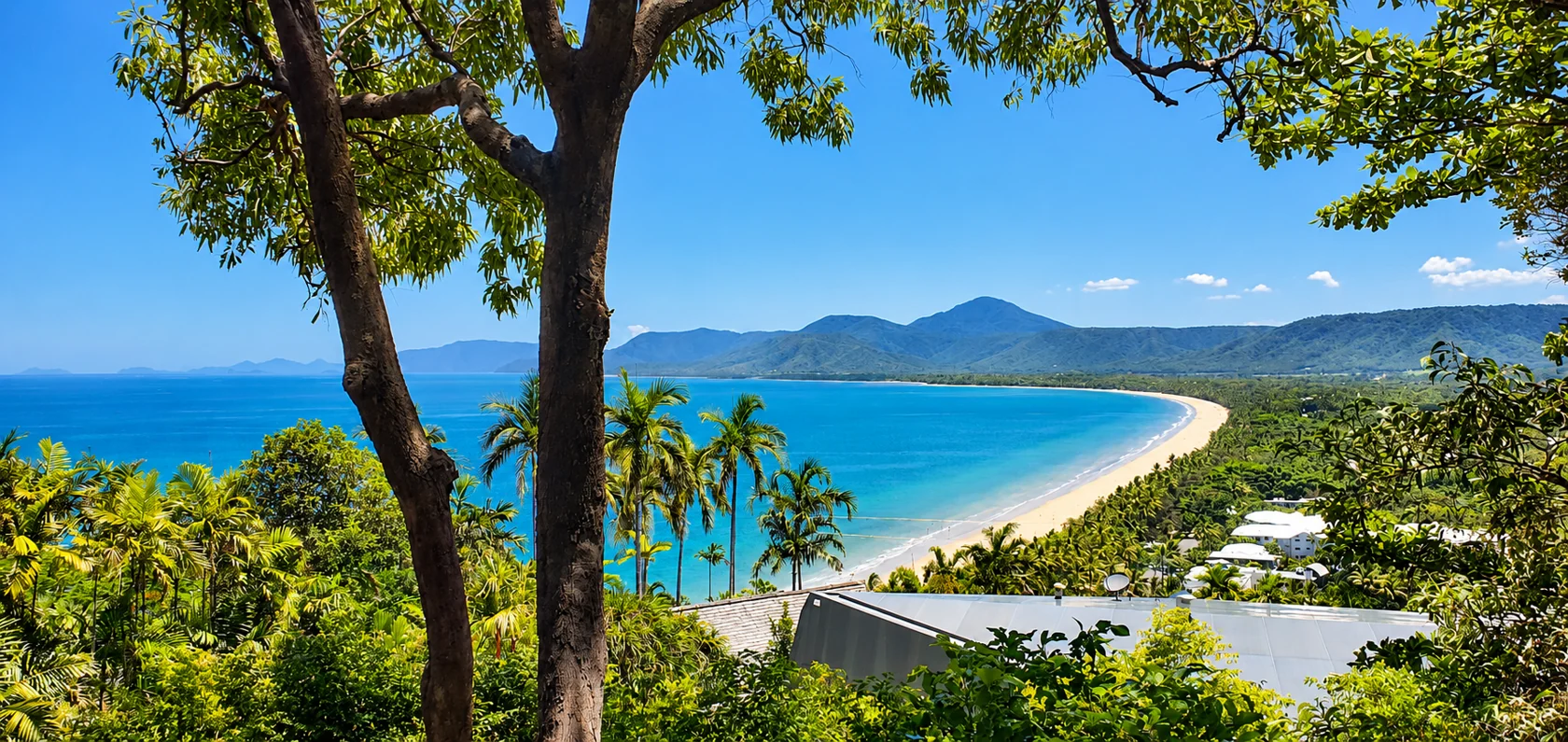
Four Mile Beach is about 6.5 km of palm-lined sand, a short walk from Macrossan Street. Douglas Shire Council manages the beach and sets out the rules for swimming.
Stinger season and the enclosure
Marine stingers, including box jellyfish, are in the water during stinger season, which the council gives as typically November to May, subject to seasonal variability. A stinger-resistant swimming enclosure is installed for that period. The council describes the enclosure as giving a high degree of protection against box jellyfish, but it is not 100 percent stinger proof. The enclosure sits at the Port Douglas end of the beach, outside the lifeguard station at the Esplanade and Macrossan Street end.
During the season, wear a wetsuit or full-body lycra suit, even when the beach is open, and enter the water slowly, because stingers often swim away if given the chance. Vinegar stations are available on the beach. Visit Port Douglas also advises reef-safe, mineral-based sunscreen and not touching marine animals.
Flags, closures and lifeguards
At patrolled beaches, swim only between the red and yellow flags and ask a lifeguard if conditions are unclear. The council provides lifeguards on this beach at certain times, so check the patrol hours on the signs or with the council before relying on them.
The beach closes when stingers are present, and the closure stays until the weather changes and pushes them away from the coast. Do not enter the water when signs say "Closed" or "Stingers Present". Waves that break over the net make it ineffective, and lifeguards reopen the beach only after trawling the net and finding it safe. Very stormy conditions, large numbers of jellyfish and crocodile sightings also close the beach. Swim with a friend where possible, and raise a hand for help if in trouble.
Crocodiles
Saltwater crocodiles live in the surrounding estuaries. Crocodiles are very rarely sighted off Four Mile Beach, and when lifeguards spot one they usually close the beach for a few hours and follow the animal until it leaves the protected swimming area. Another local guide says crocodiles have occasionally swum the length of the beach between Dickson’s Inlet and the Mowbray River mouth and have occasionally been seen on the sand. Do not swim in Dickson’s Inlet, near the Sugar Wharf Jetty or near the Mowbray River mouth, and obey any crocodile signs.
Driving into the Daintree
The Daintree rainforest lies north of the Daintree River, and the only vehicle crossing is the Daintree River Ferry, a cable ferry that carries up to 27 vehicles on a crossing of about 5 minutes. It is the only sealed road access to the area. The ferry is about 50 km north of Port Douglas, and the drive takes roughly 45 minutes via Mossman. From Cairns it is about two hours along the Captain Cook Highway, and the turnoff is past the "Welcome to the Daintree" sign. Cape Tribulation is about two and a half hours from Cairns each way.
Ferry hours and fares
The ferry runs daily from 5am to midnight, including Christmas Day. Fares per crossing, as shown on the Daintree Coast ferry page (modified 25 August 2026), are:
| Vehicle or passenger | One way | Return |
|---|---|---|
| Car or ute | $35 | $57 |
| Passenger, bicycle or pedestrian | $7 | $8 |
| Motorbike | $15 | $22 |
| Trailer or caravan | $15 | $21 |
| Bus, 6 to 10 seats | $35 | $57 |
| Bus, 11 to 20 seats | $50 | $92 |
| Bus, 21 or more seats | $87 | $160 |
| School bus | $19 | $31 |
| Multi-day pass (5 return car or ute trips) | $143 per book |
Council sets fares each year on 1 July. A timetable site lists the same car fares from 1 July 2026 and adds a machinery fare of $21 one way and $36 return. Douglas Shire residents and eligible Far North Queensland residents travel free under the Douglas Card between 1 November and the end of February, and concession cards receive year-round discounts. Visitors on a day trip from Port Douglas should price a return car trip ($57) against a guided tour that covers the crossing.
Closures and road conditions
The ferry does not run in extreme weather or flooding. Major flooding in March 2026 broke the vessel loose from its moorings and closed the crossing for weeks. Roads north of the river also close in wet weather. In its January 2024 update, the council warned that all sections of the route can close at short notice if adverse weather occurs.
Tropical Cyclone Jasper in December 2023 shows how long the effects last. Access north of the river was restricted from mid-December 2023, and the Noah Range section reopened as one lane under traffic management. By the council’s 31 May 2024 visitor fact sheet, some sections were single-lane with 20 to 30 minute delays, including the stretch with Alexandra Lookout. Cape Tribulation Road was open to just north of Cape Trib Beach House. The Cape Tribulation to Bloomfield road was due to reopen to 4WD vehicles from 22 June 2024, and trailers, campervans and caravans were not suitable for it. Bloomfield is a 4WD-only track, very steep in places, and closed during heavy rain.
Two agencies publish road status. The Department of Transport and Main Roads manages state roads including the Captain Cook Highway and publishes live closures through QLDTraffic and an hourly Far North district road report. Douglas Shire Council manages the roads north of the Daintree River, including the CREB Track and the Cape Tribulation to Bloomfield road, and posts their open or closed status. Check both on the day.
The council advises carrying water, food, fuel and travel insurance, planning flexibly and following council and Destination Daintree Facebook pages for notices. Two causeways completed over Cape Tribulation Road in 2011 made the drive mostly floodproof except in the most severe rain events. The river peaked at 12.6 metres at Daintree in 2019, above the 1901 record of 12.4 metres, so severe events still happen. Visitors with fixed flights should leave a buffer day around any Daintree trip in the wet season.