Orange is a regional city in the Central West of New South Wales, about 3.5 hours’ drive west of Sydney. Visitors come mainly for the cool-climate wine, the produce, the gardens and the walks on Mount Canobolas, an extinct volcano just outside the city. Orange360, the regional tourism body, promotes it as a food and wine destination for short trips and weekends away.
The region has four distinct seasons with cold winters, so the month you visit shapes what you can do. Autumn suits wine and walking, spring brings wildflowers to the mountain, and winter brings frost and occasional road closures on Mount Canobolas. A car is the practical way to reach cellar doors and trailheads. The city centre has a museum, a gallery and a central wine tasting venue for visitors without a car.
Getting to Orange
By train
NSW TrainLink runs from Sydney Central to Orange Station. Transport NSW lists the shortest one-way journey at 4 hours 46 minutes. When checked, morning services ran from 07:19 to 12:06 as train only, and an evening service ran from 17:42 to 22:52. Some services include a coach leg. A 15:09 departure took 7 hours 43 minutes, so check the journey time before you book a particular departure.

Book online, by phone or at a station. Booking in advance is recommended, and online booking saves 5% on an adult fare (conditions apply). The Discovery Pass lets you hop on and off at more than 365 destinations across NSW, Victoria, Queensland and the ACT (conditions apply). Check travel alerts before you leave.
By air
Orange360 lists a flight time from Sydney of about 45 minutes, with Qantas and REX (Regional Express) as the operators and several flights daily. Orange Airport is at Spring Hill, about 15 km south of the town centre. The drive into town takes about 15 minutes, and no public transport serves the airport, so arrange a hire car, a taxi or a pick-up.
By road and coach
The drive from Sydney takes an easy 3.5 hours according to Orange360. The route follows the M4 Motorway, the Great Western Highway through the Blue Mountains, and the Mitchell Highway through Bathurst, along the route described in this route guide. Australia Wide Coaches also runs a coach service between Sydney and Orange, so confirm its current timetable with the operator.
When to visit Orange
Orange sits high (the Orange Agricultural Institute weather station is at 922 m above sea level), which makes winters cold. Climate averages for 1991 to 2020 show highs of 27°C in January and 10°C in July, with overnight lows averaging 14°C in January and 2°C in July and August. The city has about 25 freezing nights a year, concentrated in June, July and August. About 7 days a year reach 32°C or higher. Annual rainfall is about 840 mm. Orange is wet for an inland location because Mount Canobolas lifts passing air and squeezes out rain.
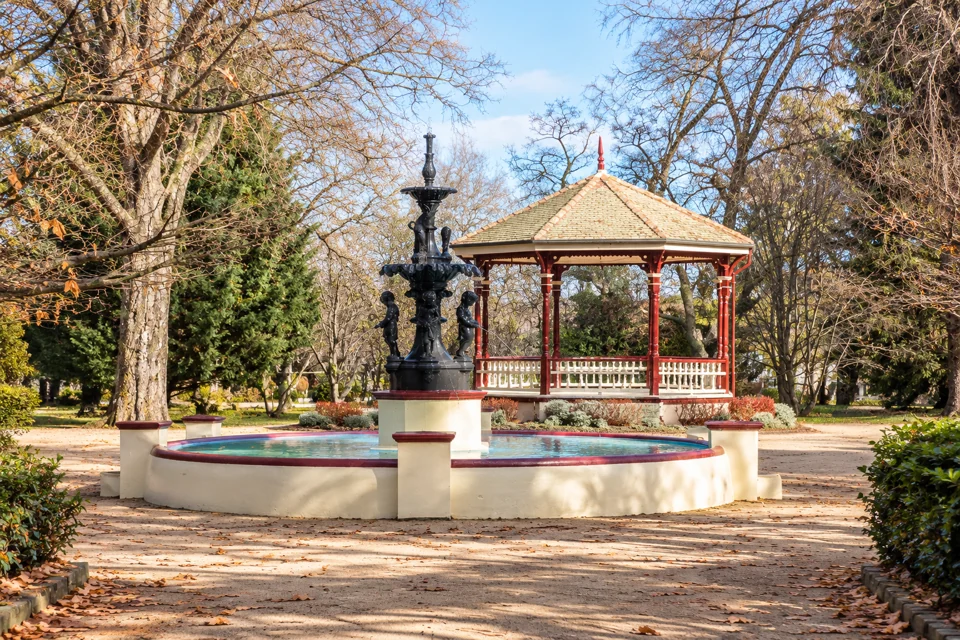
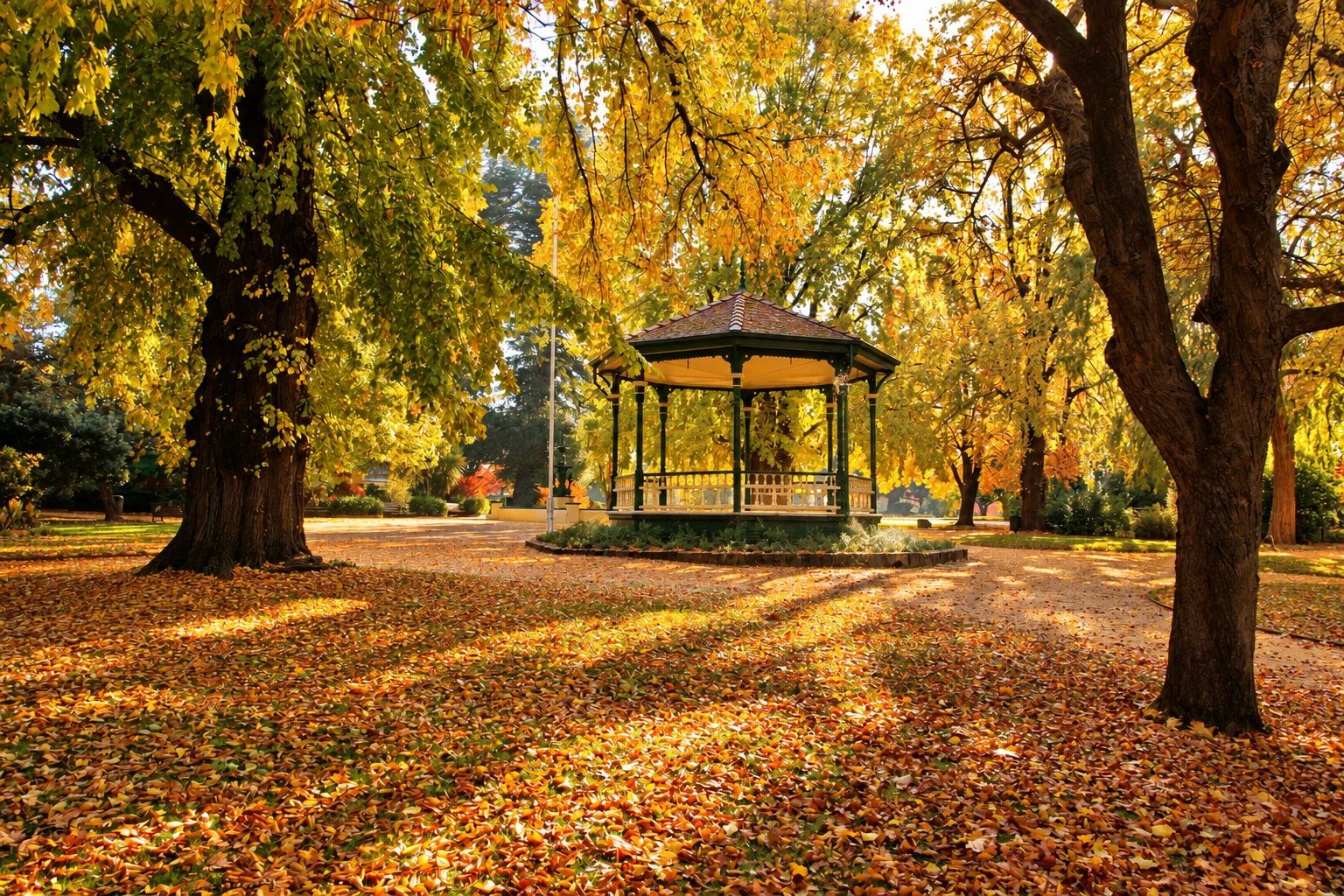
Autumn (March to May). Autumn is the easiest time for walking and wine. NPWS (the NSW National Parks and Wildlife Service) describes misty mornings and clear, sunny skies on the mountain. Daytime highs fall from 23°C in March to 14°C in May, and April is the driest month in the climate table. Cook Park, a Victorian-style park in town, is especially colourful in autumn.
Winter (June to August). Expect daytime highs around 10°C to 11°C, frosts, and the wettest months of the year on the mountain. NPWS names August as the wettest. Mount Canobolas access roads may close to vehicles during snow, generally once or twice each winter, and the park can also close for poor weather or fire danger. Winter suits cellar door visits and museum days, and a warm coat is essential.
Spring (September to November). Highs climb from 14°C in September to 22°C in November. NPWS notes violet kunzea, fringe myrtle and mirbelia flowering in the heaths around rocky outcrops on the mountain, which makes spring the time for botanical walks.
Summer (December to February). Days are warm, with highs of 24°C to 27°C, and nights are cooler, with a December average low of 11°C. Summer is the wettest season at Orange Airport, so carry rain protection for walks. Fruit picking is a seasonal activity in the warmer months.
Things to do in town
Start at 151 Byng Street, where the Orange Regional Museum and the Orange Visitor Information Centre share a site. The museum is open 9am to 4pm daily, closed 25 December, with free entry. It interprets the stories, cultures and places of the region. Groups of 10 or more should contact the museum to book. The Visitor Information Centre is open 9am to 4:30pm on weekdays and 9am to 4pm at weekends, seven days. It sells hand-made local art and crafts, and its adjacent café features local produce. The centre also publishes the Orange Heritage Trail, a suggested walking route through the city.
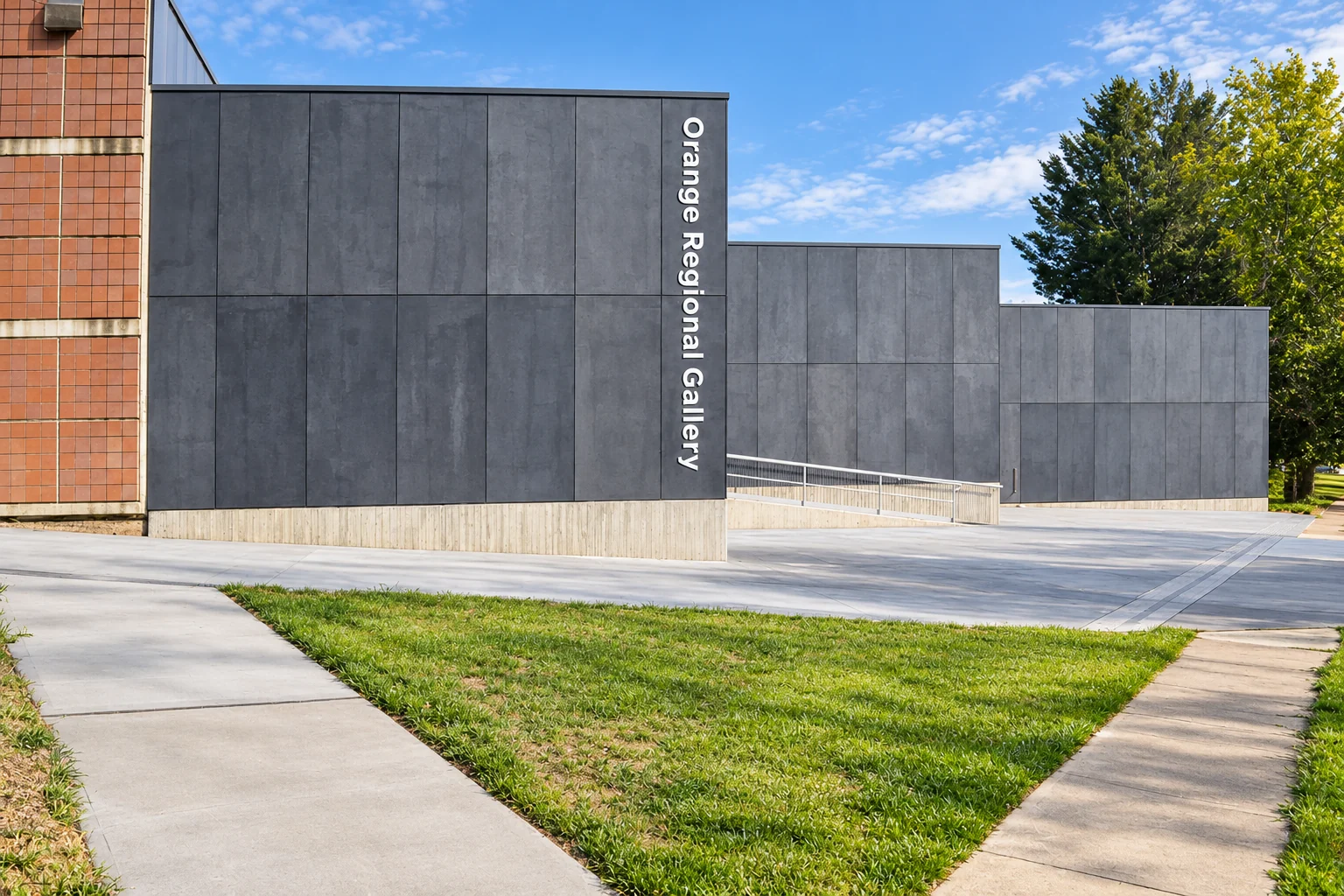
The Orange Regional Gallery is known for its touring exhibitions, and entry is free. Between the museum, the gallery and the heritage trail, a wet or frosty morning in town fills easily.
For families, Heifer Station at 1034 The Escort Way, Borenore, combines a cellar door with a children’s "funny farm". Helicopter visits are possible but must be arranged in advance, because the landing pad is in a working cattle paddock.
The Orange wine region
The Orange wine region is an Australian Geographical Indication (GI), a legally defined wine-growing area, in the Central Ranges zone of NSW. The Orange wine region is the contiguous area above 600 m within the City of Orange, Cabonne Shire and Blayney Shire, and vines were first planted commercially there in 1980. Orange360 says the GI was registered in 1996, the first Orange Wine Show was held in 2002, and the vine area now exceeds 1,100 hectares.
Vineyards sit between about 600 m and 1,100 m around Mount Canobolas, which rises to 1,395 m. Orange360 describes the wine as cool-climate and says the region has Australia’s highest-altitude vineyards. The traditional reds are Shiraz, Merlot and Cabernet Sauvignon. Newer varieties such as Tempranillo and Barbera now grow alongside them. VisitNSW counts about 80 vineyards and 30 cellar doors (the tasting rooms where wineries sell directly to visitors).
Wine trails
Orange360 publishes a map of five Orange Region Wine Trails, with cellar doors clustered close together on each. Names in use include the Mountain Trail, the Cargo Road Trail, the Borenore Trail and the Eastern Heritage Trail. Pick one trail per day and book the cellar doors that require it, because grouping visits avoids long back-and-forth drives.
Ferment on Hill Street
If you have no car or only a short time, go to Ferment the Orange Wine Centre at 87 Hill Street. It acts as the cellar door for multiple local wineries, and VisitNSW says visitors who cannot reach the cellar doors can sample many of them here. Ferment is listed as the official cellar door for 19 wineries, with tastings Monday to Saturday from 11am to 5pm and the wine bar open until 9pm. Confirm the current hours with Ferment before you go.

Cellar door hours and bookings
The venues below suit different routes. Opening days change, so check each winery’s website or its Orange360 listing before you leave.
| Venue | Location | Notes |
|---|---|---|
| Borrodell Estate | 298 Lake Canobolas Road, Orange | Listed as open 9am to 5pm daily; bookings preferred |
| Printhie Wines | 208 Nancarrow Lane, Nashdale | Less than 10 minutes from Orange; official site describes a 5-star Halliday-rated winery |
| Ross Hill Wines | 134 Wallace Lane, Orange | Listed daily 10:30am to 4:30pm; bookings essential; promoted as carbon neutral |
| Stockmans Ridge | Orange | Open Thursday to Tuesday, with Saturday hours to 8pm; bookings essential on Tuesday and Thursday |
| Word of Mouth Wines | Mountain Trail | Listed as open Monday and Friday to Sunday; online booking recommended |
| Logan Orange Cellar Door | 432 Cargo Road, Orange | Guided tastings |
| Rowlee Wines | 19 Lake Canobolas Road, Nashdale | Listed in local guides |
| Mayfield Vineyard (School House Cellar Door) | Orange | Open Friday to Sunday; on the Eastern Heritage Trail |
| Cargo Road Wines | Cargo Road, Orange | Planted 1983; listed as open seven days |
Borrodell and Rowlee both sit on Lake Canobolas Road, which is also the first leg of the drive to the mountain, so they combine naturally with a morning on the summit.
Food, cider and markets
Orange is built around local produce, and the food scene extends beyond wine. Travel guides name Agrestic Grocer and Charred Kitchen and Bar among the restaurants to try, and book ahead on weekends. The Orange Farmers Market sells local produce and homemade goods, and breweries and distilleries add to the drinks list. Small Acres Cyder is an orchard-based cidery described as the only producer of locally grown, locally made cider in Orange. The café beside the Visitor Information Centre features local produce and makes an easy coffee stop on a museum visit.
Gardens and parks
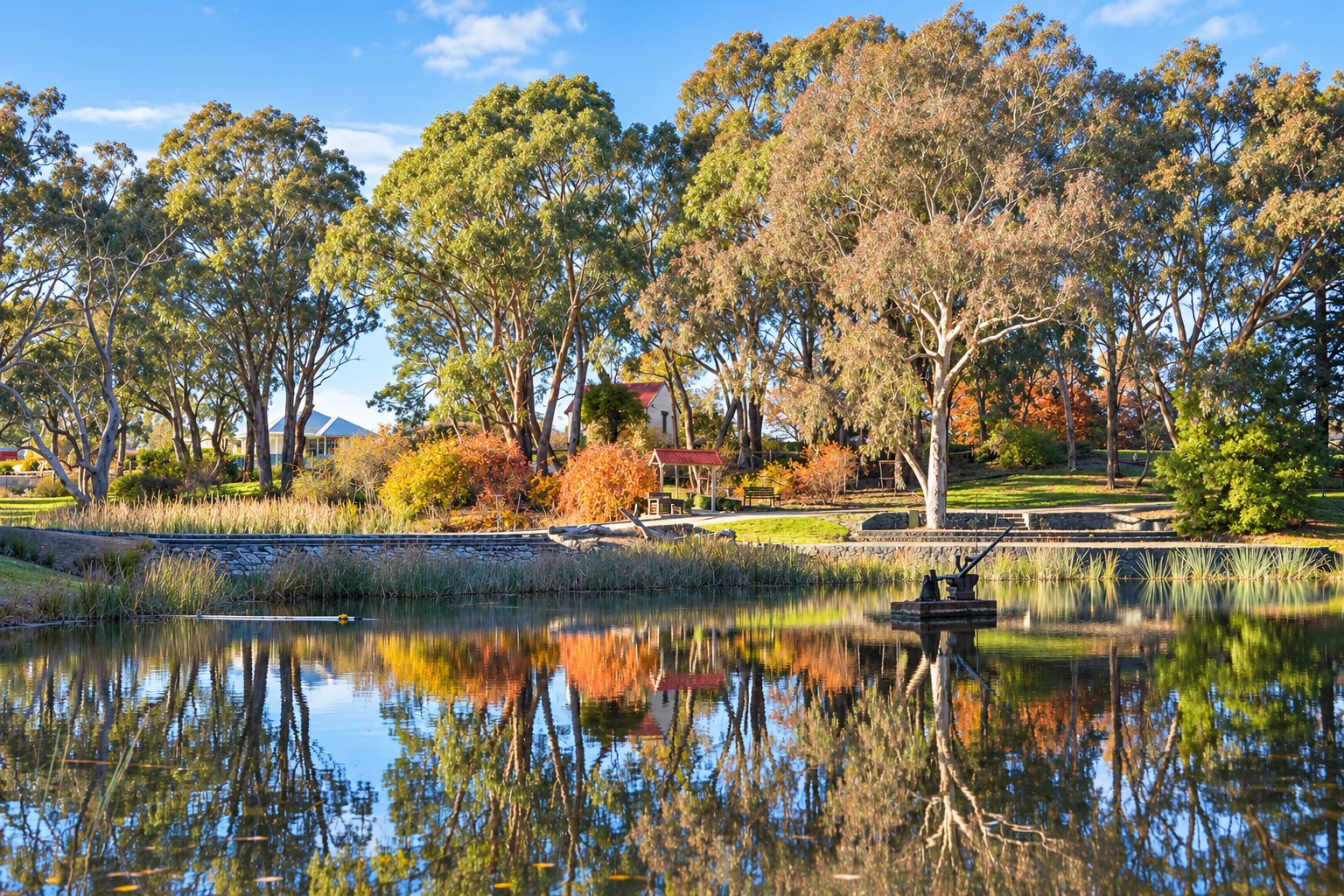
Orange Botanic Gardens lies a few kilometres from the town centre. It is a relatively young garden with a collection of native and exotic plants. Cook Park, closer to the centre, is the choice for a short stroll among mature plantings, and it peaks in autumn.
Mount Canobolas State Conservation Area is the largest natural attraction, managed by NPWS, and the summit reaches about 1,395 m. The NPWS park page lists no entry fee. Camping requires a booking, so check the NPWS passes and fees page for the current campground price.

Driving to Mount Canobolas
From Orange, head west on Cargo Road (A32), turn left onto Lake Canobolas Road (which becomes Pinnacle Road), then turn right into Mount Canobolas Road. NPWS gives the route to the summit lookout as about 15.8 km: 3.8 km on Cargo Road, 6.3 km on Lake Canobolas Road and 5.7 km on Mount Canobolas Road. The summit and Orange View roads are sealed, and a 2WD vehicle is enough. Long vehicles cannot use the Orange View picnic area, and a narrow section just below it needs care. For cycling information, NPWS points to the Bicycle information for NSW website.
Facilities vary by stop:
- Summit lookout: an asphalt carpark with two accessible car spaces, step-free access and non-flush accessible toilets.
- Orange View picnic area and lookout: picnic tables, step-free access and a small gravel carpark.
- Federal Falls campground: toilets, picnic tables and barbecues.
Walks on Mount Canobolas
All five walks below are graded 3 by NPWS. NPWS cautions that the walks can be quite strenuous even when they take only a few hours.
| Walk | Distance and time | What to expect |
|---|---|---|
| Federal Falls walking track | 4 km loop; 1 to 2 hours | Formed, signposted track with short steep hills and many steps; reached via Mount Canobolas Road, then Towac Road |
| Nature walking track | 2 km loop; 30 minutes to 1.5 hours | Starts clockwise from Walls picnic area and passes the Walls lookout; bring water, a hat and sunscreen, and binoculars for birdwatching |
| Summits walking track | 2.1 km return; 45 minutes to 1 hour 15 minutes | Links Mount Canobolas (Old Man Canobolas) and Young Man Canobolas across a saddle; weather changes quickly, so bring a jumper and, in winter, a raincoat and warm clothing |
| Snowgum walking track | 0.9 km one way; 15 to 30 minutes | Formed with steps and short steep hills; starts at the summit or Federal Falls campground |
| Spring Glade walking track | 3 km return; 45 minutes to 1 hour 15 minutes | Runs from Spring Glade carpark to the summit, with birdwatching and picnic options |
For a first visit, the Nature walking track is the shortest loop with a lookout. The Summits walking track rewards a little more effort with views from two peaks. Federal Falls takes the longest, so allow up to two hours.
Safety on Mount Canobolas
NPWS track pages read "Open, check current alerts". The park is always open but closes at times for poor weather or fire danger, and visitors are responsible for their own safety. Check NPWS park alerts on the day. Mobile coverage is intermittent on the mountain, so download directions before you leave town. Carry water, snacks and a warm layer, even in summer, because temperatures on the summit are lower than in the city.
A weekend in Orange
Two days covers the main interests. Arrive Friday and spend the afternoon at the museum, the gallery and the Visitor Information Centre, then follow the Orange Heritage Trail on foot. On Saturday, take one wine trail (the Mountain Trail pairs well with the mountain drive), book two or three cellar doors, and eat at one of the town’s restaurants that night. On Sunday, walk the Nature or Summits track in the morning, then finish with Ferment on Hill Street if you want a last tasting. Visit in autumn for colour and mild days, or in winter for cellar door fires and a quieter mountain.