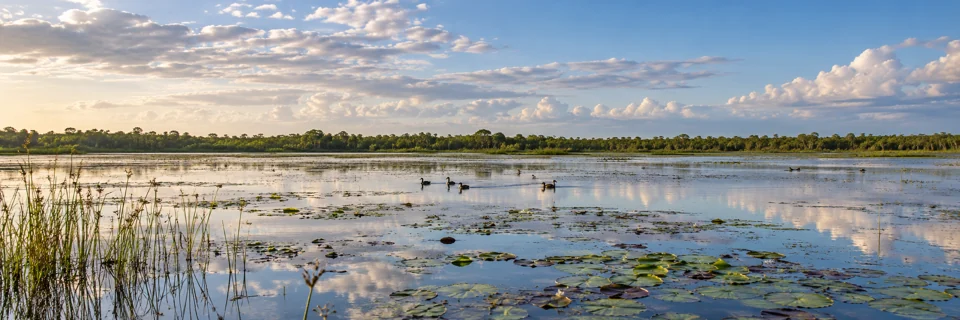
Mamukala is a wetland and bird hide beside the Arnhem Highway, west of Jabiru in Kakadu National Park, Northern Territory. A flat loop of about 3 km runs around the floodplain, and a shaded hide overlooks water where magpie geese and other waterbirds gather in the late dry season. September and October are the best months to visit.
The walk and hide can close from around December while floodwater is up. Entry is covered by the Kakadu park pass, and the water’s edge is crocodile habitat.
Where Mamukala is and how to get there
The wetland sits about 20 km west of Jabiru, the park’s service town. Its listed address is 14580 Arnhem Hwy, Kakadu National Park, NT 0822, and the trailhead coordinates are -12.65094, 132.57393. From Darwin, the driving distance is 223 km, which takes 2 hours 43 minutes.
The carpark is signed and sealed. A 2WD vehicle can reach the site, and the day-use carparks suit normal campervans and many motorhomes. Kakadu has no public transport, so visitors without a vehicle need a hire car or a tour. The Arnhem Highway from Darwin is usually open all year, although wet-season flooding can interrupt other roads in the park.
Walking the circuit
The main walk is a 3.1 km loop that takes about 1.5 hours. Some visitors finish in one hour and others take two, depending on how long they stop for birds. The ground is flat and the track is unsealed, with compact dirt underfoot. The path is wide for most of the way and narrows in one section. Parkwolf lists the walk as Grade 2, an easy grade, and dogs are not permitted.
Shade on the circuit is limited, and midday heat is punishing. Unsealed track conditions also change after rain, so allow extra time and take care on any wet or soft patches. Use the toilets at the carpark before you set off, because there is nothing on the loop itself.
Parks Australia lists a Mamukala Wetlands Walk among its seasonal guided activities. A guided walk suits visitors who want help identifying birds, and the official page shows when it runs.
The bird hide
The hide is a short walk from the carpark, and the first section of the path to it is wheelchair-accessible. Visitors who cannot manage the full circuit can still see the wetland from here. The hide is large, clean and shaded, with wide viewing openings and information panels. The displays explain how the wetland changes through the seasons and what the place means to local Aboriginal people.

Bring your own binoculars. One third-party listing says the hide has a pair, but that is not something to rely on. A camera with a zoom lens is useful because the birds sit well out on the water.
When to see the most birds
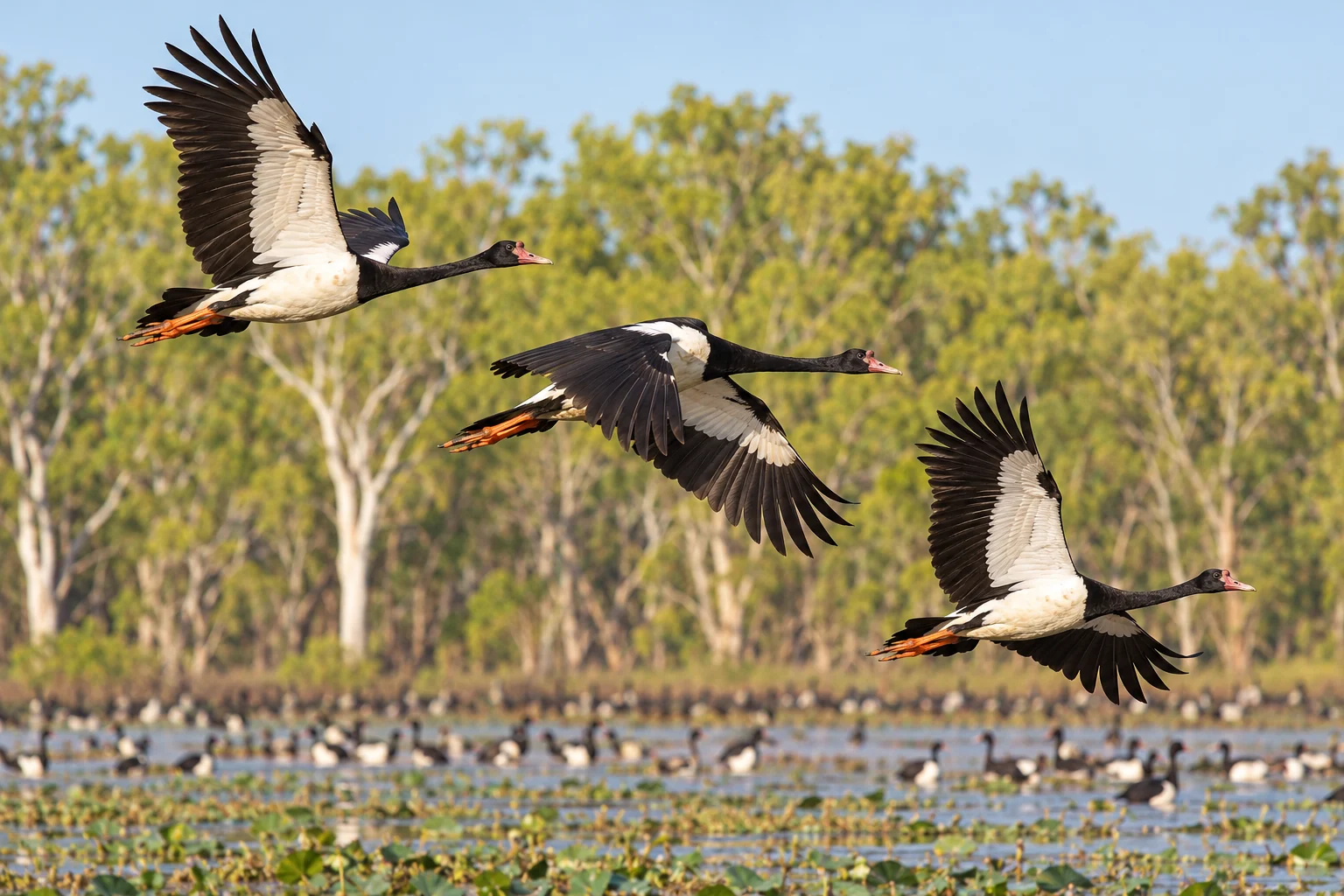
The late dry season is the peak. In September and October magpie geese gather in large numbers as water recedes elsewhere in the park, and one guide extends the window to September to November. The geese start earlier than that. By late August the wetland is busy with geese digging for water chestnuts, and they gather in the tens of thousands from the end of the dry season into the build-up.
The early dry season, May to July, has cooler days and easier walking. Visitors then see jabirus, egrets and raptors, though not the dense goose flocks of September. Local groups use a six-season calendar, and the season called Yegge usually falls from May to mid-June, with south-easterly winds and the start of dry weather. The start dates follow natural triggers, so they shift from year to year.

During the wet season, roughly November to April, birds spread out across the floodplains and numbers at Mamukala fall. A few species, such as the red-tailed black cockatoo, remain possible.
Best time of day to visit
Dawn and early morning are the busiest times for bird activity, and early morning and late afternoon are the best for watching birds drink and feed. The loop has little shade, and the heat builds through the morning, so an early start gives you the loop before it sets in. Birdingplaces also notes that early-morning light falls from the left and leaves much of each bird in shadow. If photographs matter more than the cool, a later hour at the hide can suit better.
Birds to look for
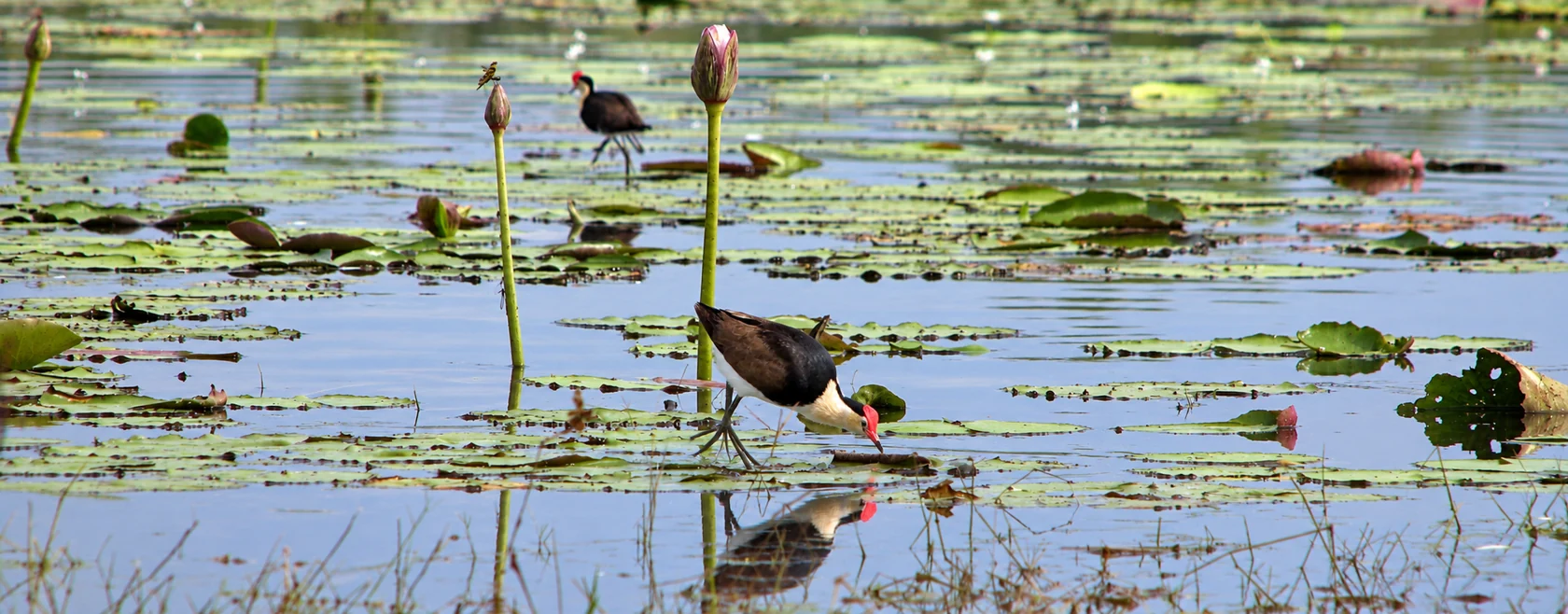
Birdingplaces lists five standouts: comb-crested jacana, black-necked stork, magpie goose, Australasian swamphen and sacred kingfisher. Other waterbirds include lotus lilies’ neighbours, whistling-ducks and radjah shelducks. Egrets, herons, kingfishers and darters are also commonly seen, while purple swamp hens are rarer.
On the circuit itself, watch the bushes and paperbarks for small birds. Birdingplaces records Arafura fantail, paperbark flycatcher and lemon-bellied flyrobin, and Experience The Wild adds varied triller, long-tailed and masked finches and red-backed fairy-wren.
Wet-season closures
Mamukala is a floodplain, so it floods. December rains may close the circuit walk, rising floodwater may close the hide, and reopening usually comes around March or April. Parkwolf says the walk is usually open from mid-April to January. A trip between mid-April and December is the safest planning window, with the late dry season best for birds.
Check the Kakadu access and alerts page before leaving. Kakadu Tourism, in a post published 10 March 2026, names January to March as the period of rapid change, with flooding and temporary road closures possible. For live road status use the NT Road Report on the day you travel. The access page also lists area closures for 2026, including Jim Jim and Twin Falls, and the Barrk sandstone walk, which is closed at the request of Traditional Owners. Mamukala is not affected by those, but they matter if Kakadu is part of a longer itinerary.
Park pass and fees
Mamukala has no separate entry fee. It falls under the Kakadu park pass, which is valid for 7 days, can be bought online and covers Kakadu only. Uluṟu-Kata Tjuṯa needs its own pass. Revenue from passes goes back into facilities, World Heritage protection and support for Traditional Owners.
The published prices depend on the season:
- Dry season, 15 May to 31 October: adult (16+) $40, child (5 to 15) $20, family (2 adults and 2 or more children) $100, concession $30.
- Tropical summer, 1 November to 14 May: adult $25, child $12.50, family $65, concession $19.
Parks Australia has a dated notice that passes for visits between 1 July and 31 October 2026 are charged at the lower tropical summer rates. Campwatch describes the reduction as temporary. Northern Territory residents receive free park passes. Older guides quote higher or different prices and a 14-day validity, so use the official pass page for the figure that applies to your dates.
Toilets, water and services in Jabiru
Mamukala is a day-use site. The carpark area has toilets, picnic tables and benches, though one guide says toilets are available at times. There is no drinking water listed, so carry your own along with sun protection. Overnight camping is not available here. Campwatch says camping fees at other Kakadu campgrounds vary and are separate from the park pass, and many Parks Australia campgrounds are first-come, first-served with fees collected on arrival.
For other needs, Bowali Visitor Centre near Jabiru is listed as open 8am to 5pm. Jabiru has a service station, supermarket, post office, bank, medical centre, pharmacy and a restaurant or café. Buy fuel in Jabiru instead of counting on stops further along the road.
Staying safe at Mamukala
Saltwater crocodiles live in many Kakadu waterways. They often hunt submerged and can attack in knee-deep water, so wading is dangerous. Obey every warning sign, and assume crocodiles are present where there is no sign. At Mamukala, stay back from the water’s edge and watch the birds from the hide and the track.
Plan for heat and insects. Go at sunrise or sunset, carry water, wear sun protection and apply insect repellent, because mosquitoes can be a nuisance. On the road, never drive through floodwater. A 4WD does not make deep water safe, and you should not cross water whose depth you cannot judge. Some roads in and out of the park are 4WD-only, and many sections are steep, narrow and slippery when wet, so drive slowly.
The Northern Territory tourism site says a permit may be needed for drone use, commercial filming, photography or research in Kakadu, and for access to Aboriginal land. Check before flying anything near the wetland.
What to take
Pack water, sun protection, insect repellent, binoculars and a camera. Buy the park pass before you arrive, and confirm the rate for your travel dates.