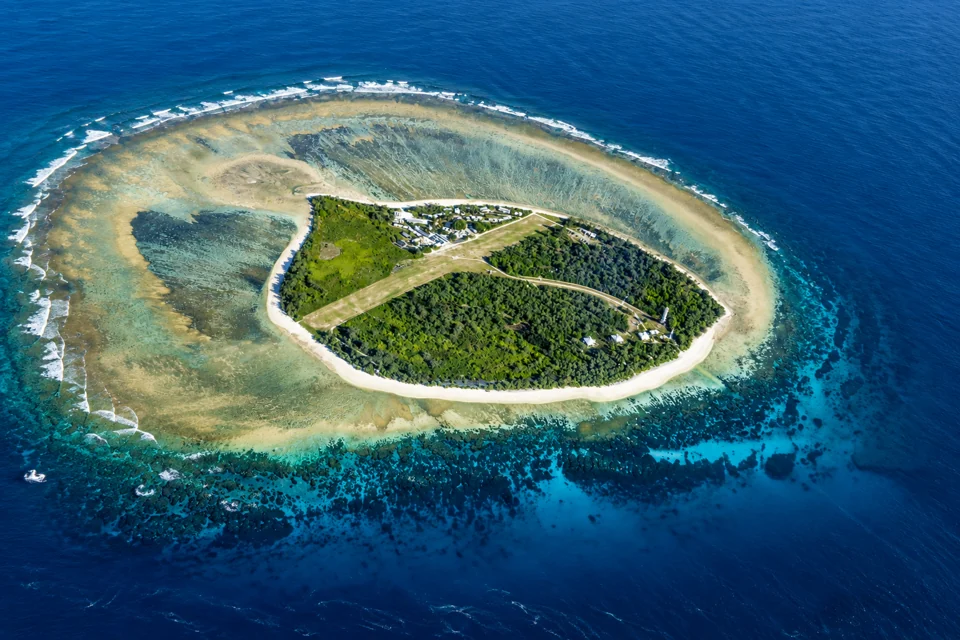
Lady Elliot Island is a small coral cay at the southern end of the Great Barrier Reef, off the Queensland coast. It is a private, closed destination run by the Lady Elliot Island Eco Resort. Every visitor arrives on a small charter aircraft that lands on a grass airstrip running the length of the island. With no ferry and no road, your planning comes down to three choices: which airport to fly from, whether to stay for a day or overnight, and which season suits the wildlife you want to see.
Most visitors fly from Bundaberg or Hervey Bay, where the flights are shortest and cheapest. Flights from Redcliffe (north of Brisbane) and Coolangatta (Gold Coast) take longer and cost roughly double. A day trip gives you a full day on the island, and an overnight stay gives you access to night turtle viewing in summer.
How to get there
Boats do not take visitors to Lady Elliot Island. The resort’s own travel page describes the island as private and closed, with the resort as the only access provider, and says boat travel is impractical because this is the most remote Great Barrier Reef island regularly accessed. The aircraft are chartered from Seair Pacific, which has flown the resort’s guests since 1996.
Many people searching for a ferry are thinking of Lady Musgrave Island, a separate national park that is reached by excursion boat from Bundaberg or 1770. Its access and rules are a different matter from those on Lady Elliot Island, and a boat trip to Lady Musgrave does not put you on Lady Elliot.
Flight times from each airport
The operator runs scheduled flights from four departure points. Check the current timetable with the resort before you book, because departure times are set by the operator.
| Departure point | Flight time | Outbound to the island | Return from the island |
|---|---|---|---|
| Bundaberg Airport | About 30 minutes | 08:40*, 09:10, 13:30, 14:00 | 11:30, 12:00, 16:00*, 16:30 |
| Hervey Bay (Fraser Coast Airport) | About 40 minutes | 08:10*, 08:50, 10:30, 11:10, 13:00, 13:40 | 09:30, 10:10, 11:30, 12:10, 16:00*, 16:40 |
| Brisbane (Redcliffe Aerodrome) | About 80 minutes | Departs 07:15, arrives 08:45 | Departs 14:30, arrives 16:00 |
| Gold Coast (Coolangatta) | About 100 minutes | Departs 06:45, arrives 08:45 | Departs 14:30, arrives 16:30 |
*Flights marked with an asterisk are restricted to day guests and one-night stays.
At Hervey Bay, check in at the Lady Elliot counter at Gate 2 of Fraser Coast Airport. On the Gold Coast, check in at the Seair hangar on Lores Bonney Circuit in the General Aviation Area. Redcliffe Aerodrome is about 40 minutes’ drive north of Brisbane city, so the 07:15 departure means an early start from the city.
The Bundaberg and Hervey Bay timetables have many more departures than the two southern airports, which makes them the better choice for flexible stays of several nights.
Fares, fuel levies and luggage
The operator’s return scenic flight fares for 1 April 2026 to 28 March 2027 are listed on its travel page. From Bundaberg or Hervey Bay, adults pay $540 and children $390. From Brisbane (Redcliffe) or the Gold Coast, adults pay $1,035 and children $700. A sole adult from Redcliffe pays $1,135 because of a $100 single surcharge. A fuel levy is added per person. It is $50 from Brisbane and the Gold Coast, and $30 from Hervey Bay and Bundaberg. Groups wanting an exclusive overnight charter can book a Cessna Caravan from $3,800 one way (including GST, up to 12 passengers) or a Twin Otter from $5,200 one way (up to 12). These rates are subject to change, and additional island fees apply on top.
Small aircraft set strict luggage rules. The same page sets a limit of 15 kg per person, including children and infants, in soft bags no larger than 70 cm x 40 cm x 30 cm. Hard cases are not accommodated. Excess luggage costs $160 return per 10 kg, and divers or photographers needing extra allowance for equipment can buy it up to 3 days before travel. Other conditions to know before you pack:
- Check in 30 minutes before departure, or 15 minutes at Redcliffe and Coolangatta. Reconfirm your flight 24 hours beforehand.
- No flights operate on Christmas Day.
- Drones need prior written approval. Lithium and other batteries need dangerous-goods acceptance. Flammable, toxic, explosive and weapon items are restricted.
- Guests over 100 kg must give their actual weight so the aircraft can be loaded safely, and anyone needing mobility help must say so in advance.
- Luggage storage is available at the Gold Coast, Hervey Bay and Bundaberg airports, but not at Redcliffe.
Reaching the departure airports
Bundaberg is just over 4 hours’ drive (390 km) north of Brisbane on the Bruce Highway. Qantas and Link Airways fly there daily from Brisbane, and Queensland Rail’s Tilt Train also runs from Brisbane. Hervey Bay is just over 3 hours’ drive (289 km) from Brisbane on the Bruce Highway, with flights from Qantas and Jetstar, coaches from Greyhound Pioneer and Premier, and a Queensland Rail service to Maryborough that connects to Hervey Bay by shuttle bus.
Day trip or overnight
A day trip suits visitors who want one good snorkel and a look around without paying for accommodation. The operator’s day trip from Bundaberg costs $595 per adult and $445 per child aged 3 to 12 from 1 April 2026 to 31 March 2027, and children under 3 travel free. Check-in is at 08:10, the flight leaves Bundaberg at 08:40 and the aircraft leaves the island at 16:00, which gives about 7 hours on the island. A day trip typically covers lunch, morning and afternoon tea, an island orientation, a glass-bottom boat ride and a guided snorkel with equipment included, plus free time to swim or walk.
Day trips are also possible from Hervey Bay, using the 08:10 outbound flight and 16:00 return, and from Brisbane or the Gold Coast, where the aircraft leaves the island at 14:30. Day tours cannot be booked online. Call Reservations on +61 7 5536 3644 or request a quote.
An overnight stay reduces time pressure and opens up the experiences that need dusk or dawn: turtle nesting and hatching in summer, early-morning snorkelling at high tide, and night diving. The early 08:10, 08:40 and 16:00 flights are reserved for day guests and one-night stays, so longer stays use the other departures. For something between the two, the resort’s Recharge 3 Night Package starts at $1,577 per adult for twin or triple share in an Eco Cabin, with a minimum 3-night stay and travel until 31 March 2027. Blackout dates from 12 December 2026 to 27 January 2027 match school holidays. Flights from Brisbane and the Gold Coast add $495 per adult and $310 per child, and the $100 single-passenger surcharge applies from Redcliffe.
Where to stay
The resort has 44 rooms across five types, described on its accommodation page. All of them are on the island’s flat coral cay, so none is far from the lagoon.
- Eco Cabins: 13 cabins, 12 of them sleeping 4 each, with shared bathroom facilities, set 20 to 30 m from the lagoon. One Eco Family Cabin sleeps up to 5 adults.
- Garden Units: 9 fan-cooled units, each sleeping 2 or 4, with an ensuite and balcony. Three are accessibility rooms with a ramp and wheel-in showers.
- Reef Units: 15 fan-cooled units about 10 m from the lagoon, sleeping 2 or 4, with an ensuite and balcony.
- Glamping Tents: 2 fan-cooled tents for 2 adults, each with an ensuite and private balcony.
- Two Bedroom Beachfront Units: 5 units that sleep 4, with an air-conditioned lounge and private bathroom. Only the lounge room of these units is air-conditioned, and the Garden, Reef and Glamping units are fan-cooled, which matters in the humid months from December to March.
Rooms have no telephones, televisions, radios or Wi-Fi, and limited Wi-Fi is available only in the restaurant. Housekeeping runs daily between 9:00am and 3:00pm. Check-in is at 1:00pm and check-out at 10:00am. Indicative prices are $290 to $660 per person per night, with flights extra.
The nightly rate covers the full buffet dinner and breakfast, snorkel gear (mask, snorkel and fins) and a snorkel lesson if needed. It also covers one glass-bottom boat or guided snorkel tour per person per stay, a range of guided tours and activities, and the Environmental Management Charge. That charge is $8.50 per person per day for up to 3 days, for guests aged 4 and over and capped at $24.00 per person, from 1 April 2026, and the resort collects it for the Great Barrier Reef Marine Park Authority. A Christmas Day buffet lunch carries a surcharge of $160 per adult, $80 per child aged 7 to 12 and $60 per child aged 3 to 6.
Beaches and walks
Lady Elliot Island is a low coral cay with no hills, and its highest point sits only a few metres above the high-tide line. The island has two walking tracks, and the beach can be walked all the way round, including at high tide, so everything is reachable on foot. Tourism Australia describes white beaches of crushed coral, with snorkelling and diving just off the beach.
The two sides of the island behave differently. The eastern lagoon is calm and shallow enough for beginners and children, especially at high tide, and you can snorkel straight from the beach, with a float of 30 to 60 minutes suggested. At low tide the lagoon is too shallow for swimming or snorkelling because coral is exposed, so ask the resort when the lagoon opens each day. The western beach has deeper water, strong currents and coral about 30 to 40 m from the sand. That side suits advanced snorkellers only, who should check tide and wind direction and never snorkel alone.
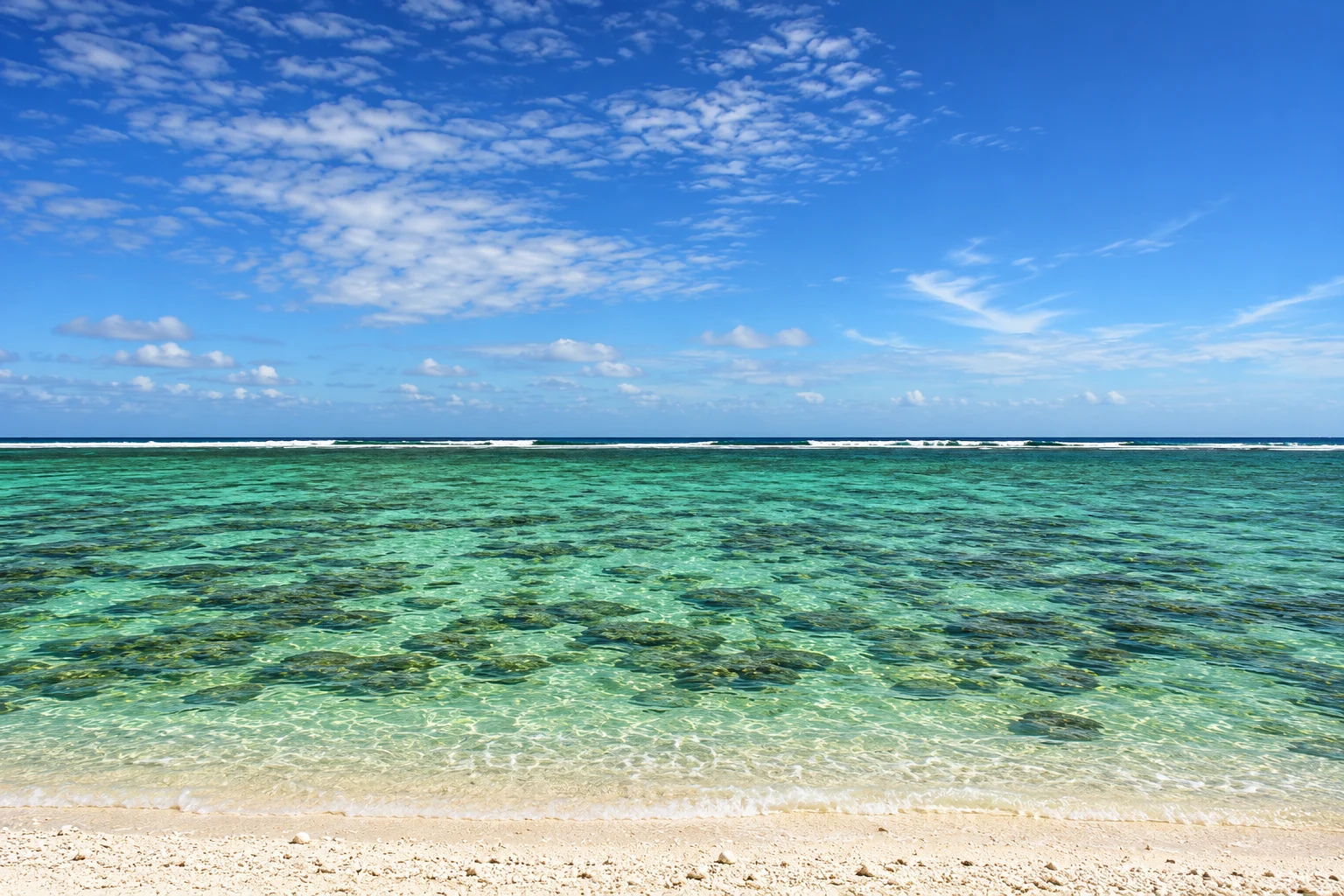
Wear reef shoes to protect against sharp coral and stonefish, and avoid touching or standing on living coral.
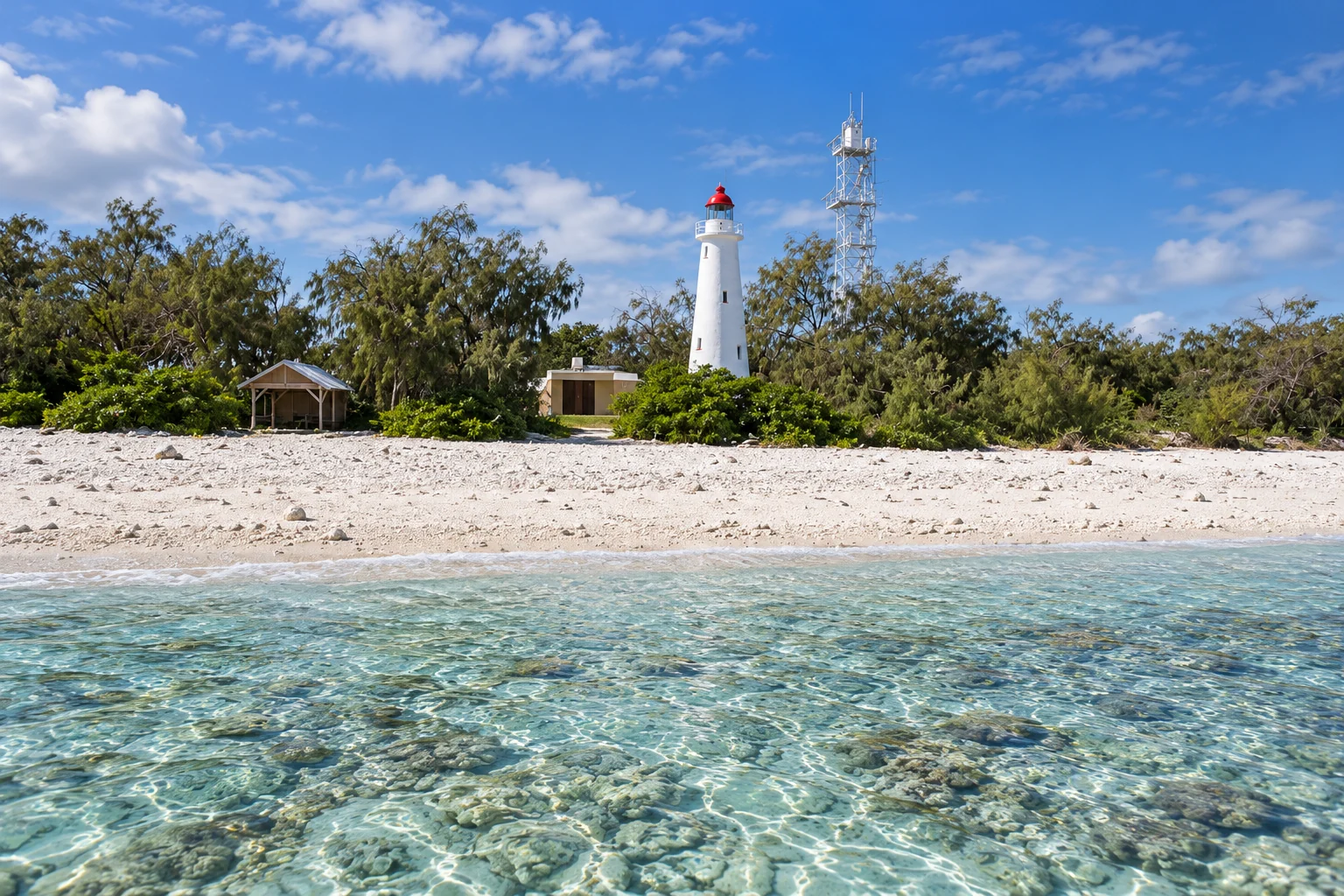
The walk also takes in history. The original lighthouse and the remnants of early dwellings are on the walking route, and a 45-minute historical tour covers the island’s shift from guano mining to a lighthouse outpost. The lighthouse near the beach is a popular photo spot.
Snorkelling, diving and tours
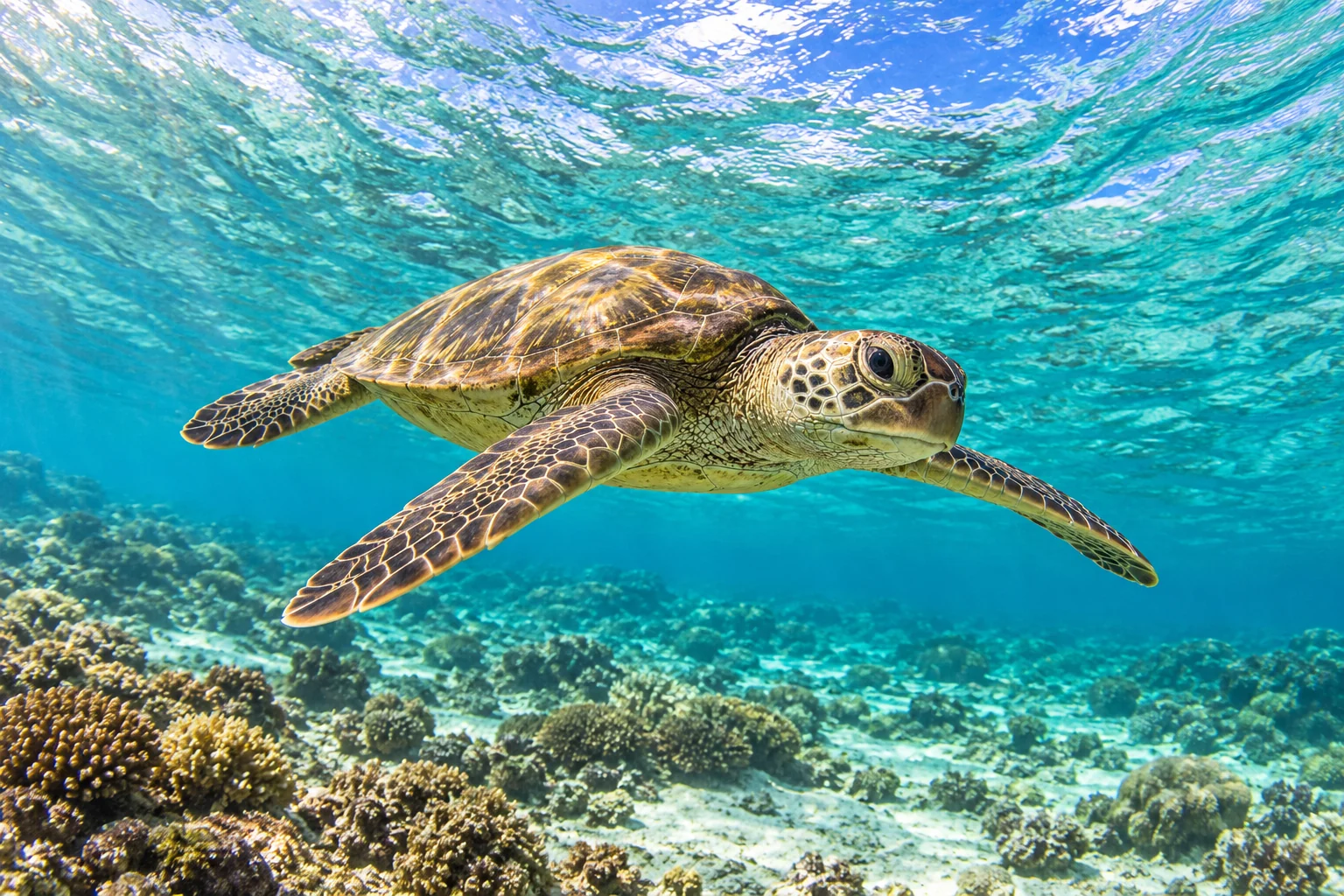
Snorkellers in the lagoon see giant clams, green turtles, clownfish and coral beaches. Guided low-tide reef walks show sea cucumbers, brittle stars and corals, and guided clear-bottom kayak tours run for about 1 hour on the reef in single or double kayaks. Visitors who prefer to stay dry can take a glass-bottom boat ride. The Reef Education Centre runs displays and presentations.
Divers have about 19 dive sites to choose from, including Lighthouse Bommie, Coral Gardens, Moiri and Shark Pool, plus a historic shipwreck. Night diving is offered, resort packages include two escorted dives daily, and a dive shop by the runway handles gear hire and repairs. Divers flying out must leave a 12-hour surface interval after a single dive or 18 hours after multiple dives, so plan the last dive of a stay around the departure time. Full-face snorkel masks are not permitted on guided activities.
Wildlife by season
Several species are on the island all year, and others follow a calendar. The timing below comes from the resort’s seasonal guide, based on 2021 and 2022 season data. Confirm current-season timing with the resort before booking around one event.
| Wildlife or event | Timing |
|---|---|
| Green and loggerhead turtle nesting | About November to March, peaking December to January. About 20 to 30 tracks per night were counted in 2021. Best viewed at night at high tide. |
| Turtle hatchlings | Peak from mid-January to February. Hatchlings usually head to the sea at night, roughly from sunset to 9:30pm, regardless of tide. |
| Resident turtles in the lagoon | Year-round, with sightings almost guaranteed. Best at high tide in the early morning or late afternoon. |
| Manta rays | Year-round, best from June to September. The resort counted at least 40 individuals on one day in 2021. |
| Seabirds | Present year-round. Nesting generally starts around September and most birds leave by the end of April. A small population of white-capped noddies stays all year. |
| Red-tailed tropicbirds | A small colony is present most of the year and absent from February to April. |
| Humpback whales | June to late October. Some pass about 100 m from shore, and whales can be seen from the flight in. |
| Coral spawning | October, November or December, with dates shifting each year. In 2021 brain corals spawned in the lagoon on 25 October. |
The cay has around 57 bird species and more than 50,000 seabirds nesting across it in summer, including noddies, terns and shearwaters. The reef around the cay is a highly protected Green Zone that shelters over 1,200 marine species. Manta sightings are not guaranteed even in the best months.
Best time to visit
The best month depends on what you want to see.
Summer (December to February) is the high season. Turtles nest and hatch, seabirds crowd the cay, and the water sits at about 24 to 25°C from November to March. Humid weather and mosquitoes also run from December to March, which makes the air-conditioned beachfront units more attractive. Summer coincides with the school holiday blackout dates on the Recharge package, so book early.
Winter (June to August) is the low season, with mild, dry weather of about 18 to 25°C from May to September. Manta rays and humpback whales are the draw. The water drops to about 18 to 20°C in June and July, so a long-sleeve wetsuit is advised. Visitor numbers rise during the winter school holidays between May and September.
March and November are shoulder months with fewer visitors and only brief light showers. November also brings the start of turtle nesting and a chance of coral spawning, which makes it a good compromise for visitors who want warm water without the peak crowds.
Vehicle and permit rules
Private vehicles are not part of a Lady Elliot Island visit because arrival is by charter flight only, and there is no road or ferry access. Queensland’s vehicle access permit scheme, run by the Queensland Parks and Wildlife Service, applies to Bribie Island, K’gari (Fraser Island), Mulgumpin (Moreton Island), Cooloola and Minjerribah (North Stradbroke Island). Lady Elliot Island is not on that list, so no vehicle permit is needed. The same QPWS booking terms cover the permit areas.
The rules that do apply to visitors are the operator’s flight and luggage conditions above: drones need prior written approval, restricted items are not carried, and weight and mobility details must be disclosed when booking. Reef rules also apply on the water, where the island’s Green Zone calls for care around living coral. For bookings and questions, call Reservations on +61 7 5536 3644. A side trip to K’gari by vehicle falls under the permit scheme above, so arrange that permit separately.
Summary
- Fly to the island: Lady Elliot Island is reached only by the resort’s charter flights from Bundaberg, Hervey Bay, Redcliffe or Coolangatta, so choose your airport first.
- Choose Bundaberg or Hervey Bay to save money: Return flights cost $540 for an adult from either airport against $1,035 from Brisbane (Redcliffe) or the Gold Coast, with fuel levies extra.
- Pack soft and light: The limit is 15 kg per person in soft bags, with excess at $160 return per 10 kg.
- Match the season to the wildlife: Turtles nest from about November to March, while manta rays and humpback whales peak from June to September and June to October respectively.
- Stay overnight for turtles and dusk activities: Day trips cost $595 per adult from Bundaberg, while overnight rates run from $290 to $660 per person per night with flights extra.
- No vehicle permit is needed: Queensland’s permit scheme covers other sand islands. Lady Elliot Island has no vehicles.