Visitors and new residents see native birds in suburban parks, gardens and along the coast, but sightings vary by region. Start with a bird’s shape and behaviour, then check its colours and call. Habitat narrows the possibilities but cannot confirm an identification on its own.
The list covers birds common in some parts of Australia, with no nationwide ranking of species. For local comparisons, use BirdLife Australia’s Bird Finder to filter species by location and habitat, or the Australian Museum’s bird-identification advice.
Birds in parks and suburbs
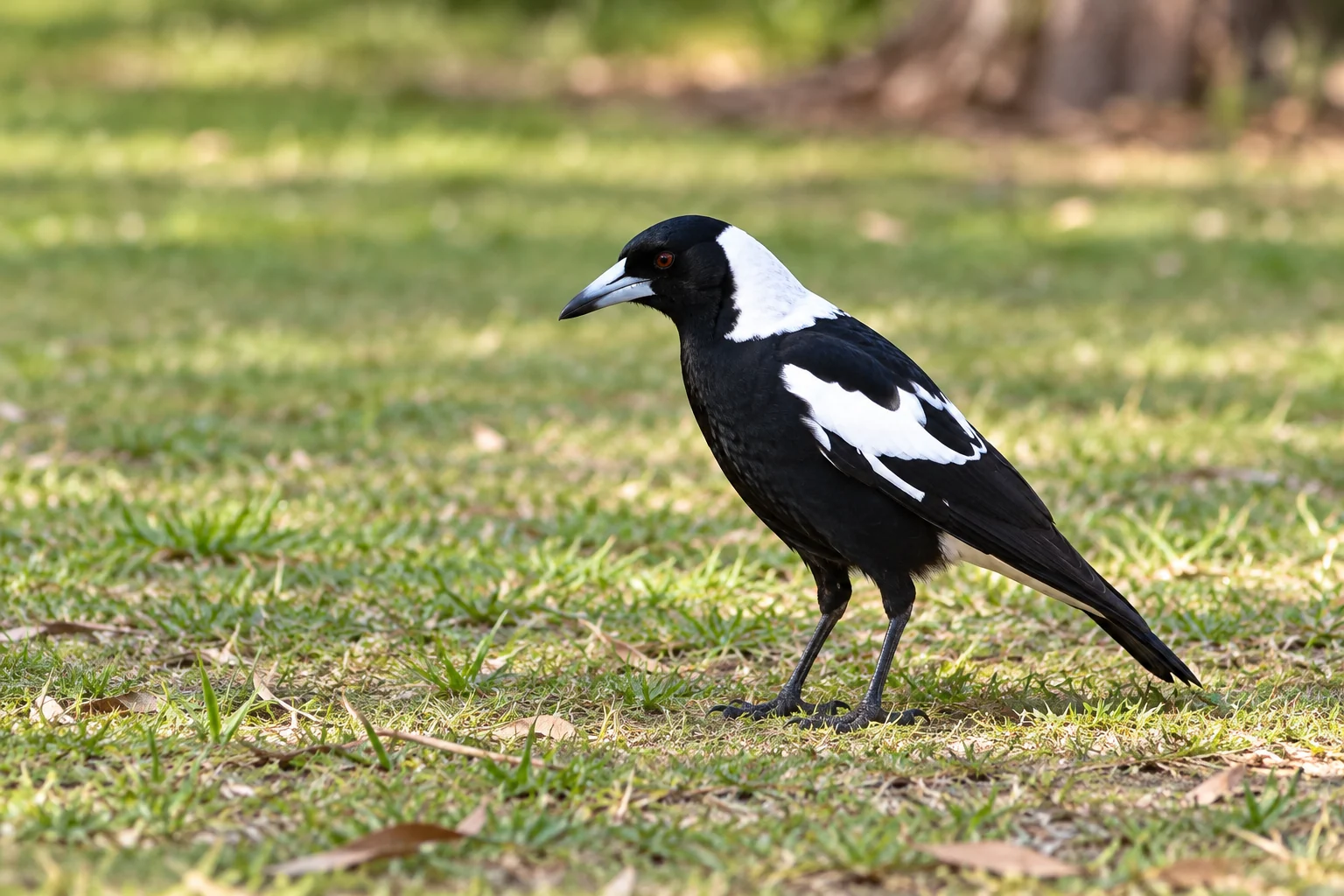
Australian Magpie
This sturdy black-and-white bird has a wedge-shaped bill and often walks across lawns looking for food. Its clear, musical warble is a useful clue. Back patterns vary by region and sex, so use the bird’s build and bill as well as its plumage. Some magpies defend the area around a nest; give them space and do not approach nesting birds.
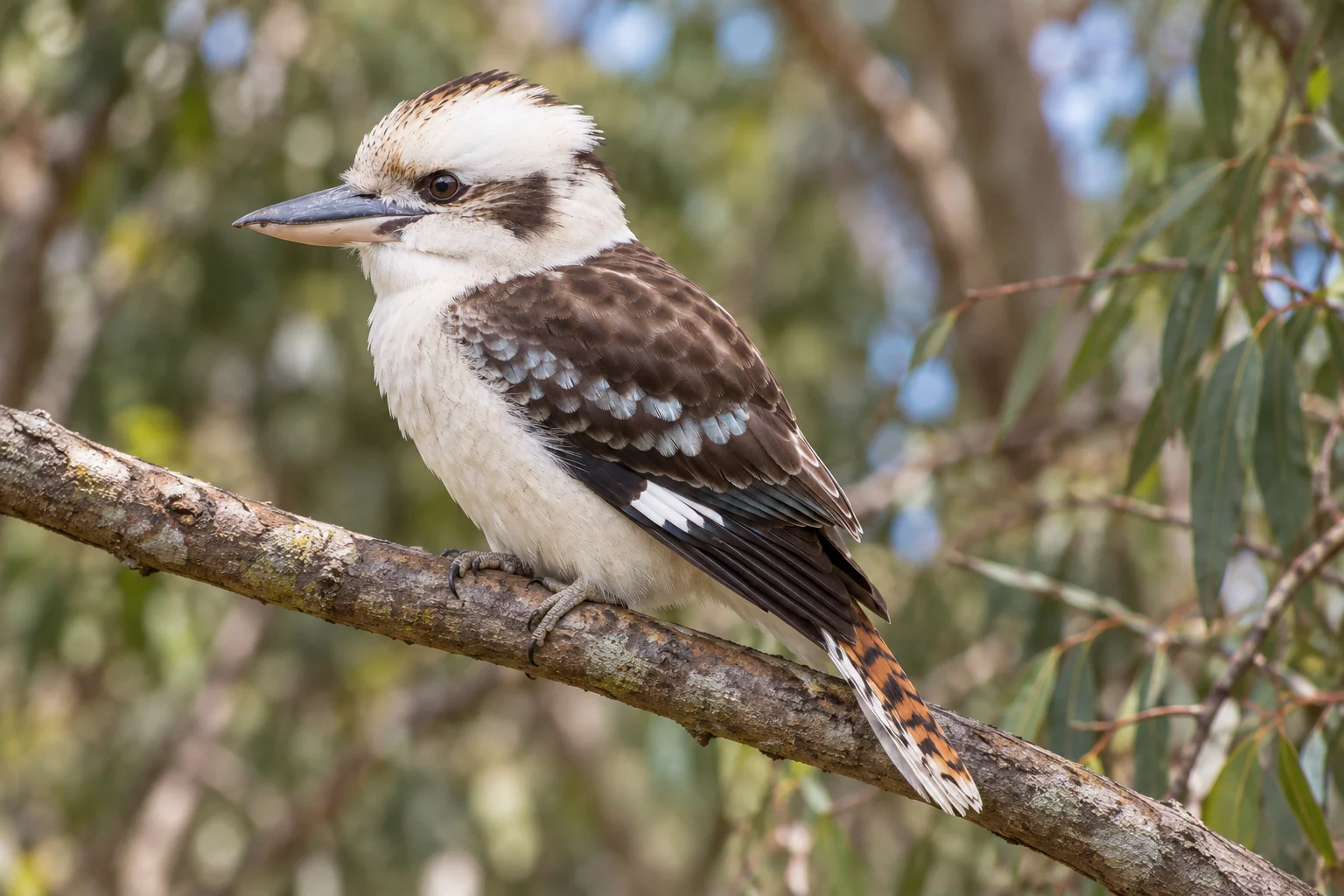
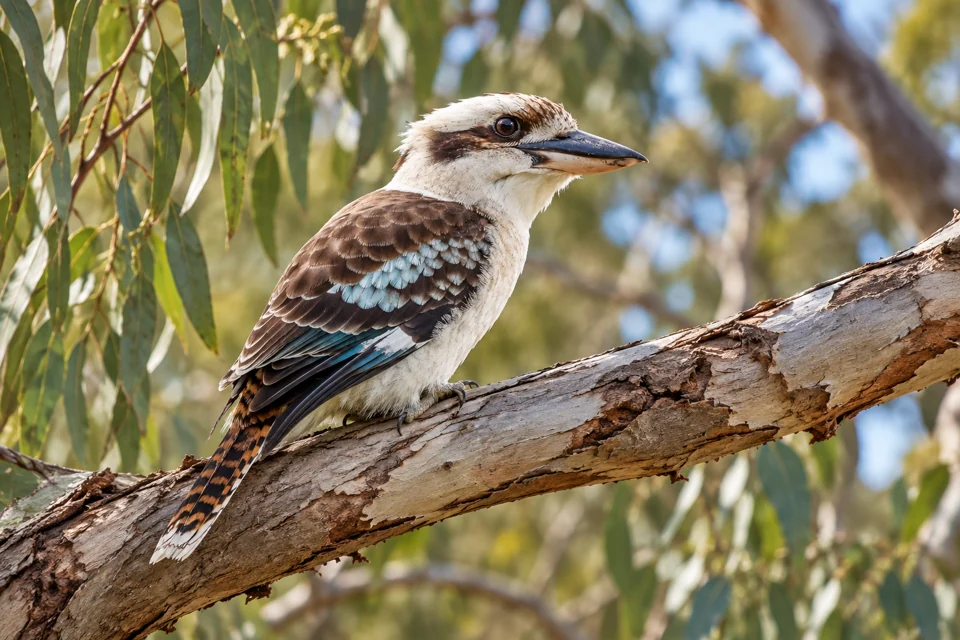
Laughing Kookaburra
Look for a large, stocky kingfisher. Its brown upperparts contrast with pale underparts; a dark stripe runs through the face, and its wings and tail are barred. It often perches in a tree. Its cackling call is territorial, sometimes made by several birds together. It is familiar across much of eastern Australia, but is not equally likely in every region.
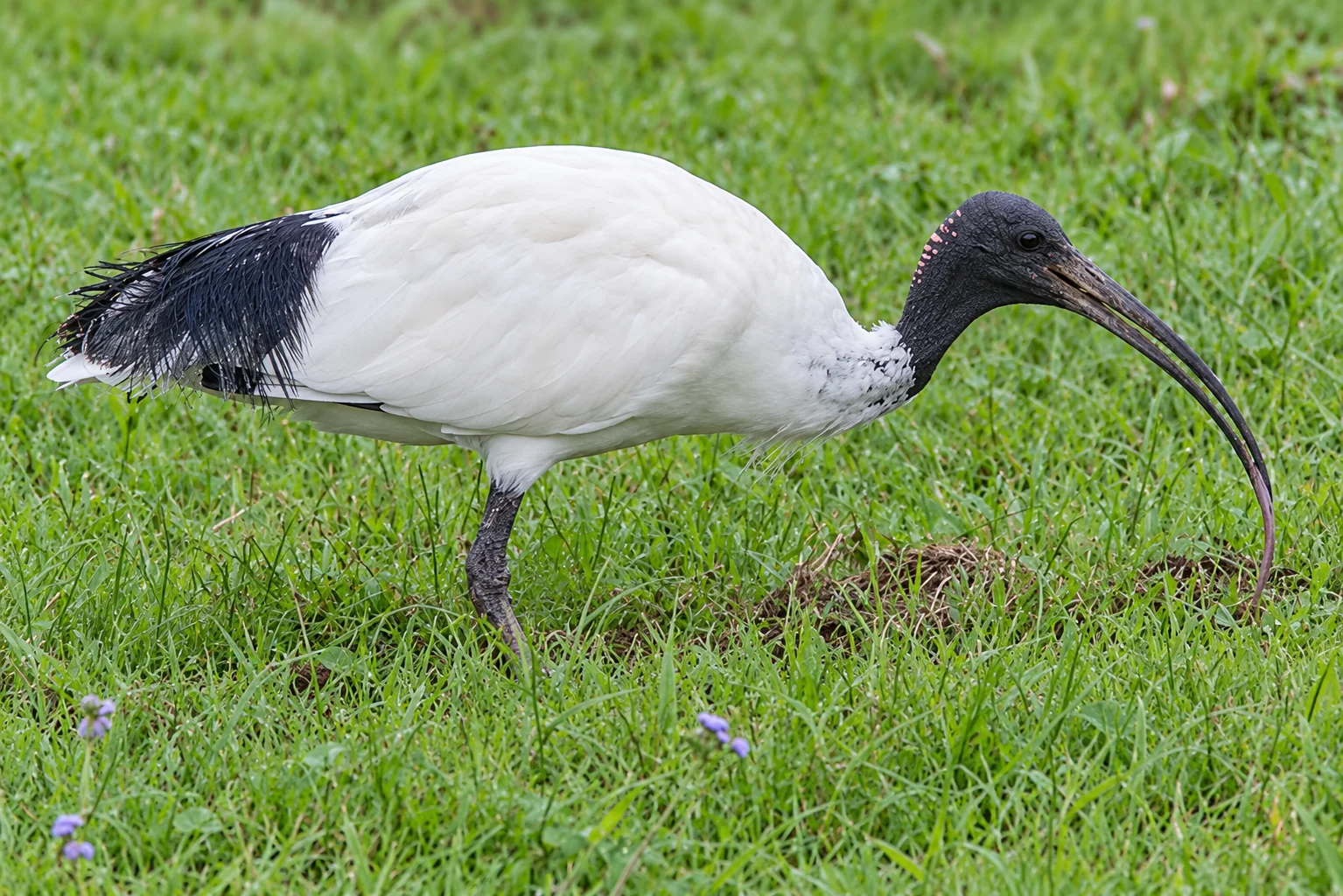
Australian White Ibis
The long, down-curved black bill and bare black head make this large, mostly white bird distinctive. It probes for food in wetlands and on tidal mudflats, as well as in grassy parks. Adults can have a pale tuft at the back of the neck, and flocks in flight may form a V. Its call is a drawn-out croak. The species occurs widely across Australia but is absent from Tasmania.
Birds in flowering trees and flocks
Rainbow Lorikeet
This colourful parrot has a bright red bill and a blue-violet head and belly. Its wings and back are green, and its breast is orange-yellow. Listen for screeching and chattering above flowering trees, then look for a fast-moving flock. Rainbow Lorikeets are familiar in eastern Australia and around Perth, and their range varies across the country.
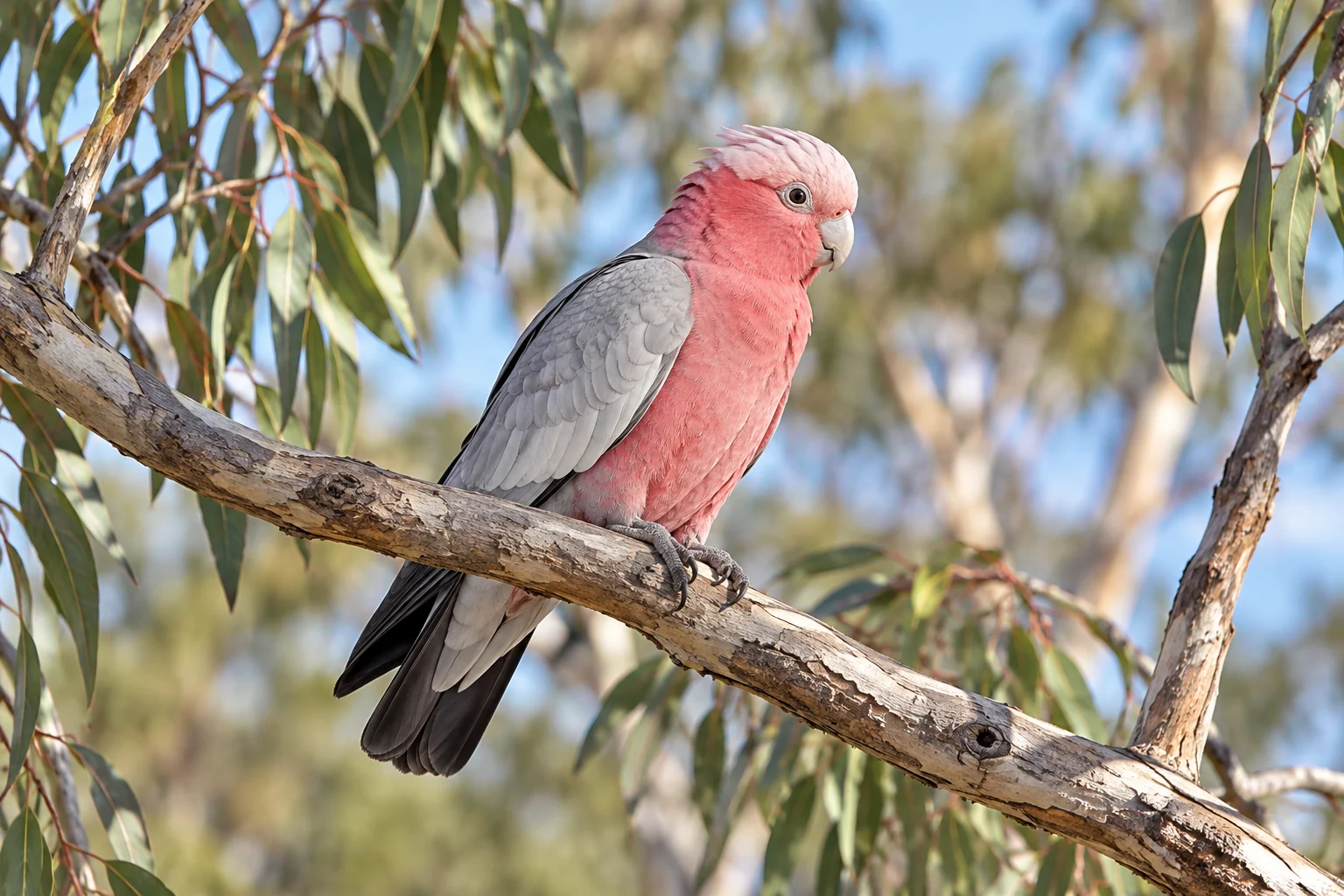
Galah
Pink plumage covers their heads and underparts; their backs and wings are grey. They often feed on the ground or gather in flocks. Their high-pitched screeches can carry across parks and open areas. The pink-and-grey plumage distinguishes a galah from the mostly white Sulphur-crested Cockatoo; galahs in western Australia tend to have paler plumage.
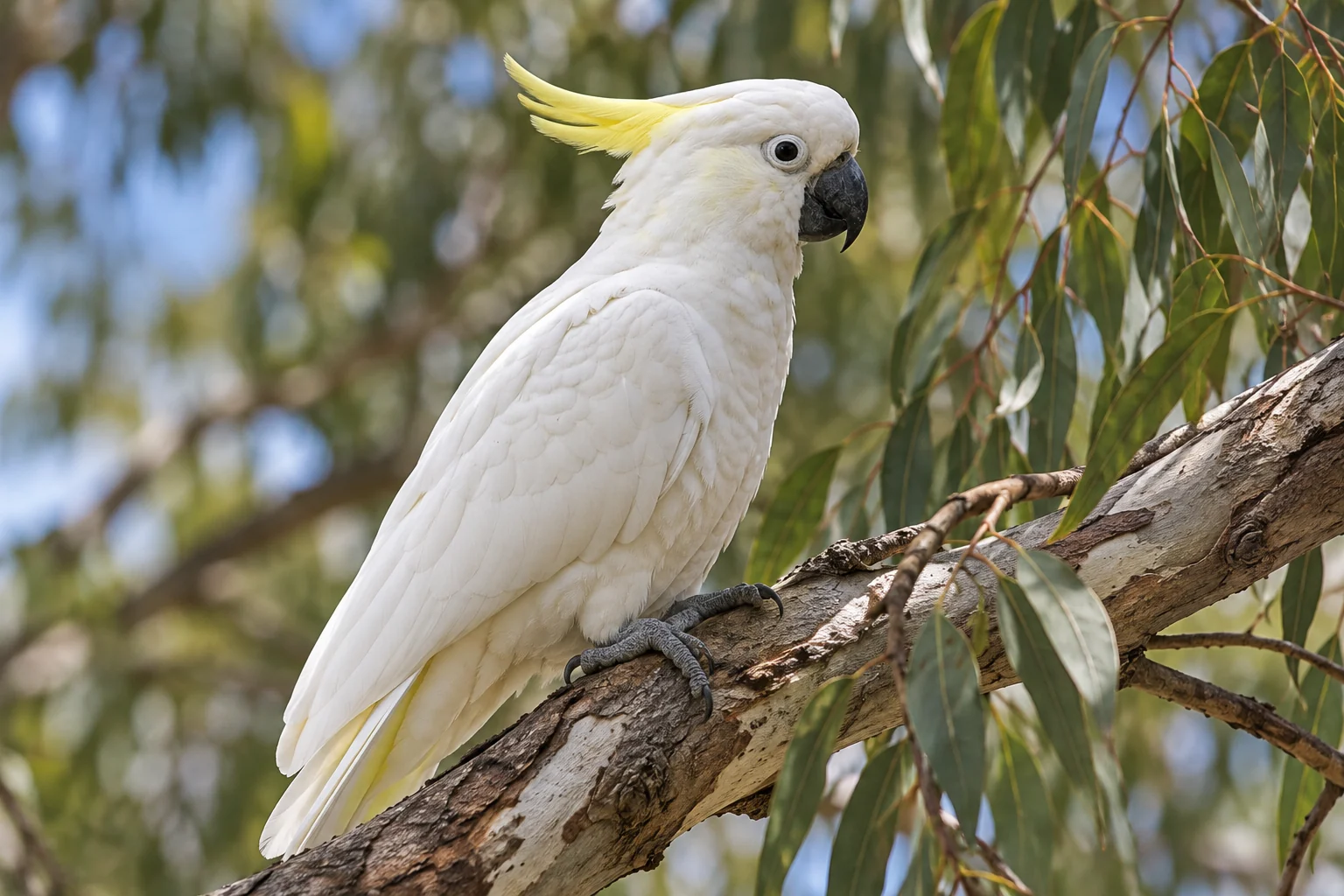
Sulphur-crested Cockatoo
This large white cockatoo has a yellow crest and yellow colouring beneath its wings, along with a dark bill. It often feeds on the ground in flocks, while other birds perch nearby. Its call is a loud, rising screech. It is common around human settlements in eastern and northern Australia, rather than throughout every part of the country.
Birds along the coast
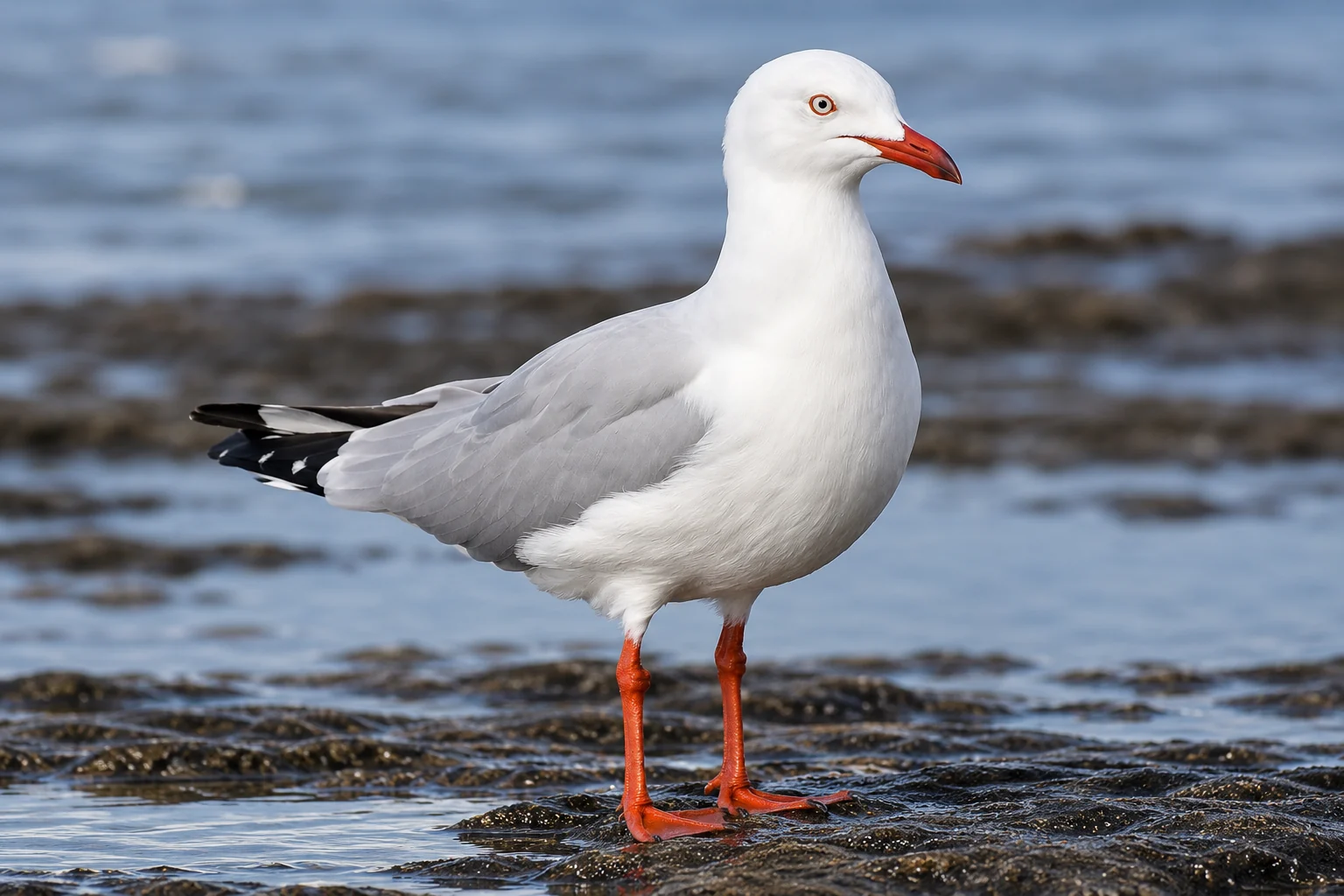
Silver Gull
The familiar gull has a white head and underparts, a light-grey back and black-tipped wings. Adults have orange-red bills and legs. Look for it around coasts and other watery places, where gulls gather on the shore or near people. Its appearance is a better identification clue than any assumption based on location: gulls also visit other habitats.
How to identify Australian birds
Compare the bird’s size and shape before relying on colour. A heavyset bird with a wedge-shaped bill points towards an Australian Magpie; a long-billed bird probing wet ground suggests an Australian White Ibis. Then note its behaviour and habitat. A flock feeding in a flowering tree, for example, is a useful clue to Rainbow Lorikeets.
Calls help you locate birds and support a visual identification, but sound alone can mislead. Plumage also varies with age, sex and region. BirdLife Australia’s Bird Finder lets you filter by state or territory. You can also filter by habitat, size, colour and shape, and its species profiles include calls. The Australian Museum’s “What bird is that?” advice explains how to combine a bird’s appearance and behaviour with its habitat and sound. Its “Birds in Backyards” list presents urban examples; it is a selection and carries no national abundance ranking.
In pictures
More in pictures
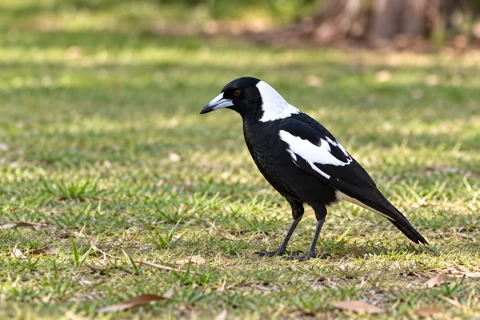
An Australian magpie on short grass. 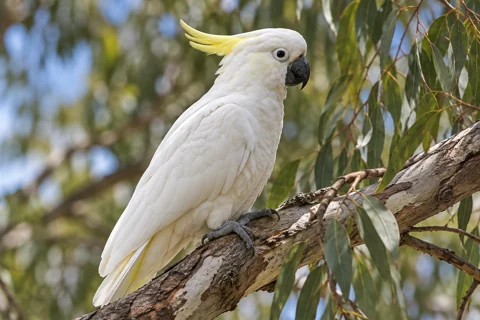
A sulphur-crested cockatoo perched on a branch. 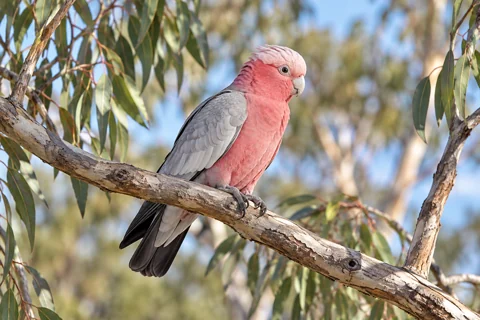
A galah with its pink breast and grey wings. 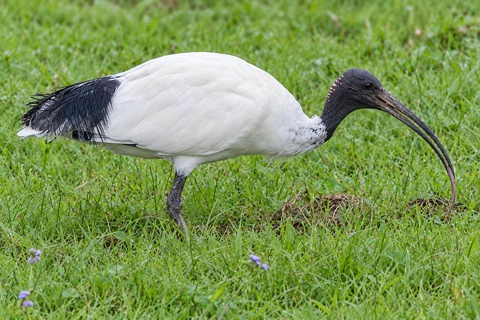
Australian white ibis, with a bare dark head and a long downcurved bill. 
Rainbow lorikeet, showing its blue head, orange breast and long green tail. 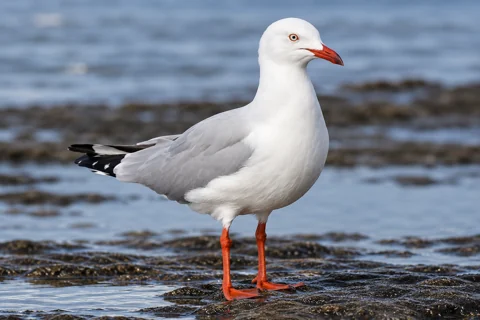
Adult silver gull, with red legs and bill, pale grey wings and black wing tips. 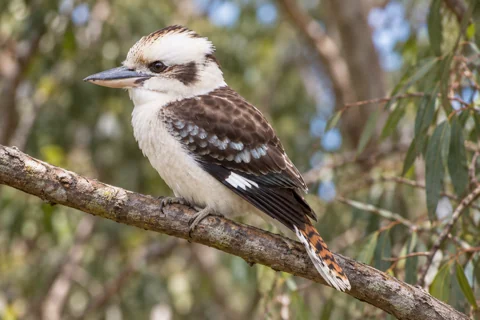
A laughing kookaburra showing its stout bill, dark eye stripe and barred tail.