Australia has patrolled surf beaches where lifesavers watch the water, and thousands of unpatrolled stretches of coast. In the tropical north, jellyfish and saltwater crocodiles are a constant risk. Visitors and new residents are safest when they swim between the red and yellow flags at a patrolled beach, learn to recognise a rip current (a narrow, fast flow of water heading out to sea), and treat every northern waterway as unsafe unless it is signposted otherwise.
Being strict about this matters because 73% of coastal drowning deaths happen more than one kilometre from a lifesaving service, according to Surf Life Saving Australia (SLSA). The sections below cover flags, rips, stingers, crocodiles and the groups most at risk.
Reading Australian beach flags
The red and yellow flags mark the supervised swimming area of a patrolled beach and show that a lifesaving service is operating. Surf Life Saving Queensland says to always swim at patrolled beaches and only between these flags. SLSA describes this as the safest place to enter the water during patrol hours. The system dates back to 1935, when red and yellow flags were introduced, and red and yellow caps became standard for lifesavers in 1939.
| Flag | Meaning |
|---|---|
| Red and yellow | Swim between these flags. A lifesaving service is operating. |
| Red | No swimming. |
| Yellow | Caution. Potential hazards are present. |
| Red and white | Evacuate the water, according to Beachsafe. |
| Black and white | Surf craft zone. Surfers and board riders stay outside these flags, which sit next to the red and yellow flags. |
The black and white flag meaning comes from a Central Coast Council release in New South Wales (NSW) in 2018, so look for local signs that confirm it at the beach you are visiting.
Why the flags move
Lifesavers check conditions each morning and place the flags according to depth, wave pattern, obstacles and possible rips, as SLS North Coast explains. The SLSA patrol captain makes the call, and Healthdirect notes that the flags may be moved during the day as conditions change. A spot that was safe at 9 am may have shifted by the afternoon, so check where the flags are each time you enter the water, not just when you arrive.
When there are no flags
Healthdirect gives the rule "NO FLAGS = NO SWIM." Beachsafe advises that if there are no red and yellow flags you should check with a lifeguard, and stay out of the water if you are unsure. Some hazard signs are permanent, while lifeguards set others daily because rip currents move from day to day.
Surf Life Saving Queensland lists the hazards a beach can present: surf size and strength, unpredictable rips and gutters, and dangerous marine creatures. It recommends asking a lifesaver or lifeguard when you are unsure. If you are not confident in the water, stay in shallow water where you feel in control.
Patrol hours and seasons
Patrols run only during set hours and seasons. In 2018, Central Coast Council on the NSW coast had council lifeguards on 15 beach locations from Monday to Friday, and Surf Life Saving members covering 15 locations on weekends and public holidays. That 2018 season began on 29 September, and the council expected about 3 million visitors to its patrolled locations. Patrol dates and hours differ between councils and clubs, so check the beach’s club or council page before you travel. Outside patrol hours, the rule for unflagged water applies.
Who drowns and when
The 2026 National Drowning Report, released on 10 September 2026 by Royal Life Saving Australia with SLSA, recorded 313 drowning deaths in 2025/26. That is 10% above the 10-year average, though lower than the record 357 in 2024/25. Coastal locations (beaches, ocean and rocks) accounted for 151 deaths, or 48% of the total, and 66 of those deaths were at beaches. Ocean and harbour deaths were up 55% on the 10-year average.
Several patterns are useful when judging your own risk:
- Age: People aged 65 to 74 had the highest drowning rate of any age group, and rates were above the 10-year average in every age group over 45. For older adults, the report links risk to medications and medical conditions.
- Birthplace: Where it was known, 39% of people who drowned were born overseas.
- Location: Drowning rates were nearly triple in regional areas compared with cities. The national reports page gives "nearly quadruples" for remote residents.
- Holidays: The Summer Coastal Drowning Report 2025–26, as summarised by the Australian Sports Commission, recorded 50 coastal drowning deaths over the summer, 92% of them male. Coastal drowning risk was 3.6 times higher on public holidays and long weekends.
The report cites declining swimming and water-safety skills, an ageing population and a changing climate as drivers. SLSA chief executive Adam Weir’s advice is to swim at a patrolled beach between the flags where possible and avoid unnecessary risks. Long weekends and public holidays are the days to be most disciplined about that.
Spotting a rip current
A rip carries water back out to sea through a gap in the breaking waves. The SLSA Rip Currents fact sheet lists five signs:
- Deeper or darker water.
- Fewer waves breaking.
- Sandy-coloured water extending beyond the surf zone.
- Debris or seaweed moving offshore.
- Significant water movement.
A rip rarely shows all five at once. The fact sheet’s method is to find where waves break consistently, then compare that with the areas beside it where they do not. The areas where waves do not break are often rips. Surf Life Saving NSW adds another sign: a rippled surface surrounded by smoother water. Coastal scientist Dr Rob Brander, known as "Dr Rip," has said that a calm, quieter channel between breaking waves is often a rip, and that a darker gap can also indicate one.
Beachsafe warns that rips change shape and location quickly and can be hard to see. A visitor who cannot confidently read the water should use the flags, because lifesavers place them away from rips.
How often rips kill
According to the SLSA fact sheet, rip currents cause at least 21 drownings in Australia each year on average. In the National Drowning Report 2023, covering 1 July 2022 to 30 June 2023, rips were the top coastal hazard, linked to 28 coastal drowning deaths, about one in five. In the 2025–26 summer, 42% of beach drownings were rip-related.
Escaping a rip
The SLSA fact sheet gives four steps. Stay calm and conserve energy. Raise an arm and call out for help, because you may be rescued. Float with the current, which may carry you back toward a shallow sandbank. If you are still being carried out, swim parallel to the beach or towards the breaking waves, which may take you out of the rip. Surf Life Saving NSW notes that a rip may circulate and return you to a nearby sandbar.
The first step goes against instinct. Swimming straight back against a rip exhausts you, so floating first buys time and may bring you to shallower water. Beach Safety Hub frames the same sequence as "Stop – Think – Plan". Follow the SLSA sequence.
Stinger season in northern Australia
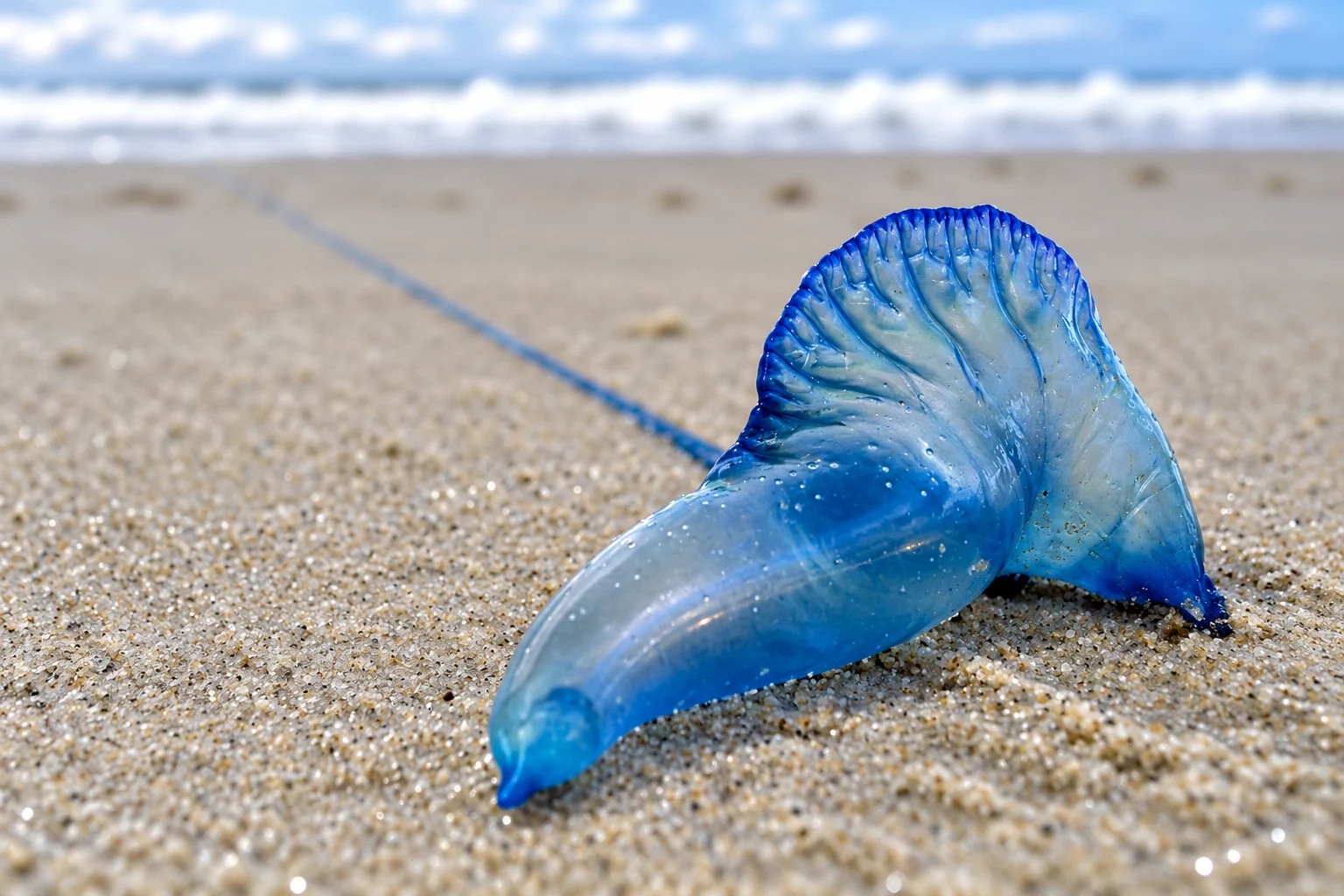
Box jellyfish and Irukandji are the two stinging jellyfish groups to know in tropical Australian waters. The Northern Territory (NT) Government says box jellyfish are more likely to be in NT waters from 1 October to 1 June, which it calls stinger season. Stings have been recorded in every month of the year. The animals live in shallow water along the northern coast, and after local rain and in calm seas many may gather near river and creek outlets and boat ramps. The NT page was last modified on 7 September 2023, so check it for current advice.
Northern Territory
Box jellyfish venom can kill a person in under five minutes. Children are at greater risk because of their smaller body mass. Since 1975, 14 people have died from box jellyfish stings in the Top End, all of them children. Irukandji can result from certain box jellyfish types in NT waters, some as small as a thumbnail with only four tentacles.
Surf Life Saving NT lists Irukandji symptoms including agitation, confusion, loss of consciousness, respiratory failure and cardiac arrest. Victims may need CPR and typically need hospital care and strong pain management.
Queensland
Tropical North Queensland tourism says box jellyfish and Irukandji are found along the coast as far south as Gladstone, from around October or November to May or June. It adds that many popular beaches have stinger nets patrolled by lifeguards so people can swim safely. Swim inside the netted enclosure where one is provided, and treat open water outside it as unprotected.
Staying out of reach
The NT Government’s advice is to stay out of the water where jellyfish may be, especially in stinger season. If you enter, cover exposed skin: the more skin you cover, the greater the protection. Special stinger suits are available for coastal water activities, though the NT page does not make them compulsory. Surf Life Saving NT recommends long-sleeved tops with shorts or a sunsuit, because stings have occurred in every month.
First aid for jellyfish stings
The NT Government’s steps for a box jellyfish sting are:
- Get out of the water.
- Call 000, or get a lifeguard if one is available.
- Check the person and start CPR if needed.
- Pour vinegar on the sting. Do not use fresh water.
- If vinegar is not available, pick off any remaining tentacles, using your fingers and palms because the skin there is thicker.
- Seek urgent medical help. Antivenom may be needed for severe stings.
Ice or hot packs may be used for minor stings, but only ice packs are recommended for severe ones. St John Victoria also advises vinegar for at least 30 seconds, no rubbing of the sting and no fresh water. Patrolled northern beaches may keep vinegar at the lifesaving tower, so ask a lifesaver there first.
Crocodiles in the Top End
The NT Government’s guidance on swimming is to assume that any water body within the saltwater crocodile’s natural range is unsafe unless it is signposted otherwise. Most fatal crocodile attacks in the NT over the past 20 years happened when people entered the water outside designated swimming areas. No time of year is completely safe. Crocodiles may be more active in the warmer wet season, but they are present in Top End waterways all year. If a waterway has no swimming-area sign, do not swim there, because it may not be free of saltwater crocodiles. Pets should not swim either, because crocodiles prey on animals.
The NT manages crocodiles actively in some locations, using traps, harpooning and surveys to find and remove animals, alongside education programmes. These measures reduce risk at designated sites but do not make unmarked water safe.
Designated swimming sites
The NT Government publishes a list of open swimming sites and their seasonal status. A snapshot of that list shows how much the status varies:
- Open all year: Leanyer Recreation Park, Lake Alexander, the Wave Lagoon, and the toddler and rock pools at Howard Springs Nature Park.
- Dry season only: Berry Springs Nature Park, Wangi Falls, Walker Creek, Tjaynera Falls, Butterfly Gorge Nature Park, Tjuwaliyn (Douglas) Hot Springs Park, and the plunge pool and upper pools at Leliyn (Edith Falls).
- Open all year except during extreme flooding: Florence Falls, Buley Rockhole, Sweetwater pool, Mataranka thermal pool and Bitter Springs.
Seasonal status changes, so check the NT Government page before you set out.
Darwin’s patrolled beaches
Surf Life Saving NT strongly recommends swimming at Mindil, Nightcliff and Casuarina beaches in Darwin when lifeguards are on duty, and reports no fatal crocodile attack at these patrolled beaches in over 130 years. For unpatrolled beaches, follow NT Parks & Wildlife Service advice before entering the water. Darwin’s patrolled beaches carry the same stinger risk as the rest of the Top End, so the cover-up advice above applies there.
Signs of crocodiles and safe habits
Warning signs are posted at camping areas, swimming spots and fishing areas, but a missing sign is no guarantee of safety. Slide marks on banks, large tracks in sand and sightings all indicate that crocodiles are present. Guidance for Top End visitors adds several habits:
- Camp only in designated sites and avoid areas with slide marks or tracks. Do not leave food or waste around camp.
- Do not swim at night or in murky water.
- Do not wade, paddle or stand in the water at boat ramps, causeways or murky edges.
- Clean fish well away from the water and boat ramps, and put frames and scraps in bins, not in the water.
Crocodiles can see you before you see them, so stay alert near any water and do not turn your back on it. They move quickly and can jump out of the water. Fishing guidance suggests keeping at least 5 metres from the water’s edge, and the RACV crocodile safety guide advises against standing close to the edge.
Guides to the Top End also advise against swimming where only freshwater crocodiles live, and against assuming smaller crocodiles are harmless. NT Government guidance in its crocodile safety PDF is never to feed, provoke or interfere with crocodiles, even small ones, because crocodiles that have been fed or feel threatened may bite.
Reporting a sighting
In Queensland, report crocodile sightings to the CrocWatch hotline on 1300 130 372 or through the QWildlife app. In the NT, report to the Parks and Wildlife Commission. Timely reports help managers locate the animal.
Practical rules before you swim
A few habits cover most of the risks described above. Choose a patrolled beach and check the patrol hours. Walk up to the flags and ask a lifesaver about the day’s conditions, especially if you are unfamiliar with the surf. Stay in shallow water if you are not a confident swimmer. In the tropical north, wear a stinger suit or covering clothing during stinger season, and swim only at netted or signposted locations. Treat unsigned northern waterways as crocodile habitat. Older swimmers, and anyone on medication or with a medical condition, should take extra care, given the age and health patterns in the drowning data.