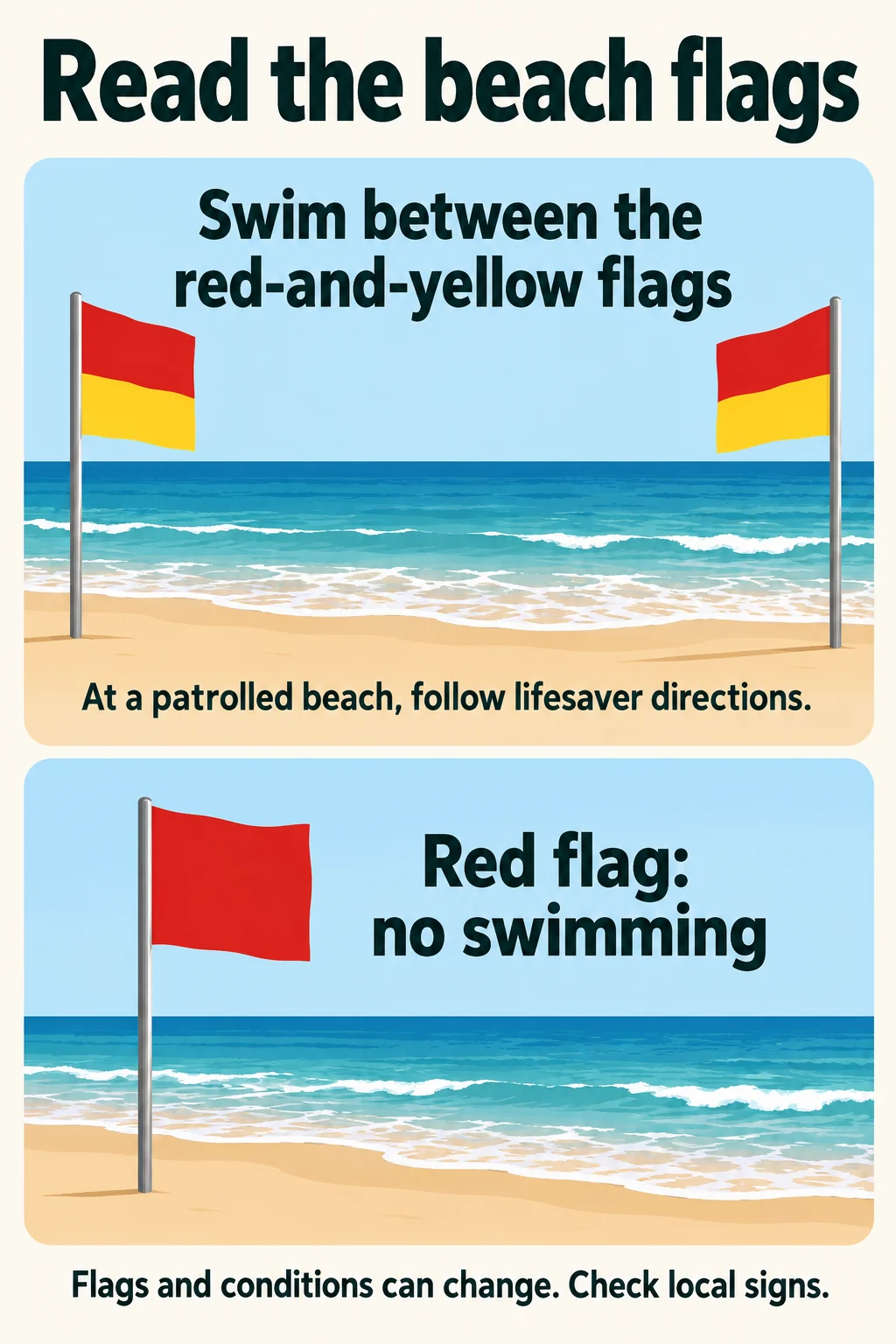
At an Australian beach, swim between the red-and-yellow flags at a patrolled beach, follow local signs and stay out of the water if it is closed. Hazards remain in areas supervised by lifesavers, and rips, marine animals and conditions vary between beaches. Ask a lifesaver if you’re unsure.
Understand Australian beach flags
Red-and-yellow flags mark the recommended swimming area. Stay between them and watch for changes to the flags, signs or lifesavers’ instructions.
A red flag means no swimming. A yellow flag warns that hazards are present, so check nearby signs and ask a lifesaver if you do not understand the warning. Red-and-white flags signal that swimmers must leave the water. Black-and-white chequered flags mark a boundary for surfboards and other surfcraft; they do not mark the supervised swimming area.
If no red-and-yellow flags are operating, do not assume the beach is patrolled. Check local signs and ask lifesaving staff where available.
Recognise and escape rips
A rip is a strong current that flows away from shore through the surf. It may appear as a gap in breaking waves. The water may also look darker or deeper, appear discoloured as it moves out to sea, or carry a line of floating debris. Rips move and can be difficult to see, so a visual scan cannot replace swimming between the flags.
If a rip carries you away from shore, stay calm, raise an arm and call for help. Float to conserve energy and follow a lifesaver’s directions. Swimming parallel to shore or towards breaking waves may help some swimmers, but the right action depends on the current and your ability. Do not exhaust yourself trying to swim directly back against the flow.
Reduce marine hazards
Marine risks vary by region. In northern waters, follow local warnings about tropical stingers such as box jellyfish and Irukandji. Season dates differ by location, and dangerous species can occur outside the usual season. Where local authorities recommend it, wear a full-body stinger suit. Avoid touching marine animals, shells or coral, and supervise children around rock pools and slippery rocks.
In areas where saltwater crocodiles may live, follow local warnings and stay out of water where crocodiles may occur, even if no warning sign is present. Swim only in designated safe areas that are regularly checked and signposted.
Shark attacks are rare, but reduce risk by swimming with someone else and avoiding murky water, river mouths, baitfish, dawn and after dark. Leave the water immediately if lifesavers signal a shark warning or evacuation. Do not swim while bleeding or with pets.
Respond to stings
First aid depends on the animal. For a serious sting or severe symptoms, get help from a lifesaver and call 000 for an ambulance. Remove the person from the water and monitor them. If they are unresponsive and not breathing normally, start CPR.
Do not use vinegar for a bluebottle sting. For a clearly identified, localised bluebottle sting, rinse with seawater and use hot water for pain relief. For potentially lethal jellyfish stings, ANZCOR advises considering household vinegar on the stung area for 30 seconds. Do not use vinegar for bluebottles. Call 000 for serious symptoms, remain with the person and follow emergency instructions.
Protect yourself beyond the water
Swim with someone else and stay within your ability. Supervise children closely. Avoid swimming after alcohol or drugs. Check the forecast and local beach warnings before entering the water, and leave if conditions become unsafe.
Use several forms of sun protection, including clothing, a hat, shade, sunglasses and sunscreen. The Bureau of Meteorology recommends sun protection when the UV Index is 3 or above; cool or cloudy weather does not mean UV exposure is low.
Explained visually
Read the swimming flags
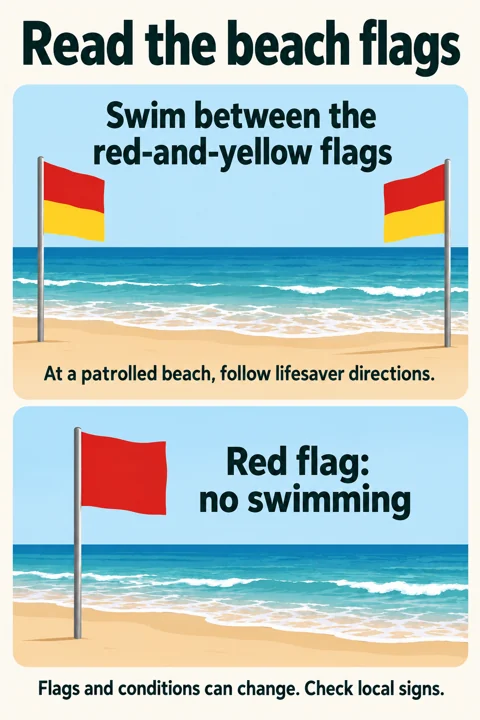
Red-and-yellow flags mark the recommended swimming area; a red flag means no swimming. Follow current lifesaver directions.