Warrnambool is a coastal city on Victoria’s south-west coast, about 260 km west of Melbourne. The council’s Coastal Management Plan, finalised in February 2014, calls it the largest coastal city outside Port Phillip Bay.
Visitors come to see southern right whales at Logans Beach from June to September, to walk the foreshore and its heritage breakwater, to visit the maritime museum at Flagstaff Hill, and to see Moyjil, a headland of deep significance to the Eastern Maar people. The city sits at the western end of the Great Ocean Road, so it is a starting point for the drive to Port Campbell and the Twelve Apostles.
Whale watching at Logans Beach
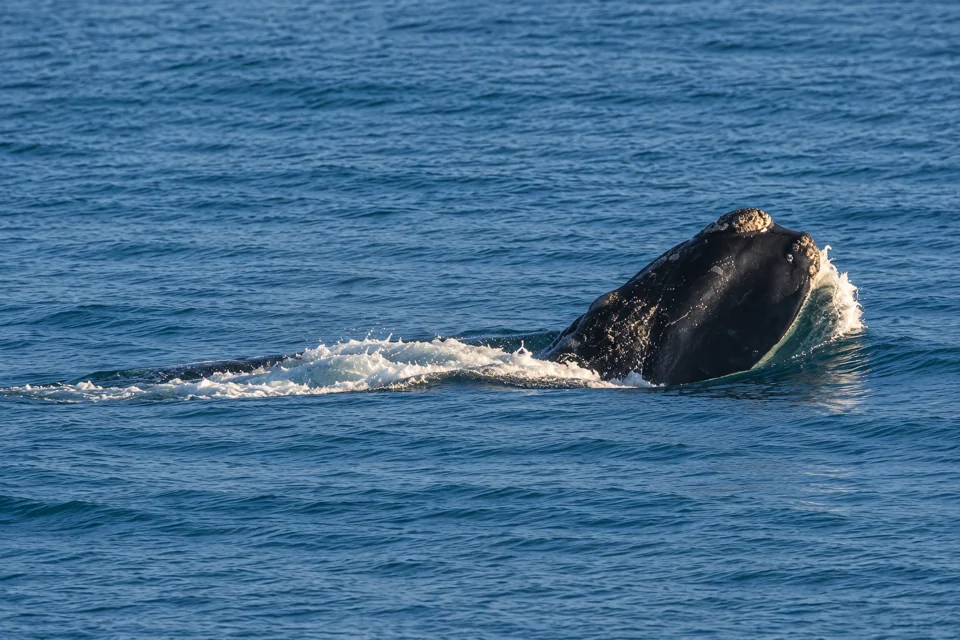
Female southern right whales return to Logans Beach to calve almost every year between June and September, and they often swim within 100 metres of the shore, as the Warrnambool visitor site explains. Whales arrive in late May or early June, and mothers stay in water 5 to 10 m deep for 8 to 12 weeks before heading south in October, according to Great Ocean Road tourism. Southern right whales were hunted almost to extinction. Whaling was outlawed in 1935, and numbers have grown since. Mothers use shore-side nursery areas, while males, yearlings and young adults stay further offshore.
Spotting the whales
Southern right whales have no dorsal fin and a smooth black back. Visit Victoria notes that each animal has a different pattern of callosities, the crusty outgrowths on the head, and some have irregular white belly patches. Binoculars or a telescope make a clear difference, and winter is the best time to visit, so dress for wind and rain.
The viewing platform
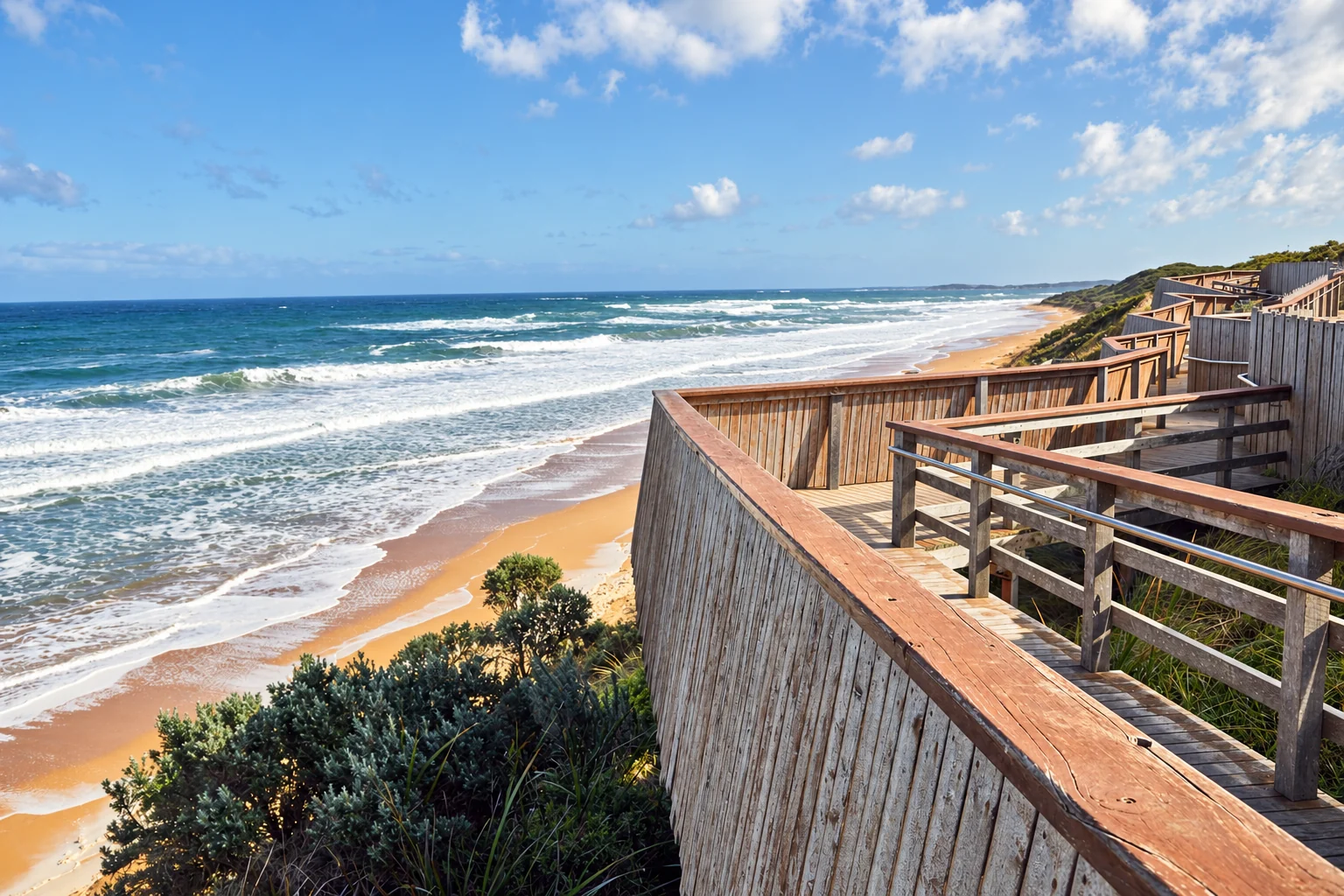
The platform sits in the sand dunes and is free and open at all times. A ramp provides access for people of all abilities, and visitors can also watch from the beach. Logans Beach is on the eastern edge of Warrnambool and signposted from both directions on the Princes Highway. Great Ocean Road tourism describes a free car park, a short paved path and interpretation signs on whale biology and the calving cycle. The nearest toilets are about 1 km away at the Hopkins River.
Rules and planning
The visitor guidance sets 100 m as the viewing distance. It also asks people to stay off fragile vegetation and sand dunes and to use the provided facilities. The Standard reports a protected exclusion zone at the nursery from June to the end of October each year, which shields mothers and calves.
Whales are not always visible on a given day, so plan more than one visit. Phone the Visitor Information Centre on 5559 4620 before going. The visitor site also directs people to sighting updates at visitwarrnambool.com.au and on the Warrnambool Facebook page for sightings.
How significant the nursery is
The 2013 plan describes Logans Beach as Victoria’s main site for land-based whale watching and one of only ten main calving areas for southern right whales in Australia. It reports that between 4 and 21 individuals visit between May and October, and estimates that land-based whale watching drew about 37,190 tourists a year and added $2–2.5 million annually to the local economy. These are 2013 figures, based on studies from 2009 and 2011.
Whale watching near Portland
Visitors who want more time with whales can continue west to Portland. Visit Victoria recommends June to August for southern right whales between Cape Bridgewater and Narrawong. Good vantage points include the port, the harbour, Cape Bridgewater and the cliffs above Nuns Beach. Whales sometimes play within metres of the Lee Breakwater. Blue whales are generally seen off Portland from November to May, feeding on krill at a distance off headlands such as Cape Nelson and Cape Bridgewater.
Beaches and coastal walks
Warrnambool City Council manages the coastal Crown land from Levy’s Point Coastal Reserve in the west to Logans Beach in the east. Parks Victoria manages the Merri Marine Sanctuary at the Merri River mouth. Between them lie Thunder Point, Pickering Point, Stingray Bay, Shelly Beach, Lady Bay, Point Ritchie (Moyjil) and the Hopkins and Merri river estuaries.
Foreshore Promenade and Breakwater
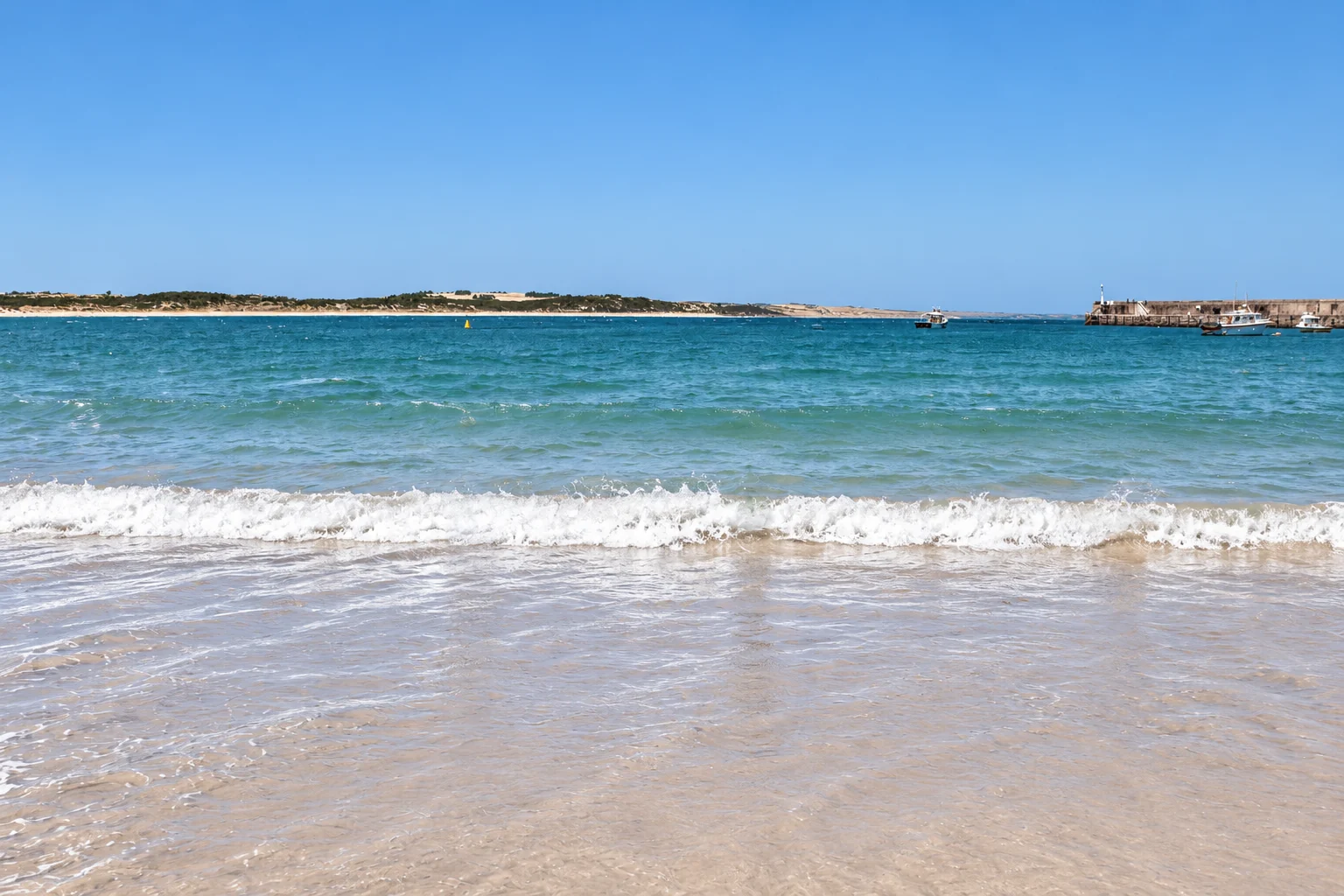
The Foreshore Promenade runs 5.7 km along the waterfront, past Lake Pertobe’s playground and picnic shelters to the Breakwater and on towards Logans Beach. The plan recorded an average of 562 trips a day along it in 2009, and estimates the summer population multiplies by 4.5 in peak months. The Breakwater is on the Victorian Heritage Register, gives shelter for fishing and boat launching, and has the highest concentration of recreational and commercial facilities on the foreshore. The plan also describes the $3.3 million Foreshore Pavilion as the latest addition to the area.
Thunder Point Walk
The Thunder Point Walk is a self-guided, out-and-back route of 4.2 km, graded Grade 2. It starts at the Breakwater car park and heads towards the Merri River estuary. Stingray Bay, at the river mouth, is described as stunning at low tide and suitable for a swim or picnic. At high tide the bay is submerged, so stay on the road. A footbridge then crosses the Merri River into Thunder Point Coastal Reserve, which has weathered sandstone cliffs, small bays, rockpools and inlets.
Pickering Point is a lookout over the Merri River, Lady Bay, the South Warrnambool wetlands and the Southern Ocean. After it, the route follows about 100 m of bitumen road before a track on the left with ocean views. Check the tide before setting out, since it decides whether Stingray Bay is usable.
A walking track from Thunder Point also leads to Shelly Beach, with toilets at the exit point, according to a local accommodation guide.
Levy’s Point and the west
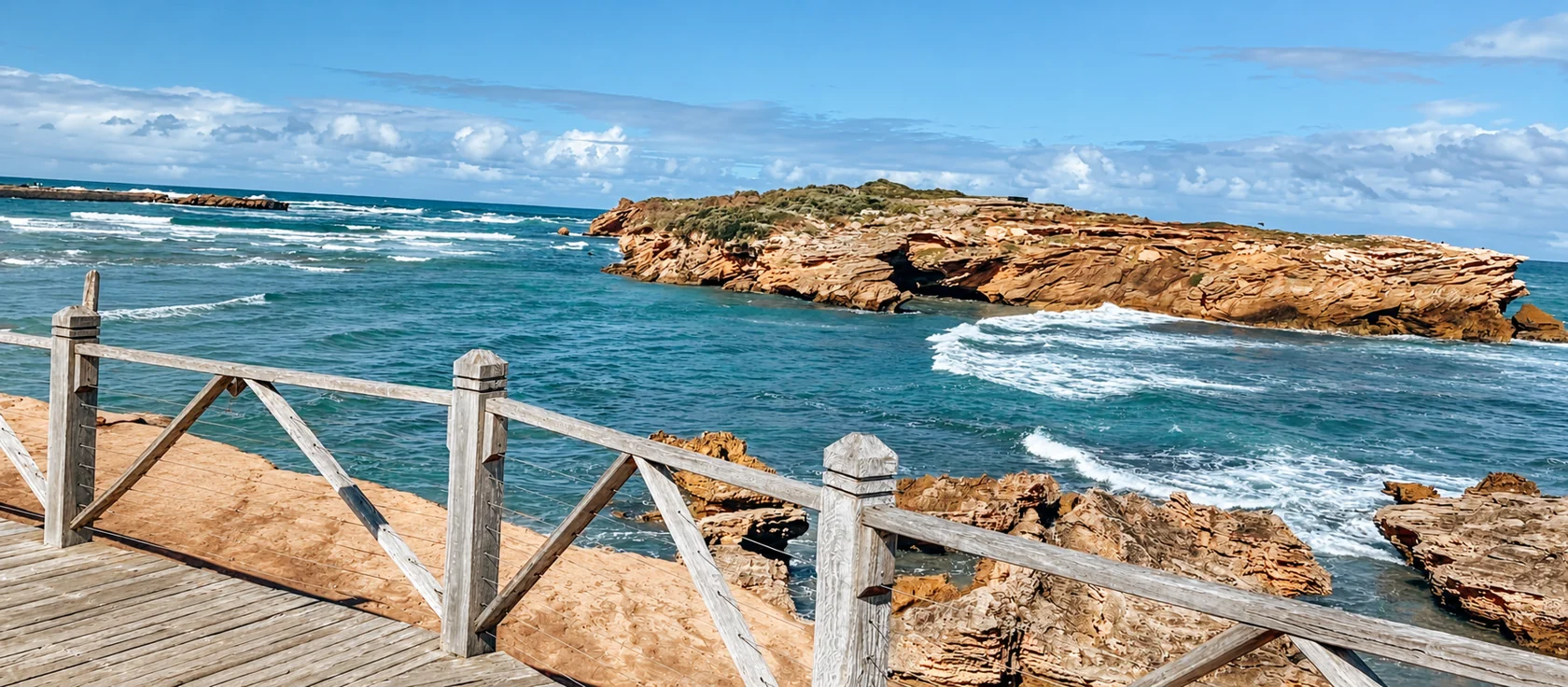
The coastline west of the Merri River is highly scenic, wild and largely undeveloped, with limited public access, according to the plan. Levy’s Point, west of the city, is a surf beach with good surfing and fishing. A local operator says dangerous rips exist there and access is through the dunes, so surfers and swimmers should treat it as an exposed beach.
Wildlife and local rules
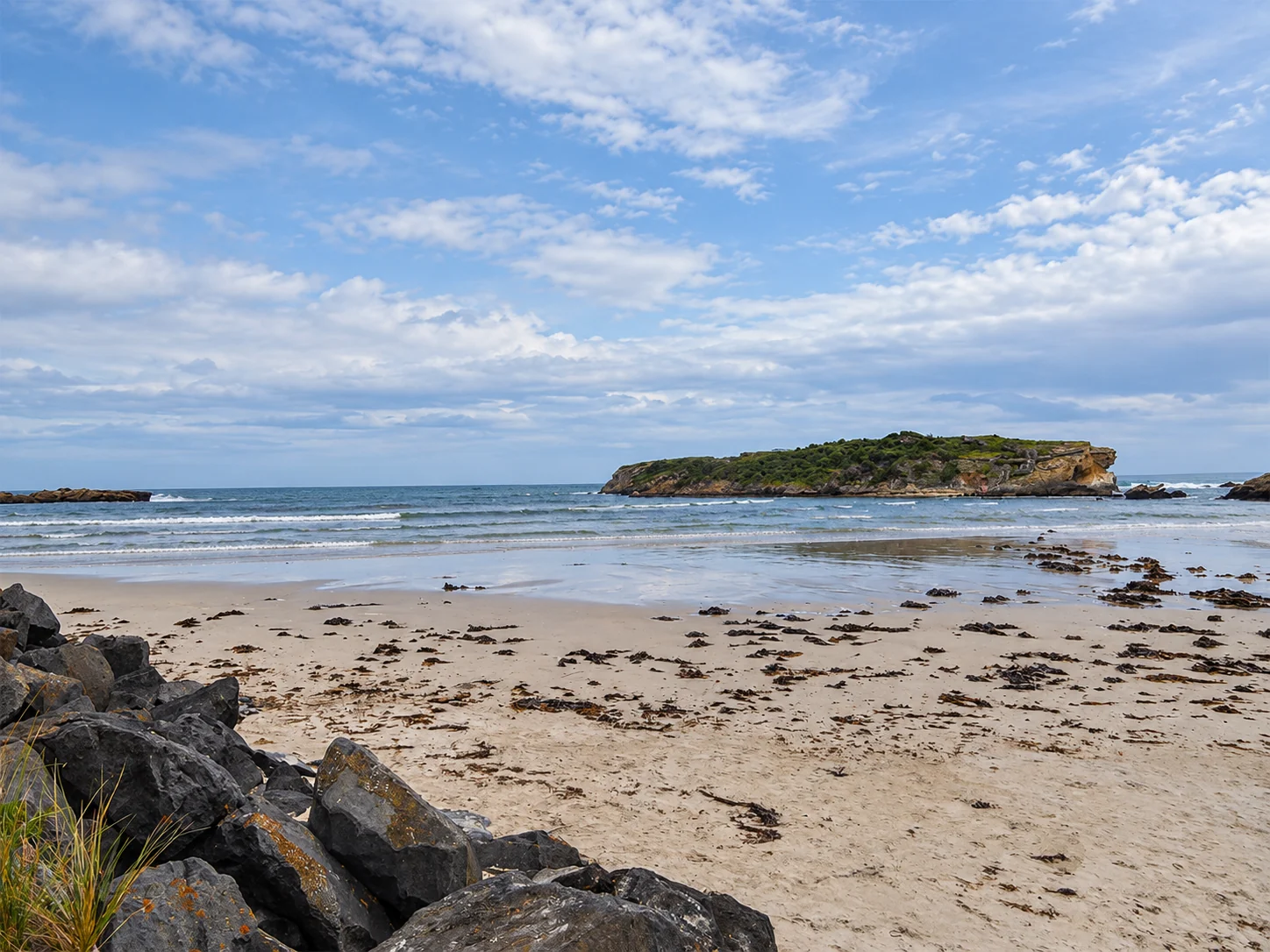
Middle Island, in the Merri River mouth, is a nesting area for Little Penguins and other seabirds, and public access is fully excluded. The plan records about 600 penguins in 1999, fewer than 10 by 2005 and over 100 by 2013, and credits the recovery to the Maremma Guardian Dogs project. The council warns that Levy’s and Logans beaches are home to threatened Hooded Plovers and other beach-nesting birds, and that illegal motorbike riding and 4-wheel driving threaten them. Warrnambool’s Local Laws No. 3 restrict horses on beaches and dogs or cats in certain areas, so check the signs before bringing a pet.
Maritime history
The name Warrnambool is thought to come from an Aboriginal word meaning "two swamps" or "ample water". The European port history centres on the Breakwater: approval to build came in 1874 and construction finished in 1890. The original structure combined a concrete section with a timber viaduct, and the breakwater railway was removed in 1962. The plan says the port is said to have handled more cargo than the Port of Melbourne in the 1880s. The council is Port Manager for the Breakwater and Lady Bay, and the Breakwater is a State Marine Precinct under the 2010 Western Victoria Boating CAP.
The plan calls this stretch the shipwreck coast and lists Grannies Grave as a historic site along it.
Flagstaff Hill Maritime Village
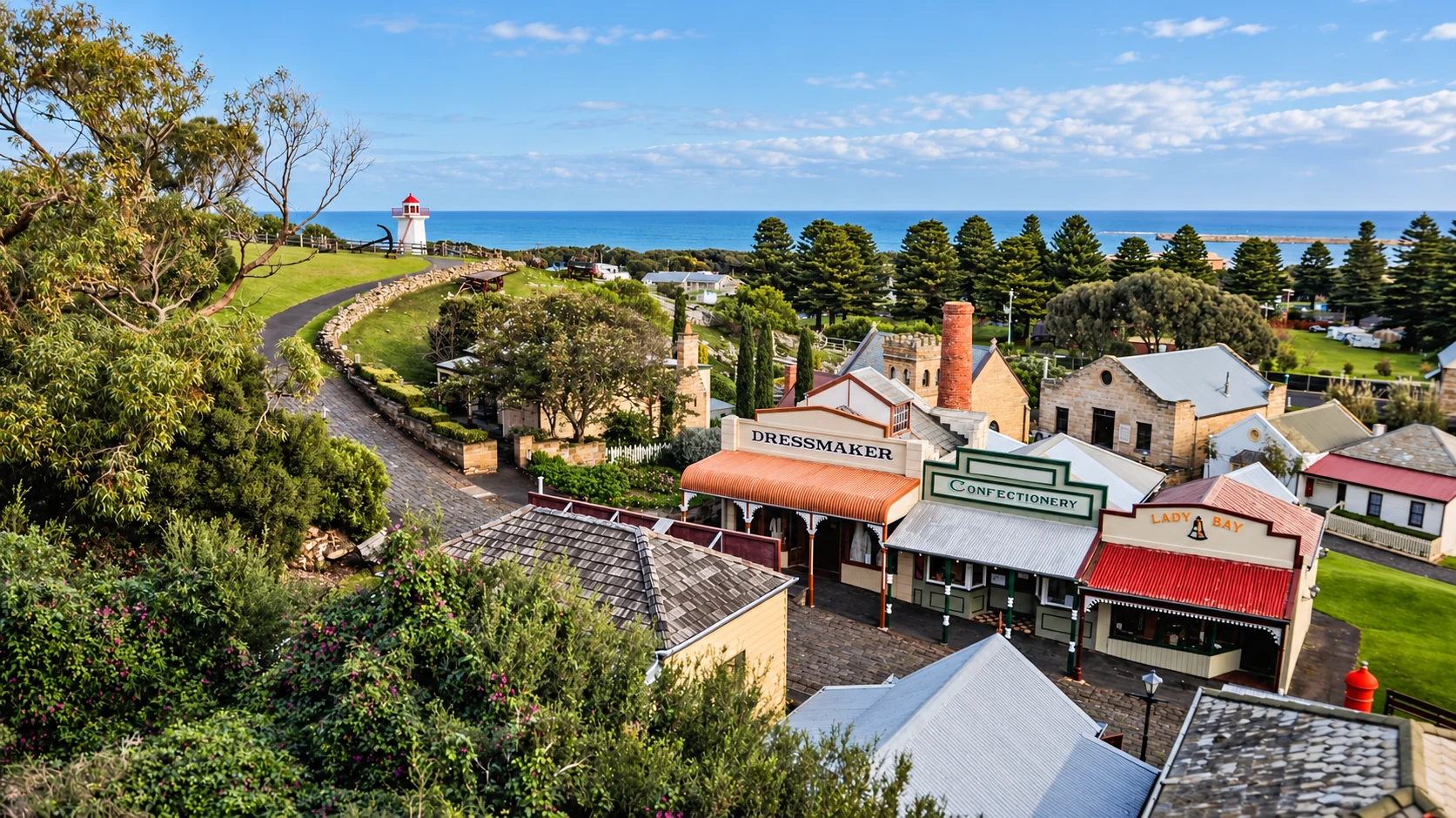
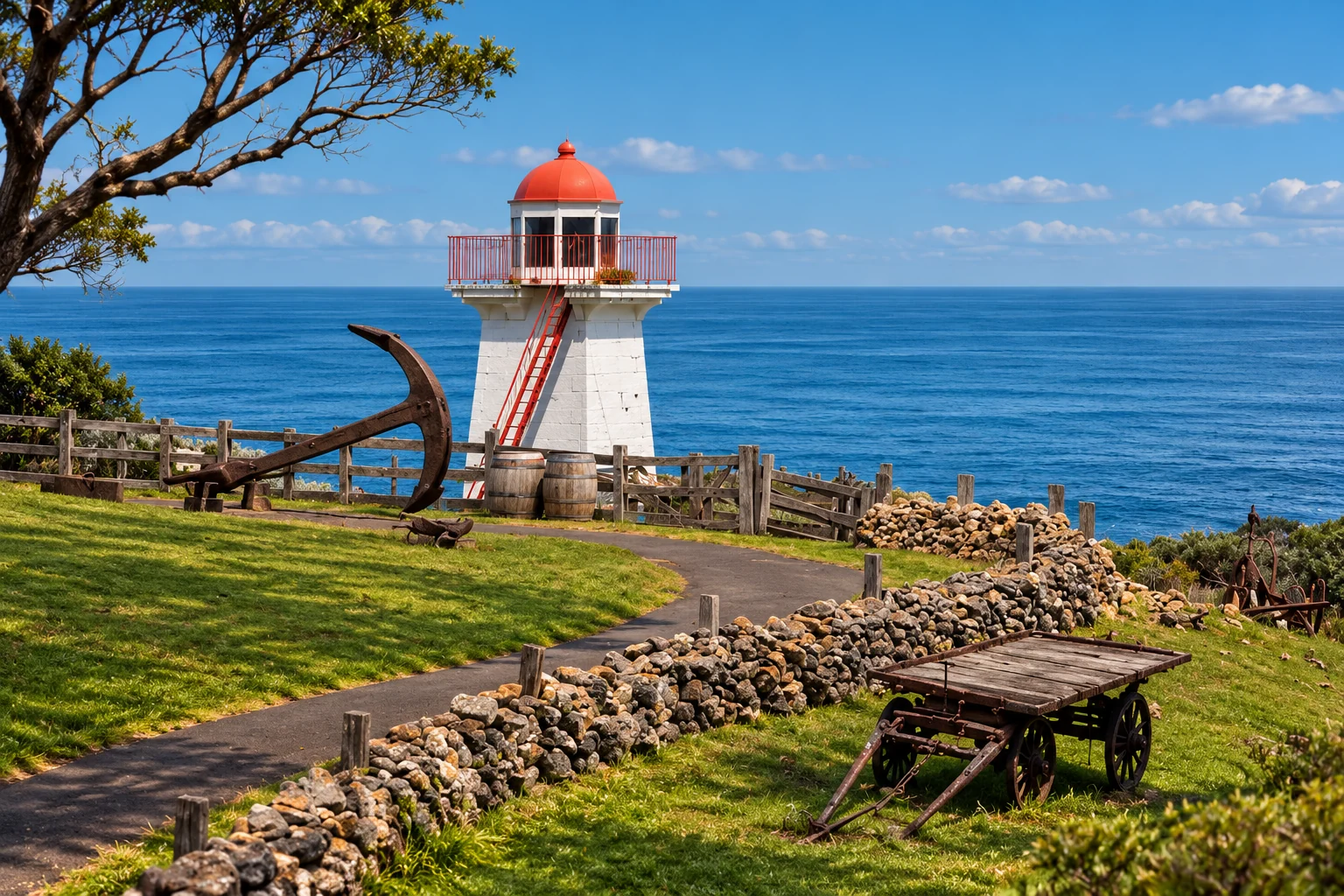
Flagstaff Hill is at 89 Merri Street, phone (03) 5559 4600. The council manages it, and it opened to the public in December 1975 with entry set at 50 cents, according to The Standard. Victorian Museums describes it as one of the largest open-air heritage villages in Australia, on more than 10 acres of Gunditjmara and Eastern Maar land. By day it shows how the Shipwreck Coast got its name and displays treasures saved from the ocean floor. The Living Museum is the daytime experience, and the Sound and Light Show runs after dark.
Hours and prices
According to the operator, the Maritime Village is open 9.30am to 4.30pm, with last admissions at 4.00pm. The Visitor Information and Gift Shop is open 9.30am to 5.00pm. The Sound and Light Show runs nightly at dusk except Monday and Friday. The village is closed on Anzac Day and Christmas Day. "Meet The Boat Builder" at the Wharf runs at 1.30pm, Monday to Thursday.
Visit Victoria, in a 2026 listing, gives these prices:
- Explore the Maritime Village costs $21.40 per adult and $56.60 per family.
- Tales of the Shipwreck Coast Sound and Light Show costs $34.30 per adult and $88.20 per family.
- Children’s day entry costs $10.50, children under five enter free, and the show costs $19 per child.
Tickets are sold online at tickets.flagstaffhill.com, and the operator’s site has current prices.
Planned changes
In February 2024 the council adopted a plan to re-imagine the site, with ideas that include a geothermal spa and hotel accommodation. In 2025 it said it would appoint a consultant to plan improved access and possibly a lift. These are proposals only, so check the operator’s site for layout and hours before a visit.
Moyjil and Aboriginal history
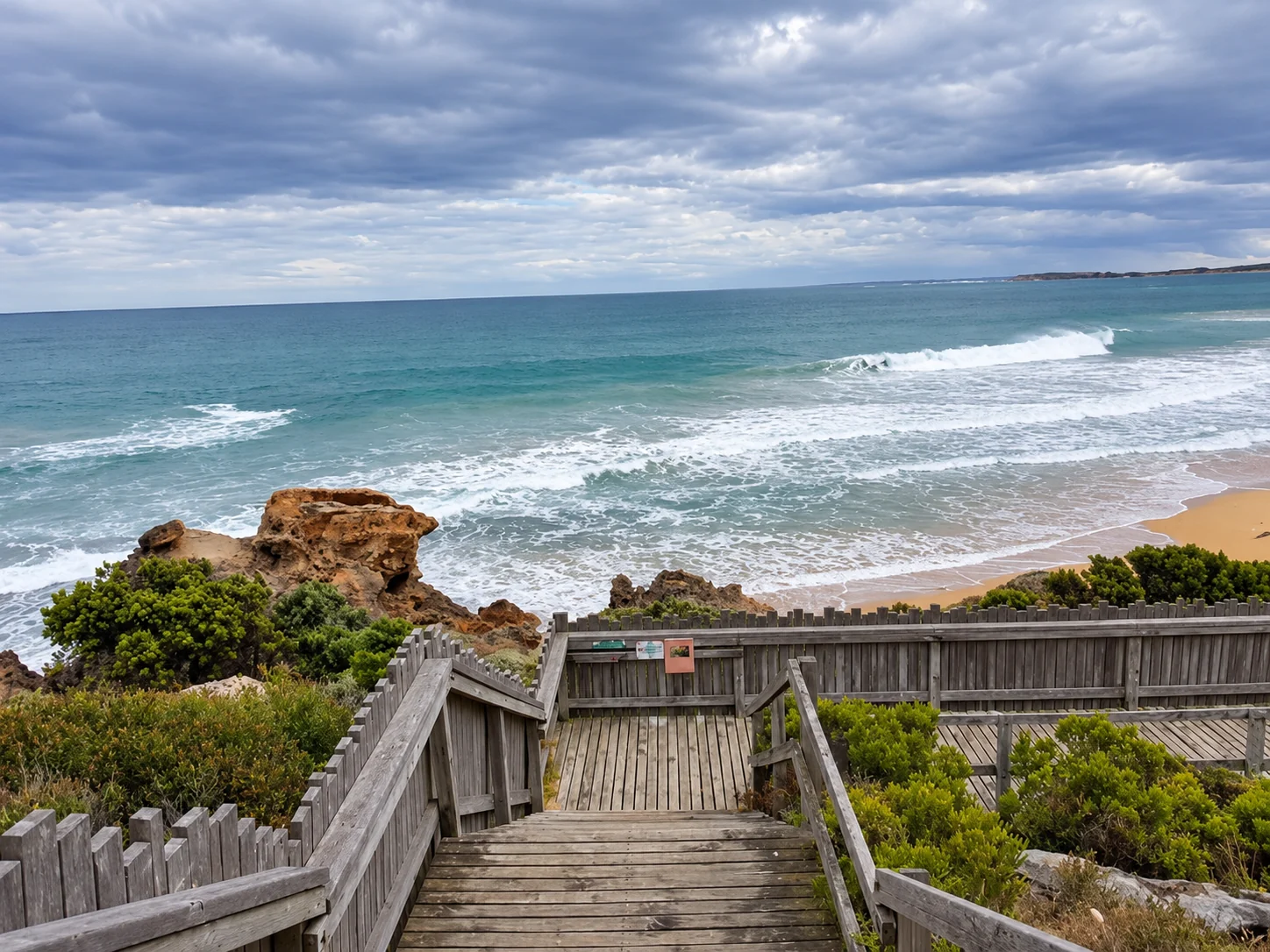
Moyjil, also known as Point Ritchie, is a rocky headland at the mouth of the Hopkins River, reached from Point Ritchie Road. A 2026 peer-reviewed paper describes Moyjil as the reinstated Aboriginal place name, and the Victorian Register of Geographic Names gives its meaning as "long drag net". George Augustus Robinson, Chief Protector of the Port Phillip Aboriginal Protectorate, recorded on 28 April 1841 that local people called the Hopkins River, at least at its entrance, "Moy.jil".
Custodians and protection
Moyjil lies in Eastern Maar Country, within the Eastern Maar Aboriginal Corporation’s Registered Aboriginal Party area, and the Corporation is among the paper’s authors. The paper describes it as of high cultural and spiritual significance. Visit Great Ocean Road acknowledges the Peek Whurrong and Kirrae Whurrung Peoples of the Gunditjmara, Eastern Maar Nations as Traditional Owners of the City of Warrnambool.
The council says Aboriginal people gathered food here for thousands of years, including eels from the Hopkins River and shellfish from the ocean. It also says the rocks and sand dunes preserve a record of long human occupation. An Ongoing Protection Declaration covers 1.361 hectares, enforced primarily by Authorised Officers and Aboriginal Heritage Officers appointed under the Aboriginal Heritage Act 2006, according to the Premier of Victoria. The 2013 plan calls the heritage extremely fragile.
What the dating evidence shows
In 2020 the ABC reported that scientists were split on whether charred rocks and weathered shells were 120,000-year-old evidence of Indigenous life. The Premier’s page noted that such an age would be 60,000 years beyond the accepted timeline for human presence in Australia. The 2026 paper reports that excavation of one feature, called Fp2, shows it is a Mid- to Early Holocene natural infill and not a Last Interglacial fireplace. That revises the claim about Fp2 specifically. It does not address whether people were present earlier.
Visiting
The lookout and walking paths start from a nearby car park, and the paved sections suit wheelchairs. The Moyjil page says signs along the trail explain the Indigenous significance, and points visitors to VicEmergency and VicTraffic for safety information.
Getting to and from Port Campbell
Flagstaff Hill describes itself as at the end of the Great Ocean Road, just beyond the Twelve Apostles, so travellers arriving from the west or finishing a drive from Torquay meet here. Driving from Melbourne takes about 3 hours and 250 km via the Princes Highway, or about 5 hours via the Great Ocean Road, according to Wikivoyage.
From Warrnambool, Port Campbell is 61.5 km and about 45 minutes by car. The Twelve Apostles area is 72 km and about 52 minutes. A car makes the trip straightforward, and a morning drive east followed by a whale watch back in Warrnambool in the afternoon fits a single day.
Without a car, V/Line buses run from Warrnambool Station on Merri Street to Port Campbell and to the Twelve Apostles stop only on certain days of the week. The journey takes about 1 hour 15 minutes to Port Campbell and about 1 hour 40 minutes to the Twelve Apostles. Check the current V/Line timetable before planning around them. Travelling from Melbourne to Port Campbell by train and bus via Warrnambool takes about 5 hours 44 minutes. A taxi from Warrnambool Station to Port Campbell is estimated at $100–130 and about 47 minutes.
Planning a visit
Winter suits whale watching, so pair a June to September trip with the Flagstaff Hill Sound and Light Show, which runs after dark on most nights. Outside whale season, the Foreshore Promenade, Thunder Point Walk and Moyjil are the main reasons to visit, and each takes a few hours at most. Check tides before the Thunder Point Walk, check whale sightings by phone before driving to Logans Beach, and look at the operator’s site before committing to Flagstaff Hill’s hours or prices.