
The Whitsundays are a group of tropical islands off central Queensland, inside the Great Barrier Reef World Heritage Area. Most visitors arrive through Airlie Beach or Shute Harbour, two mainland departure points east of the town of Proserpine, and from there travel by boat, seaplane or helicopter. The Whitsunday Islands National Park protects 32 of the islands. Tourism Whitsundays counts 74 islands in the wider group, and five of them take overnight guests: Hayman, Camp, Daydream, Long and Hamilton.
Three things shape a first trip. Whitehaven Beach and the Hill Inlet lookout have no road access, so you need a tour, charter or scenic flight to see them. The outer reef sits on a separate day trip from the islands. And the season matters: April to October brings the most settled weather, while November to March brings heat, rain, stingers and the cyclone risk. The sections below take these in turn, along with where to stay, where to walk and what the park rules require.
Whitehaven Beach and Hill Inlet
Whitehaven Beach and Hill Inlet are both on Whitsunday Island, and boat, seaplane or helicopter are the only ways to reach them. No public transport serves the island. Most visitors join a day trip from Airlie Beach, Hamilton Island or Hayman Island, and the tour price usually covers the national park and marine park fees, though you should confirm that when you book. Whitehaven has pure silica sand and shallow, clear water. It suits a long walk along the shore as much as a swim.
Hill Inlet is the lookout above the beach, where the tide pushes swirls of white sand and turquoise water through the inlet. The official track is about 1.4 km return and takes about 40 minutes, graded easy to moderate, with some gentle inclines and steps. Tour operators quote about 20 minutes each way from the landing point to the lookout. Some tours land at Tongue Bay, where passengers go ashore by tender (a small boat that ferries people from the main vessel to the beach).

Tide timing changes what you see. The tidal range reaches about 4 metres, and a mid to high tide usually frames the classic sand-and-turquoise pattern, so check which tide your tour will meet before you pick a departure. Stay on the marked track and keep off the dunes, which are fragile.
Prices vary by operator and departure point. Explore Group’s Hill Inlet half-day from Hamilton Island lists AU$205 per adult (15 and over), AU$110 per child (5 to 14) and AU$520 for a family of two adults and two children. The tour runs for four hours, leaves at 8am or 12:30pm depending on tides, and the price includes the environmental management charge and national park fees. Stinger suits (full-body lycra swimsuits that protect against jellyfish) are provided on that tour. Operators brief passengers before the walk, and they cancel it in bad weather.

Weather is the main risk to a Whitehaven visit. If Whitehaven is the highlight of your trip, leave a spare day so you can rebook if weather cancels your tour. The park islands have no wheelchair-accessible facilities, which affects the lookout walk and the beach landings.
Whitehaven is also a camping location, with a named site on the beach. Camping requires a booked permit, which the park rules section below covers.
Hook Island, the outer reef and snorkelling trips
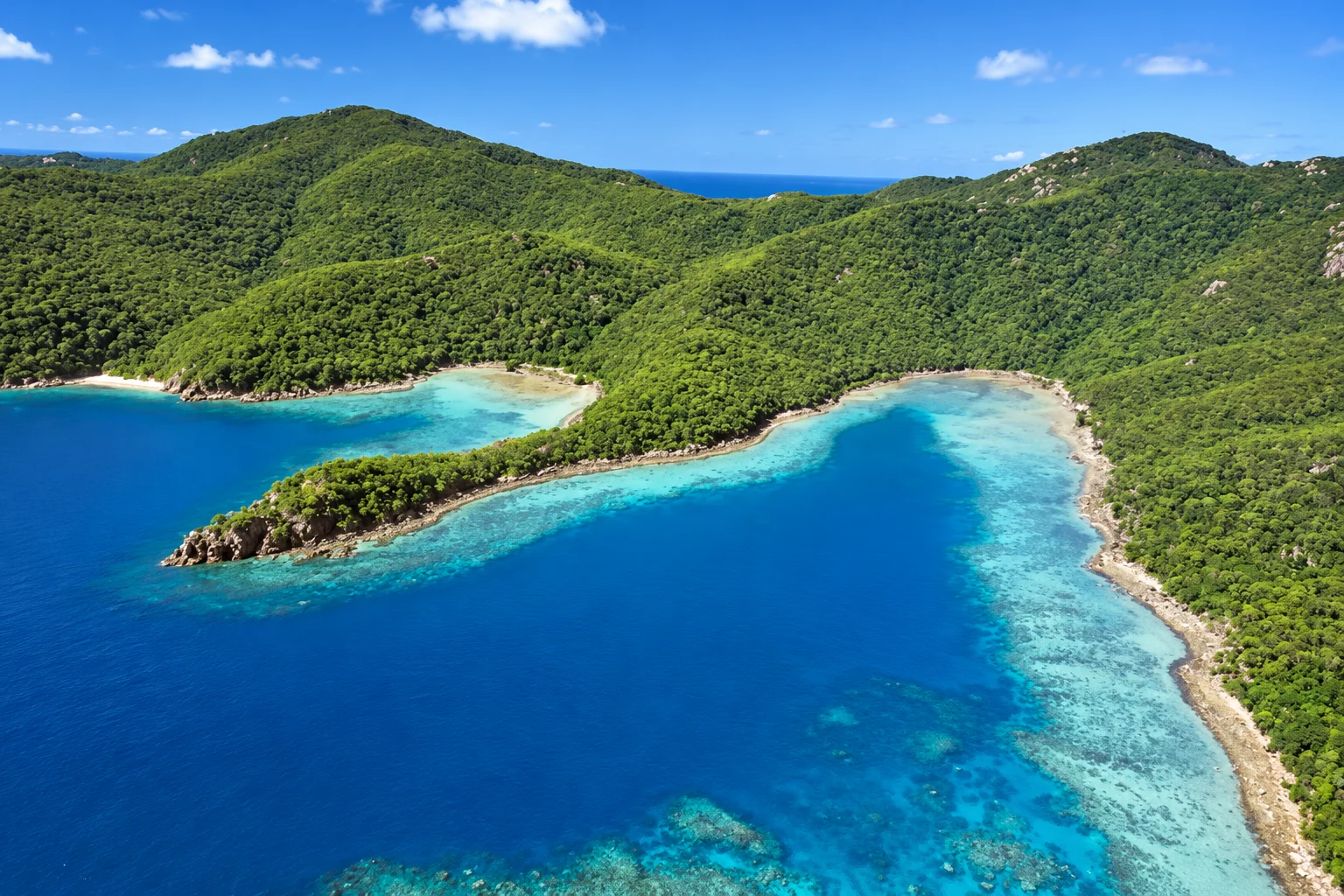
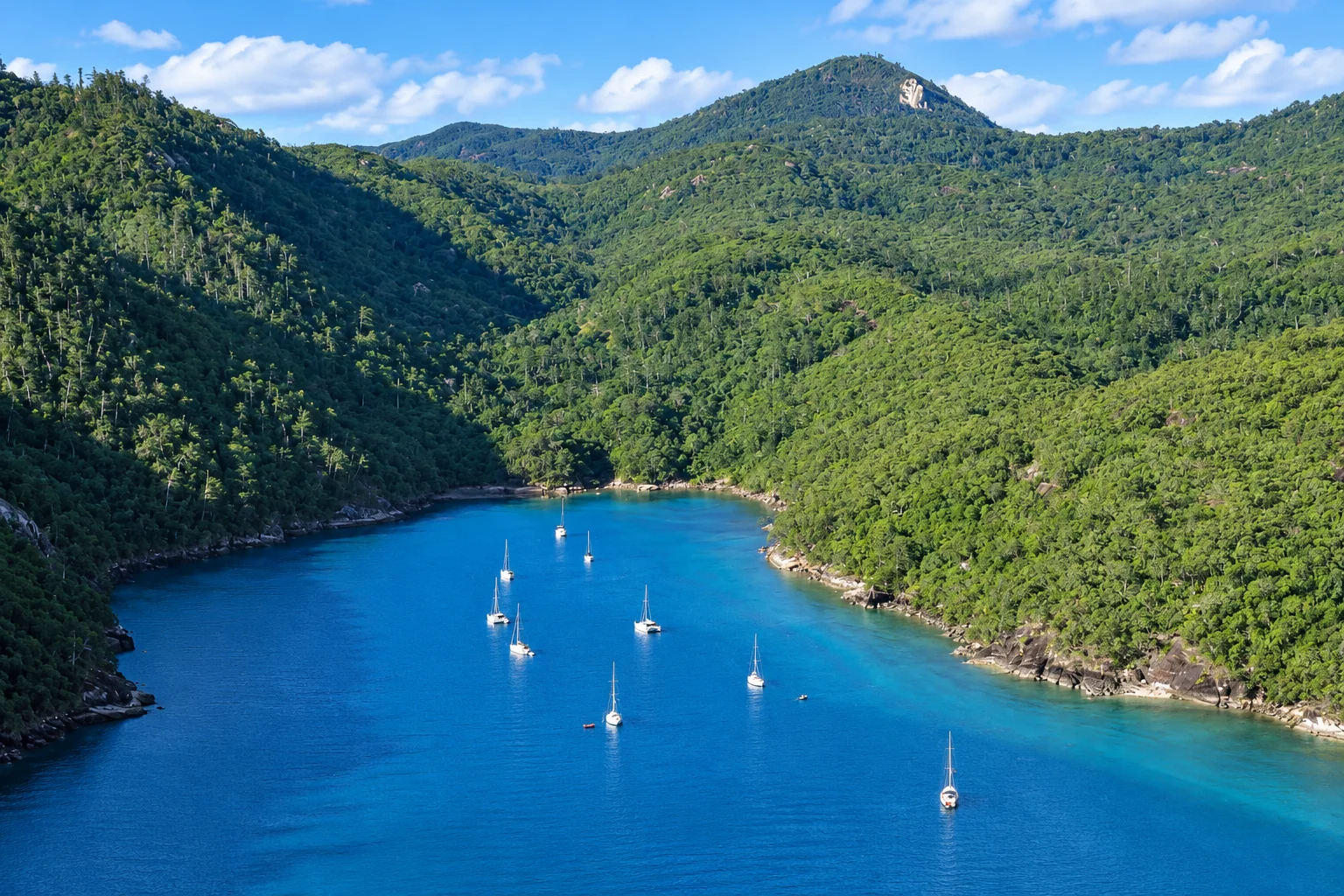
The Whitsundays offer two kinds of reef experience. Fringing reef grows around the islands themselves, and the outer reef lies further offshore, reached by a longer boat ride to a pontoon (a floating platform moored at the reef) or to reef sites that the boat visits. Water is usually clearer on the northern sides of the outer islands, and snorkelling over a reef flat is best at high tide. You need a boat to reach the distant sites.
Hook Island is the second-largest in the group and is known for its sheltered inlets and reef-edged bays. One of its best-known stops is Nara Inlet, where the track to the Hook Island Ngaro Cultural Site begins. The track is 340 m return and takes at least an hour with time at the site. It leads to rock art that belongs to the Ngaro people, the Aboriginal custodians of the Whitsunday Islands, and visitors must not touch the art. Steens Beach on Hook Island is also a named camping site.
Several operators run full-day outer reef trips from Airlie Beach, Hamilton Island and Daydream Island, and the prices cluster in a range:
- Cruise Whitsundays: the Great Barrier Reef Full Day Adventure starts from AU$295 per adult, AU$269 per senior, AU$145 per child (4 to 14) and AU$809 per family. It includes a four-hour stop at Hardy Reef, snorkel gear, wetsuits or stinger suits, an underwater observatory, a semi-submersible tour and meals. Guided snorkel safaris and scuba diving cost extra, and prices vary with demand and season.
- Barrier Reef Australia: the small-group snorkel tour costs AU$299 per adult, AU$149 per child and AU$760 per family, with levies and fees included. It spends 3.5 hours at two snorkel sites around Bait Reef and includes lunch and gear.
- Tongarra: the snorkelling and sailing day tour starts from AU$209 per person. It leaves Coral Sea Marina at 10am and returns at 6pm, with two snorkel sites, lunch, gear and park fees included.
The cheaper trips sail to inner reef sites. The price difference reflects distance as well as boat size. Compare inclusions before you book. Some tours include park fees and gear, while others add them as extras. If you are not a confident swimmer, the Cruise Whitsundays guided snorkel safari adds a guide for AU$85 per adult and AU$49 per child on top of a reef trip. Never snorkel or dive alone, and never stand or walk on coral.
Where to stay: Hamilton, Hayman, Daydream and Long Island
Only five islands have accommodation, and each suits a different kind of trip. Tourism Whitsundays lists the five, and regional guides sum up the styles this way: Hamilton for families, Hayman for luxury, Daydream for resort fun, Airlie Beach for value and Long Island for quiet.
Hamilton Island has the most services and the quickest arrival, because the island has its own airport with direct flights from Sydney, Melbourne and Brisbane. Hamilton Island names Virgin Australia and Qantas as airlines serving it, and many accommodation providers include arrival transfers. Visitors cannot bring personal vehicles to Hamilton, and there is no car ferry for tourists. The accommodation ranges from the Reef View Hotel and Palm Bungalows to the Beach Club, Yacht Club Villas and the forest-set Qualia on the northern tip, according to Tourism Australia. The Sundays, a newer property, opened on the northern tip in April 2025. Hamilton is also a good base for day trips, because several reef and Hill Inlet tours leave from its marina.
Hayman Island is owned entirely by the resort operator InterContinental Hotels Group, so only resort guests can visit. Transfers run from Hamilton Island Airport by helicopter (about 15 minutes) or boat (about 55 minutes). The InterContinental Hayman Great Barrier Reef is the only accommodation, with 168 suites and five restaurants, and it sits in the top price band.
Daydream Island has one property, Daydream Island Resort and Living Reef, with 240 suites and six restaurants and bars. It has lagoon pools, an underwater observatory and island walks, and Visit Whitsunday Islands describes the Living Reef lagoon as a good fit for families. Ferries from Port of Airlie take about 30 minutes.
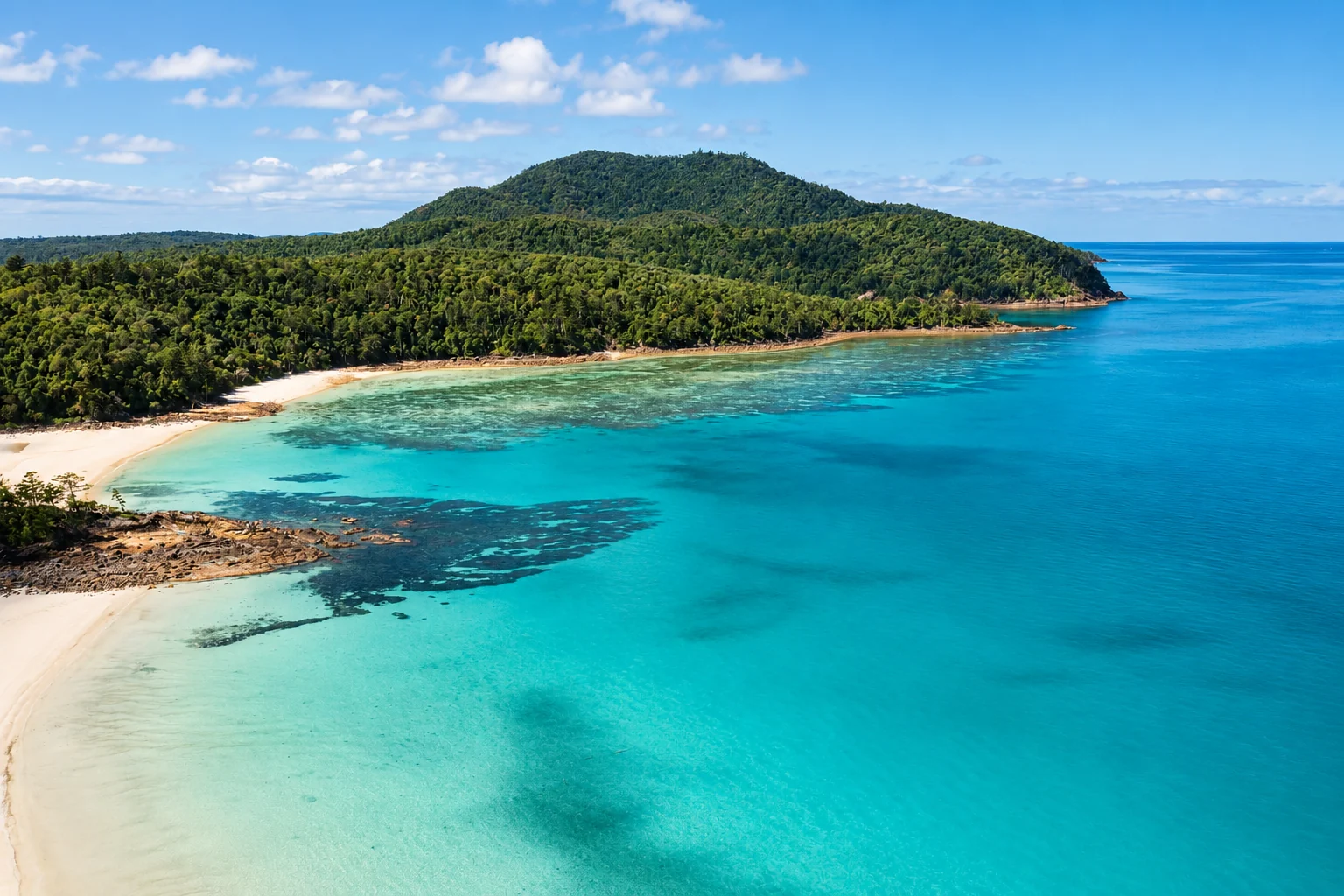
Long Island and Camp Island suit travellers who want quiet. Long Island’s listings include Palm Bay Resort and the adults-only, all-inclusive Elysian Island Retreat, and Camp Island has Camp Island Lodge.
If you want island scenery without the island price, Airlie Beach is the mainland base. It has the widest range of budget accommodation, the departure points for most tours and the Port of Airlie ferry terminal. A common first-trip pattern is a few nights in Airlie Beach for day tours, then a night or two on an island.
Quieter beaches, walks and camping
Whitehaven is the busiest beach in the group. The park also has short walks to quieter spots. The official walks are easy to moderate unless noted:
- Lookout Beach: 500 m return, about 20 minutes.
- Solway circuit: 1.2 km one way, about 40 minutes, starting from Whitehaven Beach.
- Chance Bay: 3.6 km return, 2.5 to 3 hours, branching off the Solway circuit.
- Dugong to Sawmill track: 3 km return, about 1 hour. You will get wet crossing Sawmill Creek at high tide.
- Border Island (Cateran Bay track): 1.2 km return, about 1 hour.
- Langford Island: 600 m return, about 20 minutes.
Two walks are difficult. Whitsunday Peak is 5 km return and takes about four hours on a steep track, and walkers should carry at least 2 to 3 litres of water per person on a hot day. Whitsunday Cairn is 4 km return and takes three hours or more, with parts that have no defined track, so it suits only fit, experienced walkers. Rangers are generally not on site, so nobody should walk alone.
The Whitsunday Ngaro Sea Trail is one of Queensland’s 10 Great Walks, a multi-day hike on Whitsunday Island linking Whitehaven Beach and Hill Inlet. The park’s walks page says the track is closed to the public while the track and campsites are being built, and a later menu on the park site refers to Ngaro Track bookings in 2026. Check the park site for its current status before building a trip around it.
Camping is the other way to get a beach to yourself. Named sites include Whitehaven Beach, Cairn Beach, Chance Bay, Dugong Beach, Joe’s Beach, Nari’s Beach, Maureen’s Cove, Crayfish Beach, Curlew Beach, Steens Beach on Hook Island and Northern Spit on Henning Island. Northern Spit is accessible at all tides. Facilities are usually just toilets or picnic tables, so campers carry their own food, water and insect repellent.
Camping rules are strict. You must book a site and buy a permit in advance, because visitor numbers are limited, and display the permit tag on your tent. Fines apply without one. Open fires, generators and ash-producing stoves are banned, so bring a gas or fuel stove. Take all rubbish back to the mainland, and check the current fees on the permits and fees page. The visiting safely page also says pets are not allowed on national park islands or adjacent intertidal lands, and animals including dogs may not be taken to most islands and cays.
Sailing trips and reef rules on the water
Sailing is the traditional way to see the Whitsundays, since the islands sit close together and offer sheltered anchorages. Operators run day sails, overnight trips and multi-day cruises, many of them departing from Airlie Beach or Coral Sea Marina. The best sailing season follows the south-east trade winds, which blow from about May to October, according to Skipper. Operators cancel trips for wind, swell or weather, and the park guide advises checking Bureau of Meteorology marine forecasts and park alerts before every departure. The Bureau also provides forecasts by phone on 1300 360 426.
Day sailing trips such as the Tongarra tour combine sailing with snorkelling and reef stops. An overnight or multi-day trip adds sunset anchorages, more beach time and, depending on the route, a stop at Whitehaven or Hill Inlet. First-time visitors who are unsure whether they want to spend nights on a boat can try a day sail first.
Commercial tour operators need a Marine Parks permit, and the Great Barrier Reef Marine Park Authority issues these. Private boating, fishing and swimming do not need one. If you charter or skipper your own boat, the following rules apply from the responsible reef practices guidance and the park rules:
- Use public moorings where they exist.
- Do not anchor in no-anchoring areas, which are marked by white pyramid buoys.
- Do not damage coral.
- Keep at least 2 metres from nesting turtles, and do not touch, feed or light fires near them.
- Do not clean fish or throw food scraps over the side at anchorages.
Humpback whales migrate along the reef from about May to September. Keep a safe distance and never place a boat between a mother and her calf. The whale season overlaps with the best sailing season, so June to September suits a boat trip.
The Whitsundays Plan of Management applies to everyone using the Whitsunday Planning Area, which runs from Cape Gloucester to the Repulse Islands. Commercial photographers need a permit to sell photographs of park islands, which is rarely relevant to a casual visitor but matters if you plan to sell your images.
Planning your visit: getting there, season and safety
Getting there. Whitsunday Coast Airport at Proserpine is the main mainland airport, and Visit Whitsunday Islands lists Virgin Australia, Jetstar and Tigerair among the airlines serving it, with Qantas also listed. Transfers to Airlie Beach take 30 to 40 minutes by shuttle, taxi or hire car, and booking taxis in advance is advised. Hamilton Island Airport is the alternative for island stays. By road, the region is about 12 hours north of Brisbane and 8 hours south of Cairns. Shute Harbour is about 15 km from Airlie Beach, roughly 20 minutes by taxi or bus.
Cruise Whitsundays runs the main ferries from Port of Airlie to Hamilton Island and Daydream Island. The Daydream crossing takes about 30 minutes, and Hamilton Island gives about 60 minutes from Airlie Beach. One-way adult fares of about AU$67.50 to AU$74.50 appear on Airlie Beach visitor information, and the fares in different listings are from different dates, so check current prices and timetables with the operator.
When to go. Tourism Whitsundays describes April to October as milder and less humid, and November to March as warmer and wetter. Using Bureau of Meteorology figures from Hamilton Island Airport, January averages 30°C by day and 13 rain days, while July averages 22°C by day, 18°C overnight and 6 rain days. October is among the driest months, with about 3 rain days and daytime highs near 27°C. Humpback whales are present from about May to September, peaking in August. Reef flat water temperature runs from about 22°C in July to about 27°C in January.
Stingers and cyclones. Stingers, including box jellyfish and Irukandji (a tiny, dangerous jellyfish), are most common from about November to May. Tourism Whitsundays puts the higher-risk window at October to May and says stingers can be present in any month. Wear a full-body lycra stinger suit when entering the water. If someone is stung, get them out of the water, douse the area with vinegar (or seawater if there is none) and seek urgent medical help. Do not rub sand into the welts. Cyclones are most likely from November to March, so travel insurance that covers weather disruption is a sensible purchase for a summer trip.
Other hazards. Large saltwater crocodiles live in Whitsunday waters. Do not enter the water at dawn, dusk or night, and camp at least 50 metres from the water’s edge. Sharks are present on the reef and along the Queensland coast year-round, and the official page names Cid Harbour as a known site of shark attacks. Avoid stonefish, cone shells and blue-ringed octopus, and treat coral cuts with disinfectant promptly.
Supplies and communications. No fresh water is available on any uninhabited island, so bring at least 5 litres per person per day for drinking, cooking and washing. Mobile coverage is unreliable on the islands, and the park recommends a marine VHF radio (channel 16 is the emergency channel), plus a satellite phone or personal locator beacon for remote trips. Pack SPF 50+ water-resistant sunscreen, a hat, a rash shirt or stinger suit, enclosed shoes for walks and a dry bag.
How long to allow. A long weekend covers Whitehaven Beach, one reef or island trip and some time in Airlie Beach. Allow four or five days for an island stay or an overnight sailing trip, and add a spare day if the Whitehaven tour is your priority.
Key Takeaways
- Book a tour for Whitehaven and Hill Inlet: Both are reachable only by boat, seaplane or helicopter, and tour prices usually include park fees. Leave a spare day in case weather cancels the trip.
- Time Hill Inlet for the tide: The lookout walk is about 1.4 km return and 40 minutes, and mid to high tide gives the best colours.
- Compare reef trip inclusions before price: Full-day outer reef trips run from about AU$295 to AU$299 per adult, and inner reef sailing trips start near AU$209. Gear, meals, park fees and guided snorkelling are not always included.
- Pick your island by style: Hamilton has an airport and the most services, Hayman is private luxury, Daydream has a reef lagoon, and Long Island is quiet. Airlie Beach is the cheapest base.
- Travel April to October for settled weather: That window avoids most of the cyclone season (November to March) and includes whale season (May to September). Wear a stinger suit whenever you swim from October to May.
- Plan for self-reliance on park islands: Book camping permits ahead, bring at least 5 litres of water per person per day, carry marine radio or satellite communications, and check the Ngaro Sea Trail status before planning a long walk.