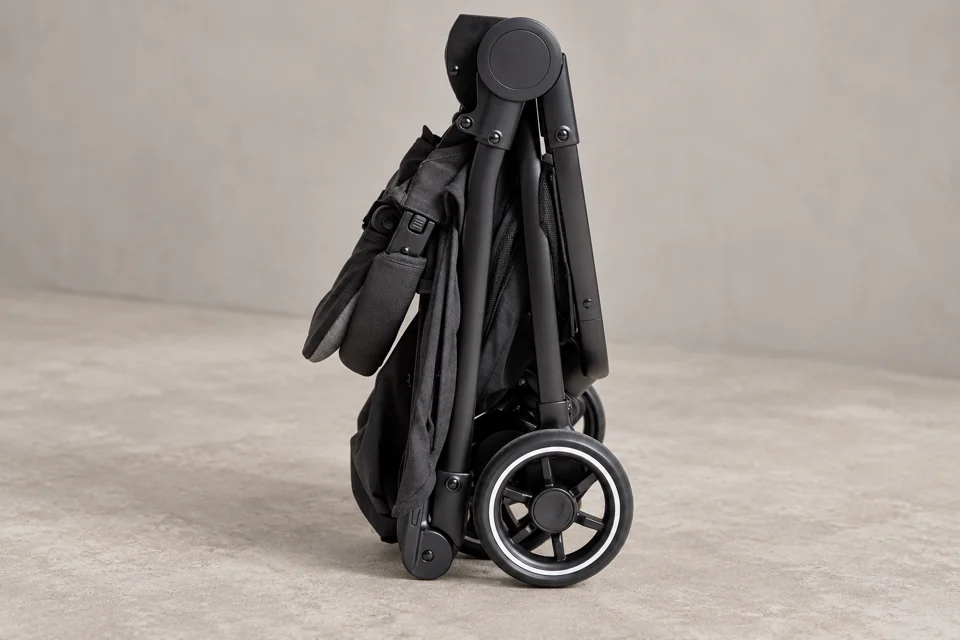
Each state runs its own trains, buses, trams and ferries. Fares, tickets and facilities in Sydney differ from those in Melbourne or Brisbane. Each state sells its own tap-on card: Opal in New South Wales (NSW), myki in Victoria and the go card in Queensland. The Disability Standards for Accessible Public Transport, national rules that set minimum access features for vehicles, stations and stops, apply everywhere. They also explain why prams are allowed in spaces built for wheelchairs.
Fares for children are low or zero in all three states, but each state draws the line at a different age. A pram shares its parking space with wheelchair users, who have priority. Many Sydney and regional trains have no toilets, so plan toilet stops at a station.
Child fares in NSW, Victoria and Queensland
Children travel cheaply or free in each state. The age limits and card types differ, so families crossing a state border should check the rules for each state.
| State | Free travel | Other child fares |
|---|---|---|
| NSW (Opal) | Age 3 and under | Ages 4 to 15 pay concession fares with a Child/Youth Opal card |
| Victoria (myki) | Under 18 with a Youth myki | Everyone’s fares are half price from 1 June 2026 to 1 January 2027 |
| Queensland (go card) | Age 4 and under, always | Ages 5 to 14 travel free on weekends with an orange child go card |
New South Wales
Children aged 3 and under travel free on NSW public transport, according to Service NSW. Children aged 4 to 15 use a Child/Youth Opal card. Transport for NSW says no proof of age is needed to buy one. Full-time students aged 16 and over can also hold the card if they have a Transport Concession Entitlement Card.
Opal caps the amount a card pays in a day and a week. The Child Opal fares page lists a cap of $9.65 a day from Monday to Thursday, $4.80 a day from Friday to Sunday and on public holidays, and $25 a week. These caps cover metro, train, bus, ferry and light rail on the Opal network. Fare tables change, so check the live page before you travel. For comparison, the 2026 fares and ticketing brochure puts the adult cap at $19.30 a day and $50 a week. On regional NSW TrainLink trains and coaches, children aged 4 to 15 get discounted fares.
Victoria
From 1 January 2026, people under 18 travel free on all Victorian public transport, including trams, trains, buses and coaches. The child needs a Youth myki and must tap on and off each trip. Where there is no myki reader, the card is shown to the driver. The Youth myki costs $5.
Adults also get a discount for a limited period. Public transport is half price for everyone from Monday 1 June 2026 until 1 January 2027, and the maximum daily cap for a full fare drops from $11.40 to $5.70. The discount covers metropolitan trains, trams and buses, plus regional trains, coaches and buses. It excludes ferries, SkyBus and non-subsidised regional bus services. During that window, parents with a child on a Youth myki pay half the usual adult fare, except on ferries.
Queensland
TransLink, the network covering South East Queensland, charges a flat 50-cent fare across all zones. It applies to City Train services (excluding Airtrain), buses (excluding dedicated school buses), Brisbane City ferries, the Southern Moreton Bay Island Ferry, trams and on-demand services. The page lists no end date for the fare. Children aged 4 and under travel free at all times.
Children aged 5 to 14 travel free on weekends with an orange child go card, and the card must still hold a balance in addition to its deposit, according to TransLink’s discounts page. TransLink says child go cards cannot be registered online; to register one, call 13 12 30. Adult go cards are for customers aged 15 and over, including school students of that age.
Where the pram goes on board
Buses, trams, trains and ferries all have a marked space for wheelchairs and other mobility aids, and prams are parked there when nobody who needs the space is on board. Under the national Standards, each allocated space must be at least 800 mm by 1300 mm. Buses with more than 32 fixed seats need at least two, and smaller buses need at least one. Ferries need at least two for the first 32 passengers of capacity, plus two for each additional 100. Rail, tram and light rail cars need at least two per car.
The same rules allow other passengers to use these spaces when no wheelchair or mobility-aid user needs them, which is why a pram can sit there. That permission gives a pram no right to the space. Operators must also tell passengers to vacate an allocated space or a priority seat when a passenger with a disability needs it. If a wheelchair user boards and the space is the only one free, a parent with a pram must fold the pram or move on.
Operator rules for buses
Operators add their own pram rules on top of the Standards. TransLink’s public transport rules for South East Queensland let a child ride seated in the pram on a bus at any time except in four situations:
- The bus is busy in the morning or afternoon peak, in which case the pram must be folded and stored in the luggage rack.
- The driver says there is not enough room to park it safely.
- The bus is not wheelchair accessible.
- The wheelchair space is occupied or will be needed for the whole trip.
When the pram is parked in the wheelchair space, put the brake on, strap the child into the harness and hold the pram throughout the trip so it cannot tip or slide. TransLink staff are not required to help fold or load prams or other large items, which TransLink attributes to workplace health and safety. A parent travelling alone with a pram and a toddler should therefore be ready to fold and lift the pram without help.
On NSW buses, Transport for NSW describes accessible buses as having designated areas with folding seats for wheelchairs and scooters, and says the areas are also used for prams. Check the full wording on the live page, as it sets out the details.
Trains and platforms
On Melbourne’s metropolitan trains, pram and mobility-device users wait parallel to the tracks with their brakes on, and everyone on the platform keeps to walking pace. Parking parallel to the tracks stops the pram rolling toward the platform edge.
Sydney Metro is the easiest rail option for a pram. Its platform-to-train boarding ramp is available for prams and strollers as well as wheelchairs, scooters and walking frames, so there is no step into the carriage.

Getting on and off with help
You can ask for boarding help on every mode. Ask early, because the method differs between buses, trains and trams.
On NSW buses, press the accessible stop button before your stop. That alerts the driver to pull in close to the kerb, lower the bus and extend the ramp. Stand where the driver can see you at the stop, so the driver knows someone needs the ramp. A parent with a pram counts, because the ramp is the way into the allocated space.
On Sydney Trains, accessible doors are marked with a wheelchair symbol and are near the sixth carriage. On Intercity and Regional services they are in the middle of the platform, although some stations place them at the end of carriages. Guards and station staff have disability awareness training and can lay a ramp across the gap if you ask.
In Melbourne, look for the International Symbol of Access decal at the end of the platform in your direction of travel. When the train arrives, the driver or another staff member asks for your destination. A portable ramp is carried at the first door of the first carriage, and if that is not possible, staff help at another door, depending on the train type. Some stations have raised platforms that allow independent boarding. At low-platform stations, the Metro Trains boarding page warns that the ramp can be steeper than 1 in 8, and that you may need help.
If nobody is on the platform, use the Customer Help Point. The red button connects you to a customer service officer, and the green button gives audible next-train and timetable information. Sydney Metro stations have video help points as well as staff to approach.
The national Standards also require boarding devices such as ramps where the gap between platform and vehicle is more than 12 mm vertically or 40 mm horizontally. Operators must deploy one on request and passengers must be able to signal that they need one. Staff are the people who know how this works at a particular station.
Children need supervision on and off the vehicle regardless of the ramp. For the new Melbourne underground stations, the Metro Tunnel guidance is to hold your child’s hand when getting on and off, and not to hold platform screen doors open because they close quickly.
NSW also offers a Companion Card, which lets a carer travel free with a cardholder who needs help on public transport. It is aimed at people with a disability, and the details of eligibility are on the Transport for NSW page.
Station access, lifts and toilets
Station access depends on how old the station is. Newer metro stations are designed for step-free travel from street to train, while older suburban stations may have stairs, long ramps or lifts that are out of service.
Lifts and step-free stations
Every Sydney Metro station has lifts, and each has at least two. The stations also have kerb ramps, accessible kiss-and-ride drop-off and pick-up points, wider accessible Opal gates, accessible toilets, platform-to-train ramps and tactile flooring in lift areas and on platforms, according to Transport for NSW’s metro accessibility page. These features are stated for metro stations only. For a Sydney Trains station, check the individual station on the trip planner before you commit to a route with a pram.
Changing between metro and train needs care. At Epping, take the lift up to Sydney Trains platforms 1, 2 or 3 and ask Sydney Trains staff for help with the rest of your trip. At Chatswood, ride in one of the last metro carriages, which puts you closest to the accessible Sydney Trains carriages.
Melbourne’s Metro Tunnel opened five underground stations on 30 November 2025: Arden, Parkville, State Library, Town Hall and Anzac. Victoria’s Big Build describes them as among the most accessible on the network, with step-free access by lift and escalator. The same page tells parents to allow extra time, because the stations have several levels and the platforms are 240 m long. Changing services can take several minutes, and the escalators can be steep, so a parent with a pram should look for the lift rather than the escalator.
Across the rest of the city, Travellers Aid says every Melbourne train station except Heyington on the Glen Waverley line has step-free access to platforms, and recommends confirming this on the PTV website before you travel.
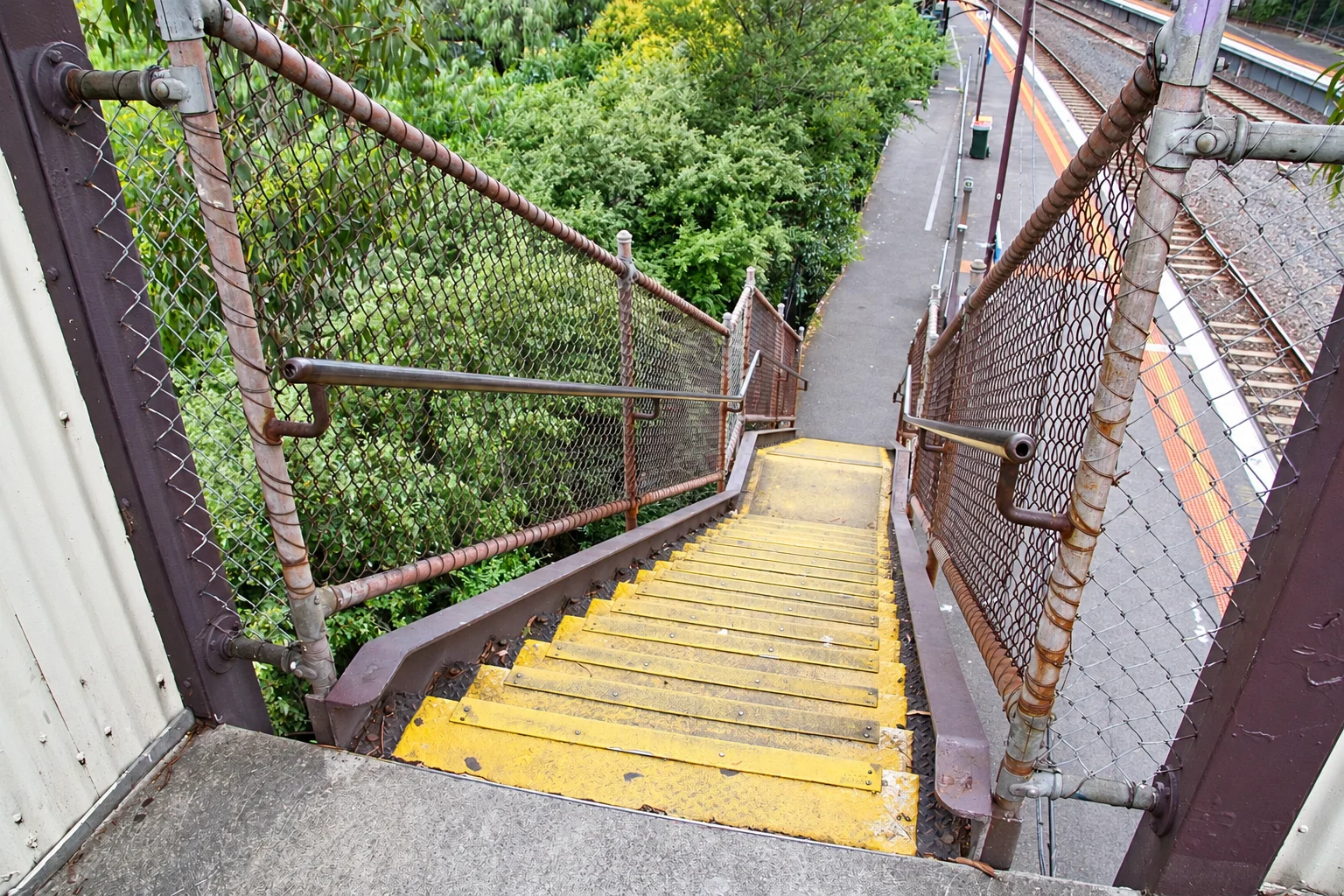
The national Standards set some baseline rules for walking routes. They require resting points along an access path where the walking distance between facilities is more than 60 metres, and stairs must not be the only means of access except in limited cases.
Toilets
Toilet access is the most uneven part of travelling with children. Sydney Trains carriages have no on-board toilets. NSW Intercity trains have accessible toilets on board, but not all NSW Regional services have them. For a Sydney Trains journey, take the child to the toilet before boarding, and plan to use one at a station on a longer trip.
Sydney Metro stations have accessible toilets. The five Metro Tunnel stations in Melbourne each have Changing Places toilets, located outside the ticket gates, with extra features and space for people with disability and their carers. Each concourse also has standard accessible toilets. Because they sit outside the gates, a parent who goes through the gates and then needs the toilet will need to tap off and tap on again. Check the fare rules for exiting and re-entering before you do.
Luggage, bags and prams as baggage
Luggage rules depend on the operator. The strictest rules apply on regional trains and coaches, where bags are weighed against an allowance.
Regional NSW TrainLink sets allowances by class of travel. Train Economy allows one hand item up to 10 kg and one large item up to 20 kg. First Class trains and coaches allow one hand item up to 10 kg and two large items up to 20 kg. Mobility aids, sporting equipment and musical instruments are carried in addition to the standard allowance. Prams are not listed by name, so ask staff before you travel whether a pram or stroller counts separately from your bags. The page also recommends travel insurance for accidental damage or loss.
For a family heading to a regional town with a pram, a bag of nappies and a suitcase, the sensible approach is to work out which items count as a large item, keep the hand item to the essentials for the journey, and confirm the pram with staff at booking or on the platform.
In South East Queensland, TransLink allows luggage and shopping bags when there is space. Use the luggage racks or store items under the seat. Passengers can be refused travel, or sent to off-peak services, if their items would inconvenience others or pose a safety hazard. During peak periods a pram on a bus is folded and stored in the rack, so a pram that does not fold quickly with one hand can be a problem when carrying a child. Trolleys larger than 65 cm by 65 cm are not allowed on Coochiemudlo Island ferries.
The national Standards require mobility, technical and medical aids to be carried in addition to the normal baggage allowance on aircraft, coaches, ferries and trains. The Standards do not say whether prams or strollers count as disability aids, so a parent should not assume the rule covers a pram.
A practical packing approach follows from these rules. A folding pram, a carrier worn on the body or a baby sling uses less allocated space and is easier to manage when the space is taken. Bags that fit under the seat leave the luggage rack free for the pram at peak times. Wearing a baby in a carrier leaves a hand free for the child who is walking, which matters on steep escalators and at the platform edge.
Planning a trip on trains, buses, ferries and trams
Each state’s trip planner finds routes across all modes. The NSW planner has a filter that helps families avoid steps.
In NSW, open the Transport for NSW trip planner, select the Filter button or the wheelchair icon in the results panel, tick "Accessible services only" and click Apply. The accessible trip filter shows wheelchair-accessible vehicles and stops, and interchanges without known lift or escalator outages. The filter is written in wheelchair terms, so it does not guarantee that a particular stop has pram space or no stairs. After choosing a route, check each station or stop for lifts, toilets and exits.
The new Trip Planner also lets you set preferences such as fewer transfers and less walking, choose travel modes and select Opal fare types. It compares public transport, walking, cycling and driving by time, cost, comfort and accessibility. Fewer transfers and less walking are useful settings with a pram or a tired child. Before leaving, check alerts and trackwork and live departures, because lift outages and trackwork change the best route. Staff at major stations, stops and interchanges can help, as described in Public transport essentials.
In Victoria, Travellers Aid suggests the PTV Journey Planner as a useful place to start, since it shows where you may need to walk between modes. For the Metro Tunnel stations, the Big Build site at bigbuild.vic.gov.au/metrotunnel has planning information.
Ferries and trams need their own attention. Ferries sit outside Victoria’s half-price discount, while Brisbane City ferries and the Southern Moreton Bay Island Ferry are included in Queensland’s 50-cent fare. In NSW, ferries and light rail count toward Opal daily and weekly caps. Under the national Standards, ferries must provide the allocated spaces described earlier, and trams and light rail must have at least two per car. In Melbourne, trams fall under the Youth myki and half-price rules, though tram stops are often on the road rather than on a platform, so check the stop type on the planner and expect a step up or a ramp.
For a first trip, pick one state’s card for each city, check the child age cut-off, and look at the route in the planner the evening before. Leave time for lifts and changes between services, since a station with several levels adds minutes that a route estimate may not show.
Key Takeaways
- Check the child age limit in each state: Under-4s travel free in NSW and Queensland, while in Victoria everyone under 18 travels free with a Youth myki. Queensland children aged 5 to 14 travel free on weekends with an orange child go card.
- Expect to give up the pram space: Prams use the same space as wheelchairs, and a passenger with a disability has priority. Put the brake on, hold the pram and be ready to fold it, especially on peak-hour buses.
- Ask for boarding help early: Press the accessible stop button on NSW buses, and use the help point or approach staff at train and metro stations. On South East Queensland buses, staff are not required to help fold or load prams.
- Plan toilet stops around stations: Sydney Trains has no on-board toilets. Not all NSW Regional services have accessible ones. Metro Tunnel stations in Melbourne have Changing Places toilets outside the ticket gates.
- Use the planner, then check the route: The NSW accessible filter is written for wheelchairs, so confirm lifts, stairs and pram space at each stop. Ask NSW TrainLink staff whether a pram counts toward your luggage allowance.