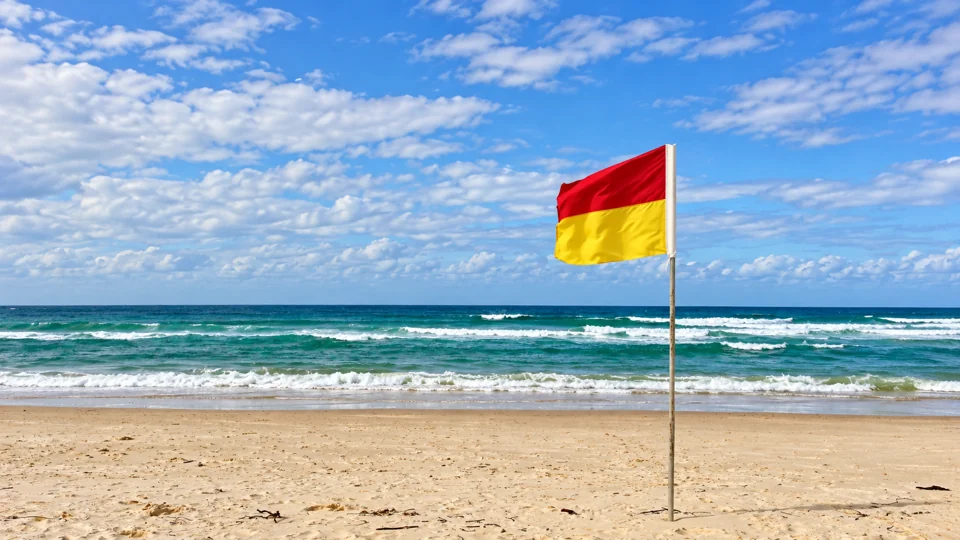
Shark bites in Australia are rare. The Australian Shark Incident Database, run by Taronga Conservation Society, recorded 19 human–shark interactions in calendar 2024, none of them an unprovoked fatality. The best protection for a swimmer is the advice lifesavers give for any beach hazard: swim at a patrolled beach, between the red and yellow flags, and follow the lifesavers’ instructions.
New South Wales, Queensland and Western Australia each run their own shark management program, using different tools such as nets, baited drumlines (anchored buoys with baited hooks), tagging, drones and listening stations. The gear, scope and evidence differ between states. Knowing what each program does, how SharkSmart alerts work and which habits lower your risk helps you decide when and where to swim.
What the Incident Data Show
The Australian Shark Incident Database, kept by Taronga since 1984 in partnership with Flinders University and the NSW Department of Primary Industries, is the principal record of shark bites in Australia. Its 2024 annual summary reports 19 interactions, of which 13 were unprovoked and six were provoked. The database defines an unprovoked incident as one where a shark in its natural habitat makes a determined attempt to bite or bump a person with no provocation. A provoked incident is one where the person initiates contact, for example by spearfishing, grabbing a shark or stepping on one.
The single fatality in 2024 was a provoked spearfishing incident in Queensland in late December. Of the unprovoked cases, 11 people were injured and two were uninjured. The 19 total is the lowest calendar-year count since 2013, and the 13 unprovoked cases are the lowest yearly total of the 2020s.
By state, the 2024 totals were:
- Western Australia: 10 incidents (eight injured, two uninjured)
- New South Wales: four incidents, all injured
- Queensland: three incidents (one fatal, two injured)
- South Australia: two, both injured
- Victoria, Tasmania and the Northern Territory: none
White sharks were involved in four of the 2024 incidents and wobbegongs in three. Bull sharks and tiger sharks accounted for two each, and one incident each involved a bronze whaler and a dusky shark. The species was unknown in three cases and three more were not yet identified. Taronga’s overview says that over 90% of Australian shark bite incidents are attributed to white, bull and tiger sharks, wobbegongs and other whaler sharks, and that white, bull and tiger sharks cause most serious bites and fatalities. Incidents occurred in every season, with July and December recording four each.

The longer trend is upward. The mean number of unprovoked cases per year was 3.1 in the 1950s, 6.1 in the 1990s, 15.9 in the 2010s and 19.3 in the 2020s, although the 2020s figure only runs to April 2025. A methods paper in Scientific Data counts 1,196 shark bites recorded from 1791 to 2022. The database relies on questionnaires and media reports and is revised as information arrives, so recent counts can change. The split between provoked and unprovoked is a classification under the database’s definitions and does not measure any one person’s risk.
Patrolled Beaches and Flags
Patrolled beaches are the first line of defence. Surf Life Saving Queensland tells swimmers to swim only at beaches with surf life saving patrols and between the red and yellow flags, to read the signs and to ask a lifesaver or lifeguard when conditions are unclear. The same flagged area is the zone lifesavers and lifeguards watch, which is why staying inside it matters for sharks as well as for rips and currents.
According to Queensland’s SharkSmart tips, updated 16 April 2024, lifesavers and lifeguards alert swimmers to hazards. If a shark is spotted, they warn swimmers and close the beach until it is safe to swim again. If you hear a siren or see people leaving the water, leave with them and wait for the all-clear.
Where a beach has no patrol, the same page tells swimmers to follow the signs. Some areas are designated no-swimming zones, and Cid Harbour in the Whitsundays is the example the page gives. An unpatrolled bay can look as safe as a flagged beach. Check the signage and the absence of lifesavers before you swim. Surf Life Saving SA also publishes shark and surf awareness advice for South Australian beaches.
How New South Wales Manages Sharks
New South Wales runs the broadest mix of shark measures, set out on the state’s technology, trials and research page. SMART drumlines are deployed daily, weather permitting, from Tweed Heads to Pambula. A target shark (a white, bull or tiger shark) that takes the hook is tagged and released, and non-target animals are released too. The government describes the approach as non-lethal.
The program grew out of a rise in shark interactions on the North Coast. In October 2015 the NSW Government committed $16 million to a five-year NSW Shark Management Strategy. Several measures have been trialled since 2015, and drones, sonar and barriers are still described as trials, not permanent infrastructure.
Figures that NSW DPIRD reported for its current program, as summarised in a Queensland working-group record from 24–25 September 2024, give the scale: 305 SMART drumlines, 51 shark nets, 37 tagged shark listening stations and drone monitoring at 72 ocean beaches from 1 July 2026. Between Sydney and Wollongong, helicopters flying for the Shark Meshing Program add aerial sightings. When a helicopter spots a dangerous shark, a siren sounds, a public address system alerts beachgoers, beach authorities are notified and an alert goes out through the SharkSmart app.
Two other trials show why NSW treats new technology cautiously. The Clever Buoy sonar trial at Hawks Nest in Port Stephens identified white sharks 45% of the time within a 46 m range, and the trial design and water depth affected its range and accuracy. Two environmentally friendly barrier trials on the North Coast were terminated because neither could be installed effectively and safely.
Queensland Shark Control Program
Queensland’s program combines long-running nets and drumlines with a newer drone and tagging effort. The drone program is a priority initiative of the Queensland Shark Management Plan 2025–2029, according to the SharkSmart drones page, last updated 6 November 2025. That page reports results from a trial at 10 beaches between September 2020 and April 2024. Surf Life Saving Queensland pilots flew 17,954 flights covering 7,181 km and saw sharks on 3.8% of them. There were 676 sighting events involving 4,959 sharks, and 190 of those events involved large sharks estimated at more than 2 m in total length. Among the large sharks, the species identified were 23 bull sharks and one white shark, with no tiger sharks. Lifesavers evacuated the water 39 times because of large sharks seen by drone.
Over the same period at the same beaches, nets and drumlines caught 284 sharks, including 26 bull sharks, 64 tiger sharks and five white sharks, along with 123 non-target animals. The department notes that tiger and white sharks may occur further offshore or be caught at night, when drones do not fly. The two tools do different jobs. Drones give lifesavers a live view so they can clear the water, while nets and drumlines aim to catch sharks before they reach the beach.
Queensland has also trialled Catch Alert Drumlines (CADs), which alert a contractor when an animal is hooked. The first phase ran from 24 January 2022 to 23 January 2023 at four Capricorn Coast beaches. There, 11 CADs were alternated with 11 modified traditional drumlines. Both were fitted with circle hooks and wire traces so results were comparable. The working-group summary of 3 May 2023 records 99 animals on modified traditional drumlines and 66 on CADs. Bull whalers, pigeye whalers and tiger sharks made up about 85% of the catch, and survival of bull and pigeye whalers was substantially higher on CADs. The mean contractor response time was 33 minutes, and all 12 non-target animals caught on CADs, across nine species, were released alive.
At the September 2024 meetings, officials noted more false alerts and tawny shark captures at Cairns. The department said sharks caught in the program had risen over the past two years and that further analysis is needed to determine whether the modified gear is a factor. Acoustic tagging between February 2020 and August 2024 saw contractors tag and release 175 tiger sharks and 42 bull sharks offshore from program beaches at Cairns, Townsville, Mackay and the Capricorn Coast.
Western Australia Drumline Trial
Western Australia’s approach centres on the Capes region in the south-west, where several serious incidents involving surfers and white sharks led to a SMART drumline trial. A DPIRD paper by Gaughan and colleagues reports a 27-month trial in which 352 fish were caught. Tiger sharks made up 55% of the catch, only two white sharks were caught, and 91% of animals were released alive in good condition. The trial tested whether relocated white sharks stayed offshore. The authors concluded that animal welfare outcomes were acceptable when response times were minimised, and that there is "no simple remedy" for shark hazards.
The trial ran off the Gracetown coast with 10 drumlines positioned 500 m offshore along an 11.5 km stretch of coast. The original proposal ran from February 2019 to May 2020, and the Environmental Protection Authority WA recorded on 11 May 2020 that it would not formally assess a 12-month extension to May 2021 under Part IV of the Environmental Protection Act. White sharks are listed as "Vulnerable" and protected under state and Commonwealth legislation, which is why the trial focused on non-lethal handling. Western Australia recorded the most incidents of any state in 2024, so a swimmer or surfer there has good reason to apply every behavioural precaution below.
How SharkSmart Alerts Work
The SharkSmart app is the NSW Government’s alert tool, available on the App Store. Its most distinctive feature is tagged-shark detection. Tagged sharks carry acoustic and identification tags, and a network of 37 real-time listening stations from Tweed Heads to Merimbula detects them. Per the Shark Activity page, the app sends an alert when a tagged shark swims within about 500 metres of a station. Data travel by satellite to the public and to beach authorities, and users can set tagged-shark alerts for particular times and locations. Sightings from helicopters, drones and beach authorities also feed alerts.
Use the alerts alongside the flags and advice from lifesavers. The stations sit roughly 500 m from shore, so a tagged shark outside that range is not detected, and an untagged shark is never detected by the stations. Some sharks go undetected for long periods, and tracking shows white sharks travelling tens of thousands of kilometres, including to Western Australia, Tasmania, New Zealand and New Caledonia. Sharks can be in the water when the app is quiet.
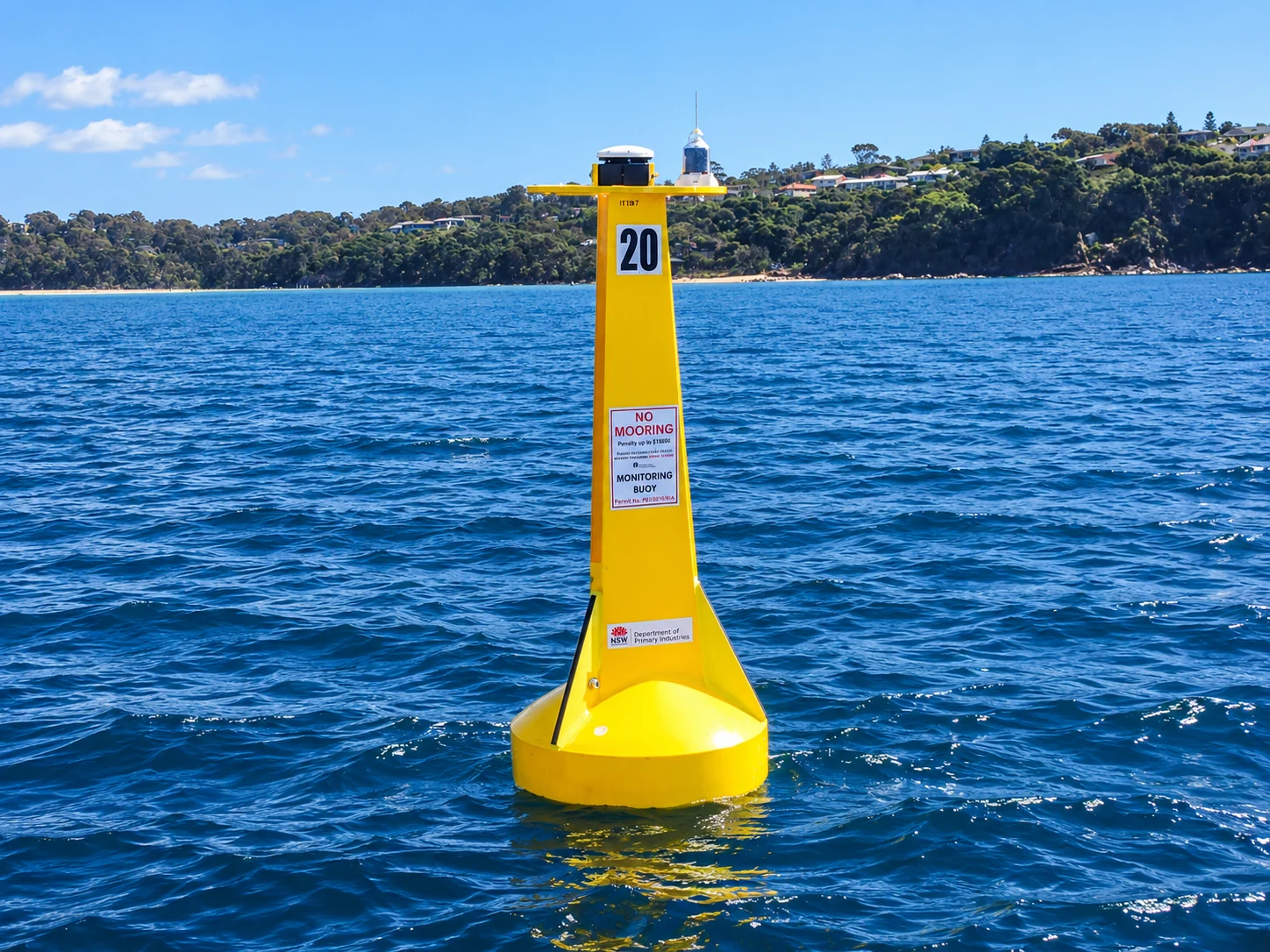
There is also an alert warning light prototype, developed with Byron Shire Council and funded in 2017/18, which displays SharkSmart alerts on a light visible to people in the water. It remains a prototype. In Queensland, the equivalent is to check local DPI and lifesaving advice, and the beach flags and signs, before you enter the water.
Ways to Lower Your Risk
Queensland’s SharkSmart tips list habits that apply anywhere on the coast. Swimming at a patrolled beach between the flags remains the first step. Swim with a buddy, and leave the water together if conditions change.
Time of day matters. Some sharks are more active at dawn and dusk, and their vision is less reliable in dim light, so swim in daylight when you can see around you and be seen. Stay out of the water when you see large schools of bait fish or diving birds, since both indicate feeding activity.
Keep food sources away from swimming areas. Fish frames, scraps and bait do not belong in the water where people swim, and chumming or berleying near swimmers is never appropriate. For the same reason, do not swim near people who are fishing.
River mouths, estuaries and canals call for particular care, especially after rain. The tips page says bull sharks hunt in murky water, and rain brings runoff that clouds river mouths and the water near them. A beach next to a swollen river is a poor choice on the day after heavy rain, even if it looks calm.
If you are new to the country, Surf Life Saving NSW offers beach safety guidance in a range of languages, and the same flag habits that protect you from rips also put you where lifesavers can reach you quickly.
Summary
- Swim between the red and yellow flags at a patrolled beach. Lifesavers watch that area, warn swimmers of hazards and close the beach if a shark is spotted.
- Know each state’s shark-control program. NSW uses SMART drumlines, nets, tagging and drones, Queensland combines nets and drumlines with drones and CAD trials, and Western Australia has run a SMART drumline trial in the Capes region.
- Use the SharkSmart app as one input. It alerts when a tagged shark passes within about 500 metres of one of 37 listening stations, and no alert does not mean no sharks.
- Keep the risk in proportion. The 2024 count of 19 interactions was the lowest since 2013, with 13 unprovoked cases and no unprovoked fatalities.
- Avoid the conditions that draw sharks in. Skip dawn, dusk and night, bait fish schools, fishing activity and murky river mouths after rain, and swim with a buddy.