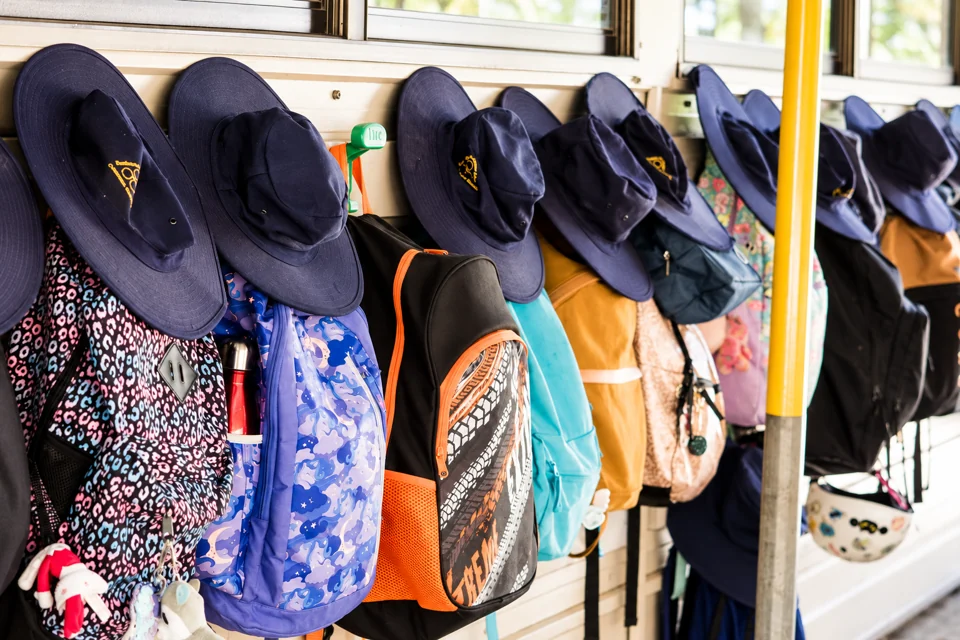
Each WA public school sets its own dress code, the written rules on what students wear. The school’s council or board sets it, and students must follow it unless the principal grants an exemption. State rules shape every code, but each school chooses its own uniform, so colours, items and suppliers differ from school to school.
Parents new to Australia or to a particular school should read the dress code before buying anything. The principal must give it to you in writing at enrolment and whenever it changes.
Who sets the dress code
A government school’s Council decides the student dress code, in consultation with students, parents and staff. This function comes from section 128(d) of the School Education Act 1999. The Department of Education’s dress codes policy says councils and boards make the decision, the principal implements it, and line managers monitor compliance.
The department’s procedures require the consultation to give parents, teachers and students a chance to express views. It must also seek the views of cultural, religious, ethnic and special needs groups, and consider how practical the garment design and materials are and what they cost. If the uniform changes, the school must tell families in writing.
The state sets some limits that apply to every public school. The code must comply with human rights, anti-discrimination and equal opportunity law, and its requirements must be similar for all students. It must include gender-neutral options, and it must not include denim, except at senior colleges. A dress code covers headwear and footwear as well as other parts of personal presentation, so hats and shoes can be part of the rules.
Whether the uniform is compulsory
The department’s uniforms page states that all public schools have a uniform that students wear every day. Students must comply with the dress code unless they have an exemption, and principals must tell students this. School documents repeat it. Campbell Primary School, for example, expects students to wear the uniform each day unless an exemption has been granted.
Exemptions from the dress code
An exemption lets a student skip one or more requirements for a set period. Under Regulation 35 of the School Education Regulations 2000, a parent or person responsible for the student can apply to the principal. An adult student or an independent minor can apply for themselves.
The principal may grant an exemption on any of these grounds:
- A component of the dress code is unavailable.
- A matter relates to the student’s health.
- A matter relates to the religious beliefs of the student or family.
- A matter relates to the cultural background of the student or family.
- Any other matter the principal considers sufficient.
Financial hardship is not named as a ground. It falls under the final ground, so the principal decides, and families should raise it early.
The principal can attach conditions to an exemption and can revoke or vary it at any time, informing affected people in writing. For each exempted student, the principal keeps a written record of the requirements exempted, the period, the ground and any conditions. The applicant gets a copy, and each of the student’s teachers is told. Principals may also grant exemptions to groups or to the whole school.
Schools add their own steps. Campbell Primary suggests parents make an appointment with the principal first and lists cultural, religious, medical or other reasonable grounds. Challis Community Primary School lists religious reasons, cultural background and health reasons. These school processes sit alongside Regulation 35, so you can still apply in writing to the principal.
For denim, a school council or board may apply to the Director General for an exemption allowing Years 11 and 12 to wear it, and must make the application before the end of the preceding academic year. The principal must show that denim is the most appropriate option. A senior college may include denim without applying, and students must still be neat and meet the rest of the code.
Items a uniform usually contains
According to the department, the standard uniform normally includes a dress, skirt, shorts and polo shirt, along with track pants and a windcheater (a fleecy pullover top). Blazers, hats and footwear can also be included.
Bayswater Primary School shows how this looks in practice. Its boys’ list has a polo shirt, maroon or navy shorts, a maroon wide-brimmed hat, a maroon jumper or jacket and maroon track pants. The girls’ list has a school dress, polo shirt, maroon pleated sports skirt, shorts or skort, the same hat and jumper or jacket, and maroon track pants. The school lists these items as recommended, so the wording for each item matters.
Gender-neutral options include pants, shorts, shirts and jackets that all students can wear. Some items, such as shorts and pants, are sometimes cut slightly differently by gender, and principals consider individual circumstances case by case. The procedures also require suitable sport and PE clothing, including for informal physical activity.
The policy gives a PE uniform as an example of a possible indirect discrimination problem, because it could disadvantage students who need to dress modestly for cultural or religious reasons. If your child’s PE uniform does not suit your family’s requirements, ask the principal for an exemption or an alternative.
What to check before buying
Start with the school’s own dress code or uniform page, then work through these points before you pay for anything.
Requirement or recommendation. Some items are listed as recommended, while others are required. Check the wording for each item, including hats, jumpers and jackets.
Colours and designs. A school uniform is clothing of a specific colour or design worn for identification. Matching the exact shade and logo matters, so compare against the school’s list instead of buying lookalikes from a general store.
Denim and footwear. Denim is excluded outside senior colleges and approved Years 11 and 12 exemptions. Footwear and headwear rules sit inside the dress code too.
Supplier, price list and order form. Many schools name a supplier. Bayswater directs families to a named supplier with a price list and online ordering, and the price list sits on the school’s website.
Timing. Bayswater encourages booking fittings during Term 4 to avoid queues in January. Bayswater’s 2026 Term 4 runs from Tuesday 13 October to Thursday 17 December, and the next Term 1 dates will appear on the school’s own calendar.
Labelling. Bayswater asks parents to mark every item with the child’s name, because unnamed jumpers, jackets and hats often end up in lost property.
Where to confirm a school’s policy
The school’s own dress code page or policy is the definitive source for that school. If you cannot find it online, the school office or principal must give you the code in writing at enrolment and whenever it changes. This duty comes from Regulation 34, which covers the student and the parent or person responsible.
For wider questions, the school’s Council or board is the body that determines the code, and Council meetings are generally open to the public under Regulation 115. Some schools also have a dress advisory panel, a sub-group of the council or board with at least one staff member, which can help with compliance. For the state rules, use the department’s dress codes policy, version 2.5, last updated on 15 April 2026. The older det.wa.edu.au address has been replaced, so use the current page.
Buying new and second-hand
Bayswater Primary families buy from Uniform Concepts at Nell Gray Inglewood Super Store, 832 Beaufort Street, Inglewood WA 6152 (phone 9270 4658, email inglewood@uc.nellgray.com.au, online ordering at nellgray.com.au). The store lists its hours as Monday to Friday 9.00am to 5.00pm (to 6.00pm on Thursday) and Saturday 9.00am to 1.00pm, with closures on Sundays and public holidays and partial closures in term breaks. Check the school page before visiting. A layby service with a $20 deposit runs during Term 4 and for back-to-school orders, which spreads the cost over several weeks.
The Bayswater P&C (Parents and Citizens association) runs a second-hand store with items from $5, and all money raised goes to the P&C. Families can leave outgrown uniforms at school reception. Other schools run similar exchanges, and the department’s procedures note that schools may run clothing exchanges and loan schemes. Ask the school office what exists before buying new.
Help with uniform costs
Secondary Assistance Scheme allowances
Families of students in Years 7 to 12 can apply for the Secondary Assistance Scheme (SAS), which pays two allowances. The Student Allowances Guidelines 2026 set the 2026 Clothing Allowance at $115, which is paid either to the parent or guardian or to the school. The Education Program Allowance is $235, paid to the school. It covers education program charges first, and any remainder goes to the voluntary contribution.
The Clothing Allowance was $300 in 2024 and 2025 under a temporary increase, and the 2026 guidelines record that the increase was removed. Budget for $115 in 2026.
Who is eligible
The student must be in Years 7 to 12, studying a full-time secondary course at a WA public school where education program charges or voluntary contributions apply. The parent or guardian must hold one of these cards:
- a Services Australia Pensioner Concession Card
- a Services Australia Health Care Card
- a Department of Veterans’ Affairs Pensioner Concession Card (the SAS page specifies only the blue card, so TPI and gold cards are not accepted)
The card must be valid when you apply, valid for at least four weeks, and valid at some point during Term 1, which ran from 2 February to 2 April 2026. The student must be listed on the parent’s card. Years 11 and 12 students may not appear on it, and in that case you produce both the parent’s card and the student’s own card.
Students are eligible up to and including the year they turn 18, so students born in 2007 or earlier do not qualify for 2026. A student with their own Health Care Card who depends financially on a parent cannot apply unless Centrelink has declared them independent. Foster parents cannot apply, because the child is a Child in Care of the Department of Communities Child Protection. The same student’s allowance cannot be claimed twice in one year, whether from another school or by another parent.
How to apply
Apply every year in Term 1, at the school or by email to it. One application does not cover all secondary years. Forms completed before Term 1 cannot be submitted until Term 1 begins, and email applications must include a copy of both sides of the concession card.
Families who arrive from overseas must hold a current card at the time of application, and must apply within one month of enrolling. The window extends to two months for extenuating circumstances, such as a Centrelink card still being processed. Students who transferred from interstate or arrived from overseas and enrol after Term 1 receive a pro-rata Education Program Allowance of $58.75 per term enrolled, and those who apply receive the full $115 Clothing Allowance.
If a student leaves a WA school mid-year, any unused clothing allowance can be forwarded to the new WA school or refunded to the parent, and the school must consult the parent. Questions go to the Financial Planning and Resourcing Directorate at the Department of Education, 151 Royal Street, East Perth WA 6004, phone (08) 9264 4516, email student.allowances@education.wa.edu.au. The department also tells parents to speak to their child’s school about eligibility.
Help for primary families
SAS covers secondary students only. Primary families who find the required uniform hard to afford can contact the principal. Challis Community Primary says its families should do this so the school can find a solution. Schools may run clothing exchanges and loan schemes, and may fund outfits for excursions or daily wear.
What happens if a student does not comply
The policy defines a non-complying student as one who breaks the dress code, has reached the age of 5 years and 6 months (or will in that calendar year) and is under 18. Schools must counsel students and families first, and may use sanctions only after other avenues have failed. A school may use sanctions only if financial reasons are shown not to contribute to the non-compliance, and sanctions that could damage later career prospects are not allowed.
For primary students, sanctions are limited to two things: preventing attendance at activities where the student would represent the school, and preventing attendance at school activities that the principal considers not an essential part of the educational program. A primary student must not be disciplined in any other way for a dress code breach.
For other students, the principal may apply any sanction in the school’s behaviour management plan. The student may not be prevented from attending an activity the principal considers essential to their educational program. No student can be suspended or excluded over dress, because Regulation 36 does not allow a dress code breach to count as a breach of school discipline for those purposes.
School practice follows this pattern. Campbell Primary starts with the classroom teacher contacting parents for an explanation, then administration contacts parents about continued non-compliance. At Challis, a fourth instance of non-compliance leads to contact with parents to find a solution and a possible meeting to request assistance or an exemption.
Safety and hygiene rules
Separate powers apply whether or not a student complies with the dress code. Under Regulation 30, a principal may stop a student taking part in an activity if their clothing, headwear, footwear, hair length or style, or jewellery would create a hazard. Under Regulation 31, if a student’s hygiene is likely to affect others’ ability to take part, the principal may require the student to wash or go home for that purpose. When a principal acts under these rules, Regulation 32 requires reasonable steps to tell the parent and give the reasons, unless the student is an adult or an independent minor.
Raising a concern or complaint
Start with the school. A conversation with the class teacher or principal resolves most uniform questions, and a written request to the principal is the formal route for exemptions.
If you want the rules themselves changed, go through the Council. Regulation 117 requires each Council to hold at least one public meeting a year, with 14 days’ notice to parents. Under Regulation 118, the chairperson must call a special meeting if a notice stating the purpose is signed by at least 20 families of students at the school, or at least half the number of families, whichever is lesser. The chair need not call it if the purposes are not relevant to Council functions. Council decisions require an absolute majority under Regulation 119.
Regulation 55 allows the CEO to establish a complaints scheme for disputes and complaints by parents of government school students. Regulation 56 protects people who make a complaint or give information from civil liability, unless they acted in bad faith. Under Regulation 57, it is an offence to pressure or intimidate someone to stop a complaint, or to dismiss them, refuse to employ them or subject them to detriment for making one. The penalty is $2,000.