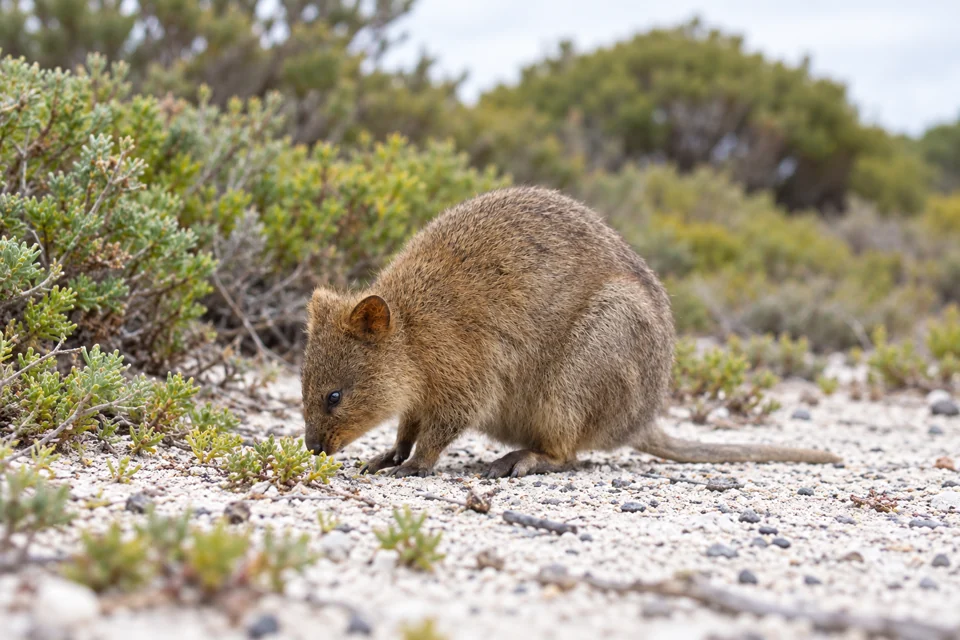
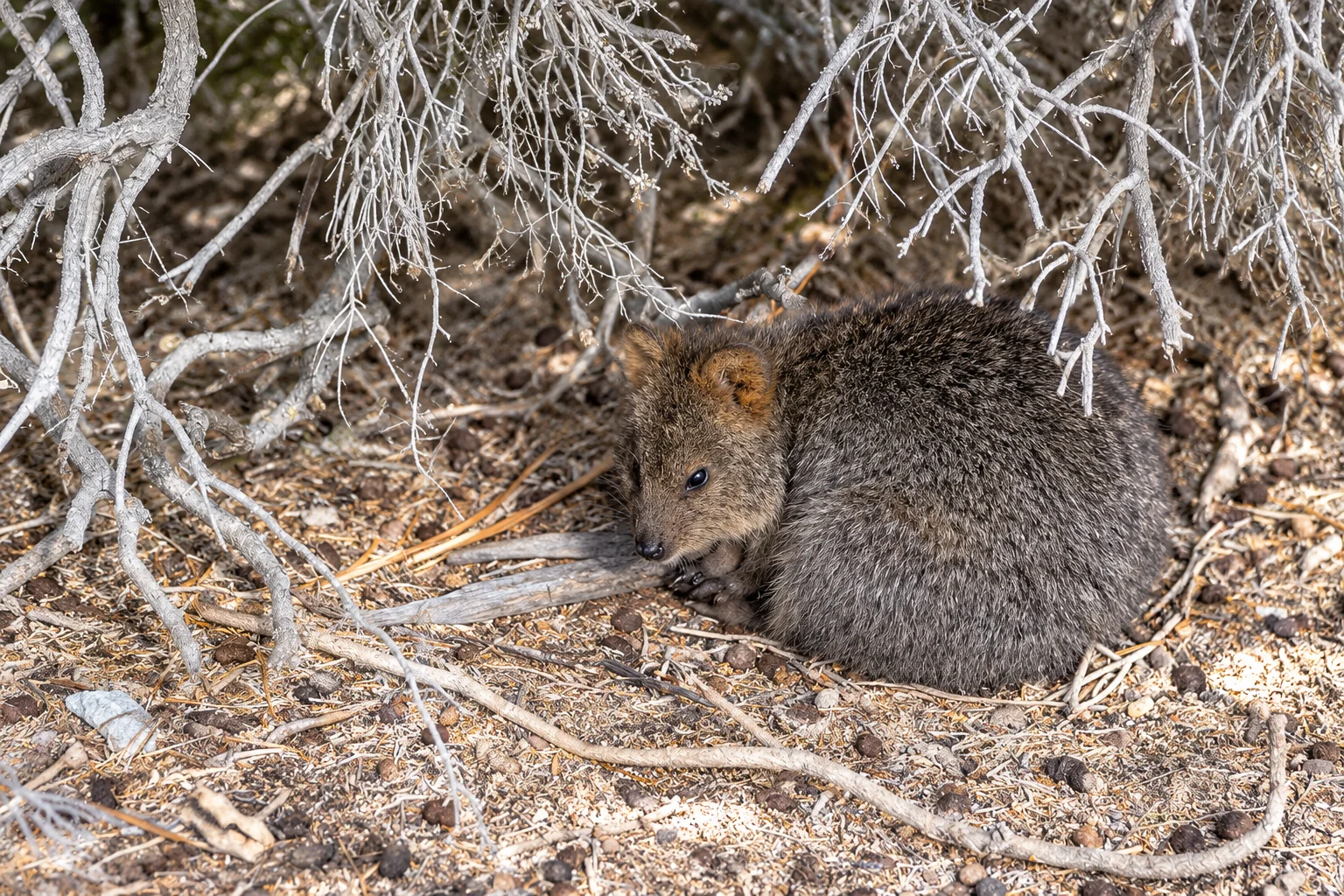
The quokka is a small marsupial about the size of a cat, with a rounded face that looks like a permanent smile. It lives in south-western Western Australia. Most visitors meet one on Rottnest Island (Wadjemup), a short trip off the coast near Perth. The official Rottnest Island site says the island has the world’s largest quokka population. Quokkas are mainly nocturnal, so the best sightings are in the early morning and late afternoon.
Feeding or touching a quokka on Rottnest is not permitted, and feeding any wildlife on the island is illegal. Photos are fine as long as the quokka decides how close it comes.
Best places on Rottnest Island
The Thomson Bay settlement is the most likely place for a quick sighting. It is the island’s main hub, and Perth Weekend notes that the quokkas here are used to crowds. Australian Traveller quotes Shane Kearney, acting general manager of the Rottnest Island Authority (RIA), saying quokkas are generally found in the morning and early evening year-round, especially around the settlement precinct. The Visitor Centre at the main settlement is another spot where quokkas gather.
Away from the settlement, Sealink points to the area around Wadjemup Lighthouse along Digby Drive, where the quokkas shelter among tea trees. Garden Lake, reached via Digby Drive, is a permanent lake with vegetation and shade, and quokkas sleep there. If the settlement is crowded, The Basin and Pinky Beach are quieter, and the Underwood Avenue boardwalk near Hotel Rottnest is another option.
The island also runs free guided quokka tours with Rottnest Volunteer Guides. The official site describes them as an educational way to see quokkas up close, and they suit visitors who want to learn about the animals as well as photograph them. Check the official Rottnest Island page for current tour times.
Quokkas outside Rottnest
Quokkas once ranged across about 41,200 km² of south-west Western Australia, including islands, at the time of colonial settlement. According to Wikipedia’s species summary, the mainland distribution fell by more than 50% by 1992. WWF-Australia now describes the species as restricted to a number of small, scattered populations on the mainland, on Rottnest and on Bald Island near Albany.
A 2016 survey report puts the mainland sub-populations between Serpentine and the South Coast, with a second offshore group on Bald Island. Waychinicup National Park is home to one of the few mainland populations, and Bald Island Nature Reserve lies offshore nearby. Mainland quokkas live in dense, swampy habitat patches, in areas receiving greater than 600 mm of precipitation per year, and most are believed to live where rainfall exceeds 1,000 mm, according to a ScienceDirect study of their population structure. They need thick ground cover for refuge, because red foxes, cats and dogs prey on them.
Mainland quokkas live under much more pressure than the Rottnest population, and fire shows how fragile they are. The Northcliffe fire burned 98,000 hectares, the largest fire in Western Australia since 1960. A 2016 survey found 39 of 500 quokkas remaining in the fire-affected area, a decline of 77 per cent. For most visitors, Rottnest is where a quokka encounter is realistic, and the mainland populations are better left undisturbed.
Rules on feeding and touching
An RIA spokesperson told Yahoo News Australia on 18 October 2024 that feeding and touching quokkas "is not permitted for the welfare of the animals". Rangers patrol "regularly throughout each day to enforce the Rottnest Island Regulations 1988, inclusive of feeding wildlife". The official site also tells visitors not to touch quokkas and to stick to the paths.
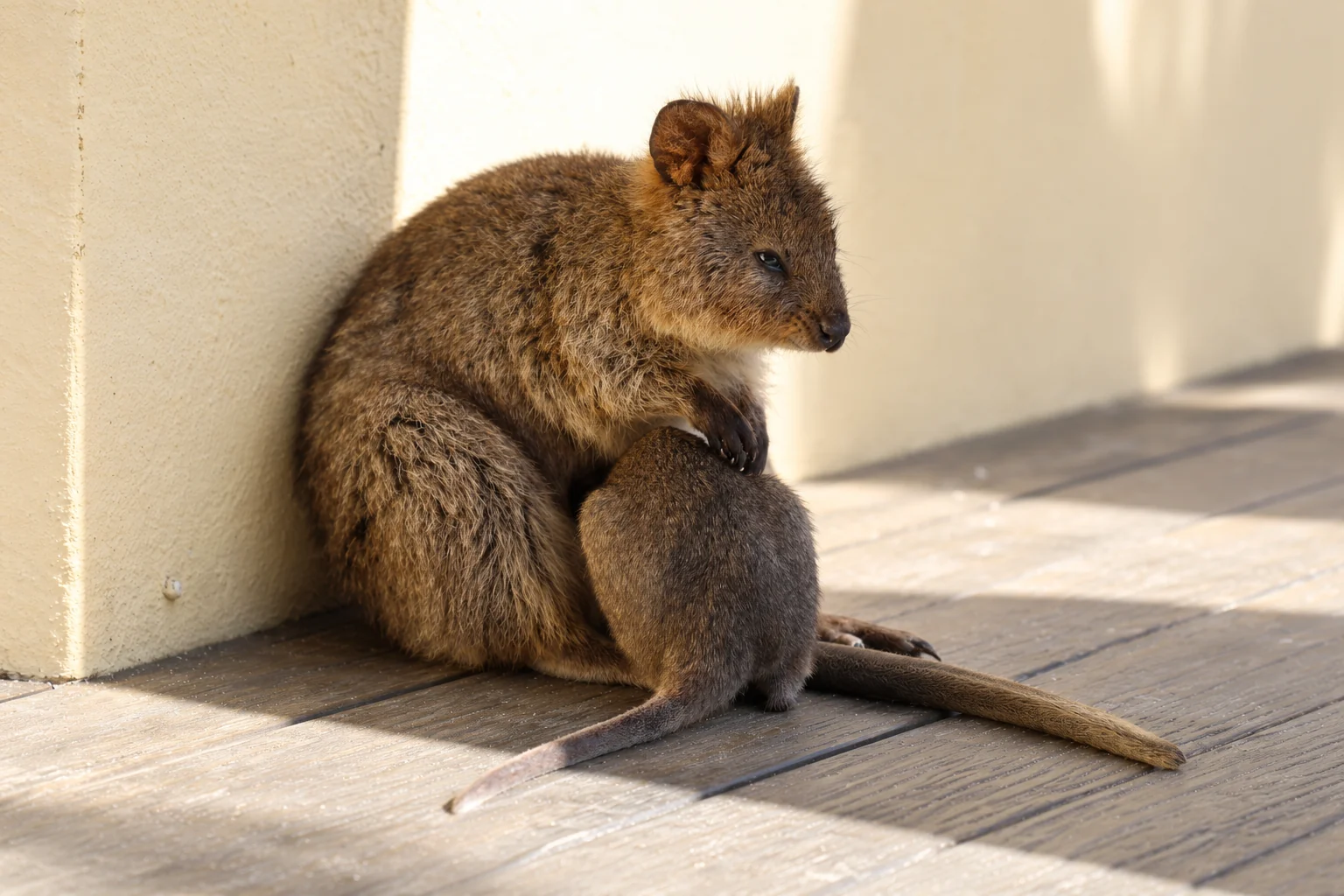
Kearney told Australian Traveller that feeding changes quokka behaviour and that food outside their natural diet makes them ill. The RIA’s tips, reported in the same Yahoo piece, add that human food disrupts their foraging. Touching can spread disease, and a mother may abandon her young if they carry an unfamiliar scent. The RIA advises against feeding quokkas even leaves, and it asks visitors to watch from a respectful distance.
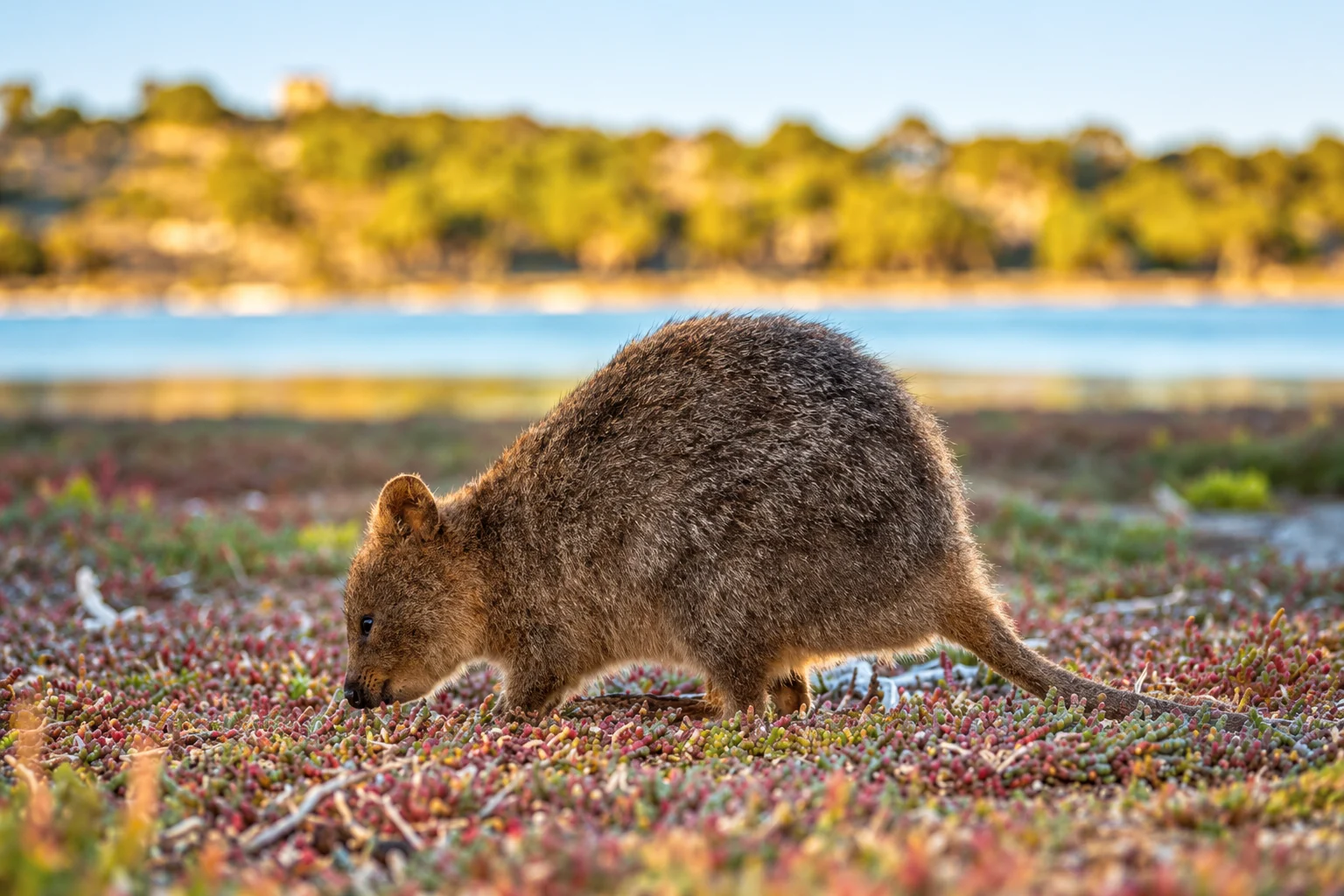
Quokkas also take food for themselves. In October 2024, a British tourist reported that a quokka rummaged through her bag on a table and took food. She had not fed it directly, but the episode prompted the RIA to urge visitors to store food securely and out of reach. Keep bags zipped and food out of sight at cafés, picnic tables and beaches, because an unattended snack can start the habit the rules are meant to prevent.
Fines for feeding wildlife
The RIA states that the on-the-spot fine for feeding a quokka or any animal is $150, issued under the Rottnest Island Regulations 1988 (RIA statement, 18 October 2024). The official Rottnest Island site says deliberate interference with wildlife, including feeding, is fined on the spot under those regulations and can also be prosecuted under the Biodiversity Conservation Act 2016. Check the official quokka page for the current figures before you travel.
| Offence | Penalty | Law |
|---|---|---|
| Feeding a quokka or any animal (on-the-spot fine) | $150 | Rottnest Island Regulations 1988 |
| Deliberate interference with wildlife, including feeding (prosecution) | Up to $10,000 | Biodiversity Conservation Act 2016 |
| Acts of animal cruelty | Up to $300,000 and five years’ imprisonment | Animal Welfare Act 2002 |
The $150 fine is the penalty a visitor caught feeding a quokka should expect. The $10,000 figure is the maximum on prosecution, and the cruelty penalties sit in a separate Act.
Taking a responsible selfie
The quokka selfie has become a Rottnest tradition, and the RIA allows it on one condition: the quokka chooses to take part. Kearney describes quokkas as "fairly trusting", which means a patient visitor will usually be approached without having to chase anything. His advice in Australian Traveller (5 November 2024) is to get your camera ready, enjoy the moment and let the quokkas come to you.
A selfie stick keeps a respectful distance between you and the animal, which he links to the safety of both people and quokkas. Never offer food or water to coax a camera-shy quokka into the frame. Dispose of rubbish properly, and ride bikes with care on the island.
Other guides to the island add a few techniques that follow the same logic. Perth Weekend and Sealink suggest crouching or lying down to the quokka’s level, which makes the animal more likely to approach, and keeping your voice low and staying on the path. Western Australian Travel advises against chasing or following a quokka that moves away. Rottnest Fast Ferries recommends skipping the flash, which can stress the animal. If a quokka comes close, step back slowly and use your camera’s zoom instead. Waiting patiently usually pays off, because Aussie Animals notes that quokkas will often grin, yawn, chew a leaf or stick out their tongue.
Quokkas are wild animals and turn defensive when threatened. First Light Travel warns that a scared or threatened quokka can bite or attack with its claws and back legs. A quokka that backs away or looks agitated has told you the photo is over.
Why the population needs protection
The federal species profile for the quokka gives the Rottnest sub-population as 8,000 to 12,000, described as resilient to current levels of disturbance, with a stable trend. Australian Traveller puts the population at around 10,000 and says about 650,000 people visit the island each year. That ratio of people to quokkas explains why the RIA enforces the rules every day.
The species is listed as Vulnerable under the national Environment Protection and Biodiversity Conservation (EPBC) Act, and WWF-Australia lists it as Vulnerable under the IUCN Red List as well. Rottnest’s quokkas have lower genetic variation than mainland populations, and the species profile says their numbers fluctuate sharply with water availability. They are relatively safe from feral cats and foxes on the island, and snakes are their only predator there. That safety is a large part of why the island population thrives while mainland populations decline, and it depends on visitors not adding new problems such as human food.
What to do on Rottnest
- Go early or late on Rottnest: Quokkas are mainly nocturnal, so look in the morning and early evening around Thomson Bay, Wadjemup Lighthouse, Garden Lake, The Basin and Pinky Beach.
- Never feed or touch a quokka: The RIA says it is not permitted for the animals’ welfare. Feeding any wildlife on the island is illegal and carries an on-the-spot fine of $150. Prosecution under the Biodiversity Conservation Act 2016 carries up to $10,000.
- Secure your food and bags: A quokka that raids an open bag can still prompt a warning from rangers, so keep food out of reach.
- Let the quokka come to you: Use a selfie stick or zoom, crouch to its level and skip the flash. Never offer food or water. If it gets too close, step back slowly.
- Treat mainland quokkas as protected: Small populations near Waychinicup National Park and on Bald Island survive under pressure from foxes, cats and fire, so Rottnest remains the place for easy viewing.