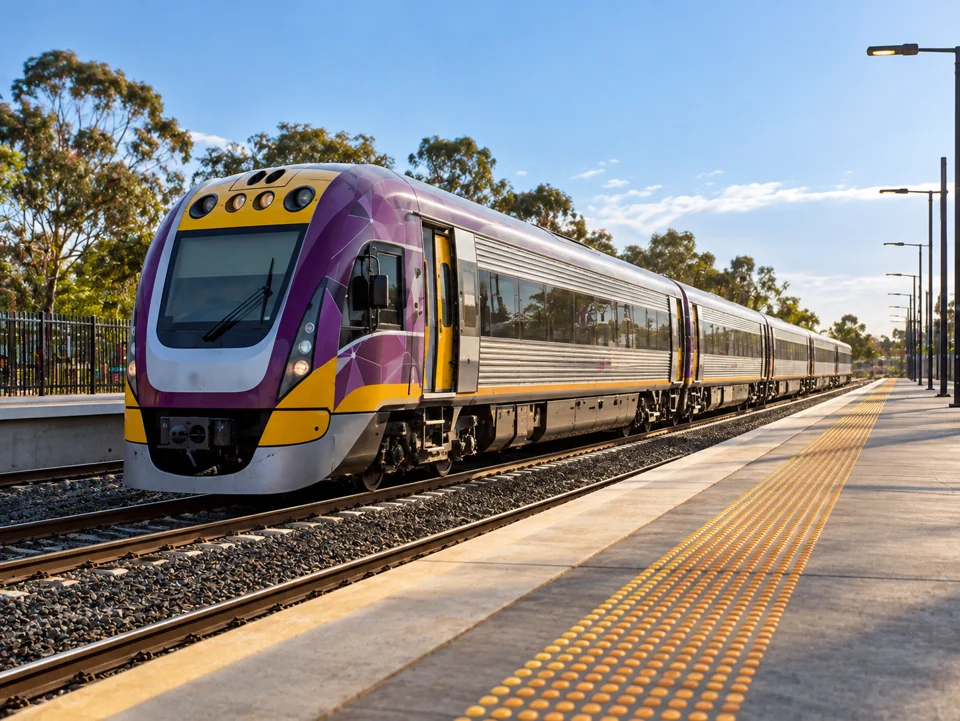
Each state runs its own public transport, so cards, fares and concessions change when you cross a state border. Sydney uses Opal and Melbourne uses myki. South East Queensland has the go card, and Perth has SmartRider. All four are tap-on, tap-off systems that charge by journey. Sydney, Melbourne and Perth stop charging once you reach a daily or weekly cap, but Queensland’s flat fare has no cap. Most of them also accept a contactless bank card.
When budgeting, check each city’s cap structure and which concessions you qualify for. Also find out what happens if you forget to tap off. The fares below are current as at the dates given. Each state revises its prices from time to time, so check the operator’s website before you plan your travel costs.
How the four systems compare
| City | Card | Fare structure | Cap or flat rate |
|---|---|---|---|
| Sydney | Opal | Distance-based fares | Daily and weekly caps |
| Melbourne | myki | Two-hour fares by zone | Daily cap |
| South East Queensland | go card | Flat fare | 50 cents per journey |
| Perth | SmartRider | Sections, then a three-hour fare | DayRider cap |
A cap is the most you pay in a set period, after which further travel costs nothing. Tapping off ends your journey and tells the card reader how far you travelled, so the system can calculate the fare. If you tap on and forget to tap off, Sydney, Melbourne, Queensland and Perth all charge a default fare, which is usually higher than the fare for the trip you made. In all four systems, tap on at the start of every journey and tap off at the end.
Sydney and Opal
Fares and caps
Transport for NSW raised most Opal fares and caps on 14 July 2025, linked to CPI. The IPART fact sheet puts the average overall increase at 2.5% and describes most single adult fares, daily caps and weekend caps as rising "around 3%". IPART, the state’s pricing regulator, sets maximum Opal fares until 30 June 2028 for Sydney, Newcastle, the Central Coast, Wollongong, the Blue Mountains and the Hunter. Transport for NSW sets the caps and discounts that sit below those maximums.


Opal covers Sydney Trains, Sydney Metro, buses, ferries and light rail, and every one of them counts toward the same caps. A contactless credit or debit card, or a phone or watch linked to one, gets the same fares and caps as an Opal card.
| Fare type | Mon to Thu daily cap | Fri, Sat, Sun and public holidays | Weekly cap |
|---|---|---|---|
| Adult | $19.30 | $9.65 | $50 |
| Child/Youth | $9.65 | $4.80 | $25 |
| Concession | $9.65 | $4.80 | $25 |
| Senior/Pensioner (Gold Opal) | $2.50 | $2.50 | n/a |
The Opal week runs Monday to Sunday, so the $50 weekly cap resets on Monday. Transport for NSW says the weekly cap has been held for a seventh year and that the $2.50 Gold daily cap has not risen since Opal began in 2012. For a commuter, the fifth or sixth day of travel in a week is free once the cap is reached.
Single trips and transfers
Opal fares depend on how far you travel and whether you travel in the peak or off-peak period. The adult figures below apply from 14 July 2025, per Transport for NSW and the IPART fact sheet.
| Train and metro distance | Peak | Off-peak | Single-trip ticket |
|---|---|---|---|
| Up to 10 km | $4.33 | $3.03 | $5.20 |
| 10 to 20 km | $5.38 | $3.76 | $6.50 |
| 20 to 35 km | $6.20 | $4.34 | $7.40 |
| 36 to 65 km | $8.28 | $5.79 | $9.90 |
| Over 65 km | $10.66 | $7.46 | $12.80 |
Buses and light rail charge $3.30 peak and $2.31 off-peak for up to 3 km, $4.49 and $3.14 for 3 to 8 km, and $5.77 and $4.03 beyond 8 km. Single-trip tickets cost $4.00, $5.40 and $6.90 for the same bands. Ferries cost $7.35 for up to 9 km and $9.20 beyond that, with single-trip tickets at $8.80 and $11.00. The Stockton ferry is charged at the cheaper bus fares: $3.30 peak, $2.31 off-peak and $4.00 for a single trip.
The single-trip ticket is always the most expensive way to pay, so an Opal card or a contactless card saves money from the first journey. When you change modes within one journey, for example a bus to a train, Opal gives a transfer discount of $2 for adults and $1 for child/youth, concession and senior/pensioner passengers.
Melbourne and myki
Zones, fares and caps
Melbourne charges by zone. Zone 1 covers roughly the inner 15 to 20 km from the CBD, and Zone 2 covers the outer suburbs, according to Melbourne Info. A two-hour fare gives unlimited trains, trams and buses within two hours. Once you reach the daily cap, the rest of the day is free, and the cap applies automatically without any claim. The city-centre Free Tram Zone sits alongside the paid zones, according to Discover Melbourne.
Normal 2026 fares are listed by Melbourne Metro and the guides that track the fare schedule:
- Zones 1+2 two-hour fare: $5.70 full fare, $2.85 concession
- Zones 1+2 weekday daily cap: $11.40 full fare, $5.70 concession
- Zone 2 only two-hour fare: $3.50 full fare, $1.75 concession
- Zone 2 only daily fare: $7.20 full fare, $3.60 concession
- Weekend and public holiday daily cap: $8.00 full fare, $4.00 concession
When more than one cap applies on a day, the lowest applies.
The half-price period
Public transport across Victoria is half price from 1 June 2026 to 1 January 2027. During that period the full-fare daily cap falls from $11.40 to $5.70 and the concession daily cap falls from $5.70 to $2.85. The reduction is applied automatically at touch-on. The Zones 1+2 two-hour fare drops to $2.85 ($1.42 concession), and a Zone 2 only two-hour fare drops to $1.80 ($0.90 concession). The reduced prices end on 1 January 2027, so budget from the normal figures above for anything beyond that date. The Victorian fare calculator shows the current figure for a trip.
Cards, passes and missed taps
Melbourne has no paper tickets. You pay with a myki card or a contactless bank card. If you tap on and do not tap off, the default fare is the maximum two-hour fare, $5.70 on a train or Zone 2 bus at normal 2026 rates. In Zone 2, you need to tap on and off to be charged the correct fare.
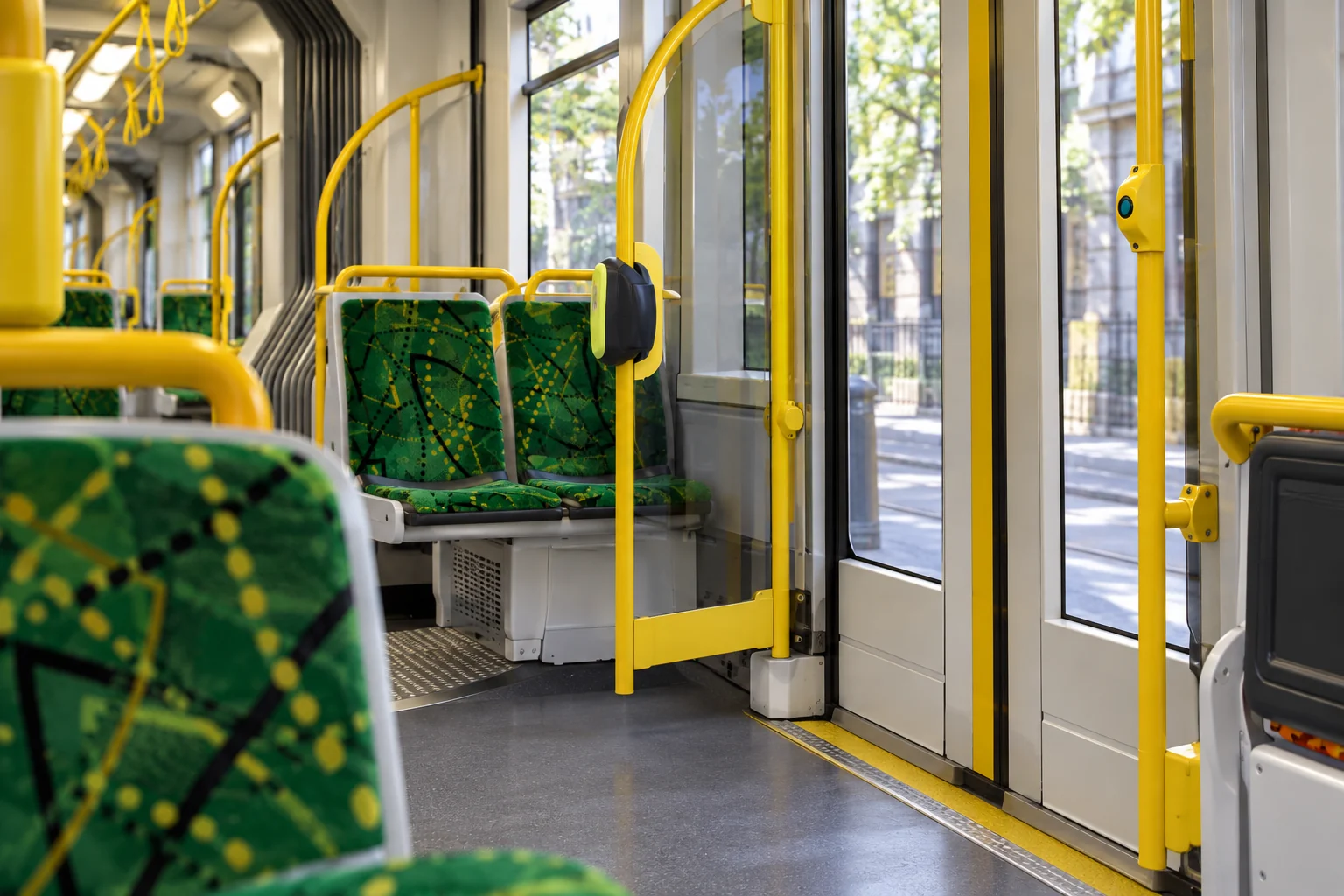
A Myki Pass covers a fixed period instead of a daily cap. A seven-day Zones 1+2 pass costs $57.00 full fare and $28.50 concession in 2026, and passes run from seven days up to 365 days. One visitor guide advises that a pass suits a stay of a week or more with very consistent daily travel. The daily cap usually works out better for shorter stays or irregular travel. Someone who commutes five days a week and rides on weekends is the person who gets value from a pass.
South East Queensland and go card
The 50-cent fare
Translink states that all public transport fares in Queensland are 50 cents per journey, regardless of distance or payment method, whether you pay with a go card, a contactless debit or credit card or a paper ticket. The go card is accepted on Translink buses, trains, ferries, trams and on-demand services across greater Brisbane, Ipswich, Moreton Bay, Redlands, the Sunshine Coast and the Gold Coast. It does not work in regional Queensland.
Children aged 5 to 14, school students, tertiary students, seniors, pensioners, veterans, job seekers and asylum seekers pay the same 50 cents per journey. Children aged 4 and under travel free. So do TPI/EDA Veteran Travel card holders, Vision Impairment Travel Pass holders, Translink Access Pass holders and go access Travel Trainer card holders. One companion or carer travelling with a Companion Card holder is also free. Carry proof of entitlement and show it to a driver or Authorised Person on request.
Using and registering the card
About go card describes three card types: Adult (aged 15 and over, including concession holders), Child (aged 5 to 14, with free weekend travel) and Seniors (for Australian Senior Card holders). Top up the card, tap on at the start of your trip and tap off at the end. The fare is deducted at tap-off, and forgetting either tap may bring a default fare. Adult cards show a green light and one beep, while child, senior and concession cards show an amber light and two beeps, so a wrong colour tells you the card type is not what you expected.
Registering a card lets you top up online or by phone and set up auto top-up. It also protects your balance if the card is lost or stolen, and lets you check transactions and request refunds or balance transfers. A new card takes up to 24 hours to be recognised before you can register it, usually a couple of hours. Child cards cannot be registered online and must be registered by phone on 13 12 30, the Translink line, which runs 24 hours a day. Most go cards expire after 10 years, and an expired card is not valid for travel. A green concession go card keeps working, but concession fares no longer apply to it.
Visitor and event options
The go explore product costs $1.50 per day for unlimited travel on Gold Coast buses and trams and Sunshine Coast buses, with up to eight non-consecutive day passes. The go Event card is $4.50 for three days of unlimited travel, with extra days from $1.50, up to eight days. It has a minimum order of 50 cards and expires two days after the event, so it suits organisers rather than individuals.
Perth and SmartRider
Fares from 1 January 2026
Transperth uses sections for short trips and a three-hour fare for everything else. These figures come from the Transperth fare table effective 1 January 2026, and include GST.
| Ticket | Cash | SmartRider 10% | SmartRider 20% |
|---|---|---|---|
| 2 Sections (up to 3.2 km) | $2.40 | $2.16 | $1.92 |
| Go Anywhere (three hours) | $3.50 | $3.15 | $2.80 |
| DayRider | $7.00 | n/a | n/a |
| FamilyRider (cash only) | $7.00 | n/a | n/a |
Concession fares are $1.10, $0.99 and $0.88 for 2 Sections, $1.60, $1.44 and $1.28 for Go Anywhere, and $3.20 for a cash DayRider. Contactless bank card payments are charged the standard cash rate, and concession fares do not apply to them. Anyone staying more than a few days is better off with a SmartRider.
Go Anywhere covers the whole Transperth network for three hours, and SmartRider and contactless users are automatically capped at that fare. The WA Government’s announcement puts the capped fare at $2.80 for SmartRider users with Autoload, which automatically adds value to the card when the balance runs low. DayRider covers unlimited travel on the day of purchase, and SmartRider and contactless users are automatically capped at the DayRider rate.
FamilyRider is a cash ticket for up to seven people, as long as no more than two normally pay full fare. It can be bought at any time on weekends and public holidays, after 6.00 pm Monday to Thursday outside school holidays, after 3.00 pm on Fridays outside school holidays, and after 8.30 am Monday to Friday during school holidays.
Free travel in Perth
Perth has three ways to travel at no cost. Every Sunday Free makes travel free for SmartRider and contactless users from the first to the last service on Sundays. It does not cover late-night services after midnight on Saturday, and a SmartRider must not be in negative balance. Most Central Area Transit (CAT) routes are free and need no SmartRider. Transperth’s tagging rules say CAT buses need no tagging. Bus journeys that start and finish within the Free Transit Zone also need no tagging, though trains are excluded from this exception.
Tagging rules and cash
On Transperth, tagging on is what makes a ticket valid, and tagging off makes the system calculate the correct fare. At tag-off it charges the lowest applicable fare based on where you tagged on and off, any transfer within the allowed time, the card type and whether Autoload is used. Tagging on and off at the same train station or ferry jetty within 15 minutes costs nothing, but after 15 minutes a default fare applies.
If you miss a tag, the default fare on a bus is the cash fare of the longest possible journey. On a train it is the cash Go Anywhere fare, and on a ferry it is the cash fare between Barrack Street and Mends Street. The default is deducted at your next tag-on. To tag on, the balance must cover at least the cash fare for two sections, although Seniors and Veterans SmartRider holders can ignore this during free travel hours.
A SmartRider balance can be refunded through the official forms, but the card fee is non-refundable and a balance cannot be transferred to another person. Drivers do not handle cash or give change, so exact money is required. Transperth strongly recommends a SmartRider and prefers Autoload for adding value on board.
Concessions in each state
Each state and territory sets its own concessions, and there is no national concession fare rule. Federal benefit cards such as the Pensioner Concession Card, Health Care Card, DVA Gold Card and Centrelink Transport Concession Card appear in every state scheme, but each state sets its own discount and conditions. Children’s free-travel ages also differ: 3 and under in New South Wales, 4 and under in Queensland and Western Australia, and under 5 in Victoria and South Australia. Interstate recognition is limited, so check your card type before you move.
New South Wales
Children aged 3 and under travel free, and children aged 4 to 15 pay concession fares with a child/youth Opal card. Full-time students aged 16 and over pay concession fares with an eligible student ID or a Transport Concession Entitlement Card. Seniors and pensioners use a Gold Opal card, which caps travel at $2.50 a day and requires a NSW or ACT Seniors Card. Holders of a valid seniors card from another state or territory may be eligible. Service NSW lists the regional products for pensioners and seniors, including Regional Excursion Daily tickets, Country Pensioner Excursion tickets and Pensioner Travel Vouchers.
Victoria
Most concession fares are 50% of the full fare. Public Transport Victoria lists these groups as eligible: students, pensioners, seniors, Disability Support Pensioners, carers and Health Care Card holders. Children under 5 travel free without a card, and under-18s travel free with a Youth myki from 1 January 2026. Concession myki applies to eligible people aged 18 and over, and people aged 19 and over with no concession entitlement pay full fare, according to Youth Central.
Victorian Seniors with a Seniors myki pay concession fares on weekdays and travel free on weekends. Senior, carer and Disability Support Pension concession card holders also travel free on Saturdays and Sundays. A Disability Support Pensioner myki is for people under 60 who live permanently in Victoria, and it requires a Centrelink Pensioner Concession Card printed with Code DSP. Carers need a Victorian Carer Card or a Centrelink Pensioner Concession Card printed with "CAR".
Queensland
Queensland’s flat fare means concession and full fares cost the same, because every group listed above pays 50 cents per journey. The entitlement groups still matter for free travel and for choosing the right card type, such as Child or Seniors. A Seniors card holder needs either an Australian Senior Card or a Seniors Card plus a go card.
Western Australia
Transperth’s concession guide lists the card each group uses:
- Children: those aged 4 and under travel free. Those aged 14 and under need no proof of concession, while children aged 15 and over carry a concession SmartRider.
- School students: primary and secondary students use a Student SmartRider. They travel free Monday to Friday during the school year and pay concession fares on weekends and during summer school holidays.
- Tertiary students: secondary students aged 19 and over, and university or TAFE students, use a Tertiary SmartRider.
- Pensioners and carers: aged pensioners and carers use a Pensioner SmartRider. Disability Support Pensioners use the same card with a Centrelink Disability Pension concession card.
- Seniors: WA seniors use a Seniors SmartRider. Interstate seniors use an Interstate Seniors card, which gives concession fares only.
- Veterans: veterans, war widows and war widowers use a Veteran SmartRider.
- Companions: Companion Card holders can bring up to two companions free, provided the cardholder has a valid ticket.
- Vision impairment: vision-impaired travellers and guides travel free with a Vision Impairment Travel Pass.
The Student SmartRider costs $5 and is bought from Monitor WA. It has no value loaded when you buy it. Interstate students may buy a Tertiary SmartRider for $5. It gives concession fares for up to eight weeks.
South Australia
Adelaide Metro offers concession travel of about 50% to eligible Centrelink or DVA cardholders and full-time students. Children under 5 and Seniors Card or Special Pass holders travel free at all times, according to SA.GOV.AU. Accepted cards include the Pensioner Concession Card, DVA Gold Card, Seniors Card, state concession card, eligible Centrelink payment cards and full-time student cards.
Centrelink beneficiaries need a Transport Concession Card, valid for six months and replaced automatically by mail while the Centrelink payment continues. Show the card when travelling and when buying tickets. Full-time student cards are issued through the school, TAFE or university. Community Transport South Australia adds that discounts exist for eligible asylum seekers and for companions of people with a disability.
Getting around without a car
How well you manage without a car depends on how each city prices frequent travel.
- Sydney: Commuters pay for roughly four to five days a week before the $50 adult weekly cap takes over, and the Monday-to-Sunday week means the cap resets cleanly. Seniors on a Gold Opal pay at most $2.50 a day.
- Melbourne: The daily cap means a day of repeated tram, train and bus trips costs no more than $11.40 on weekdays or $8.00 on weekends at normal 2026 rates. The Free Tram Zone covers short hops within the city centre. Daily commuters should compare the cap against a Myki Pass.
- Brisbane and the Gold Coast: At 50 cents per journey, a daily commute costs very little. Gold Coast visitors can use go explore day passes at $1.50 per day for buses and trams.
- Perth: Go Anywhere at $2.80 with SmartRider Autoload covers three hours of travel across the network, and DayRider caps the day. Sundays are free for SmartRider and contactless users, and CAT buses cost nothing in the city centre.
- Adelaide: Concession and free-travel rules cover seniors, students and Centrelink cardholders, as the South Australia section above shows.
Moving to one of these cities without a car means choosing the right card on day one. Concession holders need their entitlement card sorted before they can get discounted fares, particularly interstate arrivals. Seniors moving between states should check how the new state treats a seniors card from the old one, since interstate recognition varies. Students arriving in Perth from interstate can buy a Tertiary SmartRider, which gives concession fares for up to eight weeks.
Common tap mistakes and their cost
Missed taps cost the most money in everyday use. In Melbourne a missed tap-off charges $5.70, and in Perth it triggers the cash default fare for that mode. In Queensland the fare is deducted at tap-off, so skipping it can leave a default fare. Tapping off at the destination, before you leave the platform, stop or jetty, avoids all of these charges.
Perth’s balance rule trips up new users: the card needs at least the cash fare for two sections before it will tag on. Queensland’s registration steps matter if you lose a card, since only a registered go card has its balance protected. Contactless bank cards work in all four cities, but in Perth they receive the standard cash rate with no concession, so regular riders pay less with a SmartRider.