
The Great Ocean Road is a coastal touring route in south-west Victoria. It starts at Torquay, about 104 km from central Melbourne, and runs 243 km west to Warrnambool. Most drivers reach Torquay on the M1 freeway through Geelong, then follow the coast road. Operator guides allow roughly 1h20 to 1h50 for that first leg, depending on traffic and route.
The first leg is short, but the road beyond Torquay is slow, winding and prone to weather closures. A return trip to the Twelve Apostles in one day means a very long day at the wheel. Plan the routes, first stops, drive times, pre-departure checks, licence rules for overseas drivers and booking changes at the Twelve Apostles before you leave.
How far is Torquay from Melbourne?
Searoad Ferries and Tickets-Melbourne put Melbourne’s CBD to Torquay at 103 to 105 km. They allow about 1h20 to 1h50 for the drive, and about 90 minutes is typical at the low end. The official Visit Great Ocean Road itinerary describes the same leg as "just over an hour’s drive". If you are driving on a Friday afternoon, a long weekend or a school holiday, plan for the longer end of the range.
Melbourne Airport at Tullamarine is the main gateway, and car hire is available there, according to the official Getting Here page. Picking up a car at the airport lets you join the M1 without driving through the city centre.
Which route should you take?
The usual approach is the M1 (Princes Freeway) to Geelong, then the Surf Coast Highway to Torquay, as Tickets-Melbourne describes. From Torquay the coastal road, designated B100, runs past Bells Beach, Anglesea, Lorne and Apollo Bay. The road opened on 26 November 1932, according to Wikipedia’s entry on the road.
You do not have to go through Torquay. Explore The Great Ocean Road notes you can go via Torquay and Bells Beach or directly to Anglesea, which saves a little time if you want to reach the Lorne and Apollo Bay stretch sooner.
Direction matters on the road itself. The Great Ocean Road safe driving brochure says most scenic lookout car parks are on the ocean side and are easiest to enter when you are travelling south-west. That favours driving the coast outbound and returning by an inland route.
Getting there without a car
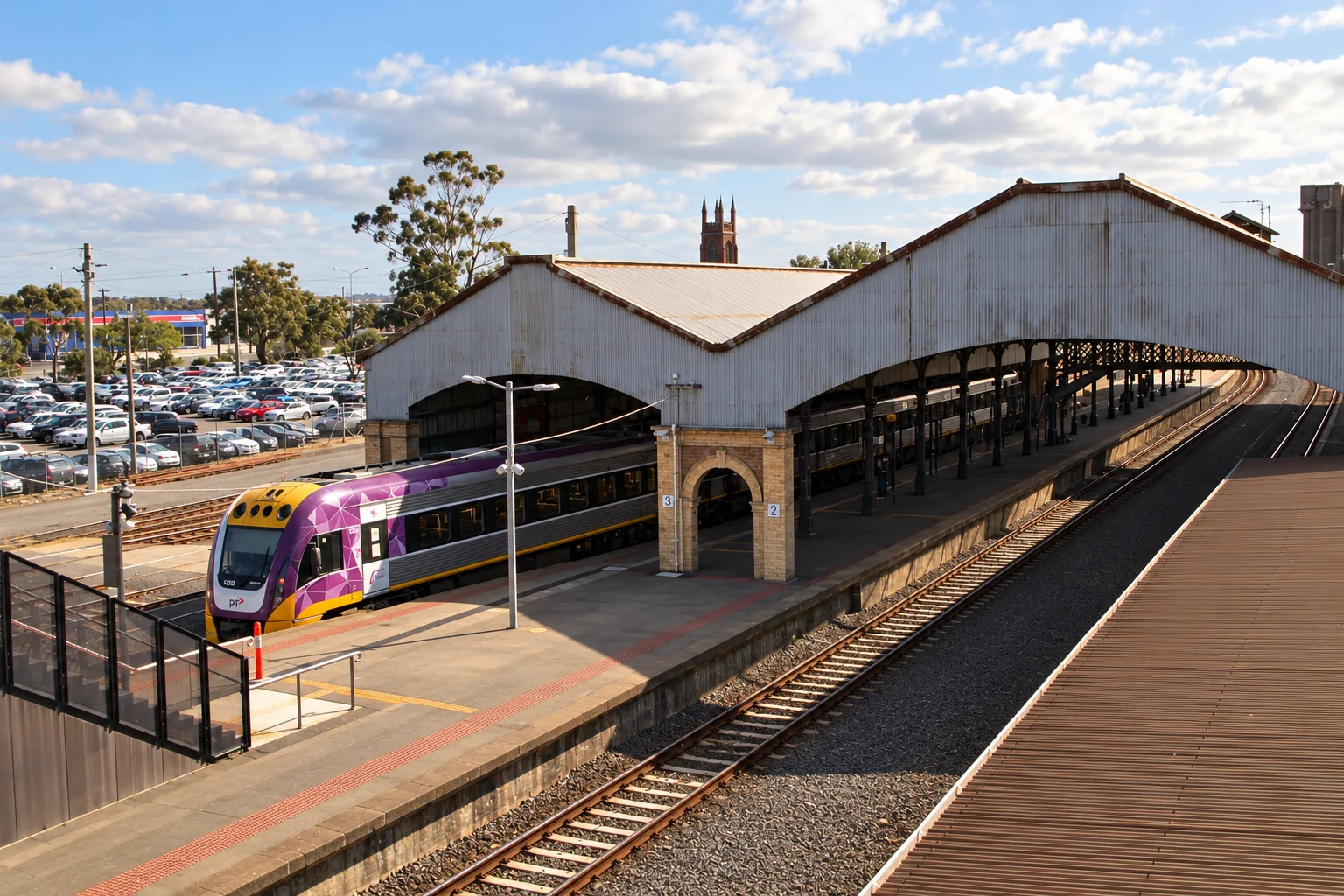
V/Line trains run from Southern Cross Station to Geelong about every 30 minutes, taking about an hour. From Geelong a V/Line coach runs through Torquay, Anglesea, Lorne, Apollo Bay and Warrnambool. Tickets-Melbourne reports three to four coach departures a day in the October to March peak and one or two in winter. Confirm current timetables with V/Line before you plan around them. Services are sparse enough that a coach limits how long you can stay at each stop.
First stops after Torquay
The official Great Ocean Road Essentials itinerary treats Melbourne to Anglesea as day one, with Torquay as the first stop and Anglesea as the second. That pattern suits drivers leaving Melbourne mid-morning, and it leaves the longer, slower sections for the following days.
Torquay
Torquay is the surf town at the start of the road. The official listings highlight the esplanade, swimming at Front Beach, Point Danger Lookout, surf lessons, Bells Beach, the surf factory outlets and the RACV Torquay Resort. The Australian National Surfing Museum is in town. The 44 km Surf Coast Walk begins here and runs to Aireys Inlet, and Melbourne Playgrounds suggests picking up maps at the visitor information centres. If you plan to take a surf lesson, Full Suitcase suggests allowing a couple of hours.

Bells Beach and Point Addis
Bells Beach sits just past Jan Juc, about 7 km and 10 minutes from Torquay according to Beyond Wild Places. It was proclaimed the world’s first Surfing Recreation Reserve in 1971, and the Rip Curl Pro is held there every Easter, so expect heavy traffic and full car parks at that time.

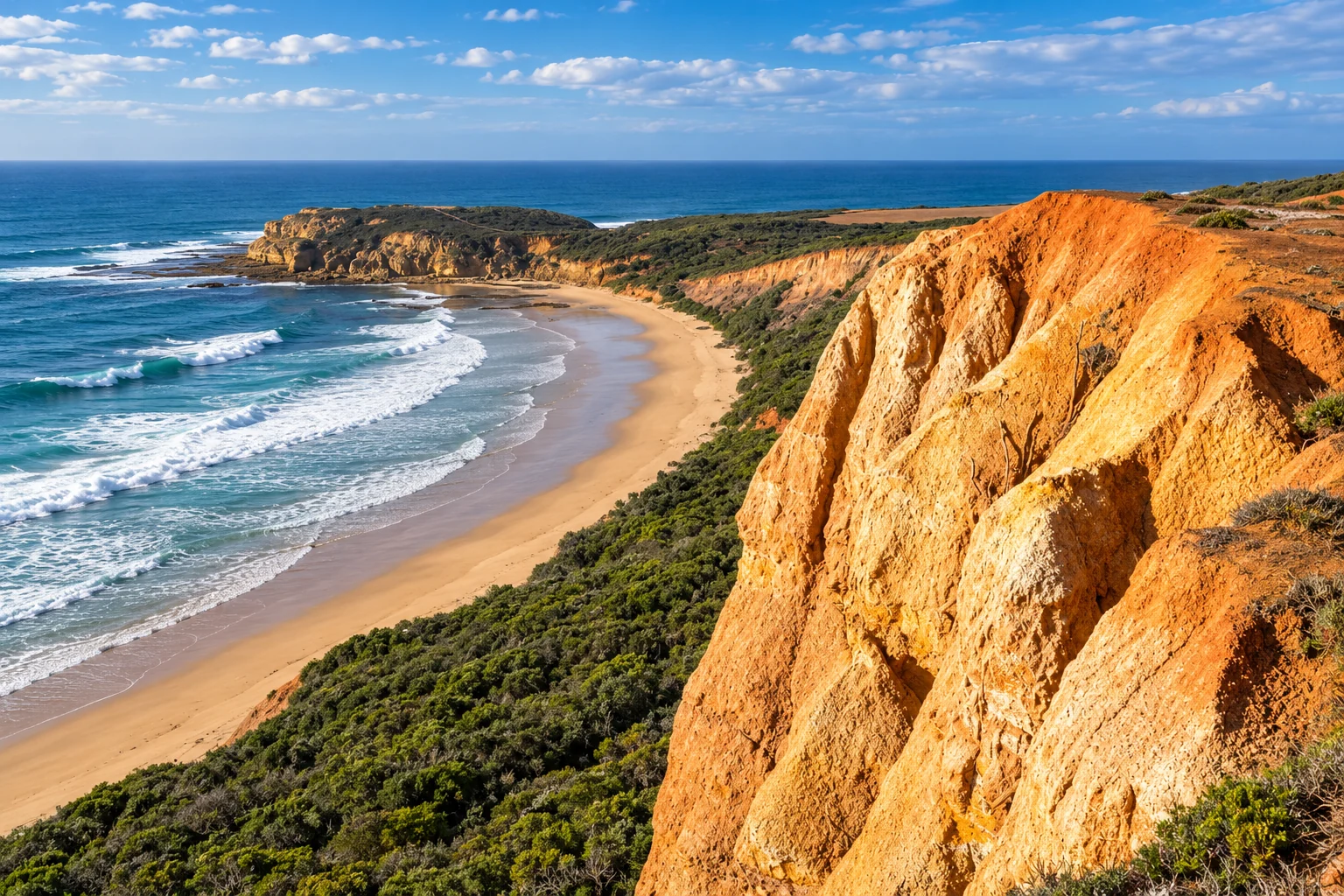
Point Addis Marine National Park lies between Bells Beach and Anglesea. It is known for sandstone cliffs, sandy beaches and surfing, and Point Addis Beach fills up on warm summer days.
Anglesea
Anglesea has a wide white-sand beach at the mouth of the Anglesea River, and you can paddle on the river. Its golf course is known for wild Eastern Grey kangaroos. Melbourne Playgrounds reports about 300 live there and that the club runs 25-minute guided tours for a fee. Visitors may not walk on the course unaccompanied.

Aireys Inlet and Split Point Lighthouse
Aireys Inlet is the last easy stop before the road tightens towards Lorne. The official destination page promotes Split Point Lighthouse, coastal walks, beaches and cafes, and suggests visiting a visitor information centre for local advice. The lighthouse was built in 1891 and still operates, according to Destinationless Travel. Guided tours climb a spiral staircase to 360° views from a 34-metre tower. One lighthouse guide gives 45 minutes for the tour, while another gives 30, so check the operator’s current session length.
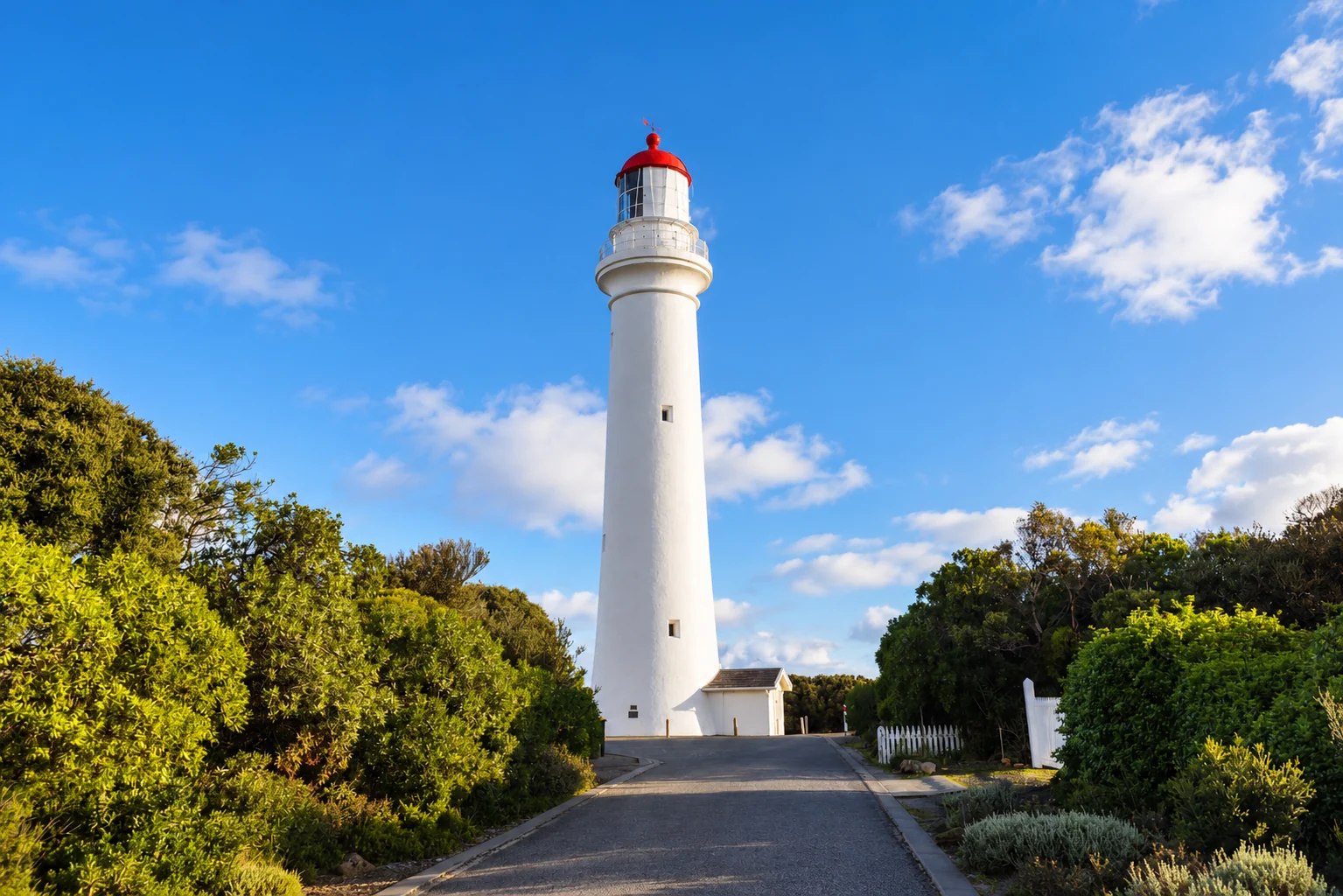
The Lighthouse Precinct Walk takes about 15 minutes. Eagle Rock lookout has views over the Eagle Rock Marine Sanctuary and towards Phillip Island, and Thoroughly Travel describes Aireys Inlet as a gateway to Great Otway National Park. Families cross the road here to reach the beach, so slow down through town.
Opening hours and entry fees for these attractions change, so check each operator’s website before you go.
Drive times beyond Torquay
The distances below are from operator guides, and the times assume no stops. The brochure warns the trip takes longer than the map suggests because of mountainous terrain, narrow road and slow traffic.
| Leg | Distance | Drive time |
|---|---|---|
| Torquay to Lorne | 46 to 48.4 km | About 50 min |
| Lorne to Apollo Bay | 45 to 47.3 km | 50 to 60 min |
| Apollo Bay to Lavers Hill | 51.4 km | 50 min |
| Apollo Bay to Gibson Steps and Twelve Apostles | 84.4 km | About 1h06 |
| Apollo Bay to Port Campbell National Park | 98.2 km | 1h33 |
| Twelve Apostles to Port Campbell | 11.2 km | 10 min |
| Apollo Bay to Warrnambool | 158 km | About 2h19 |
These figures come from Explore The Great Ocean Road, Tickets-Melbourne and Turo. Lavers Hill is the highest point on the road. Be clear about your end point: the Twelve Apostles are about 84 to 85 km from Apollo Bay, while Port Campbell National Park is about 98 km via Lavers Hill.
Measured from Melbourne, Australia for Beginners gives Lorne as about 140 km and 2 hours direct, and The Wanderbug gives Apollo Bay as 2h40. The full road from Torquay to Warrnambool is 243 km on the official itinerary page, and Tickets-Melbourne puts the one-way drive at about 4 to 5 hours without stops.
How many days to allow
Most visitors take two to three days. The Wanderbug puts the main sights about four hours from Melbourne by the scenic coastal road, or under three hours by the faster inland highway.
A same-day return to the Twelve Apostles is possible but punishing. Turo describes it as 8+ hours of driving, and Tickets-Melbourne puts a one-day round trip at around 12 to 13 hours once you include stops. The safe driving brochure recommends two days for the Port Campbell round trip. If you only have one day, consider stopping at Lorne or Apollo Bay and turning back, rather than racing to the Apostles.
Driving home from Port Campbell
Once you reach Port Campbell you have two ways home. The inland M1 route is about 230 km and around 3 hours without stops, per Searoad. The route via Colac is 229 km and about 3 hours. From Port Campbell to Colac is 77.6 km (60 minutes), then Colac to Melbourne is 152 km (2 hours), according to Explore The Great Ocean Road.
The Colac route is also the detour drivers use when the coast road closes between Lorne and Skenes Creek. Driving the coast outbound and returning inland gives you the ocean-side lookouts on the way out and a quicker trip home.
Road closure checks before you leave
The Great Ocean Road closes for weather, and closures can run for days. On 16 January 2026 the Ocean Grove Voice reported the road shut in both directions between Lorne and Skenes Creek because of extreme weather, flooding and possible landslips. Emergency services controlled the closure, and motorists were told to detour via the Princes Highway through Colac, which adds significant travel time.
The cliff section between Lorne and Apollo Bay is the highest-risk stretch in heavy rain, according to a road conditions site. It reports rockfalls, fallen trees and short closures there, and says the Lavers Hill to Apollo Bay road (C155) is prone to fallen trees after storms. In summer, bushfires and Total Fire Ban days can close the road. Large events can bring congestion and road closures, as the brochure notes.
Use the official channels on the day you travel:
- Check VicTraffic for closures, incidents and roadworks. Transport Victoria’s overview explains how to set personalised zones and instant alerts.
- Look up fire and storm warnings along your route on VicEmergency.
- Read the Bureau of Meteorology forecast for both the coastal and inland sections.
- See Parks Victoria alerts for park closures, particularly around Port Campbell National Park.
- Check Forest Fire Management Victoria’s closures page for state forest roads and seasonal park closures. Use VicTraffic for general road closures.
- Choose an inland bypass before you set off. The Deans Marsh to Lorne Road and the Apollo Bay Road are the inland options.
In winter, plan to finish driving by about 5:00 pm, when daylight is short.
Licence rules for overseas drivers
Austroads says visiting drivers without a permanent visa can generally drive on a valid overseas licence. In Victoria the limit is six months. You must carry the licence at all times, along with an International Driving Permit (IDP) or an English translation if the licence is not in English. You may only drive the vehicle classes your licence authorises, and you must follow any conditions on it.
Permanent residents and citizens must hold an Australian licence, and each state sets its own transfer rules. VicRoads lists local requirements on its new to Victoria page. Remember to drive on the left, which matters most at roundabouts and when pulling out of lookout car parks.
Twelve Apostles bookings and fees
The Twelve Apostles are the main draw at the western end of the road, and access there is changing. Advance bookings start on 16 October 2026, when the new Keerray Woorroong Visitor Centre opens, according to Neos Kosmos and Archynewsy. The centre was built with federal and state funding alongside the Eastern Maar Aboriginal Corporation.
TAMPAcrit describes timed-entry reservations made through the Great Ocean Road Coast and Parks Authority (GORCAPA) portal. Visitors choose a date, arrival window and group size, and people without a booking can scan QR codes at the main entry to take any remaining same-day capacity. Check the GORCAPA portal for current details before you travel.
An entry fee applies from April 2027. GORCAPA says fees will be consistent with other popular nature-based attractions in Australia that already charge entry, according to News24. Revenue goes towards protecting and improving the coast and parks, and Time Out reports it will be directed to beach access, visitor facilities and historic-site maintenance. Locals and Eastern Maar Aboriginal Corporation members are expected to be exempt.
Time Out also reports the booking system is intended to guarantee parking in busy periods. That matters because the Apostles draw about two million visitors a year, and local groups cite crowding, traffic and bus parking as pressures on the towns along the road.
The wider Port Campbell National Park is different from the Twelve Apostles precinct. An independent Port Campbell National Park planner says day-visitor entry is generally free, while camping, some facilities and commercial products such as helicopter scenic flights carry separate fees.
Safe driving tips on the Great Ocean Road
The safe driving brochure, a joint initiative of Lorne Community Hospital, Road Safe Barwon, the TAC, Victoria Police and several councils, gives advice that still applies:
- Following distance: keep 3 to 4 seconds behind the vehicle ahead, compared with 2 to 3 seconds on normal roads.
- Slow-vehicle turnouts: use the turnout lanes so faster traffic can pass.
- Fatigue: the brochure gives the example of a round trip from 8 am to 11 pm, which means 17 hours awake. It advises stopping for power naps.
- Sun glare: at some point you will drive into the setting sun, so keep sunglasses within reach.
- Busy periods: caravan drivers in particular should avoid school holidays, long weekends and special events, and leave early.
A secondary guide also advises against driving the road at night because of the winding route, cliffs and wildlife crossings.