
Kangaroo Island sits off the coast of South Australia, south of Adelaide, and is reached by a 45-minute car ferry or a flight of about 30 minutes. It is roughly 155 km from one end to the other, with no public transport, taxis or rideshare on the island. Most of the attractions are national parks and beaches spread over long distances. For a first visit, hire a car and plan two to four days on the island. Book the ferry or flight before anything else.
The island’s main drawcards are the sea lions at Seal Bay, the granite formations and fur seals of Flinders Chase National Park at the western end, whale sightings in winter and a run of beaches that look inviting but are mostly unpatrolled. Major bushfires in recent years burned about half the island, mostly in the west. The landscape and some park facilities are still recovering. Seal Bay’s beach access is also paused, so older guides that describe getting close to the sea lions are out of date.


Getting there by ferry or plane
The SeaLink ferry from Cape Jervis
Most visitors cross on the SeaLink vehicle ferry from Cape Jervis, about 1.5 hours’ drive south of Adelaide, to Penneshaw on the island. The crossing over Backstairs Passage (the stretch of water between the mainland and the island) takes about 45 minutes, and the ferry carries both cars and foot passengers. It runs daily except Christmas Day. Departure times change between seasons, so check the live SeaLink timetable rather than a printed or archived one.
SeaLink advises allowing about two hours from Adelaide to check-in and arriving at least 30 minutes before departure. Its getting to Kangaroo Island page also flags roadworks on Main South Road between Normanville and Cape Jervis, with a 60 km/h limit and lane changes, so build in extra time. The Cape Jervis car park costs $21 a day and can be pre-booked. Marine infrastructure works have reduced its capacity, so pre-book if you plan to leave your car on the mainland.
Book the ferry before accommodation. Sailings can fill up at peak times. If a day sells out, try a less busy departure or an extra night on the island. Cars up to 5 m long and 2.3 m high travel on the standard booking. Longer vehicles need a separate booking, and Brilliant Travels directs those travellers to call 1300 765 115. The ferry is accessible for strollers and wheelchairs.
The official standard visitor fare is only shown in the SeaLink booking engine. For a rough guide, one reseller lists vehicles up to 5 m from $118 one way, with pricing varying by demand and travel time. Another puts a standard car plus one passenger return at about $198. Treat both as rough guides. SeaLink recommends travel insurance because weather can disrupt crossings.
If you are coming from Adelaide without a car, a public coach to Cape Jervis is run by LinkSA. Check its timetable on 08 8555 2500.
Flying to Kingscote
QantasLink is the only regular passenger operator on the route, and the Kangaroo Island Council says its flights from Adelaide run seven days a week into Kingscote Airport (airport code KGC). Rex ended its Adelaide service in 2022, so older guides that describe two airlines are out of date. Tourism Australia puts the flight at about 30 minutes. Return fares have been listed from about AU$353, though prices move with demand. Check QantasLink on 13 13 13 or at qantas.com.au for current flight times and baggage allowances.
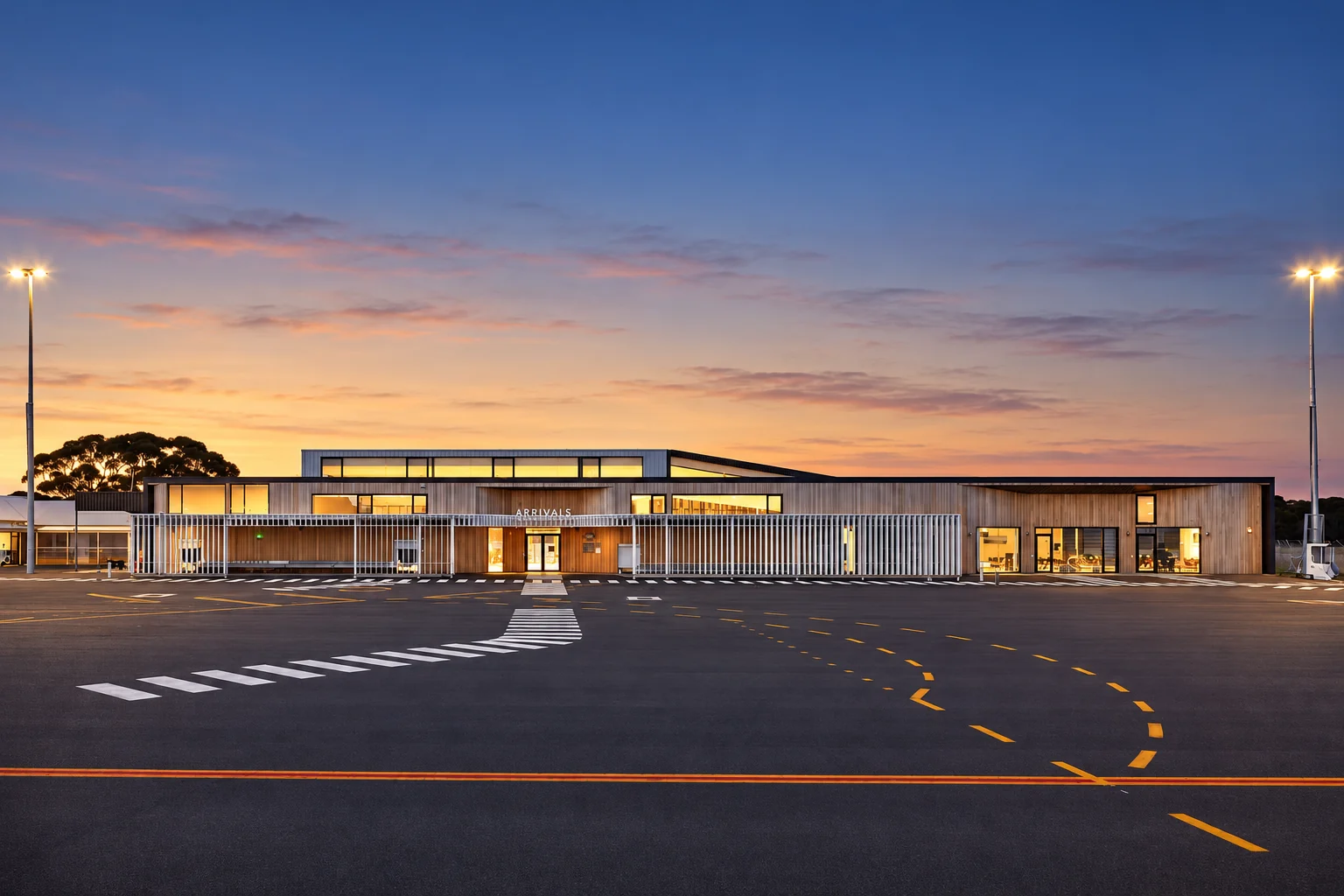
Kingscote Airport has a café, free short-term parking, paid overnight parking and public toilets. Hertz (08 8553 9144) and Budget Rent-A-Car (08 8553 3133) operate from the airport, and Kangaroo Island Transfers meets scheduled flights on 0427 887 575. Flying suits visitors who have limited time or who do not want to drive the Adelaide to Cape Jervis road, but you will need to hire a car on arrival.
Getting around the island
A car is the easiest way to see Kangaroo Island. The island has no public buses, taxis or rideshare, according to both SeaLink and Kangaroo Island Tourism. The alternatives are guided tours and private transfers. SeaLink runs a twice-daily shuttle between Penneshaw and Kingscote via American River, timed to the morning and evening ferries (book on 13 13 01). Kangaroo Island Transfers (0427 887 575) and KI 24/7 Bus Charters (0473 672 139) take private bookings.


Hire cars are available at the airport, the ferry wharf and in Kingscote, but supply is limited, so book ahead. If you pick up a car on the mainland, read the hire agreement first. Some companies restrict ferry travel or unsealed roads. Wheelchair-accessible vehicles should be hired from Adelaide Airport, as Tourism Australia notes they are not available on the island.
Roads and distances
The island has an extensive sealed road network, and a conventional two-wheel-drive car reaches most places. Some visitors prefer all-wheel or four-wheel drive for unsealed roads, which have loose, corrugated surfaces. Distances are longer than the map suggests. Flinders Chase is about 110 km from Kingscote and 130 km from Penneshaw, and major attractions can sit 45 minutes or more apart. From Pennington Bay, Vivonne Bay is about 40 minutes west and Seal Bay about 45 minutes west, according to Plank Kangaroo Island.
Fuel and charging
Petrol is sold at Penneshaw and Kingscote (both open 24 hours), Parndana and Vivonne Bay. Most fuel is sold in Kingscote and Penneshaw, so fill up before driving west. Do not assume a pump is open near the western end. Petrol stations in smaller settlements often close before 6 pm, according to Wikivoyage. Top up before you board a late ferry home as well, because the nearest late-opening station on the mainland is at Aldinga, 64 km north of Cape Jervis.
Electric vehicle drivers have six RAA Charge stations at Penneshaw, Kingscote and the airport. The Flinders Chase Visitor Centre also has chargers, but they rely on solar power and can have outages, so plan the western day with enough charge to return to Kingscote.
Seal Bay and Flinders Chase
Seal Bay Conservation Park
Seal Bay is where visitors see Australian sea lions at close range. The species is listed as endangered and is endemic to South Australia and Western Australia. The park is on Seal Bay Road, about 45 minutes from Kingscote, and is managed by National Parks and Wildlife Service SA. It opens 9 am to 5 pm daily except Christmas Day, with last entry at 4 pm.
Beach access is currently paused, according to the official park page. The boardwalk remains open, and a roaming guide provides interpretation along it. Guides written before the pause describe a guided beach tour, which is no longer running. The self-guided boardwalk is fully wheelchair accessible, with signs about how sea lions hunt, rest and reproduce, and a lookout over Cape Gantheaume and the wilderness area. Allow about half an hour; busy periods carry a 45-minute limit. Tickets are bought at the Seal Bay Visitor Centre, with no advance booking needed for the boardwalk. Listed prices are $20.70 for adults, $16.60 concession, $12.40 for children and $56.50 for a family. Confirm these at the gate or on the park page, as they change. Waters off Seal Bay fall within a Restricted Access Zone of the Southern Kangaroo Island Marine Park, so check marine park rules before entering the water.
Flinders Chase National Park
Flinders Chase covers about 326 km² in the south-west corner and takes a full day. One pass covers the whole park for the calendar day. The SA Parks listing starts day tickets at $13 per person, though other sites quote $11 to $15, so check the current fee on parks.sa.gov.au. You can pay online or at the Flinders Chase Visitor Centre, which takes cards and is open 9 am to 5 pm. The park itself is open around the clock.
Three stops anchor most visits. Remarkable Rocks are wind-carved granite boulders on a coastal dome at Kirkpatrick Point, coloured gold and orange by lichen, with a viewing platform that has disabled access. Allow about 30 minutes on the boardwalk before sunset, plus 20 to 30 minutes on the rocks. Admirals Arch is a sea-cliff arch at Cape du Couedic, about 10 minutes west, with a New Zealand fur seal colony below. Fur seal battles occur from December to February. The Cape du Couedic lighthouse was built in 1909, and keeper-led tours run on a separate timetable at about $40 per adult.
A workable order is Admirals Arch and the lighthouse in the afternoon, then Remarkable Rocks at sunset. Leave your accommodation by 8 am and plan on four to five hours in the park, as Australia Travel Hub suggests. Accessible toilets are at Rocky River, Cape du Couedic, Remarkable Rocks and the Visitor Centre. Serious walkers can look at the Wilderness Trail, which was damaged in the bushfires and now runs as a modified route between March and November. It needs bushwalking experience.
Whales, wildlife and beaches
Whale season
Southern right and humpback whales migrate past the island, with occasional toothed whales further offshore, according to Kangaroo Island Tourism. The season runs roughly May to September, with June to September the best window and October at the outer edge. Good land-based lookouts include Penneshaw headland, Cape Willoughby and the lookouts around Nepean Bay and the Dudley Peninsula. Whales can also appear from the ferry crossing. SeaLink notes that conditions on the western and southern coasts change quickly, so dress for wind.
Other wildlife
Kangaroos, wallabies, sea lions, fur seals and bottlenose dolphins are visible year-round. Koalas, echidnas, goannas and wedge-tailed eagles also live on the island, and the South Australian Tourism Commission lists Raptor Domain and KI Wildlife Park as family-friendly places to see them up close. Joeys leave the pouch in winter, and echidna mating activity starts around June, so winter suits wildlife spotting as well as whale watching.
Which beaches to swim at
No beach on Kangaroo Island has lifeguard patrols, according to Kangaroo Island.info and Wander. Beachsafe, the national beach safety information service, rates several of the best-known beaches as dangerous. Pennington Bay, the island’s main surf beach, scores 9 out of 10 ("extremely hazardous") because of topographic rips, which are currents formed by the shape of the seafloor and coast. Vivonne Bay (east 1) scores 8 out of 10 ("highly hazardous"), with a rip-dominated double sandbar system and headland rips. Some visitor sites describe calm, shallow water at Vivonne Bay, but Wander warns of reef and rips east of the car park, so check Beachsafe for the exact spot before you wade in.
The north coast is gentler than the south. Stokes Bay and Island Beach are among the safest swimming beaches, while Emu Bay is unpatrolled and swimming there is at your own risk. Snelling Beach has waves of about 1 m that suit surfers but also strong currents. Watch for undertows, rips and the occasional shark, and swim with someone nearby. South coast beaches are generally less sheltered than those on the north coast, so they are better for walking and photography than for a casual swim.
Where to stay and how many days to allow
Choosing a base
Kingscote is the largest town and the most practical base, with cafés, restaurants, petrol stations, shops, motels, guesthouses and holiday rentals. Penneshaw sits next to the ferry terminal and has more dining options than Kingscote. Kangaroo Island Tourism divides accommodation into regions: American River and surrounds, Cygnet River, Kingscote, the North Coast, Parndana, Penneshaw and the Dudley Peninsula, the South Coast and the West End. Staying at the West End cuts the long drive to Flinders Chase but puts you far from fuel and restaurants.
Stay types run from hostels, motels and cabins to holiday houses, beachside rentals and luxury lodges. Southern Ocean Lodge and One KI are the high-end names that Tourism Australia mentions. Listed rates for mid-range and budget options include Kangaroo Island Seaview Motel at about $170 to $270 a night and Kangaroo Island Cabins at about $80 to $100. Rates move with the season, so check each operator’s own site. SeaLink also recommends pre-booking tours, which matters most in summer.
Two to four days is the right range
The South Australian Tourism Commission FAQ recommends two to four days, mostly in the east between Cygnet River and Penneshaw. Its comments on island conditions date from soon after the bushfires, but the length recommendation still holds. One visitor guide calls three days "the sweet spot" for a first trip. Three days gives a day for the west (Flinders Chase), a day for the south coast (Seal Bay, Vivonne Bay and Pennington Bay) and a slower day around Kingscote, American River and Penneshaw. A fourth day adds beach time, a wildlife park or a lighthouse tour.
A day trip from Adelaide is possible but thin. With the island 155 km end to end, a day trip means about nine hours of travel for about three hours on the island. One sample day from Kingscote starts with sunrise at Pennington Bay, breakfast back in town and then the south coast loop through Seal Bay and Vivonne Bay. Flinders Chase needs its own day, because the round trip from Kingscote is very long before you stop anywhere.
When to visit
Kangaroo Island has a mild climate, and each season suits a different trip.
| Season | What to expect |
|---|---|
| Summer (December to February) | Warmest and busiest, with days around 24°C. Ferries and accommodation sell out quickly. |
| Autumn (March to May) | Calm, clear seas, thinner crowds and daytime temperatures of about 15 to 22°C. Good walking weather. |
| Winter (June to August) | Coolest and wettest, at about 10 to 16°C. July is the coldest month at Kingscote and has the most rain days. Peak whale season. |
| Spring (September to November) | Mild weather, fewer crowds and lower prices. Whales continue into early spring. |
Those figures come from Intrepid, Kangaroo Island Tours and Milehacker.
For a first visit, spring and autumn balance weather, availability and cost. Summer suits beach time and fur seal activity at Admirals Arch. It needs ferry and accommodation bookings well ahead, and fire danger is highest in January and February. Winter suits whale watching and wildlife, with rugged-up days instead of beach days. A travel listing site places the Kangaroo Island Cup horse race at Cygnet River Racecourse in February, and the Kangaroo Island events page is the place to check for current dates. Events can use up accommodation around Kingscote.
Safety and access on the island
Driving at dusk and at night
The main risk is driving from dusk to dawn. Goannas, echidnas, kangaroos and wallabies cross roads then, and SeaLink’s local tips and the tourism commission both advise avoiding driving in those hours where possible. Kangaroos can be large and heavy, so a collision damages a car badly. If an animal appears, brake in a straight line instead of swerving. Roads can be poorly lit and unfamiliar, and forested stretches call for slow driving. Drive on the left, and when it is safe to do so, pull over for faster vehicles behind you, as locals dislike excessive speed on the island.
Plan sunset visits with the return drive in mind. Remarkable Rocks at sunset is the classic shot, but it puts you on the road to Kingscote or the West End in the dark. Staying near the west, or taking the late-afternoon loop and leaving straight after sunset in the lightest-traffic direction, reduces the risk.

Bushfire
The Fire Danger Season is the part of the year when fire restrictions apply on the island. The Kangaroo Island Council publishes a media release when the season begins. Dates are set each year, so check the current ones. The Country Fire Service (CFS) declares the next day’s rating at 4.30 pm each day, from Moderate through High and Extreme to Catastrophic. Total Fire Bans apply on Extreme and Catastrophic days, and a permit is needed to light a fire, barbecues included, during the season or on a ban day. Warning levels run from Advice to Watch and Act to Emergency Warning.
On Extreme or Catastrophic days, stay out of national parks and the bush, and ask your accommodation about its bushfire plan. The recent major bushfires burned about half the island, mostly in the west, so the West End is where a bad fire day matters most to visitors.
Biosecurity and swimming
Some items cannot be brought onto the island. SeaLink lists honey, unwashed or dirty potatoes and rabbits, so check the official biosecurity rules before you pack. For swimming, check Beachsafe for hazards and live conditions before entering the water, as covered above, and choose the north coast over the south coast if you are unsure.
Key Takeaways
- Book transport first: Reserve the SeaLink ferry from Cape Jervis, or a QantasLink flight into Kingscote, before accommodation, because ferries sell out in summer and at other peak times.
- Hire a car: The island has no public transport, taxis or rideshare, and fuel is concentrated in Kingscote and Penneshaw, so fill up before heading west.
- Allow three days if you can: The tourism commission recommends two to four days, enough for Seal Bay, the south coast and a full day at Flinders Chase.
- Expect a boardwalk-only visit at Seal Bay: Beach access is paused, but the self-guided boardwalk is open daily and needs no advance booking.
- Treat beaches and dusk roads with caution: No beach has lifeguards, Pennington Bay and Vivonne Bay carry high Beachsafe hazard ratings, and animals cross roads from dusk to dawn.