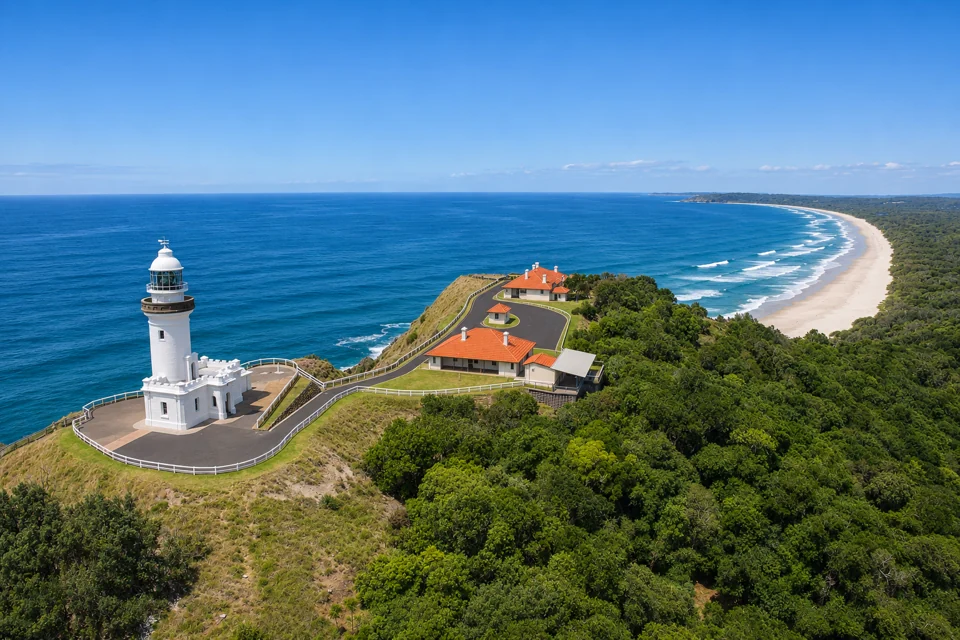
The classic first trip along Australia’s east coast runs north from Sydney, in New South Wales, to Cairns, in tropical north Queensland, and passes through Byron Bay, Brisbane, the Whitsundays and the Great Barrier Reef region on the way. The coastal route covers about 2,400 km, and Australian Backpackers puts non-stop driving time at more than a full day.
Nobody does the trip non-stop, because the point is the stops. Plan on at least two weeks for a drive that includes beaches, towns and a reef trip, and three to four weeks for a slower pace. A flight between the two cities takes about three hours but skips everything in between, so the real choice is between a hire car or campervan, a coach, or a mix of those with a flight home.
Timing matters as much as transport. North Queensland has a dry season from roughly May to October and a wet season from November to April, and the wet season brings heavy rain, jellyfish and cyclones. Settle the route, the number of days, the transport and the months before you book anything.
The route and the stops
The standard coastal route follows the Pacific Highway (the M1) out of Sydney and then the Bruce Highway (the A1) through Queensland. Turo’s route guide measures this at about 2,421 km. Other sources round it to 2,400 km, and Lazytrips gives 2,590 km for a non-stop coastal route at 29 hours. The figures differ because small detours add up over that distance, such as a side trip into a coastal town instead of staying on the highway. Budget for 2,400 to 2,600 km depending on how many side trips you take. Family Roadtrip gives a similar non-stop driving time, and says three days is the bare minimum to complete the drive, which leaves almost no time to see anything.
Most itineraries follow the same sequence of towns: Newcastle, Port Macquarie, Coffs Harbour, Byron Bay, Brisbane, the Gold Coast, Noosa, Rainbow Beach, Hervey Bay, Agnes Water, Yeppoon, Airlie Beach, Townsville, Mission Beach and Cairns, with Cape Tribulation as an add-on north of Cairns. Nomadasaurus and Lazytrips both use this sequence.
The first leg out of Sydney is short. Travellers Autobarn puts Sydney to Port Stephens, via the Central Coast, at 180 km, which suits a first night after collecting a vehicle in the city. Before leaving, itineraries suggest a day or two for the Rocks, Taronga Zoo, the Australian Museum or a day trip to the Blue Mountains. Turo adds the Sydney Fish Market and Lone Pine Koala Sanctuary, the latter near Brisbane. Travellers Autobarn measures Coffs Harbour to Brisbane at 390 km via Byron Bay and the Gold Coast, so a single day can cover Byron Bay and the border towns, although Byron Bay rewards a longer stay.
Brisbane to Noosa, via the Sunshine Coast, is 150 km according to Travellers Autobarn. Beyond Noosa, Rainbow Beach is a short drive north, and Australian Backpackers rates it as one of the shortest driving days in its 14-day plan. Hervey Bay and Agnes Water follow, and Yeppoon sits further up the central Queensland coast.
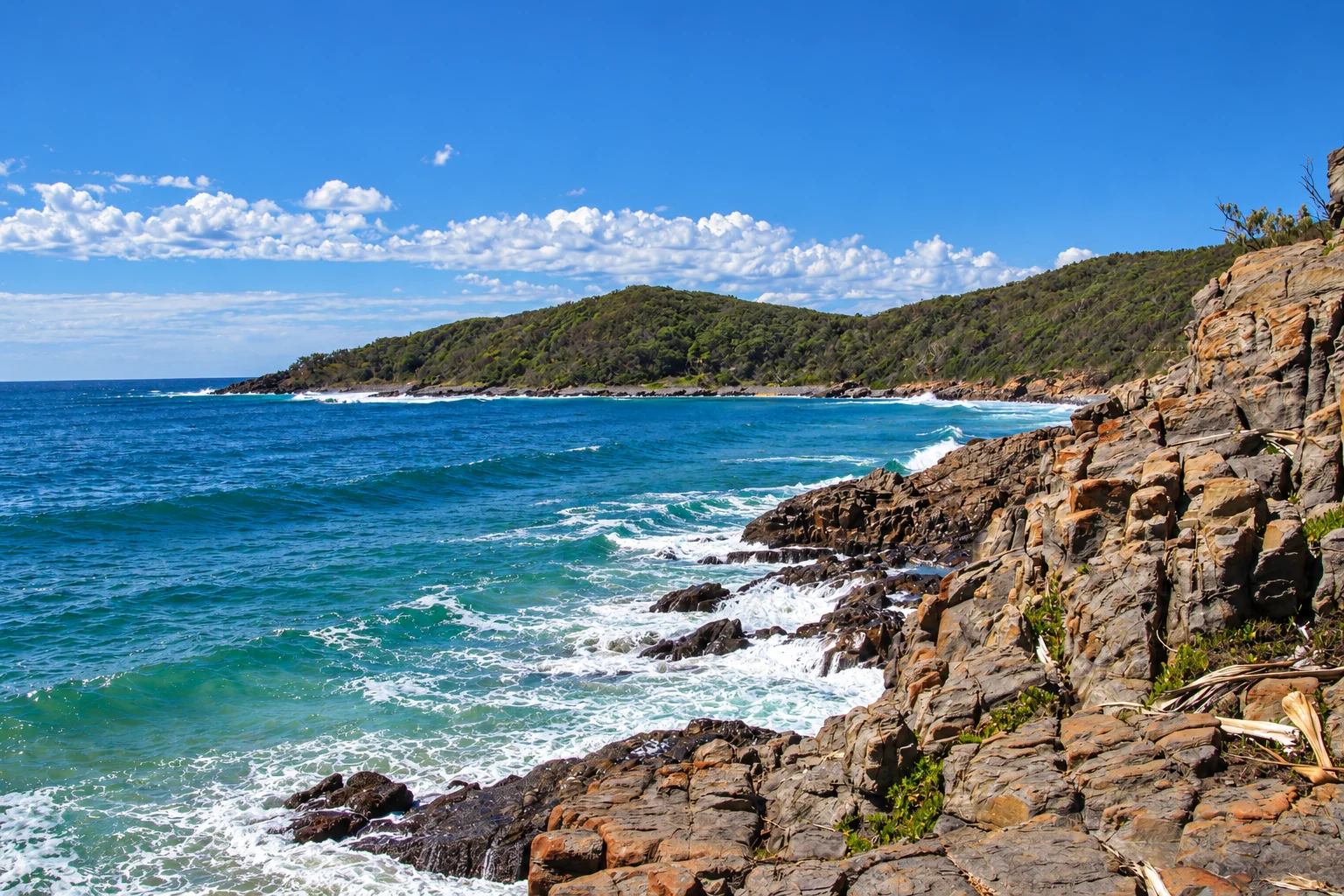
The longest single stretch is Hervey Bay to Airlie Beach, which GAFFL times at 9 hours 40 minutes and describes as having little to see. A driver who wants to avoid one huge day can split it at Agnes Water or Yeppoon, both of which are on the standard stop list. Airlie Beach is the gateway to the Whitsunday Islands and a good place for a rest day after the long haul. Airlie Beach to Cairns via Townsville and Mission Beach is 620 km according to Travellers Autobarn and OurBigJourney. Family Roadtrip suggests breaking that final leg with an overnight stop in Townsville after rejoining the A1. Cairns to Cape Tribulation adds another 170 km each way, as OurBigJourney measures it, and takes the trip into the Daintree rainforest region.

An inland alternative exists. Lazytrips describes a "Country Route" via the Gregory Highway that covers 2,420 km in about 27 hours. It runs through Moree, along the Carnarvon Highway to St George, then through Rolleston and Springsure before joining the Flinders Highway (the A6) into Cairns. Family Roadtrip lists a similar inland option via the New England Highway and the Capricorn Highway. The inland routes are about the same length as the coastal drive but skip the beaches, the Gold Coast, the Sunshine Coast and the Whitsundays, so they suit a driver who wants to reach Cairns rather than see the coast.
The vehicle also changes the distance. Road Genius quotes roughly 2,500 km and over 27 hours for a hire car, while Camper Champ lists a campervan route of about 3,000 km. Those two numbers describe different routes with different detours, so an itinerary with side trips will clock up more than the headline 2,400 km.
How many days to allow
Most published itineraries treat two weeks as the shortest workable plan. Australian Backpackers runs a 14-day itinerary covering about 2,400 km, and GAFFL plans for 14 to 16 days. Both leave long driving days on the schedule, and the Hervey Bay to Airlie Beach stretch is one of them.
Longer plans give more room at each stop. Travellers Autobarn suggests allowing several weeks for a campervan trip. OurBigJourney, a travel blog that drove the route in five weeks, says three to five weeks is adequate and warns that anything under three weeks means driving at least 100 km every day. At the other end, Turo lists 7 to 10 days for a quick trip and two weeks or more as the usual road-trip length. A seven-day trip leaves very little time for anything but the driving.
A reasonable rule for a first-time visitor is to treat 14 days as the floor. On that schedule most days involve a few hours of driving and one or two sights, and one or two days are spent on longer hauls. Three to four weeks allows rest days in places that deserve them: Byron Bay, Noosa or Rainbow Beach, Airlie Beach and the Cairns region. A Whitsundays sailing trip, a day on the reef and a Daintree excursion fill most of a week on their own.

The end point also affects the count. A traveller who drives all the way to Cairns still needs a way home. A flight back to Sydney takes about three hours, so the return adds no driving days. A one-way hire, covered below, means nobody drives back down the coast.
The season sets the second half of the schedule. CairnsAustralia.com describes the dry season, roughly May to October, as warm and sunny with low humidity, the calmest seas and the most reliable reef conditions. The wet season, roughly November to April, is hot and humid with heavy afternoon downpours and warmer water. It also overlaps with marine stinger season, when venomous jellyfish are in the water, and with the cyclone season, which runs from 1 November to 30 April according to the Bureau of Meteorology figures the same page cites. Cyclones outside those months are rare.
Cairns Discovery Tours puts stinger season from around October through the wet season and notes that the Esplanade Lagoon in Cairns is stinger-free year-round, so swimming there stays safe in the wet season. Virgin Australia recommends June to August for rainforest exploration because of clear skies, mild temperatures and lower humidity. CairnsAustralia.com adds that many visitors consider April the best-value month, with wet-season prices and mostly dry-season conditions.

The southern half follows a different pattern. Backpacking Tours says Sydney to Brisbane works in any month and is best from October to April. It describes the subtropical coast around Brisbane and Byron Bay as hot and humid with significant rainfall. The two windows overlap only around October, which is also when stinger season starts in the north. Many travellers therefore aim to reach tropical Queensland within the May to October window and accept cooler weather in the south. A trip that leaves Sydney in late April or May reaches north Queensland in the dry season. A trip that crosses into the wet season has more rain on driving days and a greater risk of delays in regional areas, so it needs spare days in the schedule. Whatever the month, book the reef and Whitsundays excursions for the days when the schedule has some slack.
Car, campervan, coach or flight
Four options cover the Sydney to Cairns trip, and each gives a different amount of freedom.
| Option | Time Sydney to Cairns | Best for |
|---|---|---|
| Flight | About 3 hours nonstop | Skipping the coast or returning home |
| Hire car or campervan | More than a day of driving, two weeks or more with stops | Flexibility and stopping where you like |
| Coach (Greyhound) | 47 hours 30 minutes | Travelling without driving |
| Hop-on, hop-off pass | Days to weeks, as you choose | Stopping at several towns on a coach budget |
A campervan covers accommodation and transport in a single booking. Wanderlust calls Sydney to Cairns the classic first trip and says Sydney, Brisbane and Cairns hold the most campervan stock. That one booking helps on a coast where beds near popular beaches fill up. A hire car gives more freedom to detour and costs less to run, but you book accommodation separately.
Greyhound’s Sydney to Cairns page shows a journey of 47 hours 30 minutes with stops at Port Macquarie, Coffs Harbour, Byron Bay, the Gold Coast, Brisbane, Noosa, Hervey Bay, Rockhampton, Mackay, Airlie Beach and Townsville. The fare starts from $691.00 and comes in Early Bird and Flexible tiers, with prices varying by how far ahead you book. The coaches have WiFi, USB charging and seat selection before departure. Greyhound also sells a 30 Day East Coast Travel Pass, marked "most popular" on the page, which allows hop-on, hop-off travel along the route. You can get off at any stop covered by the pass, stay as long as you like within the pass period, and board a later coach.
Premier Motor Service runs daily services on the Eden to Sydney, Sydney to Brisbane and Brisbane to Cairns routes. It sells one-way hop-on, hop-off value passes for Sydney to Cairns at $281.00 for one month, $402.00 for three months and $440.00 for six months. An unlimited one-month Sydney to Cairns pass costs $439.00. Each ticket includes one 20 kg check-in bag and one small hand-luggage bag, and surfboards and bikes can be added at purchase.
Jetstar, Qantas and Virgin Australia fly nonstop between Sydney and Cairns, according to Flightroutes. Nonstop flights take about 3 hours 5 minutes to 3 hours 15 minutes, and connecting itineraries via Brisbane or Coolangatta take roughly 5 hours 30 minutes to 6 hours 25 minutes. Trip.com lists one-way fares from AU$118, and sample searches on other aggregators show Jetstar at similar levels for specific dates, so prices on your dates will differ. A flight covers none of the coast. Its best use is as one half of a mix: drive or take the coach north, then fly back to Sydney, or fly to Cairns and explore only the tropical north.
Hiring and booking a vehicle
Most campervan operators set the minimum driver age at 21. Wanderlust lists exceptions: drivers aged 18 can hire from Spaceships and from Mighty’s Highball, Double Down, HiLITE and DeLITE vans, while Awesome Campers, Britz and Apollo require 21. Under-25 drivers may pay a higher excess, which is the amount the hirer pays towards damage before insurance cover applies.
Licence rules matter for overseas visitors. DriveNow accepts a full home-country licence if it is in English. A licence in another language needs an accredited English translation or an International Driver Permit (IDP), a document issued in your home country that accompanies your own licence. Wanderlust notes that some operators do not accept digital licences, so carry the physical card.
The one-way fee needs checking before you book. Sydney to Cairns one-way hire is commonly offered, according to Motorhome Republic, but the fee varies by route and season. DriveAway says no one-way fee applies when the vehicle returns to the same depot, and most suppliers charge the one-way fee at booking. Expect a bond as well. Campervan Planet describes a bond of AU$5,000 to AU$8,000 for most operators before any extra cover is added, which is a large amount to have held on a credit card.
Sydney’s toll roads use electronic tags rather than cash booths. DriveNow advises that tolls must be settled within a set time frame to avoid penalties from both the toll service and the rental company. Ask the hire company at pick-up how it handles tolls, because the tolls start on the first day of the drive.
Best time of year
Start the planning with the north. Cairns sets the timing for the whole trip, because the wet season and stinger season both fall on the northern leg. Plan the reef and Whitsundays days for the dry-season window, and check the stinger advice for any swimming you plan in the wet season. The southern half of the route is more forgiving, so the season matters most at the far end of the drive.