Darwin’s food reflects its position as a tropical port city in the Northern Territory’s Top End. A large share of residents were born overseas, and the cooking has long mixed Chinese, Southeast Asian, Timorese and European influences. The standout dishes are laksa, a spicy coconut noodle soup, barramundi and mud crab from northern waters, and mangoes from farms around the city. The best-known places to eat are the Mindil Beach Sunset Market in the dry season and the small family-run cafes and takeaways across the city and suburbs.
The Top End has two main seasons, and they determine what is open and what is in season. The dry season suits outdoor markets, and the mango harvest runs from the late dry season into the build-up to the wet.
Start with laksa
Where Darwin’s laksa comes from
The Darwin International Laksa Festival traces laksa to Peranakan culture. Peranakan communities formed after Chinese traders settled in Indonesia, Malaysia and Singapore, mainly between the 15th and 17th centuries, and many married Malay women. The festival’s shorthand is that the Chinese brought the noodle soup and Malay women added the spice. Explanations of the name draw on Sanskrit, Persian and Cantonese, and Indonesia and Malaysia both claim the dish.
Gourmet Traveller reports that locals credit the city’s cultural diversity and a long tradition of sharing food between communities. The festival describes Darwin as the most multicultural city in Australia, with nearly 30 percent of residents born overseas. Gourmet Traveller also argues that a spicy soup suits Darwin’s humidity better than visitors expect, and says the queues at markets and eateries bear that out.
What a Darwin laksa tastes like
Most Darwin laksas use chicken and seafood. The festival notes that one cook has used crocodile, and that laksa ice cream exists. Many eateries advertise "Best Laksa in Town", so check the queue before trusting the signage. The festival links Darwin’s best-known laksa cook, Mary (Guo Yang Yei), to Parap market.
Where to order one
A few specific places serve laksa:
- Laksa House in Stuart Park, about 5 km from the centre, is East Timorese-run and serves laksa, soups and Timorese-style charcoal chicken, according to Tourism Australia.
- Transit Oriental Takeaway, off Mitchell Street, sells affordable takeaway lunches and laksa. It has few tables, so expect to eat elsewhere, per Seasoned Traveller.
- Rendezvous Cafe, at the bottom of NT House, has been family-run for more than 30 years. It serves Malaysian and Thai food with Cantonese influence, including laksa with wontons.
Mindil Beach Sunset Market
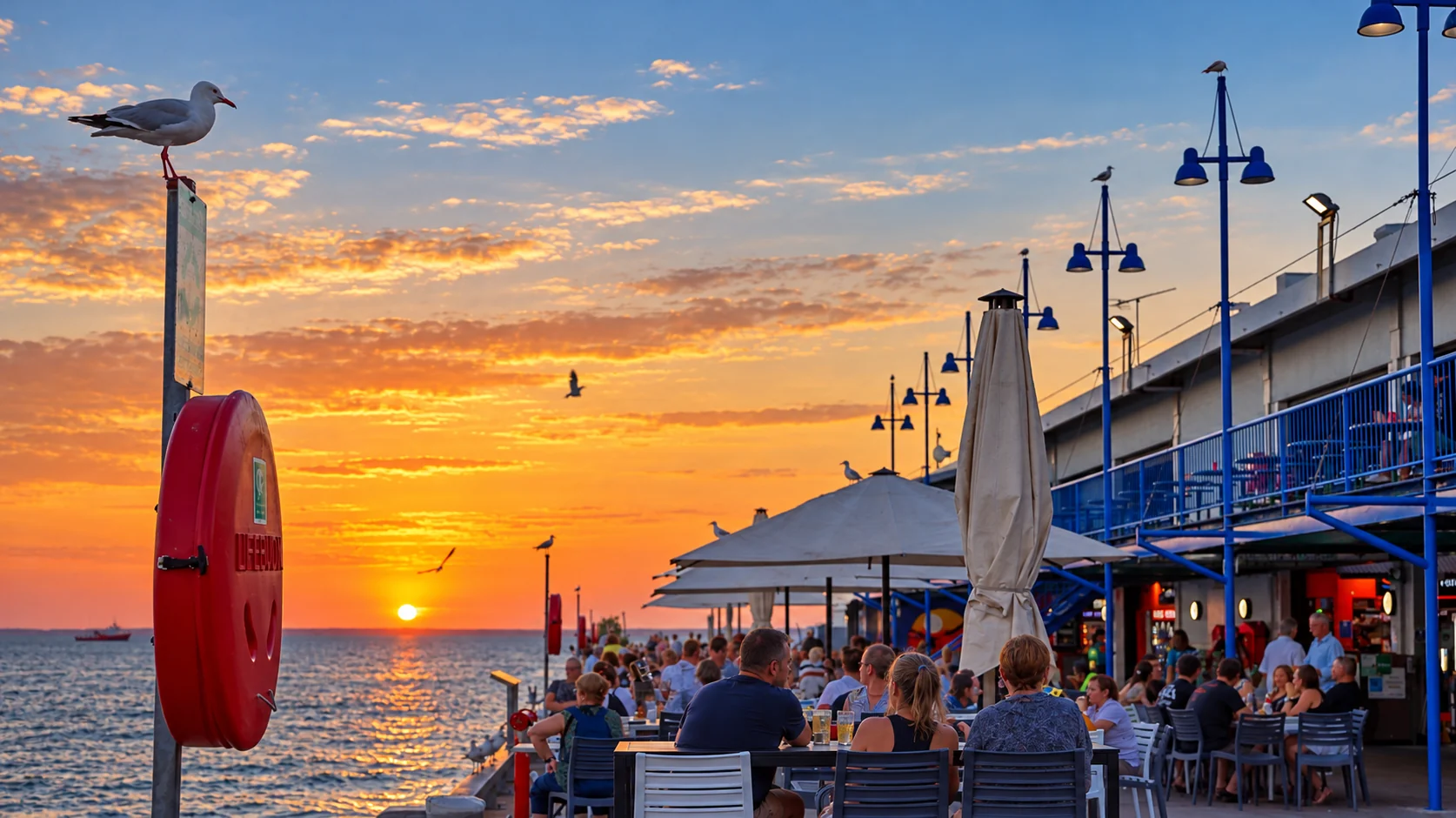
Mindil Beach Sunset Market is Darwin’s best-known food market. It runs on Thursday and Sunday evenings from 4pm to 9pm, and entry is free, according to Visit Top End and the Northern Territory tourism site. Both give a dry-season window from the last Thursday in April to the last Thursday in October. The market does not run outside those dates, so check the operator’s Facebook page for the current schedule before you go.
Getting there
The address is Maria Liveris Dr, The Gardens NT 0820, next to Mindil Beach Casino Resort. Visit Top End puts it about a 15-minute walk from the city. The NT tourism local’s guide gives a 6-minute drive or 30-minute walk from the city centre, with the driving route via Daly Street, Gardens Road and Chin Quan Road. Pick the walk if you want to arrive near sunset without worrying about parking.
What to eat and see
The NT tourism page says the market has more than 150 unique stalls, including over 55 food stalls. Tourism Top End counts more than 1,200 menu items. Food highlights include barramundi, kangaroo and crocodile. Beyond food, stalls sell Aboriginal art, crocodile leather goods and jewellery, and offer services such as massage and tarot. Live music, magicians, circus acts and buskers fill the evening. A "Sunset Lounge" offers a more exclusive market experience.
Stall numbers are quoted differently across tourism pages, from around 200 to over 300 stalls, so treat any single figure as a rough estimate of the market’s size. The market began in 1987 in Darwin Mall, according to Wikipedia. Shopkeepers complained about lost trade, and it moved to Mindil Beach shortly afterwards.
Other markets and food courts
NT Now advises visitors to "do as a local does and head to the markets". Parap market is the one most tied to local cooking, given its link to Darwin’s best-known laksa cook. The Territory’s markets overview and the Tourism Top End markets page list the rest, so check them for current days and hours before you plan around a particular market.

For a hawker-style meal outside market season, Stokes Hill Wharf Food Court at 45 Stokes Hill Road sells mostly Asian takeaway, per Seasoned Traveller. Tourism NT also notes that food trucks offer a changing mix of cuisines.
Top End seafood
Barramundi on the plate
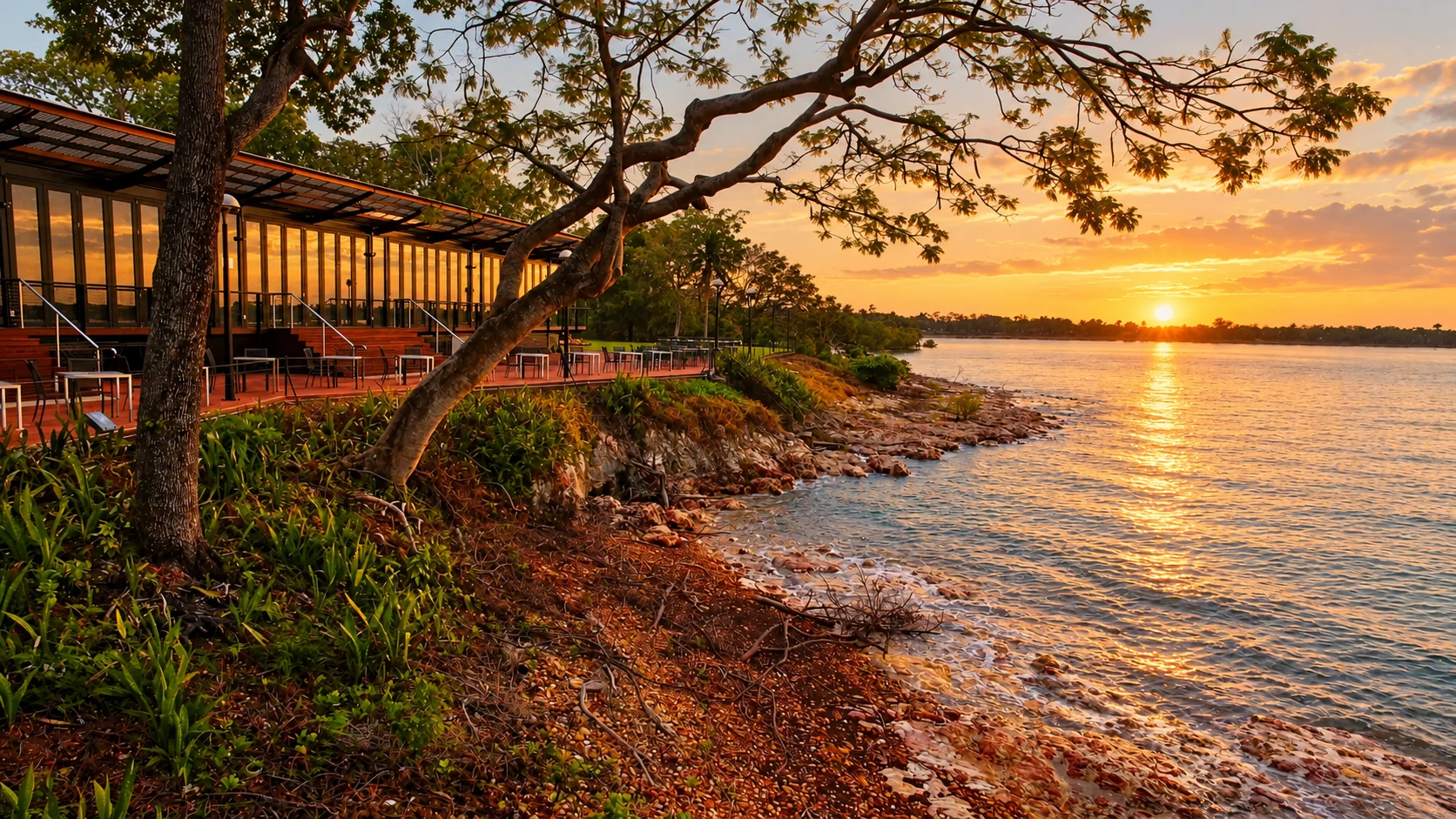
Barramundi anchors Top End menus. According to NT Now, Pee Wee’s at the Point in East Point Reserve serves contemporary dishes built on NT produce such as barramundi. Char Restaurant at Cullen Bay Marina serves grilled octopus and greco barramundi with marina views. Gourmet Traveller’s restaurant list points to coastal pop-ups with a local-produce focus: Needle in a Haystack Street Bistro on Casuarina Drive, Salty Plum Café on Alec Fong Lim Drive in East Point Reserve, and Box Jellyfish Cafe on Chapman Road.

Catching your own barramundi
Recreational anglers who want to catch barramundi face size and bag limits. Fishing charter operators report a minimum size of 55 cm, measured nose to tail, and a bag limit of five fish per person. Lower limits apply in some river zones:
- In the Daly River zone, the limit is three per person.
- In the Mary River system, including Shady Camp, the limit is three per person, with a 90 cm maximum size and a vessel limit of one fish over 90 cm.
- The ABC reported in February 2015 that restrictions in the Daly and Mary zones would include a vessel limit of one barramundi or king threadfin over 90 cm.
The same charter guide describes an October to January closure in certain spawning areas, and says that within 100 m of the Mary River barrage wall only single-hook lures or flies are allowed. Barramundi change sex at around 80 to 90 cm. Rules change, so confirm every limit with Northern Territory Fisheries before you fish.
Mud crab
Mud crab is the other Top End catch. Mud crabs live in river systems and mangrove flats. Mud crabs may be taken with marine pots or dillies: five pots or dillies per person and ten per vessel when two or more people are aboard, with no hooks or spears allowed, and berried females must go back. Some areas, including Aboriginal land, require permits from land councils. Check the current minimum carapace size with NT Fisheries before you keep any crab.

Mangoes
Mangoes are the defining Top End crop. The Australian Mango Industry Association says the NT and Queensland together produce about 95 percent of the national crop. The NT harvest starts in July or August, ahead of Western Australia (September or October) and Queensland (October or November), and the national season runs to March or April.
Foodtree gives the NT a 50.9 percent share of production in 2024/25, ahead of Queensland at 45.3 percent. It lists Calypso, R2E2 and Kensington Pride as the NT-season varieties and puts the NT season at July to December. Nationally, the five-year average variety shares are Kensington Pride 40 percent, Calypso 21 percent, R2E2 18 percent, Honey Gold 11 percent and Keitt 3 percent.
Farm labour demand peaks later than the first fruit. Farm Work Australia reports mango picking around Darwin and Humpty Doo from September to December. The ABC explains that flowering is usually prompted by cooler dry-season temperatures in June and July. The Top End harvest falls in the build-up to the monsoon, and a 2019 ABC report says about 90 tonnes are picked daily. Fruit lasts only a few weeks before it must reach market, so fresh mangoes are best bought in the weeks soon after picking. Crazy Acres Mango Farm and Café, listed by Tourism Australia, lets you eat mangoes at a farm.

Where locals eat
The Northern Territory Government’s Dining out in the Northern Territory page covers venues from fine dining to casual cafes. It names Laneway Coffee, Eva’s Café in the Botanic Gardens and De La Plage on the beachfront among its cafes. Tourism NT’s budget dining guide says Darwin’s cheaper places reflect the city’s multicultural flavours.
| Venue | What it offers |
|---|---|
| Sari Rasa (city centre plaza) | Lunch on weekdays; cash only |
| Hot Tamale (19 Kitchener Drive, Darwin City) | Mexican-inspired street food; $6 tacos 4pm to 6pm daily |
| Ton’s Bistro at Dinah (Pavonia Place, Nightcliff) | Breakfast and lunch |
| Poké Ola (Darwin Central, Smith Street) | Hawaiian poke bowls |
| Hanuman (Mitchell Street) | Southeast Asian menu, including butter chicken and hanuman oysters |
| Lizards Bar and Restaurant (105 Mitchell Street) | Pub meals and rugby; a Darwin staple for nearly 20 years, per Norther |
Mitchell Street has the densest cluster of options. Hanuman and Lizards sit on it, and Transit Oriental Takeaway is just off it. For suburban meals, Laksa House in Stuart Park and Ton’s Bistro at Dinah in Nightcliff give the clearest picture of where residents go outside the city centre.
Planning around the seasons
Visit between late April and October if the Mindil market is the priority, since it runs only in the dry season. Mangoes peak later in the year, with picking from September to December around Darwin. Barramundi and mud crab appear on restaurant menus throughout the year, but anglers need to check closed seasons and zone limits before they head to the Daly or Mary rivers. Laksa suits any week, and the cheap-eats places around Mitchell Street and the suburbs give the most direct route to it.