Bruny Island lies off the south-east coast of Tasmania. The only vehicle ferry to the island leaves from Ferry Road in Kettering, about 30 minutes’ drive south of Hobart. The crossing takes 15 to 20 minutes and runs about every 20 minutes during the operating day. Walk-on passengers travel free, vehicles pay a fare based on length, and no one books a set departure. Tickets work on a queue, so your decisions are when to arrive, which fare applies to your vehicle, and how the crossing fits into your day.
SeaLink Travel Group has run the service under contract with the Tasmanian Transport Commission since September 2018, according to Transport Tasmania. The operator’s pages use two names. The status and booking pages say SeaLink, while the fares page is branded Island Connections Bruny Island. Both names refer to the same ferry.
How the crossing works
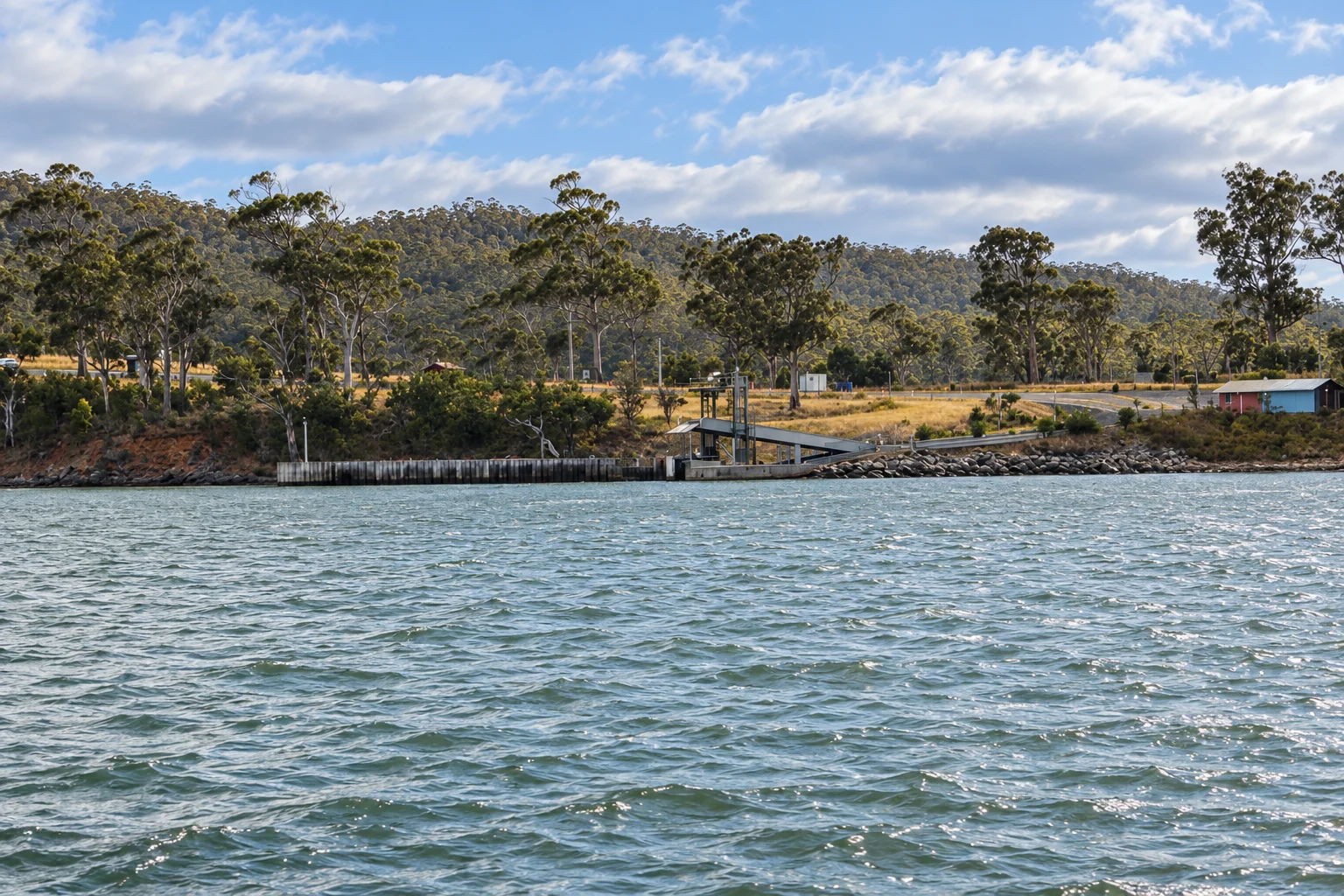
The ferry leaves from Ferry Road, Kettering, on the mainland and lands at the island terminal on Lennon Road, North Bruny. Operator timetables and many guides call that terminal Roberts Point, and Parks & Wildlife Tasmania also says the ferry lands there. You will see both names, and they mean the same place.
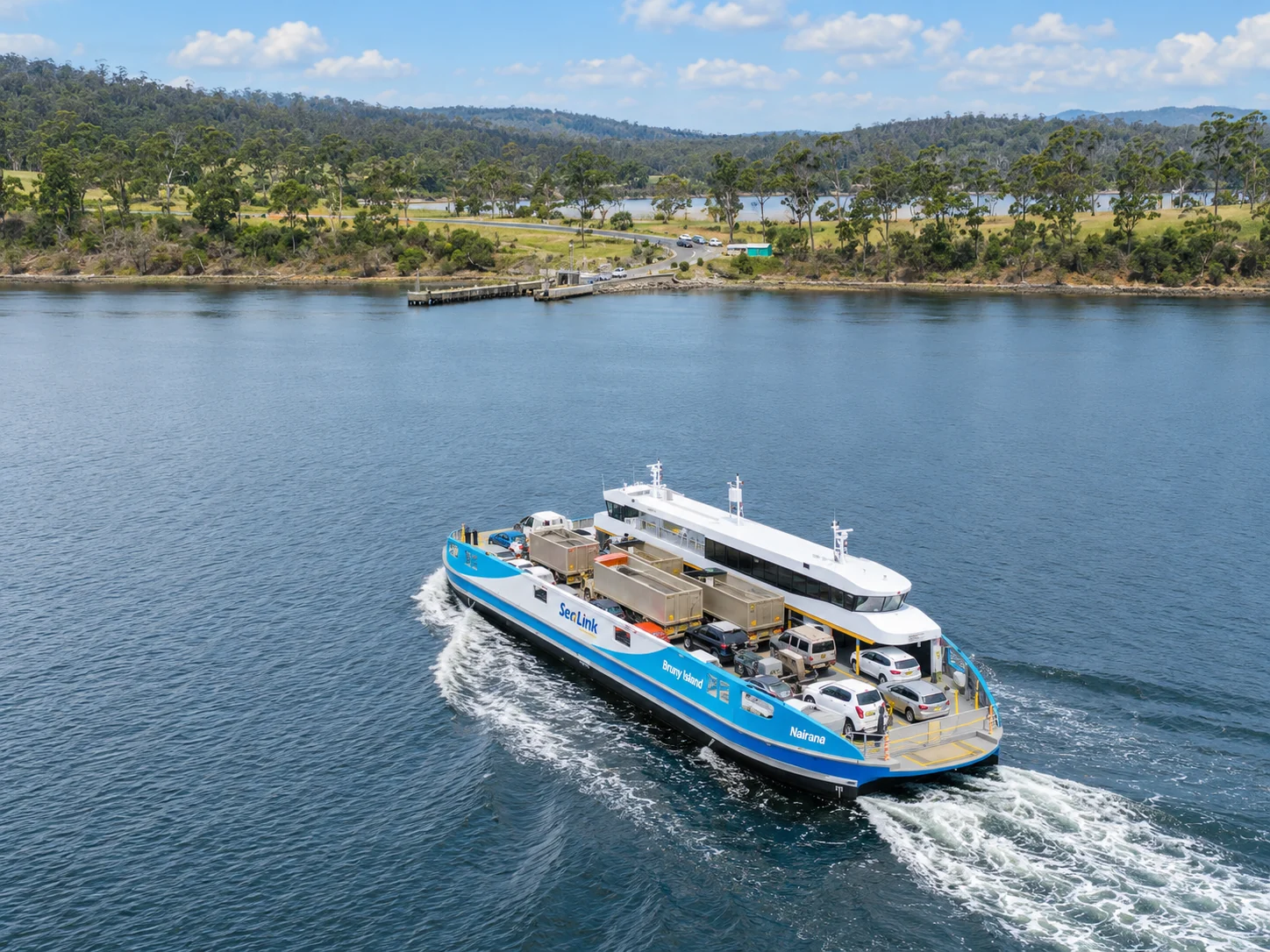
Two purpose-built, single-deck ferries do most of the work. MV Nairana entered service in February 2020 and MV Parrabah in April 2021, with MV Bowen as the backup vessel, Transport Tasmania reports. At peak times the two main vessels can each leave their terminal every 20 minutes. The service runs every day of the year.
Some users get priority boarding: the local school bus, GP doctors (who may contact SeaLink in advance) and emergency services. Expect to be waved past occasionally even if you are early in the queue.
Bruny Island ferry timetable
The operator says the ferry departs every 20 minutes from Kettering between 6.10 am and 7.00 pm. The most detailed timetable available, the summer timetable valid from 29 September 2025, shows these limits:
- Kettering: the first ferry leaves at 6:10 am and the last at 7:00 pm.
- Roberts Point: the first ferry leaves at 6:30 am and the last at 7:15 pm.
- The 6:10 am and 6:30 am sailings run on weekdays only.
Weekend and public holiday times differ from weekday times. From Monday 28 September 2026 the ferry reverted to the summer timetable, so use the current timetable for exact departures. The last sailings from each side matter most for day trippers, because missing the 7:15 pm departure from Roberts Point leaves you on the island overnight.
Boarding on foot, by bike or in a vehicle
Passengers on foot travel free, and the driver of a vehicle counts as a passenger at no charge. SeaLink states there is no requirement to book a set ferry departure, so foot passengers and cyclists simply turn up. Foot passengers can sit indoors or outdoors on the single-deck vessel.
Vehicles drive on and stay on board during the crossing. Fares depend on vehicle length, and check-in closes at least 20 minutes before departure, per Transport Tasmania. If you are in a hire car, check in advance that the rental company permits it on the ferry.
Bicycles and motorcycles are carried for a fixed $8.10 fare in all categories, according to the fares page.
Bruny Island ferry fares
On 28 September 2026 visitor fares were simplified to two options: Regular and Saver. Saver fares remain available only at designated Saver travel times, which are listed on the fares page. Peak-season pricing applies to the Regular fare from 1 December to April, while Saver fares stay the same all year. All tickets are return fares.
| Vehicle | Regular, 28 Sept to 30 Nov 2026 | Regular peak, 1 Dec 2026 to Apr 2027 | Saver |
|---|---|---|---|
| Under 6 m | $58.60 | $67.30 | $50.90 |
| 10 to 15 m | $138.70 | $159.50 | $120.60 |
| Over 15 m | $169.60 | $195.00 | $147.40 |
| Motorcycle or bicycle | $8.10 | $8.10 | $8.10 |
| Foot passengers | Free | Free | Free |
Figures are current as of 19 October 2026. The fares page also lists the length bands between these rows. Bruny Island residents and landowners have access to a discounted fare, so those fares do not apply to visitors.
For most people in a car, the choice is between $58.60 (or $67.30 in peak season) and the cheaper Saver price. If your plans are flexible, aim for a Saver departure time, which is cheaper than both the standard Regular fare and the peak Regular fare shown in the table above.
Buying tickets and booking
You can buy tickets online beforehand or at the Kettering terminal. A pre-purchased ticket covers the next available ferry rather than a set departure time, so it saves time at the booth without reserving a place in the queue. The operator describes the service as running on a queueing system.
Online pre-purchase only covers vehicles under 6 metres. Vehicles of 6 metres or more, and concession, pensioner and student fares, must be bought at the booth in Kettering, SeaLink states. That affects campervans, motorhomes and anything towing a caravan. Measure the vehicle with the tow bar and any rear carrier included before you choose a fare, and expect to buy at the booth if you land in the larger bands.
Bring a card for onsite purchases, as one travel guide reports that the Kettering and Roberts Point booths accept credit and debit cards. Any introduction of a booking system for set departures would need approval from the Transport Commission, so queueing remains the arrangement.
When the queue is longest
The island tourism body identifies the busiest periods as 8 am to 10 am leaving Kettering and 4 pm to 5 pm leaving Bruny. Travelling outside those windows is better and cheaper.
Summer from December to February is the warmest and driest period and also the busiest, and the Bruny Island portal advises booking ahead for accommodation and tours. Parks & Wildlife advises allowing extra time in peak periods such as Easter. One tours operator suggests arriving 30 to 45 minutes early at Kettering in peak periods, which is a sensible buffer given the 20-minute check-in minimum. Missing one sailing costs about 20 minutes in normal conditions, but in holiday peaks a queue can hold several sailings’ worth of vehicles.
What to check before departure
Start with the ferry service status page, which reports whether services are running as scheduled. SeaLink also posts changes on its news page. Weather can disrupt the crossing, and an afternoon closure can leave people returning to the mainland facing long delays. If you have a flight, a booked cruise or a dinner reservation on the mainland, leave slack at the end of the day.
Before leaving Hobart, confirm four things:
- The current timetable for your day of the week, including whether it is a public holiday.
- Your vehicle’s length band, and whether you need to buy at the Kettering booth.
- That you will be at the terminal at least 20 minutes before departure.
- Whether the ferry allows your hire car or caravan.
Pack layers and a waterproof jacket, because weather changes quickly on the water, and download offline maps because mobile reception can be patchy on the island.
Pets, facilities and accessibility
Pets are allowed and must stay in the vehicle during the crossing. SeaLink listings carry the note "Pet Friendly – Enquire", so confirm with SeaLink before you travel with an animal. The hotline is 1300 127 869, open Monday to Friday, 8:30 am to 4:30 pm.
There is no food service or Wi-Fi on board, according to one guide. Both terminals have toilets, a café, ticket counters and waiting areas, so buy coffee and snacks on the wharf before boarding. Photography is allowed throughout the crossing, though flash should be avoided around wildlife.
The Kettering terminal is wheelchair accessible, with ramps and level access between parking and the boarding ramp, and staff can assist with boarding and disembarking. SeaLink’s tourism listing says staff are trained to communicate with people with learning or behavioural challenges, with plain-English and easy-read information and a quiet space available. Some walking tracks on Bruny are steep or uneven, so check the terrain before planning a lookout stop.
Getting to Kettering
Kettering is about 32 km from Hobart along the Channel Highway, roughly half an hour’s drive. From Devonport the drive is about four hours (315 km), according to the tourism body’s access page, so allow that time if you arrive on the Spirit of Tasmania.
Without a car, Hobart-to-Kettering bus services are limited. A workable option is a bus to Kingston followed by a taxi or ride-share to the terminal, as the tours operator’s guide explains. Because there is no public transport at either ferry terminal on the island, a walk-on passenger arrives with no onward connection unless a tour, a host or a hire arrangement is waiting.
Day trip or overnight stay
Discover Tasmania calls Bruny a favourite day trip from Hobart, though a longer stay rewards visitors more. Parks & Wildlife also notes that a day trip shows a lot but recommends staying overnight. The constraints are the drive from Hobart, the ferry queue at each end and the distance between North and South Bruny.
For a day trip by car, the first weekday sailing at 6:10 am avoids the 8 am to 10 am rush. Aim to join the return queue at Roberts Point before the 4 pm to 5 pm crush or after it, and keep the 7:15 pm last departure as a hard limit rather than a target. A one-day commercial tour leaves Hobart at about 6:50 am with the ferry both ways included, but lunch and produce tastings cost extra. The operator also lists tours from $175.
An overnight stay lets you see South Bruny without watching the clock. On North Bruny, accommodation clusters around Barnes Bay and Dennes Point. On South Bruny they gather at Adventure Bay, Alonnah and Cloudy Bay, and Adventure Bay is the main visitor town, according to Wikivoyage. Most of the major landscapes sit in South Bruny National Park, where camping and entry fees are listed on the Parks & Wildlife site. The Cape Bruny Lighthouse is on South Bruny, and The Neck lookout has a long timber staircase of 279 steps. Bruny Island Cruises runs a three-hour wildlife cruise daily from Adventure Bay, except on Christmas Day.
Getting around the island
A vehicle is essential. Public transport is limited, and Tasmania Trails describes cars as essential once you arrive. The maximum speed limit is 90 km/h, lower than the 100 km/h elsewhere in Tasmania, and limits drop further in places. The road to the southern part of the island is partly sealed and partly unsealed, according to Parks & Wildlife.
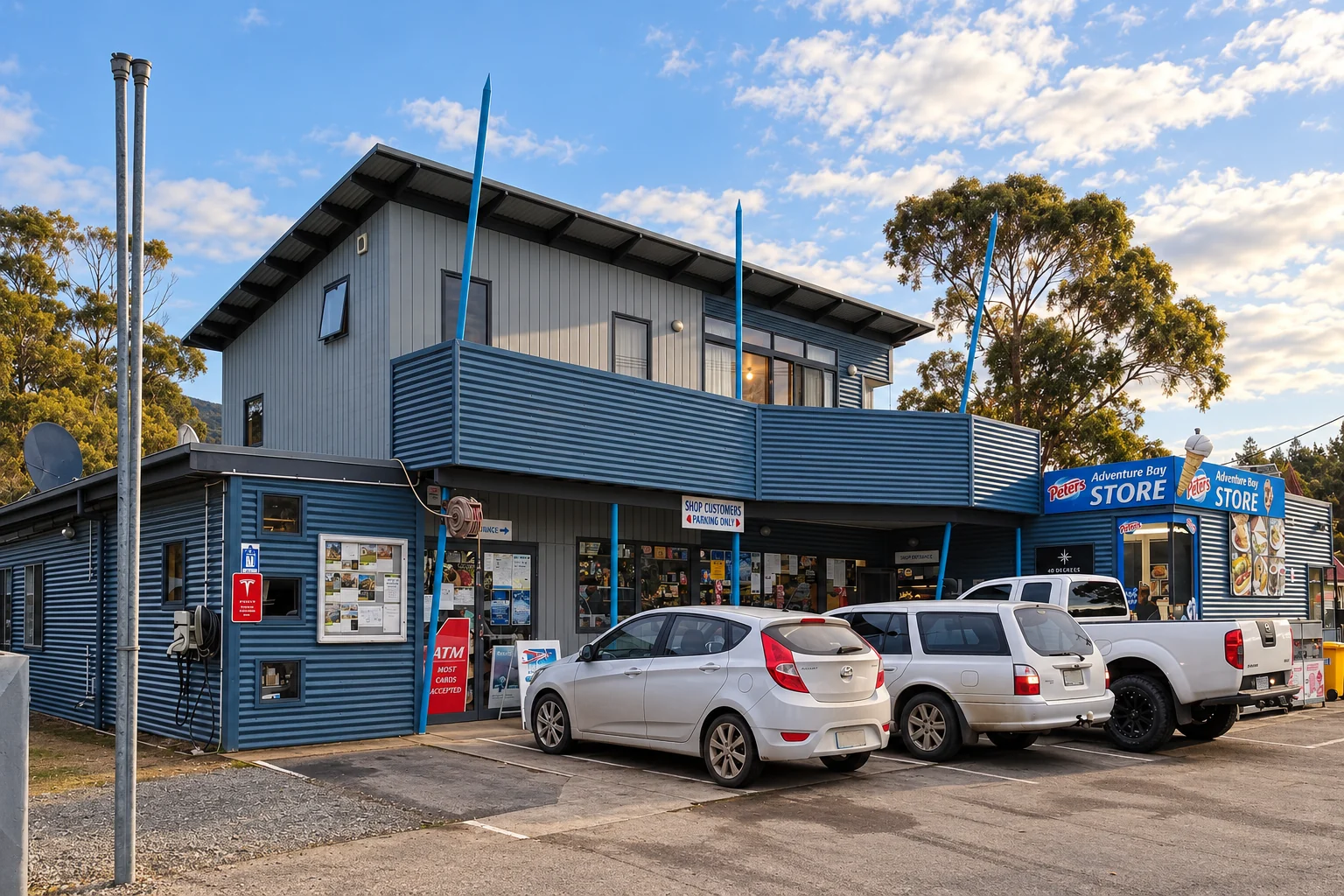
Wallabies are most active at dawn and dusk, so avoid driving then, and park off the road when you stop for photos. Drive on the left. The operator names the Adventure Bay General Store as the main fuel option, so plan your tank around a stop in South Bruny.