
An airport transfer is any ride between an Australian airport and your accommodation: a train, an airport bus, a shared shuttle van, a taxi, a rideshare car or a pre-booked private driver. For a traveller with a couple of carry-ons, they are interchangeable. For a family with checked suitcases, a pram (what Australians call a stroller) and a child seat, they behave very differently. Trains have no baggage limit but you carry everything yourself. Shuttles set bag allowances per passenger, and some count a pram as a piece of luggage. Taxis in the states with published rules do not charge for bags, but child-seat rules differ from state to state and depend on the vehicle.
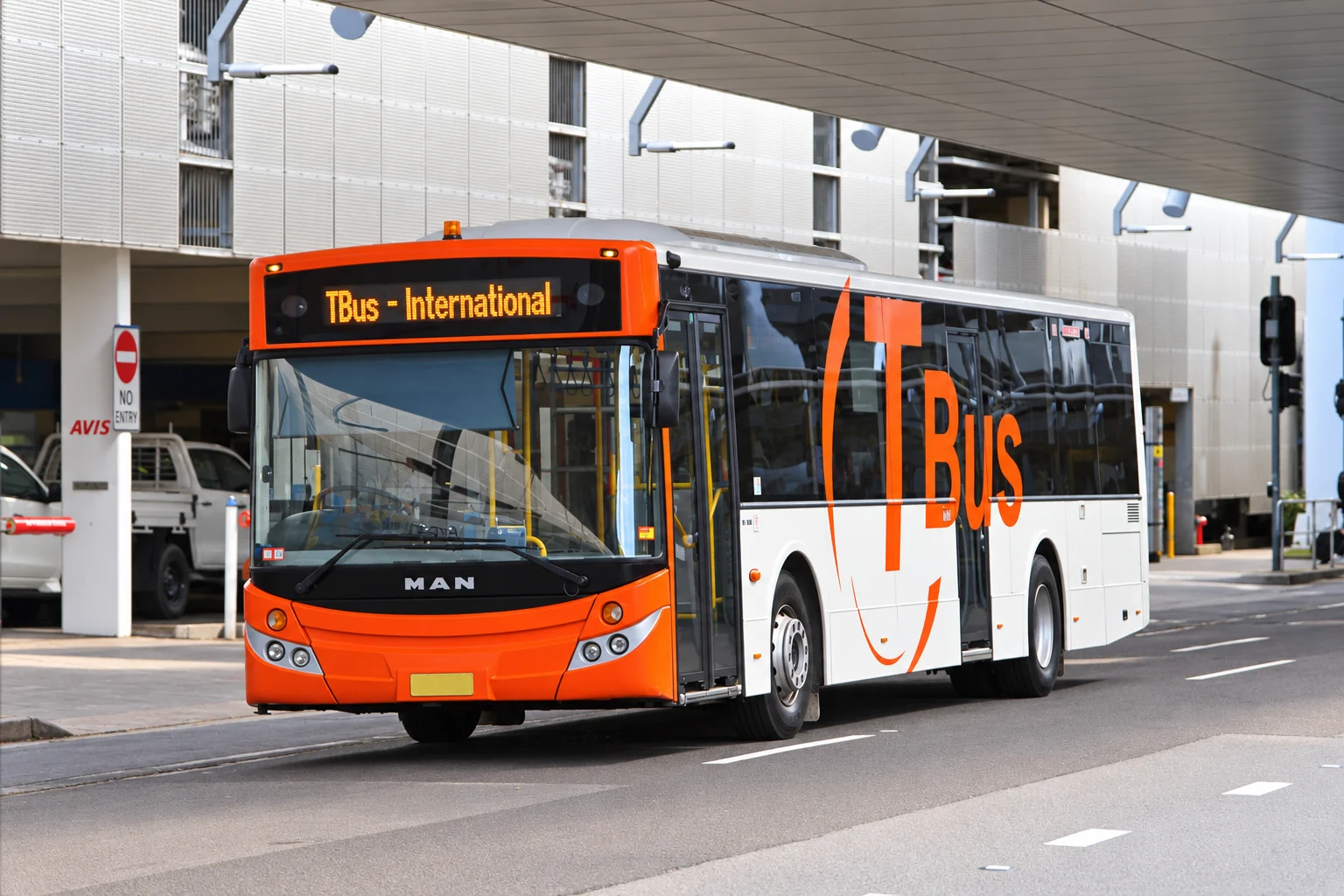
Trains, buses, shuttles and taxis handle bags and prams in different ways. Prices and rules change, so treat the dollar figures as a guide and confirm the amount when you book.
Trains in Sydney and Brisbane
Sydney and Brisbane both have a train line that serves the airport terminals, and in both cities it is the most predictable choice for a traveller with a stroller and a bag or two. Fares and timetables are fixed, traffic does not matter, and nobody counts your suitcases. The cost is that you lift, wheel and load everything yourself.
Sydney Airport Link
Sydney’s domestic and international airports are reached by train, bus or taxi, and trains run frequently from 5am to midnight, seven days a week. Both airport stations charge a station access fee on top of the normal fare, so the trip costs more than the same distance elsewhere on the network. Transport for NSW lists the fee table on its airport page, and you should read it there before you budget. You pay with an Opal card (Sydney’s public transport smartcard), a contactless debit or credit card, a digital wallet or an Opal single ticket.
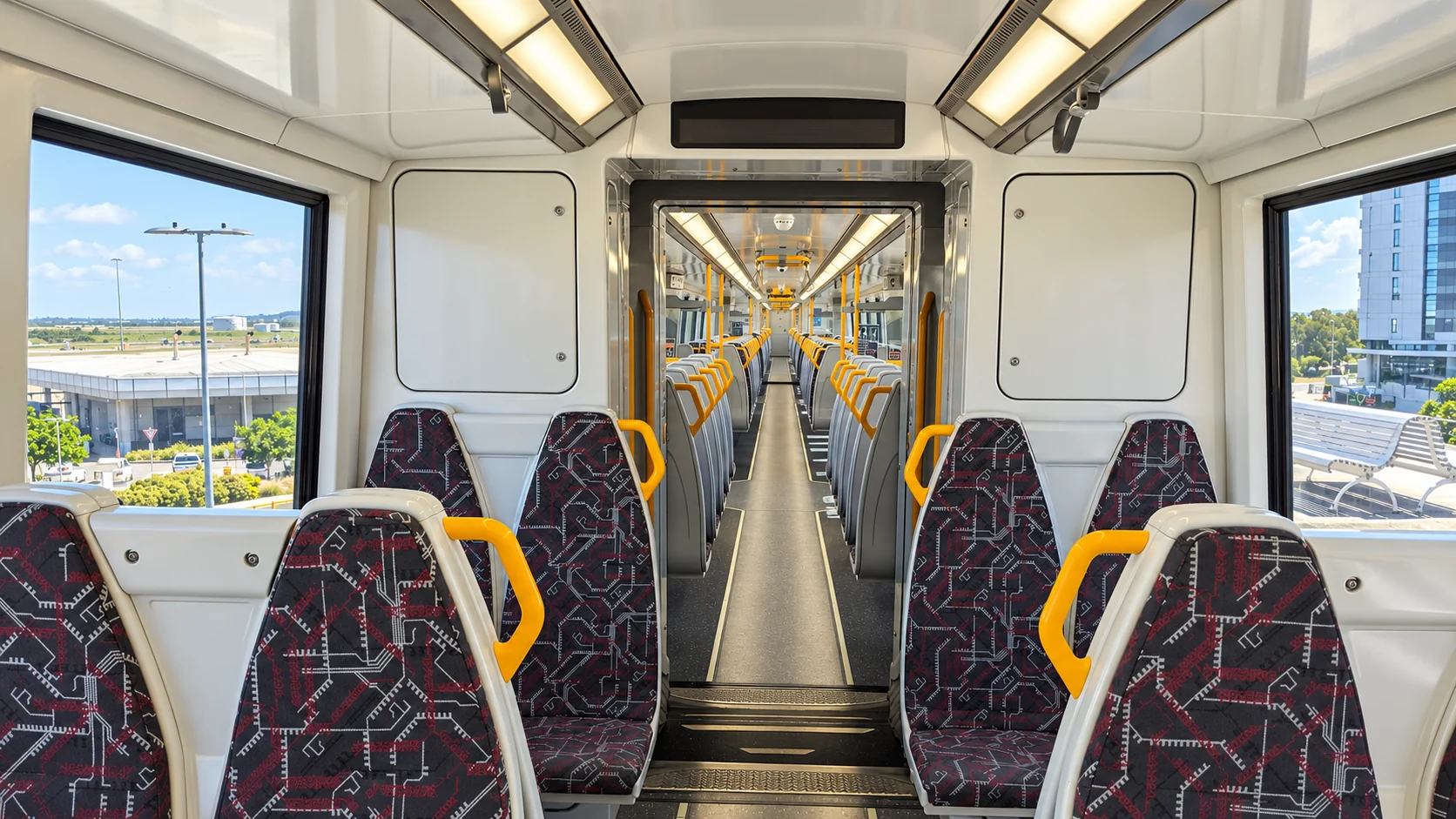
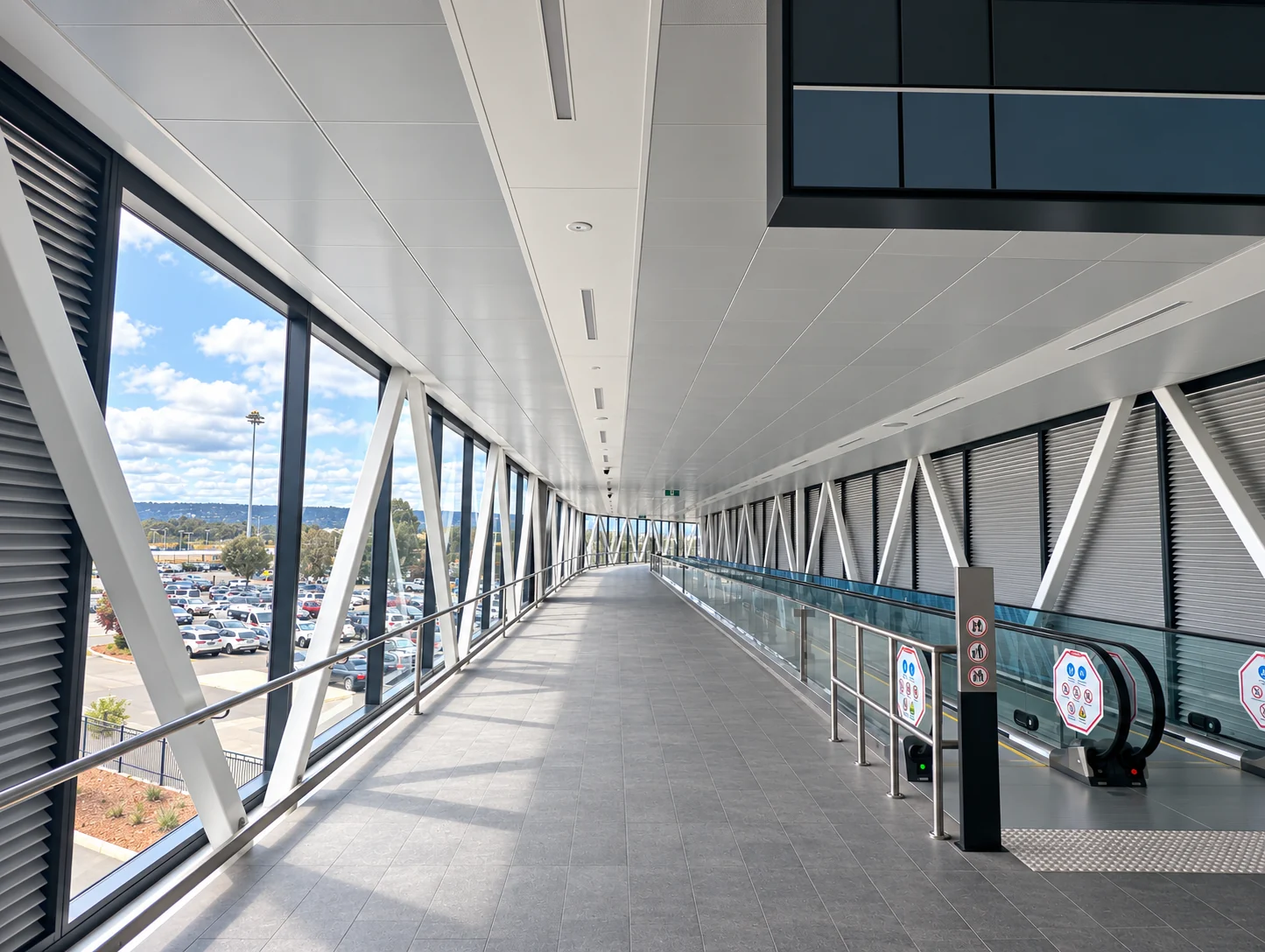
The route from the terminal to the platform matters more when you are pushing a pram. At the domestic terminals, the station is reached by the lift or escalator near baggage carousel 1 in Terminals 2 and 3. At the international terminal, leave Terminal 1 Arrivals by Exit A and walk to the end. There is also a lift or escalator near Check-In desk A. If your pram is bulky, choose the lift and ask a staff member if you cannot see it.
Staydownunder describes the lifts and level platforms as making the train straightforward with a pram, and says the trains have no dedicated luggage racks. Plan to keep suitcases beside you or in the open space near the doors. If you are transferring between the domestic and international terminals rather than heading to the city, the T8 Airport and South Line or route 420 bus does the job.
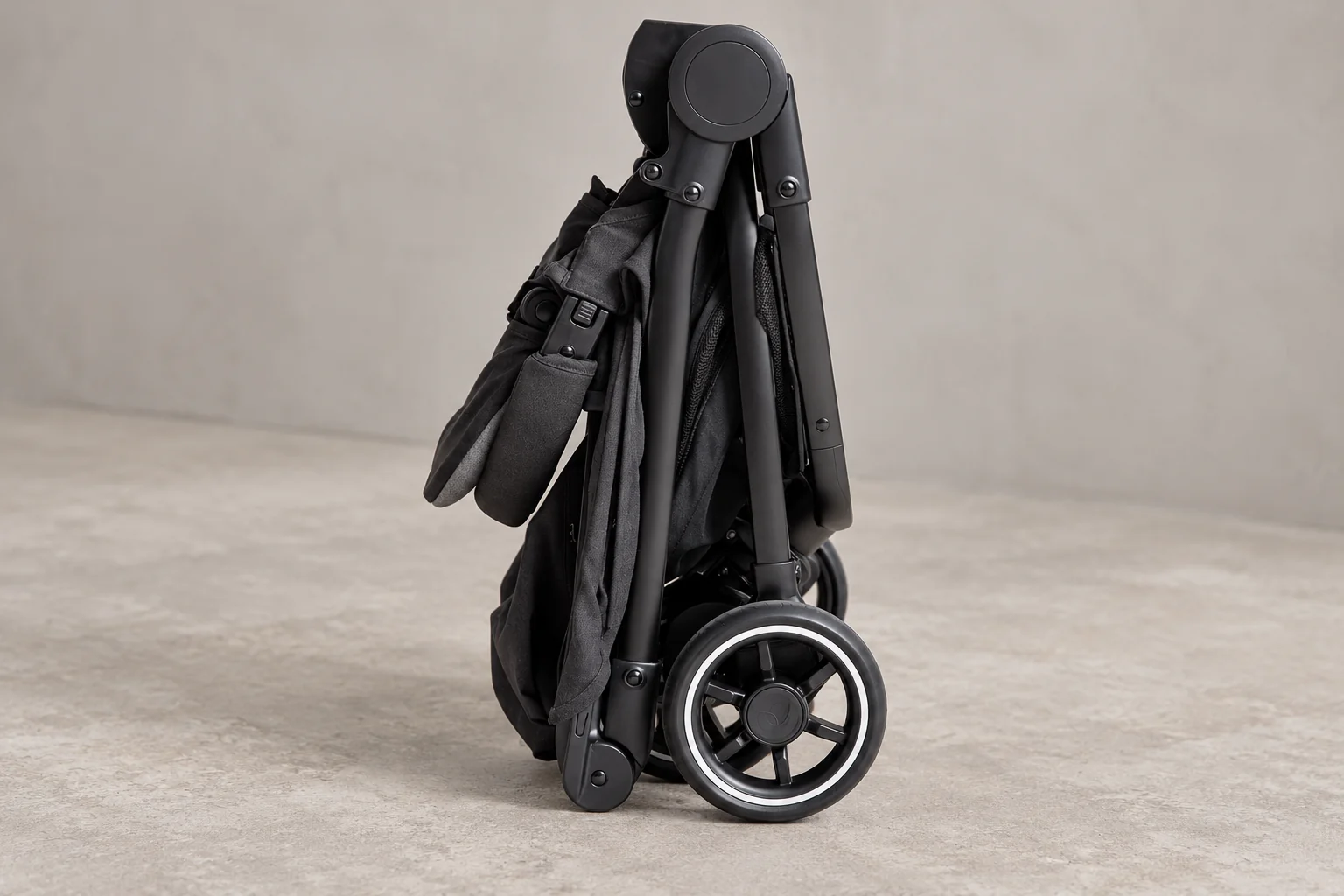
Buses are a harder choice with luggage. Royal Airport Concierge calls route 350 less practical with bags, which makes sense when you are standing in an aisle with a suitcase and a toddler.
Brisbane Airtrain
Brisbane’s Airtrain is the strongest of the three city options for luggage because the stations sit directly in front of each airport terminal. Translink describes this as making access easy for passengers with luggage. The trains also carry luggage space, air-conditioning, Wi-Fi, restrooms and information screens. They run from 4:30am to 10pm, every 15 minutes at peak times.
Fares start at $23.30 between the airport stations and Brisbane City stations (Central, Roma Street, South Brisbane and Fortitude Valley), effective 27 April 2026. Children aged 14 and under travel free between the airport and any Brisbane City station when accompanied by an adult with an Airtrain ticket, so a family of four with two school-age children pays for two tickets. Tap on and off with the same contactless card, go card or device. Airtrain tickets are valid on trains and trams, but not on buses or ferries.
Airport luggage trolleys cannot go on board, according to a traveller guide, so you move your bags from trolley to train. That guide also describes open spaces near the doors where suitcases and prams are stored. A family transfer guide calls the Airtrain manageable but not ideal with a stroller, and says a stroller plus several bags means juggling. In practice, the Airtrain suits a family with one pram and two or three bags if two adults share the lifting. A single adult with a pram, a baby and three suitcases will find the platform step and the carriage doors harder.
If you are heading to Skygate, the free Terminals to Skygate bus or the route 590 bus connects it to the terminals, according to Translink.
Melbourne’s SkyBus and Sydney’s shared shuttles
Melbourne has no train to its airport, so most budget-minded visitors take SkyBus, the express coach to the city. In Sydney and elsewhere, shared shuttle vans fill the same role for travellers who want door-to-door service. Both have luggage allowances that you should read before you arrive.
SkyBus at Melbourne Airport
SkyBus stops at Terminals 1 and 3 for pick-up and drop-off and at Terminal 4 for pick-up, according to Wikipedia. Melbourne Pedia says departures run 24 hours a day and mentions luggage racks and no extra charge for baggage.
The luggage rule follows your airline. Melbourne Point says the standard allowance generally matches the checked and carry-on allowance of the airline you are connecting with. You keep smaller bags with you and store larger luggage as the driver directs. Larger items may be accepted when space allows, and passengers can be moved to a later bus if space or safety requires it. That last point matters for a family with a pram and several suitcases on a busy morning: a full luggage bay means your whole group waits for the next coach. The same page advises families with prams or several suitcases to allow extra boarding time, and to keep passports, medication, electronics and valuables with you rather than in the luggage bay.
Fares vary between sellers. Parkmundo lists an adult one-way fare of $25.90 and $6.60 for children, and Melbourne Pedia lists a different one-way figure. Check the current fare at skybus.com.au before you buy. If you buy through a reseller such as Klook, read the validity period printed on your voucher, because different products carry different expiry windows, including 12 months for one and 3 months for the Peninsula Express.
Shared and pre-booked shuttles in Sydney
Shared shuttles are vans that collect several groups from the airport and drop each at their own address. They suit families who do not want to handle public transport, but the bag rules are tighter than on a train, and each operator sets its own.
GetJet Shuttle Service allows one large suitcase plus one piece of hand luggage per passenger. Extra pieces cost $5 each, and the shared vans seat up to 13 passengers. A family of four with five large suitcases would pay for the extra piece, and might be better off booking a private charter, which GetJet also offers. GetJet provides baby seats for ages 0 months to 8 years if you request one at booking. It has no refunds for cancellations within 48 hours of pickup, and its public-holiday surcharge appears as both 10% and $20 on the same page, so confirm the amount on your booking confirmation.
EasyGo allows one standard bag plus one carry-on per passenger and requires you to notify oversized items in advance, naming prams, golf clubs and ski gear. Airport Shuttle Penrith is more specific: one suitcase and one carry-on per passenger, each with a weight limit, and each pram or stroller counts as one piece of luggage that must be declared at booking. A family of three with two suitcases and a pram is therefore already at its quota, before counting any nappy bag.
Ram’s Airport Transfer offers fixed-fare, door-to-door private transfers 24 hours a day with free baby seats and free cancellation up to 24 hours before pickup. Its listed bag capacities by vehicle are one checked bag plus one carry-on per passenger, with a sedan fitting 4 bags, a large SUV 8 and a people mover 12. REDY2GO requires advance booking for its hotel shuttles from Sydney’s Domestic Terminal 2 and offers free cancellation up to 24 hours before.
Count your bags and your pram, check the operator’s allowance and tell the operator at booking. If the van turns up without room for the pram, you cannot fix that at the kerb.
Taxis: luggage fees and fixed fares
A taxi is the simplest way to carry a lot of gear, because the boot takes the bags and the driver loads them. The question is what it costs and whether the vehicle is big enough.
Luggage fees
The published fare rules in Queensland and Tasmania both rule out luggage charges. Queensland’s Maximum Fares Notice (last updated 27 May 2026) states: "There is no fare applicable for the carriage of luggage." The notice covers rank and hail services. Booked hires may carry a booking fee set by the booking service, which must be included in the estimate, and drivers may pass on tolls and access fees incurred during the hire.
In Tasmania, permitted charges from 29 January 2025 do not allow fees for extra luggage. They do allow a card surcharge of up to 5%, a $100 soiling fee, a deposit up to the likely fare and an airport surcharge for trips starting at Hobart or Launceston airports. The airport surcharge amount is not stated on that page, so ask the driver or the booking service before you get in.
For Victoria, a Melbourne airport taxi operator reports no per-bag fee in the fare schedule, a $16.35 high-occupancy fee for five or more passengers and a $4.78 airport rank access fee in 2026, plus a $3.00 airport booking fee for pre-booked pickups. Verify these with the Essential Services Commission or Melbourne Airport before relying on them.
The pattern is consistent: bags do not add to the fare, but airport fees, booking fees, card surcharges and large-group fees can. Ask for the total, not just the meter rate.
Sydney’s airport rank fixed fare
Sydney has a fixed fare from the airport taxi rank to the CBD trial area. According to the Point to Point Transport Commissioner (page dated 29 September 2025), the fare is $60 for a standard taxi, including wheelchair-accessible taxis, and $80 for a maxi-taxi, which a group of five or more passengers gets, or anyone who requests one. The fixed fare covers tolls, levies and fees. The only add-ons are a card surcharge of up to 5% and a cleaning fee of up to $120.
Two limits apply. The fixed fare applies only from the airport rank to the trial area, and it does not apply to rideshare or booked transfers, where the fare quoted at booking applies. Some commercial sites quote $65 and $85 for the same fares, but the official figures are $60 and $80.
For a family with a pram, two large suitcases and two kids, the maxi-taxi is worth requesting at the rank. A standard sedan boot may take the suitcases, but the pram and car seat then ride in the cabin with the children. A maxi-taxi has the floor space to take everything inside without a squeeze.
What the rules say about child seats
Child-restraint rules (the law on car seats, boosters and seatbelts for children) differ between states and between vehicle types. Taxis at Sydney and Melbourne airports do not have to carry a baby seat, so a family who expects one will be disappointed.
New South Wales
The NSW Point to Point fact sheet (March 2024) sets separate rules for taxis and for hire cars and rideshare. In taxis, children under 1 may travel only in a suitable approved child restraint. For ages 1 to 7, the options are an approved booster, an approved forward-facing harness seat or the vehicle’s own seatbelt in their own seat, though a restraint is strongly recommended. Over 7, a properly fastened seatbelt is enough.
Hire cars and rideshare vehicles follow the same rules as a private vehicle, which are stricter:
- Up to 6 months: an approved rear-facing seat.
- 6 months to 4 years: an approved rear- or forward-facing seat with an inbuilt harness.
- 4 to 7 years: a forward-facing seat with a harness or an approved booster.
- Over 7 and under 145 cm: a seatbelt is permitted but a booster or harness is recommended.
- Over 7 and at least 145 cm: a properly fastened seatbelt.
The fact sheet’s own example of a trip that is not permitted is a 13-month-old riding in a hire vehicle or rideshare (the example refers to an airport transfer) without a restraint. Children up to 4 may not sit in the front of a taxi, hire or rideshare vehicle, and children from 4 to 7 must not sit in front where the vehicle has two or more rows, unless the back seats are unavailable. Drivers face fines and demerit points for carrying an unrestrained passenger under 16, and the driver is responsible for attaching the restraint, so check it before the car moves.
Only wheelchair-accessible taxis and wheelchair-accessible vehicles must carry an approved child restraint. Everyone else expects you to bring your own or book one in advance. You may use your own approved restraint in any taxi, hire car or rideshare. At an airport, if you need a restraint to use a taxi rank, ask the rank marshal for help.
Victoria
Transport Victoria says rideshare and hire cars follow the same child restraint rules as private cars, and children under 16 must be in a restraint, booster or adult seatbelt correct for their size and properly fastened. Taxis are different. Drivers do not have to provide restraints or boosters, and under-1s must ride in the back seat but do not need a restraint and may be carried by the accompanying adult. From age 1, a child needs their own seat, with a seatbelt if no restraint or booster is available. Taxis must have at least one anchorage point for a passenger’s own restraint.
Even though a taxi allows a baby on a lap in Victoria, Kidsafe Victoria recommends bringing your own restraint in taxis where possible. It also says Uber and other rideshare services are not exempt from the Victorian rules, and neither are hire vehicles. Melbourne operators such as 13 Silver recommend pre-booking a taxi or chauffeur car with a restraint, which is a commercial offer rather than a legal requirement.
Child seats for overseas visitors
International visitors face one extra rule: Kidsafe Victoria says overseas child car restraints cannot be used in Australia by law. It recommends hiring an Australian-standard restraint that meets AS/NZS 1754 and suits the child’s size and age. A seat you bring from home, even an expensive one, is not legal on Australian roads.
This changes your packing plan. Leave the car seat at home and arrange a compliant one through one of four routes: a pre-booked transfer that supplies it, a car-hire company, a baby-equipment rental business, or a purchase on arrival. Operators such as Ram’s and GetJet list baby seats for pre-booked transfers, and GetJet covers ages 0 months to 8 years. Request the seat when you book, as GetJet requires, and tell the operator your child’s age and weight so they send the right type.
Uber Child Seat in Melbourne
Uber ran a trial called Uber Child Seat in Melbourne, announced on December 13, 2022. The December 2022 newsroom release said Melbourne was the first Australian city to trial it, with a view to rolling it out nationally the following year. Uber’s pages are from 2022, and later 2025 to 2026 articles describe the service as still running in Melbourne, so open the Uber app and look for the option before you rely on it.
When available, you select "Uber Child Seat" under "Choose a ride" after entering pick-up and drop-off. You can book on demand or through Uber Reserve, between 30 minutes and 30 days ahead. Once the driver is en route, you confirm the seats you need, and the trip starts only after the seat is fitted, so allow installation time. Drivers carry a Britax Safe’n’Sound convertible seat (0 months to 4 years, 67 to 145 cm, up to 18 kg) and a Babylove Ezymove booster (4 to 8 years, up to 145 cm, 14 to 32 kg). Each ride has one convertible seat and one booster, with a maximum of two children under 8 and five passengers in total. The surcharge is $9.99, locked in upfront. The vehicles are the largest UberXL cars, and no luggage quantity is stated, so a family with a pram and large suitcases should consider whether everything fits.
On a standard Uber ride, the family supplies the seat. Uber’s footnote says children may travel on other Uber products if an appropriate seat is fitted correctly and the child is buckled in.
Matching the transfer to your luggage
The right transfer depends on three things: how many bags you have, whether you have a pram and car seat, and how many adults can lift.
One or two bags and a pram, with a train at the airport. Take the train. In Brisbane, the Airtrain stops in front of each terminal and children 14 and under travel free with an adult on the city route. In Sydney, check which lift serves your platform and budget for the station access fee. Neither city has a luggage fee. Both require you to carry your own bags onto the train.
Several large bags, a pram and a child seat. Book a private or shared door-to-door transfer. Count your bags against the per-passenger allowance, remember that Airport Shuttle Penrith counts a pram as one piece of luggage, and declare the pram and any oversized item at booking. If your group exceeds the standard van, a people mover or maxi-taxi gives more floor space. Private operators with listed bag capacities, such as Ram’s, make the planning easier because you can match your bag count to the vehicle.
A taxi from the rank. This is the flexible option. No luggage fee applies in Queensland or Tasmania, and Victoria’s schedule has no per-bag charge according to a Melbourne operator. In Sydney, the $60 fixed fare to the CBD trial area includes tolls and fees, and the $80 maxi-taxi suits five or more passengers or a pile of gear. Bring your own approved child seat (or one hired in Australia), because the driver does not have to supply it outside wheelchair-accessible vehicles.
Rideshare. Rideshare rules for children are the same as for a private car in NSW and Victoria, so a child needing a restraint must have one. If you cannot bring a seat, pre-book a transfer that supplies one, or check for Uber Child Seat in Melbourne.
Timing. For shuttles, GetJet asks you to arrive at least 2 hours before a domestic flight and 3 hours before an international one, which matters if your pickup is a shared van with other stops. On SkyBus, allow extra boarding time with a pram, and expect that a full luggage bay can put you on the next coach.
A taxi charges no luggage fee under the official rules reviewed, but airport surcharges, booking fees and card surcharges still apply. Ask for the total before you book.
Key Takeaways
- Check the child-seat law first: Overseas car seats cannot be used in Australia, and taxis in NSW and Victoria do not have to supply restraints. Book an Australian-standard seat with your transfer.
- Declare your pram when you book a shuttle: Operators such as Airport Shuttle Penrith count a pram as one piece of luggage, and EasyGo requires advance notice for prams. An undeclared pram can mean a smaller van or a refused boarding.
- Choose the train for one pram and a few bags: Brisbane’s Airtrain stops in front of each terminal, and Sydney’s stations are reached by lift or escalator. You carry everything yourself, and Airtrain does not allow airport trolleys on board.
- Expect no luggage fee in a taxi, but ask for the total: Queensland and Tasmania rule out luggage charges, but airport, booking and card surcharges still apply. In Sydney, the $60 or $80 fixed fare applies only from the airport rank to the CBD trial area.
- Confirm Uber Child Seat in the app: The Melbourne trial was announced in 2022 with a $9.99 surcharge, and current availability is not confirmed by Uber’s own pages.