
Flights, accommodation and, for some visitors, an entry fee make up most of the cost of a trip to Australia, with food and local transport adding a daily cost on top. The entry fee ranges from nothing to A$250 or more, depending on your passport. Once you are in the country, domestic flights are the biggest variable, because distances are long and low-cost fares bill extras separately. Public transport in Sydney and Melbourne is capped, so the cost of a day’s rides has a known ceiling.
Official data gives exact figures for visas, transport caps and airfares. Food prices are published as annual price movement rather than dollar menu prices, and the only category-by-category spending benchmark dates from 2019. Read each figure for what it measures. The daily budget tiers are defined by what they cover.
Visa and Entry Fees
Check your passport against three options before paying anything. The eVisitor (Subclass 651) is free for passport holders from the UK, EU and EFTA countries, plus some microstates. It allows stays of up to 3 months per visit, allows multiple entries, and is applied for online through ImmiAccount. The Electronic Travel Authority (ETA, Subclass 601) suits passport holders from countries such as the US, Canada, Japan, South Korea, Singapore, Malaysia, Hong Kong, Taiwan and Brunei. It carries an A$20 service charge and the same stay and multiple-entry terms.
Everyone else applies for a Visitor visa (Subclass 600, Tourist stream).
| Option | Cost (AUD) | Stay |
|---|---|---|
| eVisitor (651) | Free | Up to 3 months per visit |
| ETA (601) | A$20 service charge | Up to 3 months per visit |
| Visitor visa (600), offshore | A$250 | Length of stay set per grant |
| Visitor visa (600), onshore | From A$630 | Length of stay set per grant |
| Visitor visa, Frequent Traveller stream | A$1,845 base, plus a A$250 approved designation charge | For eligible frequent travellers |
The offshore Subclass 600 fee was A$190 in 2025 and rose to A$250 in the 2026 change. Visitor visa fees are reviewed each financial year, usually on 1 July, so confirm the current amount with the Department of Home Affairs before you apply. The charge is non-refundable even if the application is refused, and adults and children pay the same amount. Processing for the tourist stream ranges from 1 day to 5 months, so apply early to avoid paying for flights you cannot use.
Subclass 600 holders have no work rights, and health insurance is recommended but not mandatory. A dual national can use the free eVisitor on an eligible passport instead of paying for a Subclass 600, so it is worth checking every passport you hold.
Domestic Flight Prices
The Australian Competition and Consumer Commission (ACCC) publishes fare indices rather than dollar fares for individual routes. Its March 2026 report, with data to January 2026, shows the real fare index (adjusted for inflation) up 0.6% on January 2025 and 3.6% below January 2019. The nominal index, which tracks the prices travellers actually see, was up 3.3% year on year. Fares are therefore roughly flat in real terms against 2019.
The lowest fares moved differently from the rest. The real best-discount fare, the lowest available across any airline on the 70 busiest routes, was 12.2% lower than a year earlier in the December 2025 comparison. Restricted economy fares were down 5.1% year on year, while business-class fares were up 10.9%. Booking the cheapest restricted economy fare has been the best-value choice, and business class has become more expensive.
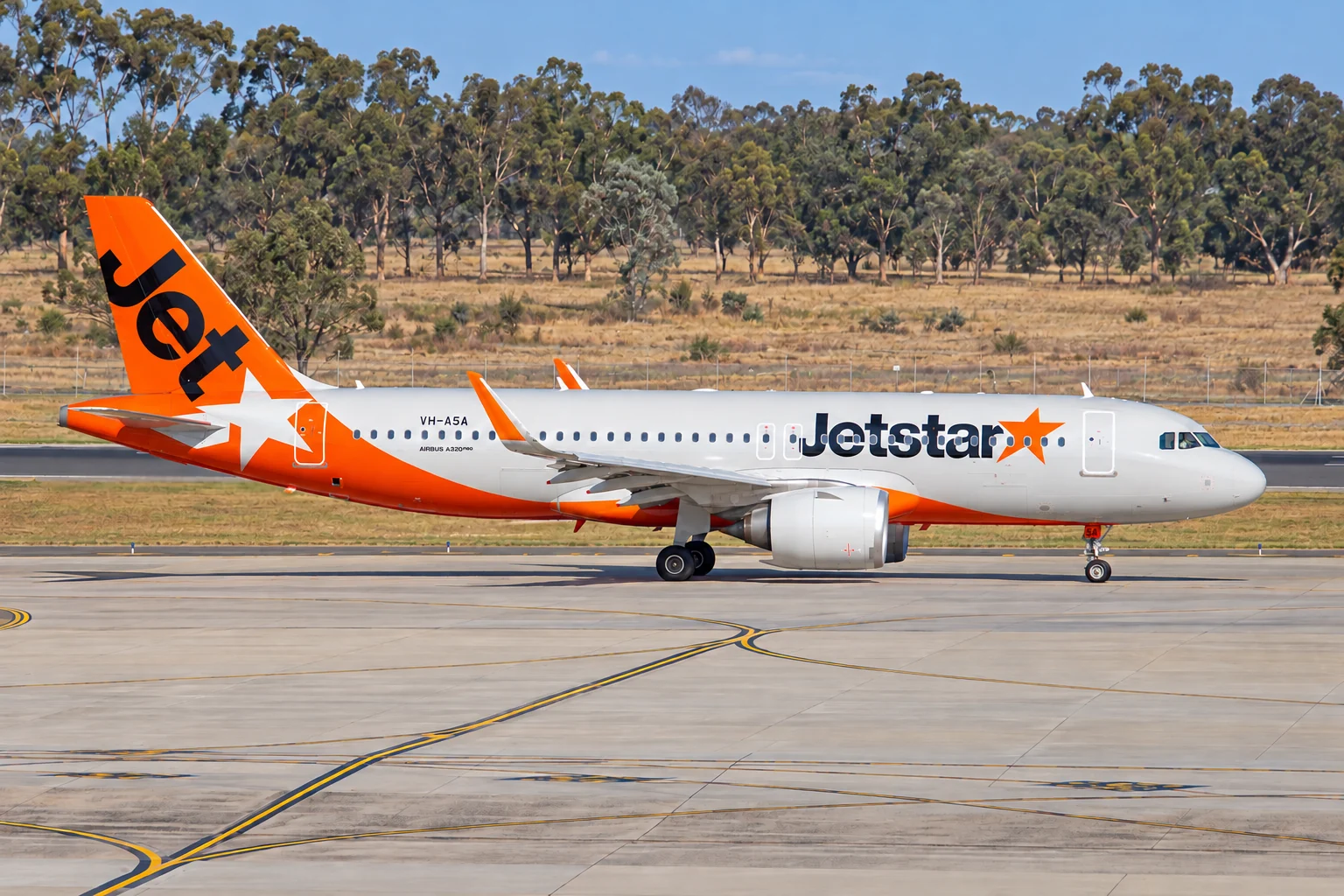
Three carriers dominate. In January 2026 Virgin Australia carried 33.2% of passengers, Qantas 33.0% and Jetstar 32.6%, while Rex carried 1.2%. Qantas and Jetstar belong to the Qantas Group, which together with Virgin Australia carries 98.8% of passengers. On major city routes 91% of passengers flew on routes served by two competing airline groups, so you can compare. Remote routes are served by one airline 68% of the time and regional routes 59% of the time, which leaves little room to shop around.
Timing matters as well. The ACCC found very high demand in September and October 2025, which lifted fares in October. School holiday periods and spring travel are the times to book early.
Routes Where Fares Jumped
Between January 2025 and January 2026, the real best-discount fare rose sharply on several routes: Adelaide to Brisbane by 81.0%, Ayers Rock to Sydney by 42.0%, Brisbane to Rockhampton by 41.4%, Brisbane to Townsville by 31.5% and Brisbane to Canberra by 30.4%. A route that was cheap last year will not necessarily be cheap now, so price each leg of an itinerary individually. Ayers Rock (Uluru) to Sydney is the one most outback itineraries touch, and the jump suggests locking in that leg early.
Fuel adds some upward risk. Strikes in the Middle East from 28 February 2026 lifted jet fuel prices. The ACCC says airline hedging provides short-term protection, but sustained high fuel prices could push domestic fares up over time. The ABS also recorded transport prices up 8.9% over the 12 months to March 2026, which is relevant if you plan to hire a car and pay for petrol.
Low-Cost Fares and Extras
Low-cost carriers keep fares down by leaving out extras such as in-flight meals. Full-service carriers include meals, a checked baggage allowance and entertainment, usually at higher fares. The ACCC’s fare measure excludes baggage fees, seat-selection fees and onboard food and drink, so a headline fare understates what you pay. Add baggage, seat choice and food to every comparison before deciding that a low-cost fare is cheaper.
Reliability is part of the cost. Jetstar’s on-time arrival rate was 67.7% in January 2026, against a long-term industry average of 80.5%, and its cancellation rate was 3.2% against an industry average of 2.2%. If a Jetstar leg feeds a connecting flight, a tour departure or a non-refundable booking, leave a generous buffer or choose a carrier with a stronger record on that leg. Qantas offers Economy Plus and Virgin Australia offers Economy X, which add legroom and priority services at mid-range prices and suit longer east-west flights where seat comfort matters.
The major airlines run sales. Qantas ran its largest domestic sale in more than five years, covering economy and business fares to 60 destinations for travel between 14 October and 20 December 2026. Virgin Australia ran sales on select domestic routes for travel between 1 April and 20 December 2026. The ACCC reports increased use of promotional pricing by the major airlines, so check the Qantas and Virgin Australia sale pages before booking a fare at full price.
Sydney Public Transport Costs
Sydney uses the Opal system across trains, buses, ferries and light rail. The Opal card is free for adults, and you can instead tap on with a contactless debit card, credit card or phone at the same adult fares and caps. The weekly adult cap is A$50. The daily adult cap is about A$19.30 from Monday to Thursday. From Friday to Sunday and on public holidays it is about A$9.65. Concession and child travel is capped at A$25 a week. Those daily figures came from the IPART fare schedule baseline of A$17.80 and A$8.90 in October 2023, with later indexation. In that schedule an adult single train fare ran from A$4.00 for 0 to 10 km at peak to A$9.84 for the longest trips at peak.
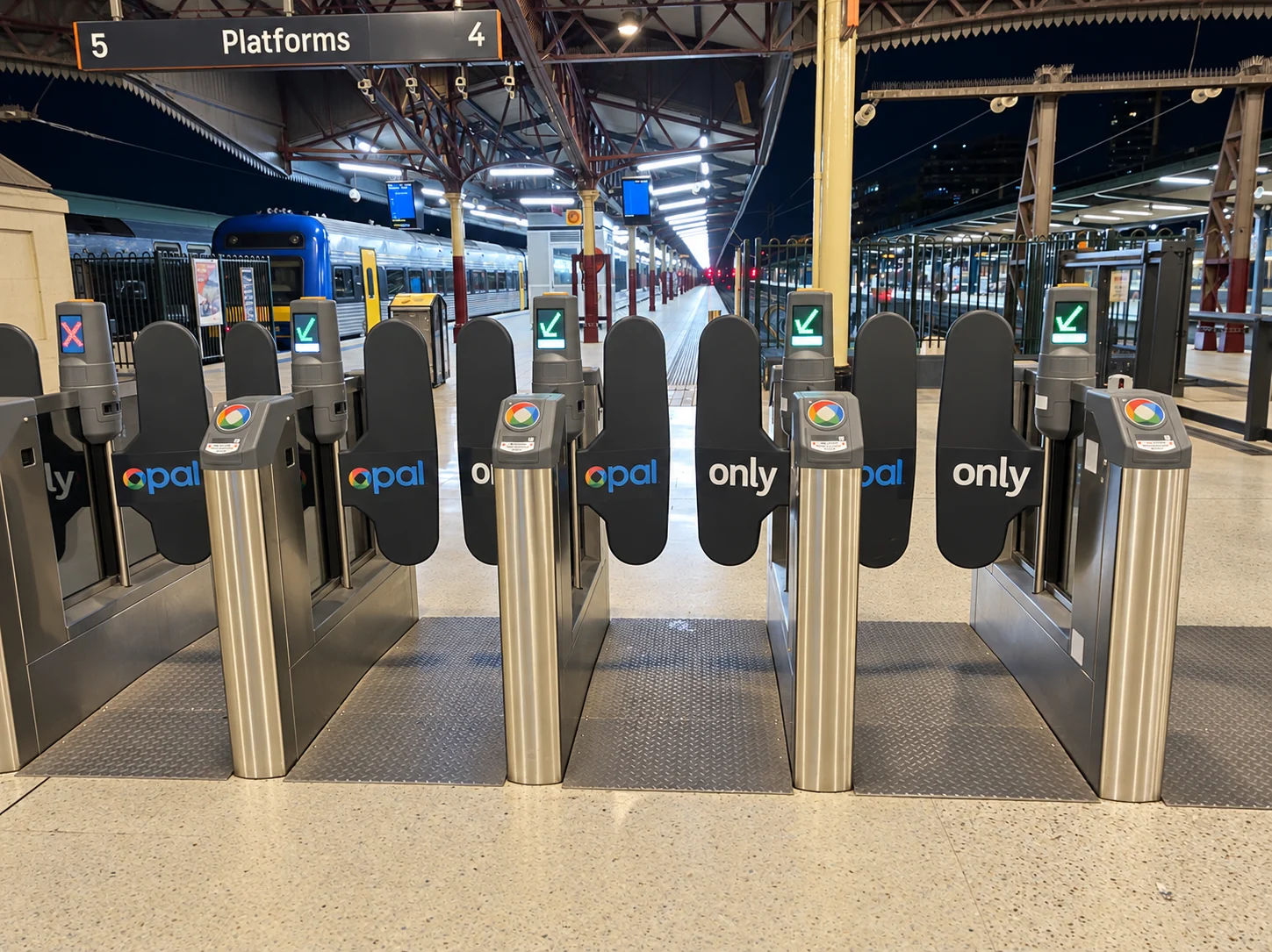
Fares rose by an average of 3.6% from 1 July 2024 and 2.5% on most fares from 14 July 2025. The NSW Government’s Transport Affordability Package holds Opal fares at 2025 prices for the next year and retains the A$50 weekly cap. One 2026 guide puts off-peak fares at about 30% lower, which applies before 6:30am, after 9:30am or after 4pm on weekdays, so a late start on sightseeing days is cheaper.
The airport is the exception to the caps. The station access fee, listed at roughly A$16 to A$17.92 for adults, sits outside the caps. One guide says boarding a bus to Mascot station avoids the surcharge, so check the route before you travel with luggage.
Melbourne Public Transport Costs
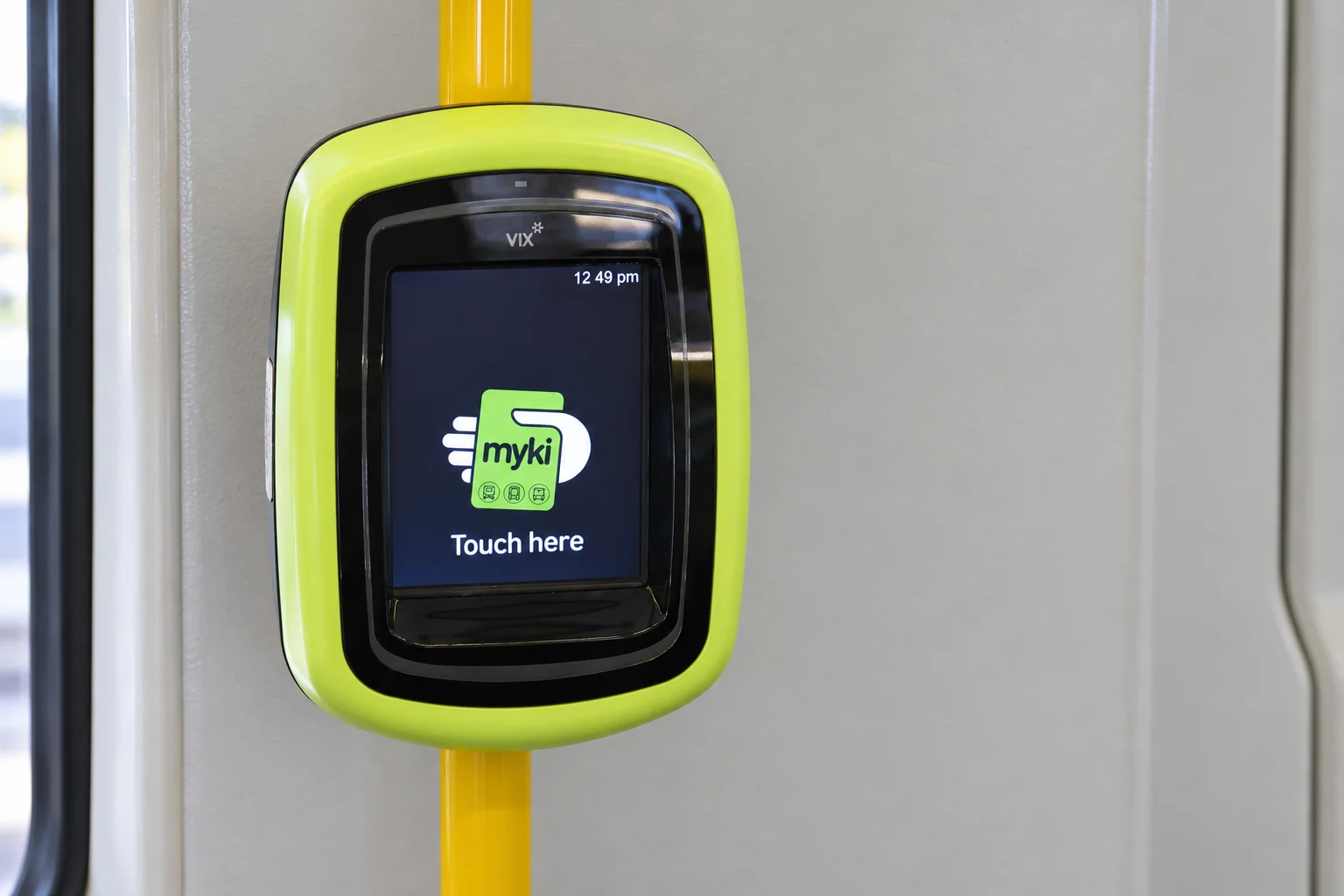
Melbourne’s myki card covers metropolitan trains, trams and buses, plus V/Line trains and regional buses in Geelong, Ballarat, Bendigo and the Latrobe Valley. The card costs A$6 at full fare and A$3 for concession. A 2-hour fare in Zones 1+2 is A$5.70, the weekday daily cap is A$11.40, the weekend and public holiday daily cap is A$8.00, and a 7-day pass is A$57.00. Concession fares are half those amounts. Tap-and-go with a contactless card is available on trains, trams and myki-enabled buses at myki fares, which avoids the card purchase if you plan a short stay.
The central city also has a free tram zone, so short trips inside the CBD cost nothing. Victorian Labor has pledged a weekly cap of A$30 from 1 January 2027 if re-elected. This is a political pledge rather than current policy, and it would compare with about A$57 for five days at full fare.
Compared with Sydney, Melbourne’s weekday ceiling of A$11.40 is lower than Sydney’s about A$19.30. Over a week, though, Sydney’s cap of A$50 is below Melbourne’s 7-day pass of A$57. A visitor spending a week in each city on public transport pays a similar amount.
Food and Eating Out
Official figures track how fast food prices move and do not list menu prices. The ABS reports food and non-alcoholic beverages up 3.1% over the 12 months to March 2026. For eating out, meals out and take-away foods rose 3.5% over the 12 months to December 2025, and food and non-alcoholic beverages rose 3.4% in that release. In the September 2025 quarter, restaurant meals were up 2.8% and meals out and take-away foods up 3.3%. For the June 2025 quarter, restaurant meals were up 2.3%. Headline inflation reached 4.6% over the 12 months to March 2026, so a food budget set on 2025 prices will run short.
Australians’ own spending shows where the money goes. In the June quarter 2026, Tourism Research Australia recorded national totals of A$3.8 billion on takeaway and restaurant meals, A$7.3 billion on accommodation, A$3.8 billion on domestic airfares, A$2.7 billion on petrol and A$1.5 billion on groceries and self-catering. Eating out outweighs groceries by a wide margin, which makes self-catering the clearest lever on a food budget. A kitchen in your accommodation matters as much as the nightly rate.
Accommodation and Package Tours
The only per-night benchmark by category comes from Tourism Research Australia’s 2019 profile of Australian residents’ domestic holiday trips that included flights. Those trips averaged 4.3 nights, A$1,932 per trip and A$452 per night. Accommodation was A$207 a night, food and drink A$116, airfares A$145 and shopping, gifts and souvenirs A$70. Package tours cost A$563 a night, the highest per night of any category, at A$2,179 per trip.
These are 2019 figures for one type of trip, so they will understate current costs. They show relative weight: accommodation is the largest nightly cost, food comes second, and a package tour costs more per night than any other part of a trip. Booking your own accommodation, transport and day tours instead of a package is the most direct way to cut the highest-cost category.
Daily Budget Tiers
A budget day starts with the cheapest entry route (free eVisitor or A$20 ETA where eligible) and rides on capped public transport. In Sydney that means paying no more than the daily cap, and no more than A$50 across a week. In Melbourne it means A$11.40 on a weekday. Food comes mainly from groceries and self-catering, with the occasional takeaway, since groceries are the cheapest food category. Flights are the cheapest restricted economy or sale fares, with baggage and seat selection priced in. Accommodation is the main expense, so the largest saving is a place with a kitchen.

A mid-range day mixes self-catered breakfasts with restaurant lunches or dinners, which exposes you to the 3.5% meals-out inflation. It also adds a few paid activities and flights on Economy Plus or Economy X when the leg is long. You still use the transport caps, since they cost nothing extra to apply. The A$207 per night accommodation figure from 2019 gives a lower bound for this tier, given inflation since.
A comfortable day means eating out for most meals, taking business-class fares where the trip demands them, and paying for package tours if you want them. Business fares were up 10.9% year on year, and package tours cost A$563 a night in 2019. Taxis and rental cars replace public transport in this tier, so petrol and transport inflation of 8.9% apply directly. This tier has no cap on transport, flights or tours, so the total depends on the choices you make.
Ways to Save
Start with the visa. Confirm whether the free eVisitor or A$20 ETA applies before paying A$250 for a Subclass 600. Next, book flights on sale dates: the Qantas sale covers travel from 14 October to 20 December 2026 and the Virgin Australia sale runs from 1 April to 20 December 2026. Compare fare types with baggage, seats and meals added, and avoid the spring peak the ACCC identified.
On the ground, use the transport caps. Sydney’s A$50 weekly cap and Melbourne’s A$11.40 weekday daily cap stop further charges once reached, and Sydney’s off-peak travel is about 30% cheaper. Avoid the airport station access fee in Sydney by boarding a bus to Mascot station. Cook where you can, because groceries cost far less than restaurant meals.
Finally, build in connection buffers on Jetstar legs and price every leg separately. A cheap flight loses its saving if a cancellation forces a rebooking, and routes such as Adelaide to Brisbane moved sharply in a year.
Key Takeaways
- Check visa eligibility first: The eVisitor is free. The ETA costs A$20, and the Subclass 600 costs A$250 offshore. Confirm the current fee with the Department of Home Affairs.
- Price the whole domestic fare: The ACCC’s fare measure excludes baggage and seat fees, and low-cost fares exclude meals. Add them to each fare before you compare carriers.
- Use the transport caps: Sydney’s weekly cap is A$50. Melbourne’s daily weekday cap is A$11.40 for Zones 1+2. Avoid the Sydney airport station access fee where a bus is an option.
- Budget for rising food costs: Food prices rose 3.1% to March 2026 and meals out rose 3.5% to December 2025, so self-catering is the strongest food saving.
- Treat the 2019 benchmark as a guide to weight: Accommodation was A$207 a night and package tours A$563 a night, so book your own accommodation and tours to control the largest costs.