
Reaching an Australian island usually means taking a ferry or barge (a flat boat that carries vehicles). What you can bring depends on the island. Rottnest Island in Western Australia has no private cars. K’gari (formerly Fraser Island) in Queensland requires a vehicle access permit and a four-wheel drive. Kangaroo Island in South Australia takes vehicles, but ferry bookings depend on vehicle length and height. The Bass Strait crossing to Tasmania takes nine to eleven hours and has a strict check-in cut-off.
Each crossing below covers the ferry options, vehicle and permit rules, baggage limits, and the transfer from the terminal to accommodation. Fares and timetables change. Dates are given where the operator provides them. Confirm every price with the operator before you book.
Which crossing suits which island
First, decide whether you need your own vehicle on the island. That choice decides which ferry you book, how far ahead you book, and which rules apply.
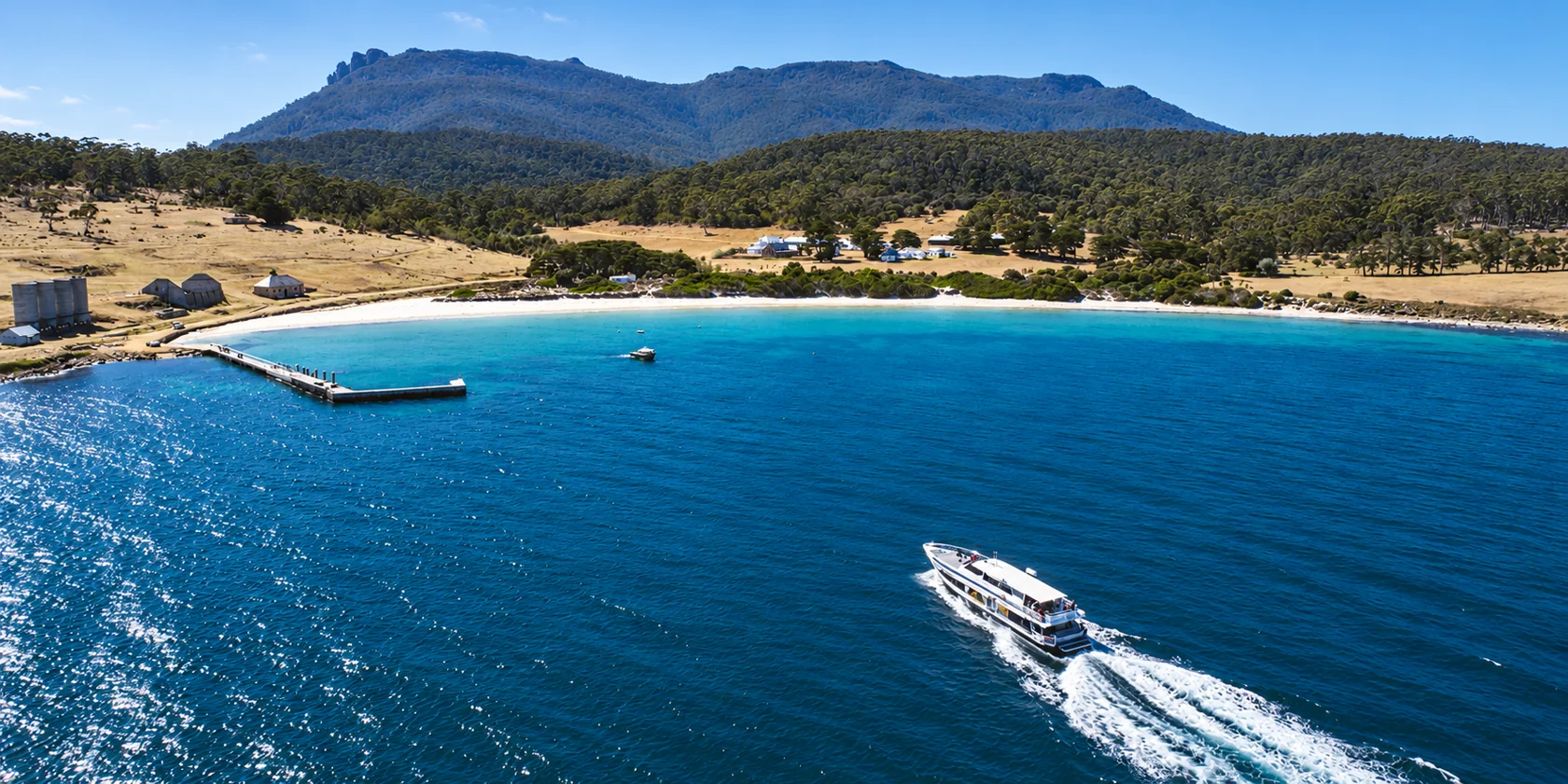
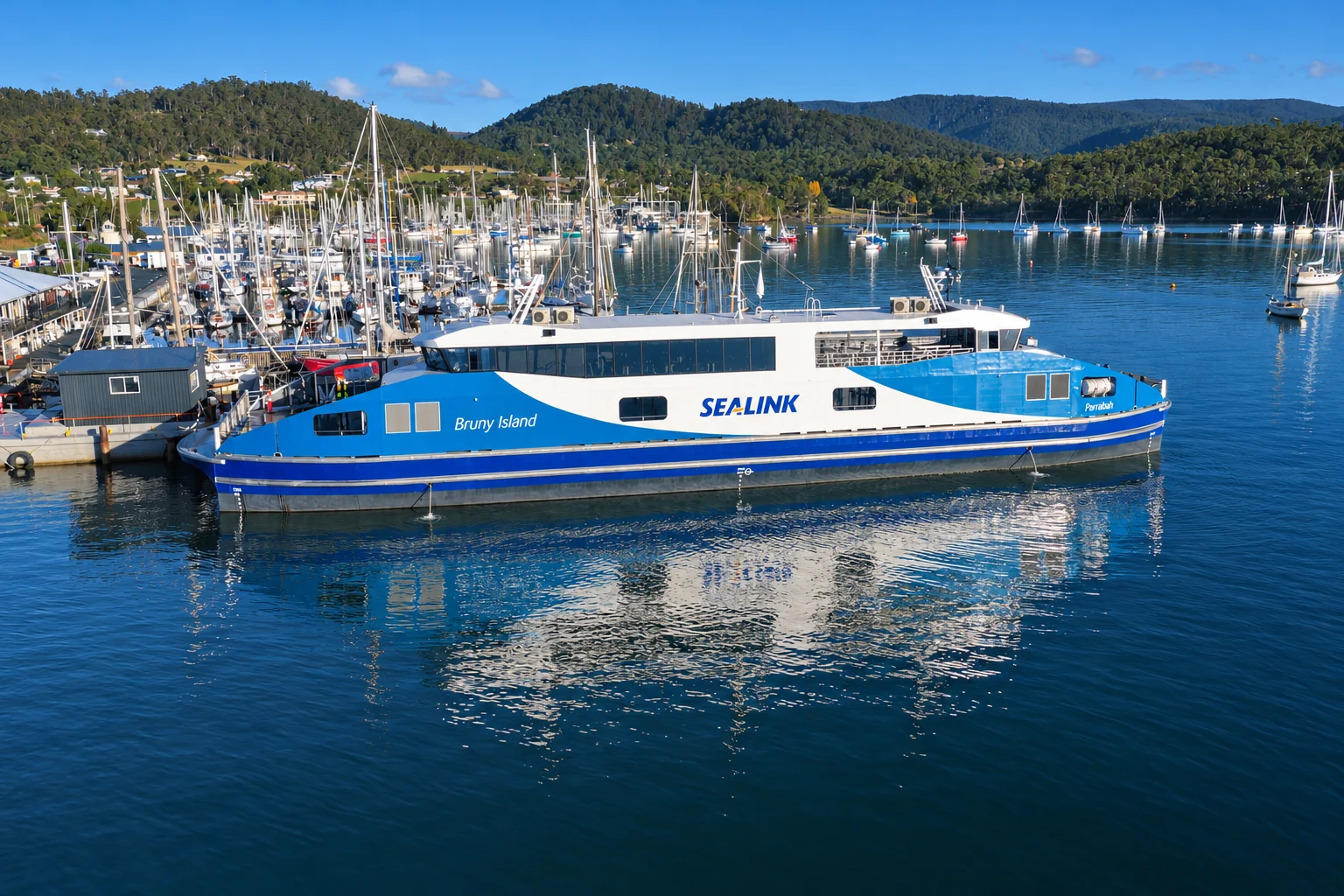
| Island | Crossing | Vehicle on board? |
|---|---|---|
| K’gari, Queensland | Vehicle ferry from River Heads (Hervey Bay) to Kingfisher Bay, or a barge from Inskip Point near Rainbow Beach | Yes, with a permit and a 4WD |
| Kangaroo Island, South Australia | SeaLink car ferry, Cape Jervis to Penneshaw, 45 minutes | Yes, with size limits |
| Rottnest Island, Western Australia | Three operators from Fremantle, Perth city and Hillarys | No |
| Tasmania | Spirit of Tasmania, Geelong to Devonport | Yes, including caravans and motorhomes |
| Magnetic Island, Queensland | SeaLink passenger ferry or Magnetic Island Ferries vehicle barge from Townsville | Yes, on the barge only, with a booking |
Crossing times vary widely. Rottnest ferries take about 25 minutes from Fremantle, 45 minutes from Hillarys and up to 90 minutes from Barrack Street Jetty in Perth. SeaLink’s Magnetic Island passenger ferry takes about 20 minutes, while the vehicle barge takes 40 minutes. Kangaroo Island’s Backstairs Passage crossing takes 45 minutes, and the River Heads to Kingfisher Bay run on K’gari takes about 50 minutes according to Island Connections. Bass Strait is in a different category, taking approximately 9 to 11 hours depending on the sailing.
A passenger-only ferry suits short stays where you can reach your accommodation on foot, by bus or by hire car. A vehicle ferry costs more and needs a vehicle booking. It makes sense where attractions are spread out or the roads are rough. Kangaroo Island and K’gari fall into that second group. The sections below take each island in turn.
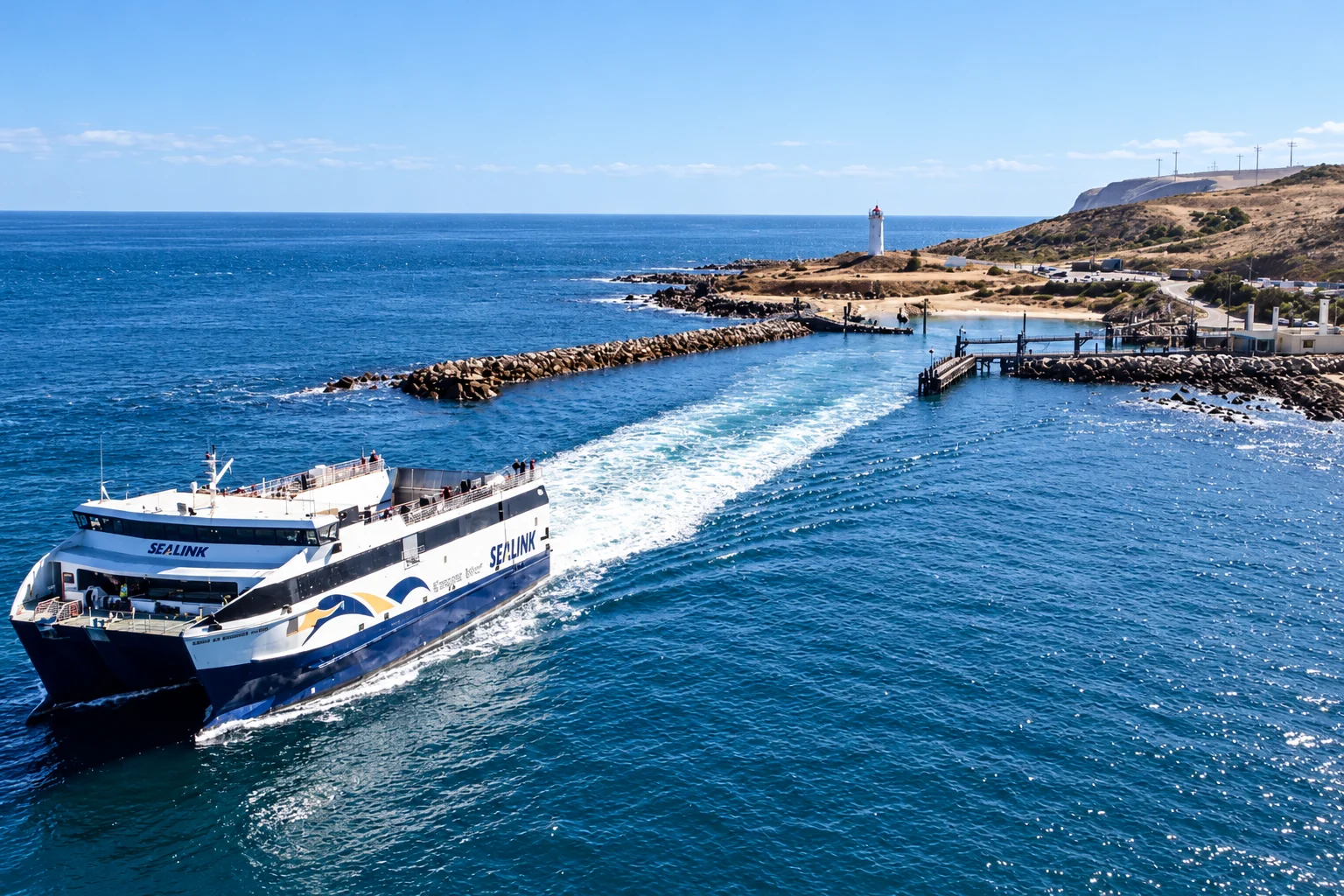
K’gari: permit first, then ferry, then sand
K’gari is the world’s largest sand island. Almost all driving there happens on sand tracks and beaches. Queensland Parks and Wildlife Service (QPWS) requires a vehicle access permit before you drive on the island. You can buy one online, over the counter or by phone if online booking isn’t possible. QPWS’s booking guide explains that each vehicle needs its own booking, and that the start date on the permit is the first day you drive in the park. The expiry date appears in the booking summary.
Fees are charged per vehicle and depend on the length of stay. QPWS lists K’gari-only permits at $59.80 for one month or less, but check the current price on the QPWS booking page. Camping is charged separately, and bookings generally open up to 12 months ahead, depending on availability. Carry proof of your permit, including a digital copy. authorised officers can ask to see it, and vehicles without a valid permit face fines under Queensland law.
If you hire a 4WD, ask what the hire company does about permits. Aussie Trax, which hires vehicles through Kingfisher Bay, charges an $8.50 administration fee for each National Park Permit it issues, and the permit is normally not included in hire rates. Hire vehicles are available at Rainbow Beach and Hervey Bay.
There are two main routes across. From River Heads near Hervey Bay, Island Connections K’gari runs vehicle and walk-on passenger ferries to Kingfisher Bay, with fares from $135.30 per 4WD vehicle. Kingfisher Bay’s guidance is to arrive at the mainland reception 40 minutes before departure, and a resort shuttle leaves 10 minutes before the ferry. Passengers without a vehicle can book transfers by phone on 1800 372 737. You only need a vehicle booking if you are bringing your own vehicle.
The second route is the Inskip Point barge near Rainbow Beach, a 10-minute crossing that lands vehicles on the island’s southern end. Services run in daylight hours, so a late arrival on the mainland means waiting until morning.
Once on the island, a high-clearance 4WD is needed to reach the Great Walk access points, and QPWS warns that soft sand, tides and estuaries make driving difficult. Kingfisher Bay says the only sealed roads are inside the resort grounds. The island has more than 1,500 km of sand tracks, plus 75 Mile Beach, a gazetted highway along the eastern side. Give way to convoys and coaches on inland tracks, using the pull-off bays. One older guide recommends checking QPWS’s conditions report before departure, and it is worth confirming the current reporting arrangements on the QPWS site.
Kangaroo Island: book by vehicle length and height
SeaLink runs the Cape Jervis to Penneshaw car ferry daily except Christmas Day. Cape Jervis is on the tip of the Fleurieu Peninsula, south of Adelaide, and Penneshaw is the island’s eastern port. The alternative is a short flight from Adelaide, but the ferry is the common choice for visitors who want a vehicle. SeaLink’s FAQ strongly recommends a car because attractions such as Flinders Chase National Park, Seal Bay Conservation Park and Vivonne Bay are spread out and public transport is very limited.
SeaLink’s fare page lists one-way passenger fares of $49 for an adult, $39 for concession, pension, seniors and veteran cards, $25.50 for a child aged 3 to 14, and free travel for infants. Vehicle fares start at $99 for a vehicle, campervan or motorhome up to 5 m, $112 for 5.1 m to 5.9 m and $144 for over 6 m. A trailer, boat, caravan or camper trailer follows the same bands, and a motorbike is $38. A bicycle is $13, and a single kayak is $17.50. These figures were published as valid to 31 March 2026, and SeaLink notes that fares vary with demand and time of travel. Every traveller needs a passenger fare, including the driver, plus a vehicle fare if you bring one.
The booking rules depend on dimensions. SeaLink’s page states that passengers and vehicles up to 5.9 m can be booked online, while vehicles over 5.9 m in length or over 2.3 m in height cannot. Those bookings go through SeaLink on 13 13 01, as do car-and-trailer combinations over 9.9 m combined length. A car towing a trailer must not exceed 2 m combined width. Measure with everything attached, including bull-bars, bike racks and roof racks, because incorrect dimensions cause delays and extra charges. Freight, trade or commercial vehicles over 5.5 m long or 2.9 m wide must call the TIPC Department on (08) 8551 7234. If you are bringing an electric or hybrid vehicle, tell SeaLink when you book.
Summer fills the ferry. One booking guide advises booking three to four months ahead for the summer period. If your preferred sailing is full, SeaLink’s suggestion is to hire a car in Penneshaw or Kingscote instead of taking your own.
Getting to the terminal without a car is possible. Adelaide to Cape Jervis is served by Link SA bus route 1259, booked through the Link SA website. On the island, a shuttle from Penneshaw to Kingscote is operated by Peninsula Coaches under a Department for Infrastructure and Transport contract, on 08 8821 2755. Before you board, empty your bags of prohibited items into the Biosecurity Bins at the SeaLink terminal. SeaLink describes most visitors as staying two to three days, and four to five days as ideal. On an island 155 km long, that is worth remembering when you plan driving distances.
Rottnest Island: no cars, strict luggage rules
The Rottnest Island Authority (RIA) states that you cannot bring a car to Rottnest. The island is predominantly car-free, and visitors get around by bus, bicycle or on foot. So the ferry choice depends on the departure point and the luggage rules.
Three operators run services: Rottnest Express, SeaLink and Rottnest Fast Ferries. Departures leave from Northport at Rous Head in North Fremantle, B Shed at Victoria Quay in Fremantle, Barrack Street Jetty in Perth city and Hillarys Boat Harbour. All arrive at the Main Jetty in Thomson Bay. The RIA lists paid parking at Victoria Quay, secure undercover parking on Henderson Street, secure parking at Rous Head, and free short-term and overnight parking at Hillarys. Victoria Quay, Hillarys and Barrack Street Jetty are all reachable by public transport. SeaLink warns of limited parking and nearby road closures at the Fremantle terminal, and the RIA notes that ticket booths at B Shed have temporarily moved to the east side of E Shed.
Every visitor pays an admission fee, which ferry operators collect for the RIA and include in the fare at booking. SeaLink’s page shows return journeys from $49, and prices vary by season and availability. Booking is recommended in peak summer, though tickets can be bought on the day subject to availability. The RIA asks passengers to arrive at least 30 minutes before departure. E-ticket or QR-code holders with no luggage or freight can go straight to the boarding gate.
Luggage limits differ by operator, and the RIA tells passengers to contact their operator about the number of items allowed. SeaLink allows free carry-on that fits in your seat without taking another, up to 600 × 400 × 300 mm and 10 kg. Checked luggage up to 800 × 500 × 400 mm and 22 kg costs $3 per item. Labels are required, and you can arrange them in advance or collect them at the terminal on the day.
Bikes follow SeaLink’s published limits: maximum height 1.3 m, length 1.8 m, width 45 cm, weight 22 kg and tyres no wider than 6 cm. Bringing your own pedal bike costs $20 and an e-bike costs $25, with the battery removed and carried in hand luggage. Tandems, trikes and custom bikes are not carried, and bikes cannot be delivered to accommodation, so collect yours from the jetty on arrival. E-scooters cost $20 each, must weigh no more than 22 kg, must fold to fit the open crate and must not exceed 25 km/h. Kayaks and paddleboards are $25 each, but only two kayaks travel per ferry service, on a first-in, first-served pre-booked basis. Wheelchairs and mobility scooters travel free.
SeaLink also delivers luggage to accommodation. Book before you travel, and collect labels from the SeaLink ticket counter at least 30 minutes before boarding, with your accommodation location and unit number written on them. Delivery takes 2 to 3 hours after arrival, and luggage for departure must be left out by 8:00 am on the day you leave. No delivery is available on SeaLink services leaving B Shed at 6:00 pm or later, and no pickup for services leaving Rottnest at 7:00 pm or later. Keep car keys, phones, laptops and medication in your hand luggage.
Tasmania: the overnight Bass Strait crossing
Spirit of Tasmania, operated by TT-Line, sails between Geelong in Victoria and Devonport in Tasmania. The Geelong terminal is at 136 Corio Quay Road, North Geelong, about 75 km south-west of Melbourne. The Devonport terminal is on the Esplanade at East Devonport. Cars, motorbikes, bicycles, caravans and motorhomes can all cross, so this is the one crossing on this list where bringing your own vehicle is the norm rather than a special arrangement.
Check-in timing is the most common trap. The official wording is that check-in opens well before departure and closes strictly 45 minutes before the scheduled departure. Have your e-ticket and photo ID ready. Travellers who miss the cut-off may be refused boarding and forfeit their fare, so plan the drive to Geelong with margin, particularly if you are coming from Melbourne in peak traffic. The same guide advises allowing at least two hours if you have accessibility needs.
The sailing schedule changes by date and season, and the official sailing schedule page is the place to confirm the departure for your travel date. Because the crossing takes 9 to 11 hours, many sailings run overnight. Plan onward travel on the Tasmanian side from the arrival time.
The advertised fare is only a starting point. Spirit of Tasmania’s adult fares page lists adult fares from $49 per person one way on selected sailings, based on the time of year and demand. Vehicle fares, cabin fares, meals and beverages are extra. Booking fees apply to non-internet bookings, and payment fees may apply. Vehicle fares vary by sailing date, direction and availability, and the type and size of your vehicle affect the price, so price a vehicle crossing for your exact dates before assuming a budget.
Accommodation on board ranges from private cabins with en-suites to budget recliners in a private lounge. Recliners are included on night sailings, and pet-friendly options are available. For a first trip, the booking order matters: choose the sailing, then confirm the vehicle dimensions you will declare, then add a cabin or recliner. Vehicle size is part of the fare, so measure a caravan or roof-racked car before booking rather than estimating at the terminal.
Magnetic Island: passenger ferry or vehicle barge
Magnetic Island sits just off Townsville in north Queensland, and two operators serve it. SeaLink runs a passenger-only service with fast ferries taking about 20 minutes and up to 17 services per day, booked online or in the Go Blue app. It leaves from Breakwater Terminal on Sir Leslie Thiess Drive and arrives at Nelly Bay. Magnetic Island Ferries calls itself the only vehicle ferry connecting Townsville to Magnetic Island, with regular daily departures to Nelly Bay. The crossing takes 40 minutes from 42 Ross Street, South Townsville.
Vehicle bookings are essential on the barge, according to the operator, and one timetable guide says to book online and arrive 20 minutes before departure. Confirm the check-in time with Magnetic Island Ferries when you book. Walk-on passenger fares start from $36.00 per adult return, and secure parking in Townsville starts from $8.00 per day. A tourism listing gives vehicle fares across a range of $21 to $320, depending on the vehicle, so treat that as indicative and price your own vehicle on the booking page.
The choice depends on where you are staying. Local guidance suggests the passenger ferry for day trips and for stays near the bus route, and the barge when you need your own car, carry a lot of gear or stay somewhere the bus doesn’t reach easily. A public bus runs daily between Horseshoe Bay and Picnic Bay, with fares paid by card on board. The bus meets every SeaLink passenger ferry but not the vehicle barge, so a barge arrival without a car leaves you waiting for the next scheduled service.
Driving on the island has limits. SeaLink says Arthur, Florence and Radical Bays have restricted vehicle access, some roads to secluded beaches are unpaved and difficult for standard vehicles, and some secluded bays are reachable only by 4WD. The island is two-thirds national park and sits within the Great Barrier Reef Marine Park. Hire cars, including open-top jeeps and sedans, are available on the island. SeaLink also offers ferry and car packages, which means you skip the barge booking.
Baggage rules are operator-specific. SeaLink carries bikes at no extra charge, including in travel boxes or bags, but does not permit bike trailers on the passenger ferry. E-bikes and e-scooters are subject to its luggage and dangerous goods policies. A local tourism guide adds that passenger luggage must be what you can carry to the vessel in one trip, with a 20 kg maximum, and that electric bikes and scooters up to 30 kg are allowed but cannot be charged on board or at SeaLink terminals. Dogs on SeaLink must be leashed and muzzled in terminals and on board, or travel in a pet carrier, and leashes are required across the island because most of it is national park.
From Townsville Airport, the Breakwater terminal is about 8 km away. SeaLink says taxis meet arrivals, at roughly $20 to the terminal, and the Townsville City Shuttle runs from the airport to major hotels and the terminal, with bookings essential.
What to confirm with operators before you leave
Most problems on island trips come from details that look minor at booking: a vehicle measured without its roof rack, a luggage label not collected in time, or a permit bought after arriving. A few checks cover most of them.
For vehicle islands, confirm the dimensions you will declare and whether your vehicle falls inside the online booking range. On Kangaroo Island that means anything over 5.9 m long or 2.3 m high needs a phone call. On K’gari it means buying the QPWS permit and confirming that your 4WD or hire vehicle is suitable for sand. On Magnetic Island it means booking the barge and noting the departure address in South Townsville rather than the Breakwater terminal used by the passenger ferry.
For car-free Rottnest, ask your chosen operator for its luggage and bike limits, since they are set by the operator and the figures above come from SeaLink. Confirm luggage delivery cut-offs if you are taking an evening ferry, and book delivery before you travel.
For Tasmania, check the check-in window and the sailing time for your date, and carry photo ID. For every crossing, check the fare validity date. Kangaroo Island’s published fare set ran only to 31 March 2026, and other operators vary their fares with season and demand, so the price you see in an old listing may not be the price you pay.
Finally, check what you are not allowed to carry. Kangaroo Island has Biosecurity Bins at the terminal, e-bike batteries are restricted on Rottnest and Magnetic Island ferries, and dogs have separate rules at each operator. Searching the operator’s own dangerous goods and pet pages before packing takes a few minutes and avoids repacking at the terminal.
Key Takeaways
- Settle the vehicle question first: Rottnest takes no private cars, K’gari needs a QPWS permit and a 4WD, and Kangaroo Island, Tasmania and Magnetic Island accept vehicles with a booking.
- Measure your vehicle with every attachment: On Kangaroo Island, online booking covers vehicles up to 5.9 m, and anything longer than that or taller than 2.3 m needs a call to SeaLink on 13 13 01.
- Buy the K’gari permit before you drive: Each vehicle needs its own QPWS permit, and officers can ask to see it, including a digital copy.
- Arrive early for Spirit of Tasmania: Check-in opens well before departure and closes strictly 45 minutes before, and you need photo ID and your e-ticket.
- Check the operator’s luggage and bike rules: On Rottnest, SeaLink’s limits are 10 kg carry-on and 22 kg checked bags, but limits vary by operator.
- Re-check fares on the day you book: Published fares carry validity dates, and Kangaroo Island’s published set ran only to 31 March 2026.