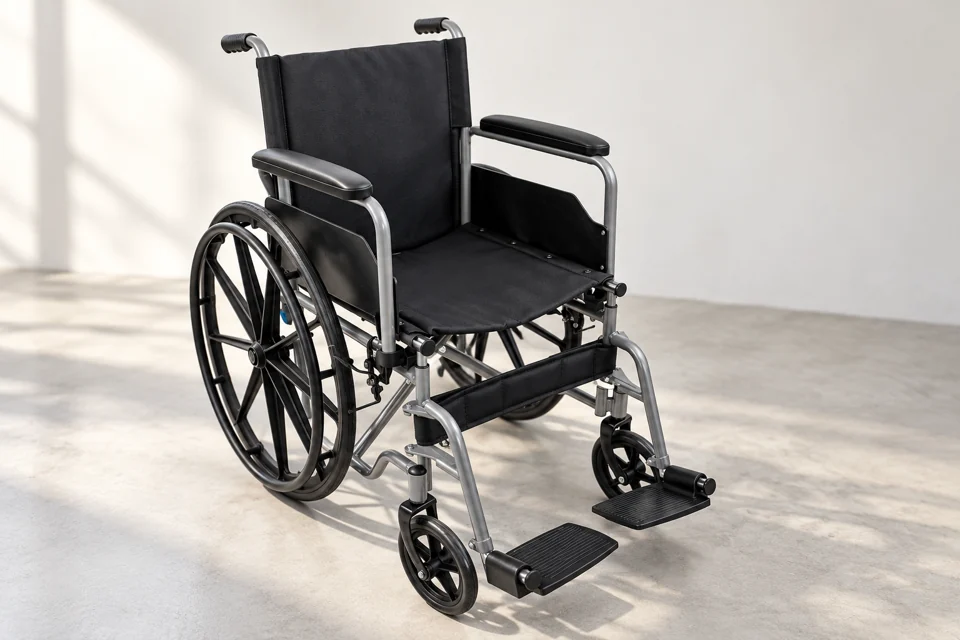
Australian cities run trains, trams, buses, ferries and, in some places, metro and light rail, and each network is operated by its state government or a contractor rather than by one national body. A traveller using a wheelchair, mobility scooter or other mobility aid therefore meets a different set of stations, vehicles and booking arrangements in Sydney, Melbourne, Brisbane, Adelaide and Perth. Step-free access means reaching the platform and boarding the vehicle without stairs or a high step, using a lift, a ramp or a level surface.
The national baseline is the Disability Standards for Accessible Public Transport 2002, made under the Disability Discrimination Act 1992. They set minimum requirements for buses, coaches, ferries, taxis, trains, trams and light rail, and for the stations, stops and wharves that serve them. The rules phase in over time, so a particular station or tram may still fall short. Most trips on the main city networks go well if you prepare. Confirm a step-free route from start to finish and know where to wait for the ramp. Check your device against the network’s size limits and locate an accessible toilet. On the day, look up lift outages.
What the national Standards guarantee
The Standards give travellers a set of rights that apply everywhere in Australia, even where local facilities are older. Operators must provide direct assistance, meaning hands-on help from staff, where a physical feature does not fully comply or where it is needed to give equivalent access on request. Equivalent access can involve different equipment or facilities, but it must keep the same amenity, comfort, dignity, price and safety, and it cannot be a segregated or parallel service.
Several specific rules help on the day of travel:
- Fare payment systems must not demand more effort from a passenger with a disability than from anyone else, and operators must offer an alternative way to pay.
- Operators must designate at least two priority seats on unbooked services. If a passenger with a disability needs a priority seat or allocated space, other passengers must be asked to vacate it.
- Mobility, technical and medical aids travel on aircraft, coaches, ferries and trains in addition to the normal baggage allowance.
- On booked services such as coaches, ferries and trains with reservations, an operator may ask for advance notice of accessible travel, but the notice period cannot exceed what other passengers must give. A carer normally sits in an adjoining seat, and an assistance animal must not block an access path.
Access paths in stations and other premises must be at least 1200 mm wide and unobstructed. Inside vehicles, access paths must be at least 850 mm wide, and stairs cannot be the only way in. Where the walking distance between facilities exceeds 60 metres, resting points are required along the path. Boarding ramps must be at least 800 mm wide and rated to carry at least 300 kg.
The timetable for compliance explains why access varies. Full compliance was due by 31 December 2022 for all services except trains and trams, and trains and trams have until 31 December 2032. A 2025 exposure draft of amendments proposes new provisions on a nominated assistance point where independent boarding is not provided, removable gangways, and passenger loading zones and taxi ranks. The exposure draft has been finalised: the department says the Transport Standards and guidelines were amended on 13 October 2026 by the Disability Standards for Accessible Public Transport Amendment 2026, and a compilation is due on the Federal Register of Legislation. Commencement follows a disallowance period, so check whether the amendments are in force.
Step-free routes, lifts and ramps by city
A step-free journey has to work at both ends: the origin station, the vehicle, any interchange, and the destination. Each network handles this differently, so learn the general pattern for your city before you travel.
Sydney
Sydney Metro stations all have lifts, and platform-to-train boarding ramps mean there is no step into the carriage. You can approach station staff or use a video help point (Transport for NSW). On light rail, ramps or lifts connect the street to each platform, and all stops on the L2 Randwick, L3 Kingsford and L4 Westmead and Carlingford lines are accessible. One exception is worth knowing: the Lilyfield stop has a single lift, and if that lift is out of service the stop is not wheelchair accessible.

Sydney Ferries vessels are accessible, but several older wharves have steps, and accessible wharves are marked on the ferry network map. Check the map before choosing a ferry route, especially for a scenic ride that ends at a wharf you have not looked up.
Melbourne
Road Safety Victoria’s fact sheet on public transport for mobility device users lists every metropolitan train station in Victoria as reached by ramp or lift, except Heyington Station, which has stairs. Ramp steepness and length vary from station to station, and wet weather affects access, so check the station and the forecast. All metropolitan trains are wheelchair accessible and have allocated spaces for mobility aids.
Trams need more care. Only low-floor trams have allocated spaces. High-floor trams have steps and do not suit manual or powered wheelchairs or mobility scooters. The tramTRACKER app shows which tram stops have ramp access, as described on the Transport Victoria accessibility page.
Brisbane and Queensland
In Queensland, most vehicles are accessible, and TransLink reports allocated wheelchair and scooter spaces on new buses and on all trains, trams and ferries. Train station access varies across the network. Many stations have lifts and ramps, hearing loops and tactile indicators, which are raised patterns on the ground that guide people with low vision. The Queensland Rail StationFinder lists the facilities at each station. Busway stations are fully accessible, with lifts, ramps and pathways.
Ferry terminals deserve a second look. Brisbane City Council says many ferry terminals are fully accessible, and notes that gradients on access ramps change with the tide, so take care at low tide.
Adelaide and Perth
Adelaide Metro marks a waiting area on train and tram platforms with the blue and white international Access symbol. Perth’s Transperth network requires wheelchairs, bicycles, prams and other wheeled vehicles to use lifts, and staff can help you find them.
Where to wait and how to ask for the ramp
Every network has a marked boarding point. Standing there tells the driver or station staff that you need a ramp. The symbol differs by city.
On Sydney light rail, wait in the wheelchair boarding zone marked on the platform tiles. The driver or a Customer Service Officer is notified as the tram approaches. Once on board, park in the designated wheelchair space, keep the aid out of the aisle and apply the brakes. If other mobility aid users occupy the designated areas, wait for the next service. Before your stop, press the blue button with the accessible symbol so the driver knows you need to alight with a ramp. In an urgent situation, press and hold the help button; the driver responds when it is safe to do so.
On Melbourne trains, look for the wheelchair symbol on the platform. At larger stations with trains in both directions, go to the end of the platform in your direction of travel and wait near the white platform marker, or ask staff. The driver provides a ramp, and some stations have a raised platform section near the front of the train that may allow boarding without one. The fact sheet suggests telling the driver your destination, or handing over a note that includes any interchange station, so staff can help you off. Trams are different: drivers may not be able to leave the cabin to assist, so board at the doors marked with a wheelchair symbol near the allocated space, and expect a small gap between platform and tram. On Victorian buses, board and alight through the front door, where the driver can lower the bus and set up a ramp. Press the wheelchair call button to request your stop.
In Queensland, wait at the assisted boarding point, shown as a white wheelchair on a blue background in the middle of the platform, where staff deploy a ramp. Allocated spaces on trains are in the middle carriage. On Brisbane Metro, the mobility bays are in the first compartment, and you press the blue ramp request button on the left side of the first compartment door. An audio announcement tells you to move back while the ramp deploys.
On Adelaide Metro trains and trams, the driver or a uniformed employee sets up the ramp when the first door opens in front of the Access symbol area. On buses, hail the driver, move onto the ramp with your wheels straight and do not turn while on it. Inside, press the stop or ramp request buttons in the allocated space to exit. The Adelaide Metro mobility scooter page says staff can help with ramps and guidance but cannot physically move a passenger or a device.
All of this rests on a national rule. Where a conveyance has a boarding device, the Standards require it to be available at all designated stops and deployed if a passenger asks. The rule also says a passenger must be able to tell the operator they need the device, and that any request button must meet Australian Standard AS 1428.2 dimensions.
Mobility aid size and weight limits
A boarding ramp or lift can be perfectly accessible and still refuse a device that is too long or too heavy. Limits are broadly similar around the country: most networks give 300 kg as the maximum laden weight, which counts the device, the rider, luggage and accessories. Length, width and height vary.
| Network | Length | Width | Height or base | Weight |
|---|---|---|---|---|
| Victoria: trains, trams, V/Line trains and coaches | 1300 mm | 800 mm | Check flags and canopies | 300 kg laden |
| Victoria: buses | 1300 mm | 750 mm | Base no more than 300 mm from ground | 300 kg |
| Perth (Transperth) | Fits a 1300 mm × 800 mm space | 750 mm maximum | 1600 mm maximum | Under 300 kg including user and assistant |
| Adelaide Metro (bus, train, tram) | 1250 mm | 740 mm | 1500 mm maximum | 300 kg including rider and baggage |
Victoria’s limits come from the state fact sheet, Perth’s from the Transperth mobility aids page and Adelaide’s from the Adelaide Metro mobility scooter page. Wheelchair-accessible taxis in Victoria have a height limit of 1500 mm.
Other requirements go beyond dimensions. Victorian guidance expects a device to turn 180 degrees within 2070 mm × 1540 mm, climb a 1:14 ramp unassisted, manage a ramp under 1520 mm long at 1:8, and cross grating gaps up to 13 mm wide and 150 mm long. Transperth requires an effective braking system that completely stops the device and keeps it upright in use and when left unattended. It also lists crossing limits of 60 mm for horizontal gaps and 20 mm for vertical bumps. Adelaide Metro requires add-ons such as sunroofs, luggage carriers and baskets to stay within the same dimensions. Batteries must be secured, and flag poles must be removed or retracted.
If you are hiring a scooter or bringing your own from overseas, measure it with everything attached before leaving home. Victorian guidance makes the user responsible for learning to use the device safely, including on ramps and in shared spaces. Melbourne’s Try Before You Ride sessions let you practise on stationary vehicles with customer support staff present, which is a sensible use of an hour if you will rely on trams or buses during your trip.
Designated spaces are few, and another passenger may already be in them. The Victorian fact sheet notes that off-peak travel may be easier, and on light rail in Sydney you may need to wait for the next service.
Finding an accessible toilet
The national Standards require that where toilets are provided in a station or other transport premises, at least one must be an accessible unisex toilet without an airlock, and it must be in the same location as the other toilets. The Standards do not require a toilet at every station or stop, so an accessible toilet cannot be assumed at a suburban platform or bus stop.
Vehicles have their own rules. On ferries and accessible rail cars, where toilets are provided, at least one unisex accessible toilet must be available. On coaches, if the onboard toilet is not accessible, the operator must offer stops at reasonable frequency at premises that have accessible toilets. On aircraft, direct assistance to the toilet door must be provided. The accessible toilet itself must meet AS 1428.1, with specified clearances around the pan, a seat height of 460 to 480 mm, and hand washing inside or just outside the cubicle.
Sydney Metro stations have accessible toilets (Transport for NSW). In Victoria, the Journey Planner shows accessible toilets, hearing loops, lifts and tactile indicators for a selected station or stop. Travellers Aid lists accessible toilets with ceiling hoists and adult change tables at Southern Cross, Parkville and Flinders Street stations, on the Transport Victoria accessibility resources page. That detail matters if you need a hoist or a change table, since a standard accessible cubicle does not provide either.
The National Public Toilet Map covers toilets beyond the transport network, such as parks, shopping centres and rest areas along a route. Its About page says it is funded by the Australian Government Department of Health, Disability and Ageing under the National Continence Program, and lists more than 23,000 public and private facilities, with the location, accessibility, opening hours and features of each. The dataset page states that most of the data is supplied voluntarily and that the Commonwealth gives no warranty it is accurate or complete. If you will depend on a particular toilet, confirm its opening hours and any key access with the venue.
Planning the trip and handling disruptions
Each state publishes a trip planner, and the accessibility features differ. In New South Wales, the Trip Planner has an accessible-services filter. Select the Filter button or the wheelchair icon, tick "Accessible services only" and apply. Results then show only wheelchair-accessible vehicles and stops, plus interchanges with no known lift or escalator outages, as described on the planning an accessible trip page. The filter can reduce the number of options, and it only excludes outages that have been reported. A new Trip Planner announced on the Transport for NSW news page adds quick access to the accessible filters and preferences for fewer transfers and less walking.
In Victoria, select a route in the Journey Planner, find the station or stop, and click the "i" symbol to see its accessible features. In Adelaide, the Adelaide Metro planner covers bus, train and tram and offers real-time arrivals and a service disruption list. It hands the route to Google Maps and has no accessibility filter of its own. For Queensland trains, use the StationFinder to check each station. For vehicles, TransLink advises contacting its delivery partner before the journey to confirm a space is available, using its contact page.
Check for disruptions on the morning of travel. Lifts break down, and Transport for NSW tells passengers to check travel alerts before they set out. Construction also changes services. Brisbane City Council’s project page says the Bulimba ferry terminal is closed from 9 November until mid-December 2026 for works on the Bulimba peninsula, and the council says stops across the city are being upgraded for accessibility. Upgrades help over time, but a work site on the day can block a route that normally works.
When you contact an operator before travelling, a short list of questions covers most of what matters:
- Is there a wheelchair or scooter space on my service, and is the lift or ramp at my stations working?
- Does my device fit within the length, width, height and weight limits, with luggage and accessories included?
- Where is the boarding point, and how do I request the ramp?
- Does my destination station have an accessible toilet, and what are its opening hours?
- As a visitor, do I qualify for any concession, companion benefit or subsidy?
On the last point, the answers vary by state. NSW offers a Companion Card that lets a carer travel free, listed on the public transport essentials page. Victorian guidance directs mobility device users to check PTV concession and free-travel pass eligibility.
Assistance animals have their own rules. In Queensland, certified guide, hearing and assistance dogs are allowed on buses, metros, CityCats and ferries, and the handler needs an identity card, and the dog must be certified and have passed a Public Access Test, according to Brisbane City Council. In NSW, an Assistance Animal Permit covers support animals. Confirm the rules for a dog that is certified overseas before you fly.
Taxis and subsidy schemes
Where a train or tram stop is not workable, a wheelchair-accessible taxi is the usual fallback. Each state subsidises taxi travel for eligible people with disabilities, but the schemes are designed for residents. Visitors should budget for standard fares, including wheelchair-accessible taxis where available.
The New South Wales Taxi Transport Subsidy Scheme pays half the fare up to $60 per trip and includes wheelchair-accessible taxis. To be eligible, you must be a permanent resident of Australia who usually lives in NSW and be over school age. You must also have a severe, permanent disability in a listed category. Queensland’s Taxi Subsidy Scheme pays half the fare up to $30 per trip and requires permanent residency of Queensland. It also pays a Lift Payment of $25, including GST, to the driver for each eligible wheelchair-accessible taxi trip. This payment is not part of the fare. South Australia’s subsidy scheme pays 75% up to $30 per trip for people permanently dependent on a wheelchair and 50% up to $20 per trip for others.
For a short visit, an operator’s boarding assistance and a well-planned step-free rail or tram route cost far less than taxis. Taxis make the most sense for the first or last leg to a venue that has no accessible stop nearby.
Key Takeaways
- Check the whole journey: Confirm step-free access at your origin, interchange and destination stations, because lifts, ramps and older wharves vary by station and by day.
- Wait at the marked boarding point: Look for the wheelchair symbol, the blue and white Access symbol or the blue ramp request button, and tell the driver or staff your destination so they can help you off.
- Measure your device before you fly: Most networks cap laden weight at 300 kg, but length and width limits differ, for example 1250 mm × 740 mm in Adelaide and 1300 mm × 800 mm on Victorian trains and trams.
- Verify accessible toilets for each stop: The Standards require one only where toilets are provided, so use the operator’s journey planner or the National Public Toilet Map and confirm opening hours.
- Plan for lift outages and works: Use the operator’s trip planner and check travel alerts on the day. Budget for full taxi fares, since subsidy schemes are for state residents.