
Ningaloo Reef is a fringing coral reef off the Western Australian coast. Visitors base themselves in one of two towns: Coral Bay in the south or Exmouth near the northern tip of the North West Cape. Exmouth is the better base for whale shark swims, Cape Range National Park and accommodation choice. Coral Bay is the better base for snorkelling straight off the beach and for manta rays, but it is small and its beds fill early.
Many visitors split their time between the two. Your choice depends on when you travel, which animals you most want to see and how far ahead you can book.
Coral Bay and Exmouth compared
| Factor | Coral Bay | Exmouth |
|---|---|---|
| Whale shark swims | A Coral Bay operator states a season of 1 March to 31 July | Operators run tours from March to late August or October; most swim tours depart here |
| Manta rays | Year-round, most reliably seen near Coral Bay | Present year-round, less of a focus |
| Shore snorkelling | From the town beach | Turquoise Bay and other sites are 40 to 50+ minutes’ drive away |
| Cape Range National Park | Reached only by a 4WD crossing of Yardie Creek | Main access point, with a sealed road to Yardie Creek |
| Accommodation | Small: one motel-style resort, two caravan parks, some holiday houses | Campsites, caravan parks, hostels, motels, resorts and luxury eco-camping |
Whale sharks
When the season runs
Tourism WA, citing the Department of Biodiversity, Conservation and Attractions (DBCA), puts the peak at March to July. A Coral Bay dive operator states a season of 1 March to 31 July, with April or May usually best. Three Islands Whale Shark Dive in Exmouth runs tours from early March to late August, with the peak from March to the end of July. A regional guide rates April to June as the best combination.
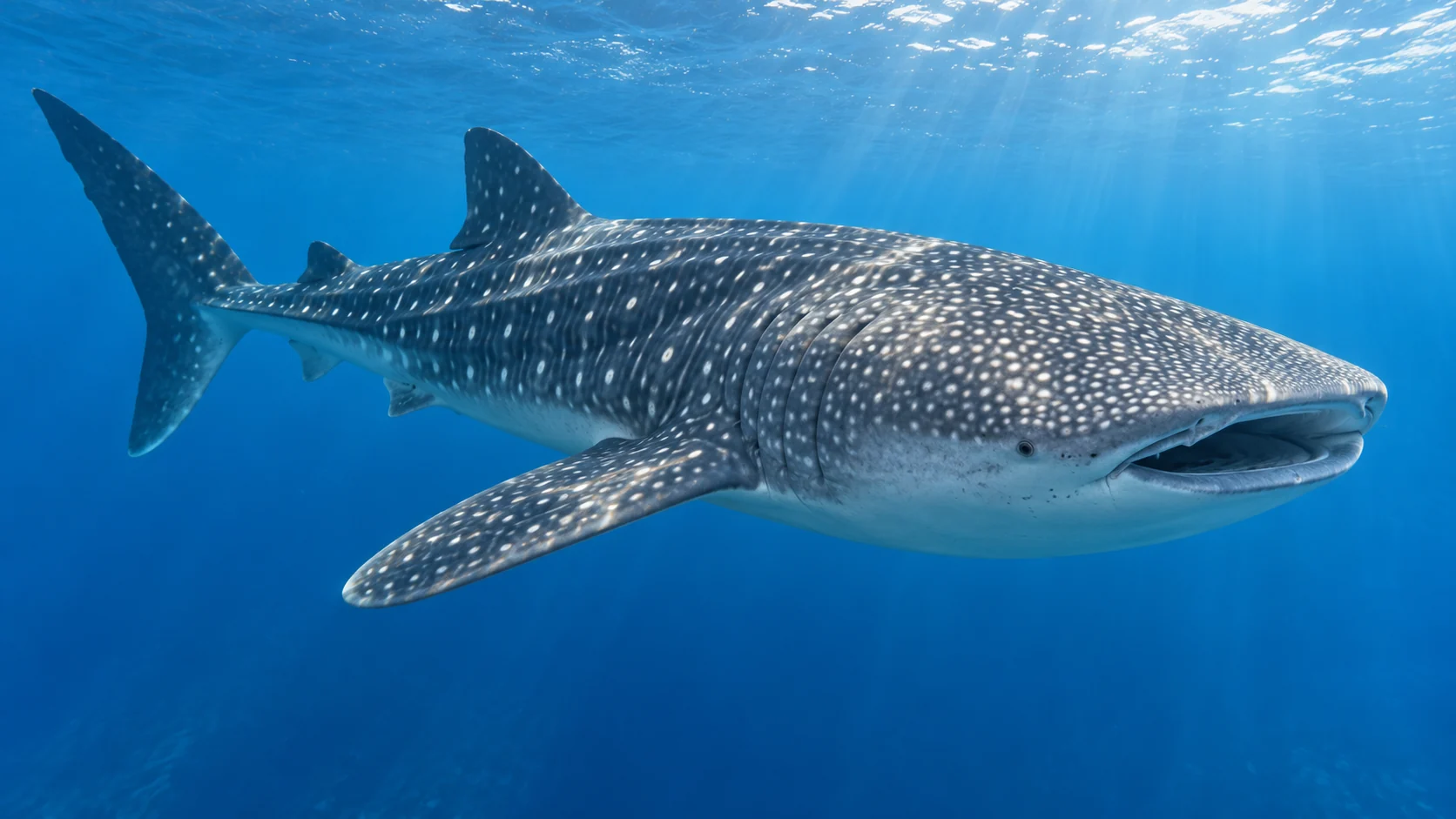
Plan around April to June for the most consistent results. Tours in August and September run, but sightings in those months are not guaranteed, and the Exmouth operators’ later end dates apply only to operators who choose to keep running.
The season opens when it does because whale sharks gather to feed on plankton at the start of the annual coral spawn, which falls 7 to 10 days after the full moon in March or April. Three Islands says the mass spawn typically occurs in March, April and May, tied to seawater temperature, lunar phases and day-night light cycles.
Why Exmouth has the advantage
Most whale shark swim tours depart from Exmouth, and its operators run later into the year than Coral Bay’s. That gives Exmouth more departures, more operators to compare and more flexibility if a day is lost to weather. A Coral Bay operator does offer swims inside its stated March to July window, so Coral Bay works if you are visiting then and are staying there for the reef anyway.
Rules for swimmers and boats
Whale shark tours are commercial activities that need a licence. State regulations from 1993 require licences for all commercial activity in marine reserves, DBCA administers them, and tours have run in Ningaloo Marine Park since 1989. Whale sharks are protected under State, Commonwealth and international law, and disturbing or harming them is illegal.
The code of conduct limits what you do in the water:
- Stay at least 3 m from the head or body and 4 m from the tail.
- No more than 10 swimmers may be in the water with a shark at one time; Tourism WA gives the maximum as 10 swimming guests plus two crew.
- Do not touch or ride the animal, restrict its movement, use flash photography or use motorised propulsion aids.
- Swim beside or behind the shark, not in front of it.
Boats work under their own limits. Each whale shark has an exclusive contact zone with a 250 m radius. The first vessel in contact may operate for a maximum of 90 minutes at six knots or less. A second vessel holds at 250 m, and any other vessels keep 400 m away. A vessel inside the zone must not approach within 30 m. It must also display the whale shark and dive flags while swimmers are in the water.
Manta rays and humpback whales
Manta rays are present year-round, particularly near Coral Bay. A regional guide gives May to November as the best period and calls Coral Bay the easier base for regular manta encounters. Coral Bay operators sell a half-day manta ray tour and a full-day nature and manta ray tour, so the activity is built into the town’s offering.
Humpback whales arrive later in the year. Tourism WA says they are plentiful from about July through September or October. The Coral Bay operator gives a season of 1 July to 30 November, with August to September best. Exmouth operators say June to October, with early August to mid-October strongest. Since 2016 DBCA has allowed companies licensed for whale shark swims to offer humpback swims, and Tourism WA says these licences have since gone to experienced operators.
The calendar below shows how the seasons overlap.
| Month | Whale sharks | Humpbacks | Mantas |
|---|---|---|---|
| March | Season opens | Low | Year-round |
| April to June | Peak, with April to June most consistent | Building | Year-round |
| July | Peak | Season opens at Coral Bay | Year-round |
| August to September | Late season, operator-dependent | Best | Year-round |
| October | Some Exmouth operators run to late October | Ending | Year-round |
July and August are the months when whale sharks, manta rays and humpbacks, the so-called "Big 3", are most likely to appear in one trip. Expect higher prices and fuller bookings then.
Snorkelling from the shore
Snorkelling at Coral Bay
Coral Bay’s main advantage is that the reef starts at the town beach. You can snorkel from the shore without booking a boat, which suits families, budget travellers and anyone who wants flexible hours. The guidance for the bay is practical: float face down near the entry point to check which way the water is drifting, abort if the current is strong or pushing you out of the bay, exit early if you feel cold or tired, and do not feel obliged to finish the full drift. Do not stand on coral and keep a safe distance from bommies, the isolated coral heads.
Snorkelling at Exmouth
Exmouth town has no reef beach of this kind. The snorkelling coast inside Cape Range National Park is roughly 40 to 50+ minutes’ drive from town, depending on stops and traffic. The Ningaloo Centre describes Turquoise Bay as a good spot for beginners to practise. The Turquoise Bay Drift is a one-way float along the reef that the current carries, and it needs more experience than a standard shore snorkel. It has moderate to strong currents because of a break in the reef further out, and weak or inexperienced swimmers should not attempt it. Walk south along the beach for at least 100 m from the Drift Snorkel carpark before you enter, and exit before the sandbar, where currents can strengthen.
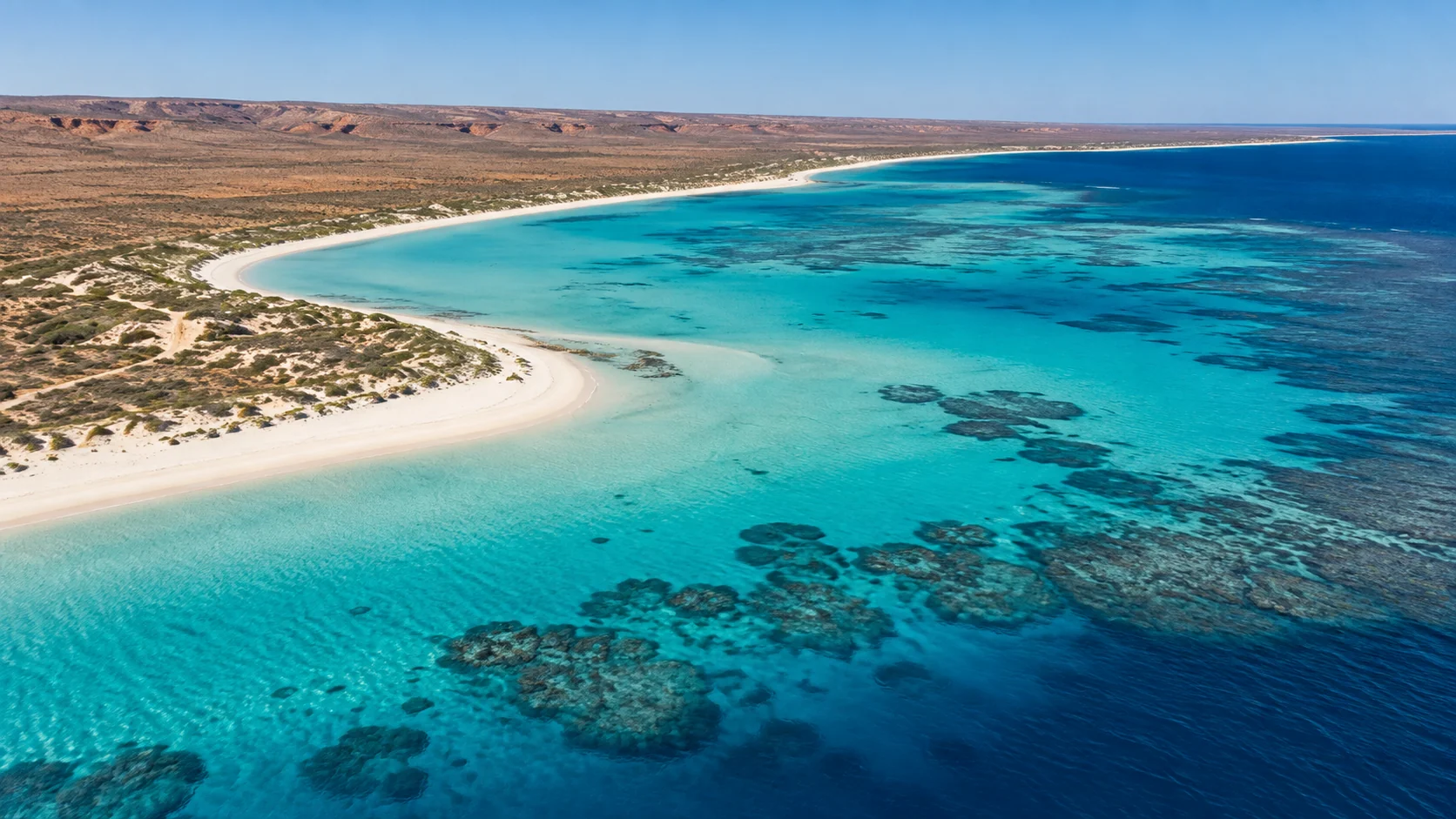
Paradise Beach has a moderate current sweeping along the beach, and the Ningaloo Centre does not recommend it for children or inexperienced snorkellers.
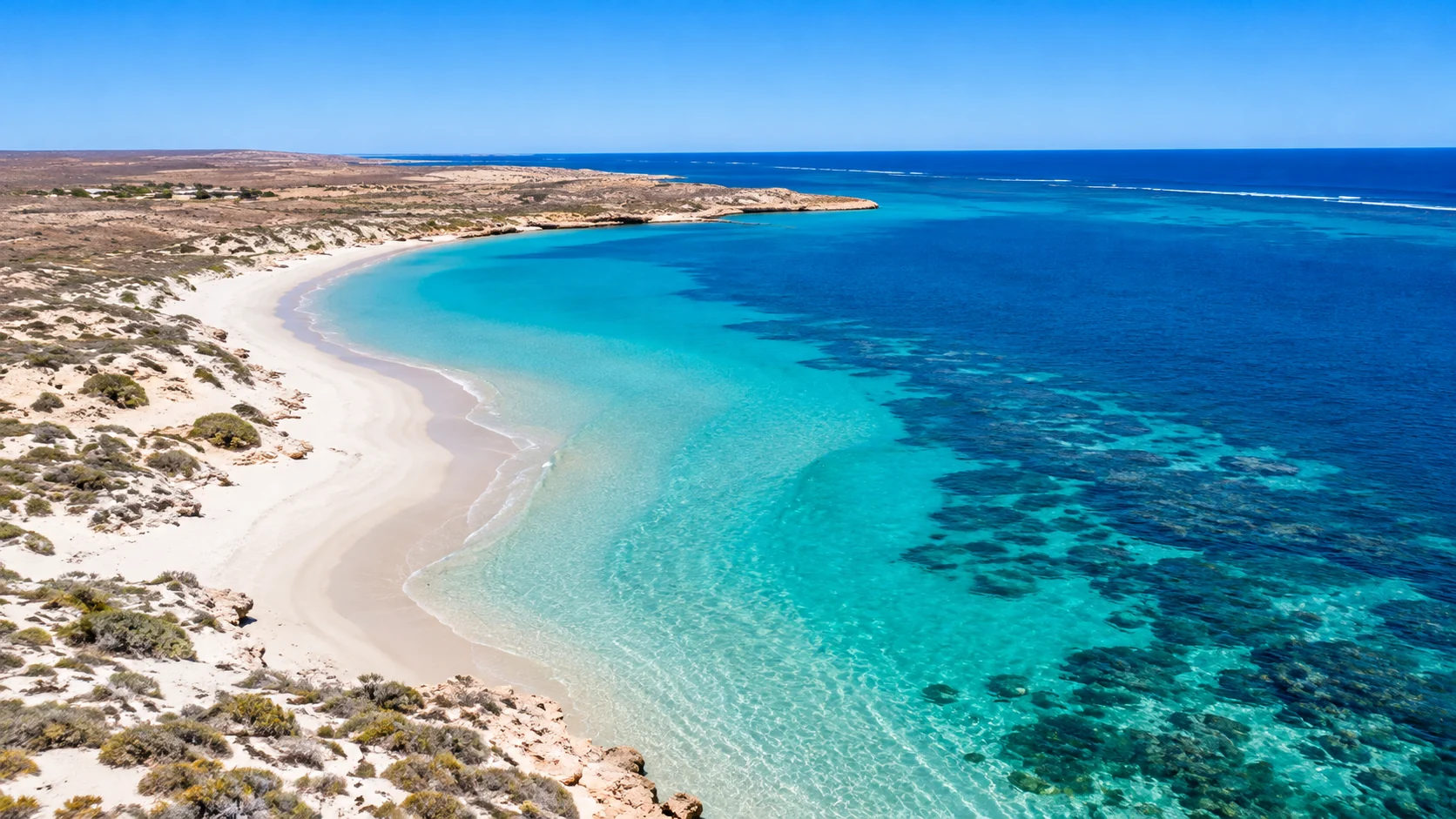
Safety in the water
Both towns share the same hazards. The Divers Alert Network (DAN) notes that Western Australia’s coast has seasonal stingers and jellyfish, including the Irukandji, whose stings can be very painful and usually need hospital treatment. DAN recommends a full wetsuit or stinger suit, especially in colder months, and says stingers are more frequent on the outer reef. A stinger suit is a sensible default for every swim. Visitor centres can tell you about recent sightings, and any sting needs immediate medical attention.
Supervision is limited. Coral Bay has no lifeguards on duty, so snorkel with a buddy and stay within your comfort zone. DAN notes that national park beaches may have fast-moving or rip currents, usually marked, and that no one should snorkel alone. Guided tours operate in sanctuary zones that are shallow, calm and monitored by the operator. That supervision comes from the tour crew rather than a lifeguard service, but guided trips are the lower-risk option for less experienced snorkellers, particularly if you are drawn to Turquoise Bay or Paradise Beach.
Water temperature ranges from about 22°C in winter to 27°C in summer. The dry season, April to October, brings clear water and calm weather. Temperatures can spike from November to February, so wear a sun shirt or shorty wetsuit with reef-safe sunscreen, rest in shade through midday and drink water before and after swimming.
Cape Range National Park from Exmouth
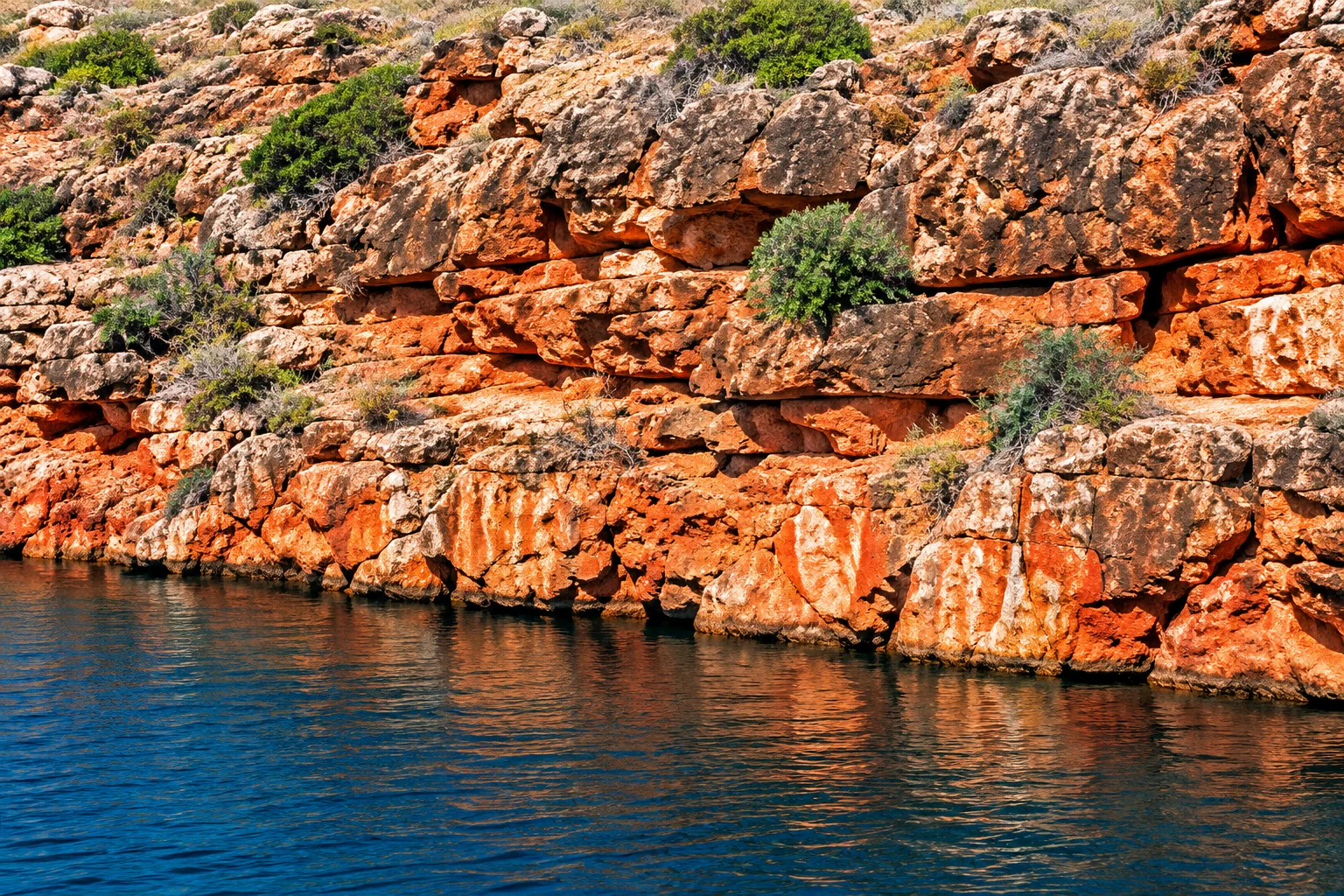
Cape Range National Park is the main reason to choose Exmouth for a land-and-sea trip. It holds the snorkelling beaches, Yardie Creek, the gorges and the walking trails, and Exmouth is where the park’s main road starts.

Fees and camping
The park entry fee is $17 for a standard vehicle and $10 concession, as listed on 8 August 2026. Confirm the current amount on the Explore Parks WA fee page. Bicycle and walk-in visitors pay no entry fee, and staying outside the park means paying on each entry. The Shothole and Charles Knife canyons sit outside the entry fee.
Camping is booked through Park Stay WA, and campsites start from $11. Camping is allowed only in designated locations, and you must be self-sufficient. The named campgrounds include Kurrajong and North Kurrajong, Osprey Bay, Yardie Creek, Neds Camp, Mesa, One K and Boat Harbour, Bungarra, North Mandu and Tulki Beach. Yardie Creek is the largest park-run campground, and some sites are 4WD-only. The maximum stay is 14 nights if any night falls in a Western Australian public school holiday, otherwise 28 nights, so recheck at booking. Peak dry season and school holidays sell out early.
Roads and vehicles
The sealed road from Exmouth reaches Yardie Creek, about 91 km away, and suits a 2WD vehicle. Most main attractions can be reached in a 2WD car. The drive takes roughly one hour. South of Yardie Creek the seal ends. Crossing the creek needs a high-clearance 4WD. The soft sand bar at the outlet should not be attempted in a 2WD. The crossing is impassable at the highest tides or after heavy rain. A 2WD vehicle can park at the creek and walk around it, and only 4WD vehicles can continue on the dirt road to Coral Bay. This crossing is the only link between the park and Coral Bay inside the reserve.
The maximum speed in the park is 80 km/h, and night driving is best avoided to protect wildlife. Fuel is not sold inside the park, so fill up in Exmouth. Check park alerts and road conditions before every Cape Range drive.
Canyons and walks
Shothole Canyon is reached via the Minilya-Exmouth Road, about 14 km south of Exmouth. Its 12 km scenic drive is a rough gravel track that needs 4WD. Charles Knife Road also needs 4WD. Both are reached from the eastern side, not via Yardie Creek Road. Allow about half a day for both with photo stops, and expect corrugated surfaces. A 2022 wildfire closed part of this area, so check current status before you go.
Thomas Carter Lookout, the start of the Badjirrajirra Walk, is about 30 km south of Exmouth. The 6.8 km loop takes about 2.5 hours and is class 4, which means a hard walk. The last 1 km of road needs 4WD, so walkers without one park before the turn-off and walk in. Mandu Mandu is best walked from April to September; in extreme heat, canyons and lookouts are the better choice.
Yardie Creek allows kayaking, paddle boarding, swimming and hiking, but not powered boats. Boat tours run when operating, and a connecting minibus has run from Exmouth to the trips. The Milyering Discovery Centre has refurbishment work in 2026 and temporary facilities, so check its hours before visiting.
Where to stay in Coral Bay
Coral Bay has a motel-style resort, two caravan parks and some holiday houses, with options from budget to 3-star. Capacity is very limited, and the town fills in peak seasons. The Ningaloo Reef Resort was listed in 2024 as temporarily closed for redevelopment, so confirm its status when you plan.
Powered sites at Ningaloo Coral Bay cost from $74 per night for one or two guests during the high season, 1 April to 31 October 2026. From 1 November 2026 to 31 March 2027 the low-season rate is from $69. Extra adults (18+) pay $15 each per night and children aged 2 to 17 pay $8. A site takes one vehicle and four adults. Christmas and New Year carry a four-night minimum, and peak school holidays in April, July and September to October require Saturday-to-Saturday weekly bookings. Water is limited in Coral Bay. Dogs are allowed only in a dog area, at $2 per night, with limited availability.
Where to stay in Exmouth
Exmouth has the wider range: campsites, caravan parks, hostels, motels, self-contained units, resorts and luxury eco-camping. Sail Ningaloo’s 2026 pricing lists Exmouth Escape Resort at $398, Mantarays Ningaloo Beach Resort at $450 and the luxury eco-camp Sal Salis Ningaloo Reef at $1,580. Basic self-contained accommodation costs about $280 per night, rising to about $500 for nicer places that fall short of luxury. Indicative listing prices show Exmouth Escape Resort from $193 per night, and a separate listing shows RAC Exmouth Cape Holiday Park from $216 and Peoples Park Caravan Park from $181. Prices vary by date, so check them on the day you book.
Booking lead times and tour costs
Book as early as possible for June to October and school holidays. ViewNingaloo recommends booking three to six months ahead for peak season, while shoulder-season stays are usually arranged a few weeks out. One Exmouth guide says peak periods such as school holidays can book out a year in advance. Confirm the lead time with each provider.
Indicative tour prices from one listing site show a 2.5-hour snorkel and turtle tour in Exmouth at $101 per adult. A half-day sailing and snorkel tour from Coral Bay costs $129 per adult, and a 6-hour Ningaloo Reef snorkel and wildlife adventure costs $191 per adult. Treat these as a guide and check the operator’s own price. Sail Ningaloo offers pre- and post-tour accommodation in both towns, scenic flight and transfer options, and Whale Shark and Humpback Whale packages. Multi-base tours also exist. An Autopia seven-day tour from Perth uses Coral Bay accommodation early in the trip and Exmouth on nights four and five, from US$1,253 per person in a shared room.
Which base suits you
Choose Exmouth if whale shark swimming is your priority, particularly in April to June, or if you want Cape Range National Park, Yardie Creek and Turquoise Bay within about 40 to 90 minutes’ drive. It also suits you if you want a choice of price points, if you plan to see the canyons, or if you are travelling in July or August and hope to combine whale sharks with humpbacks and mantas.
Choose Coral Bay if manta rays are your main goal, if you want to snorkel the reef from the beach without a tour, or if you like a small, quiet town and can book early. It also suits visits from around July to October when you want humpback-focused trips with a Coral Bay operator.
Use both bases if you want whale sharks and manta rays on the same trip. With ten days or more, two bases add variety and reduce the risk that a poor day at one location ruins the trip. Allow buffer time for delayed tours, tyre problems and heat, and keep plans flexible around flight times. Itinerary guidance for the park advises against a last-minute remote night.