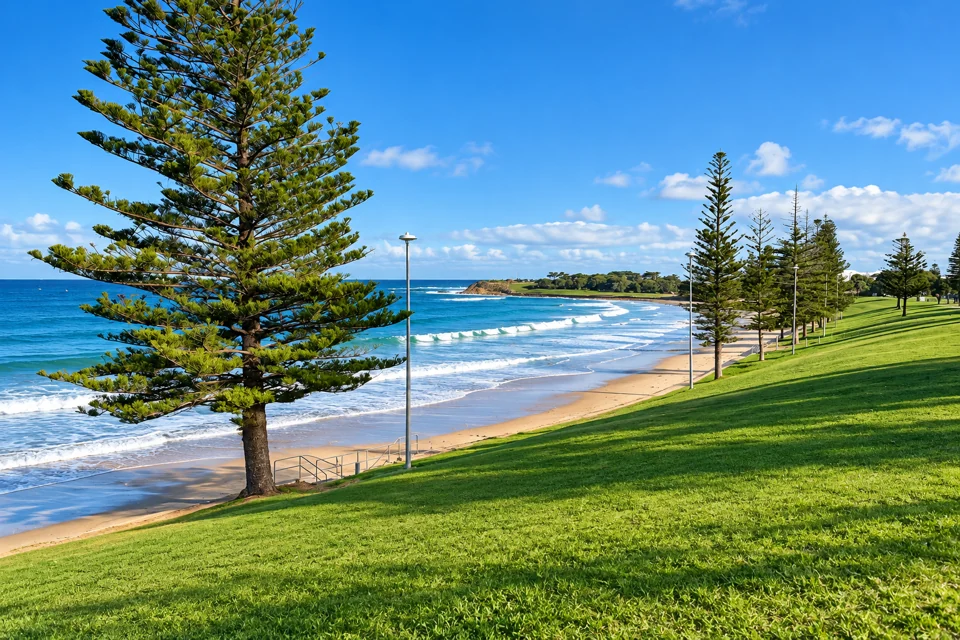
Torquay is a surf town on Victoria’s Surf Coast and the official start of the Great Ocean Road. It has calm family beaches, powerful reef and beach breaks for experienced surfers, a cluster of surf-brand outlets and a national surfing museum. Visit for a beach and shopping day trip or as the first stop on the drive west.
Choose a beach that matches your swimming or surfing ability, from sheltered sand at Front Beach to the heavy reef break at Bells Beach. Beaches are patrolled only in season, so check the time of year before you go.
Where the Great Ocean Road starts
The Great Ocean Road (route B100) begins in Torquay and finishes in Allansford, near Warrnambool. The Victorian Government describes the road as 243 km between Torquay and Allansford. Local history records that an earlier plan placed the start at Barwon Heads.
Construction began in September 1919, with the start declared on 19 September 1919 at Lorne, and the road was completed in 1932. Sir William Irvine opened it on 26 November 1932. The Visit Great Ocean Road FAQ describes it as the world’s largest war memorial, dedicated to soldiers of the First World War.
Driving the first stretch west
After Torquay the road passes Anglesea, Lorne and Apollo Bay. Landmarks on the early section include Jan Juc, Bellbrae, Bells Beach, Anglesea and the Split Point Lighthouse at Aireys Inlet, before Lorne.
Driving distances from a ticket seller are 48.4 km from Torquay to Lorne, about 50 minutes, and 45 km from Lorne to Apollo Bay. The gaps are short, so a visitor can spend a full day in Torquay and still reach Lorne the next morning without a rushed drive.
Walkers can follow the same coast on foot. The Surf Coast Walk starts at Jan Juc and runs up to 30 km, passing Bells Beach, Point Addis, Anglesea, Aireys Inlet Lighthouse, Fairhaven and Moggs Creek. Sections can be walked separately, and the walk has bus connections described on its own website.
Choosing a beach by ability
The Surf Coast Shire, which manages the beaches, lists Cosy Corner, Anglesea main beach and Lorne as beginner beaches. It lists Bells Beach, Winkipop, Torquay Point, Jan Juc and Fairhaven as intermediate to advanced. The Shire’s list leaves out Front Beach, which is the calmest option in Torquay itself.
Beginners and families
Front Beach is the town’s main beach. It has a sand bottom and gentle waves, suits all swimming abilities, and offers body boarding and beginner surf lessons. A Phillip Island tour operator calls it good for beginners and longboarders, with smaller, more forgiving waves. Front Beach is patrolled in summer, typically late November to Easter, with times varying by season.

Cosy Corner is a sheltered cove at the southern end of Front Beach with usually calm water. Paid lifeguards patrol it on weekdays in December and January.
Fisherman’s Beach is calm and sheltered near the boat ramp, and suits families and warm-up sessions. It sits between Whites Beach and Zeally Bay and is listed as a patrolled beach.
Intermediate surfers
Torquay Surf Beach, also called Back Beach, has waves that suit beginners and intermediates. It has parking, grassy areas for children, and board hire from a nearby surf academy. Wikipedia lists it as 0.8 km long and patrolled by Surf Life Saving Victoria, with a hazard rating of 6/10 ("moderately hazardous"). Access is via Surf Beach Drive and The Esplanade.
Jan Juc is about 3 km south of Torquay and is wider and quieter than Front Beach, with slightly bigger waves, and it is patrolled in summer. Its hazard rating is 7/10 ("highly hazardous"), and the beach is 1.2 km long, next to Torquay Surf Beach. The Jan Juc Surf Life Saving Club is the local volunteer lifesaving group, and it describes higher waves and persistent rips that suit experienced bathers and surfers. A tour operator rates the break intermediate to advanced.
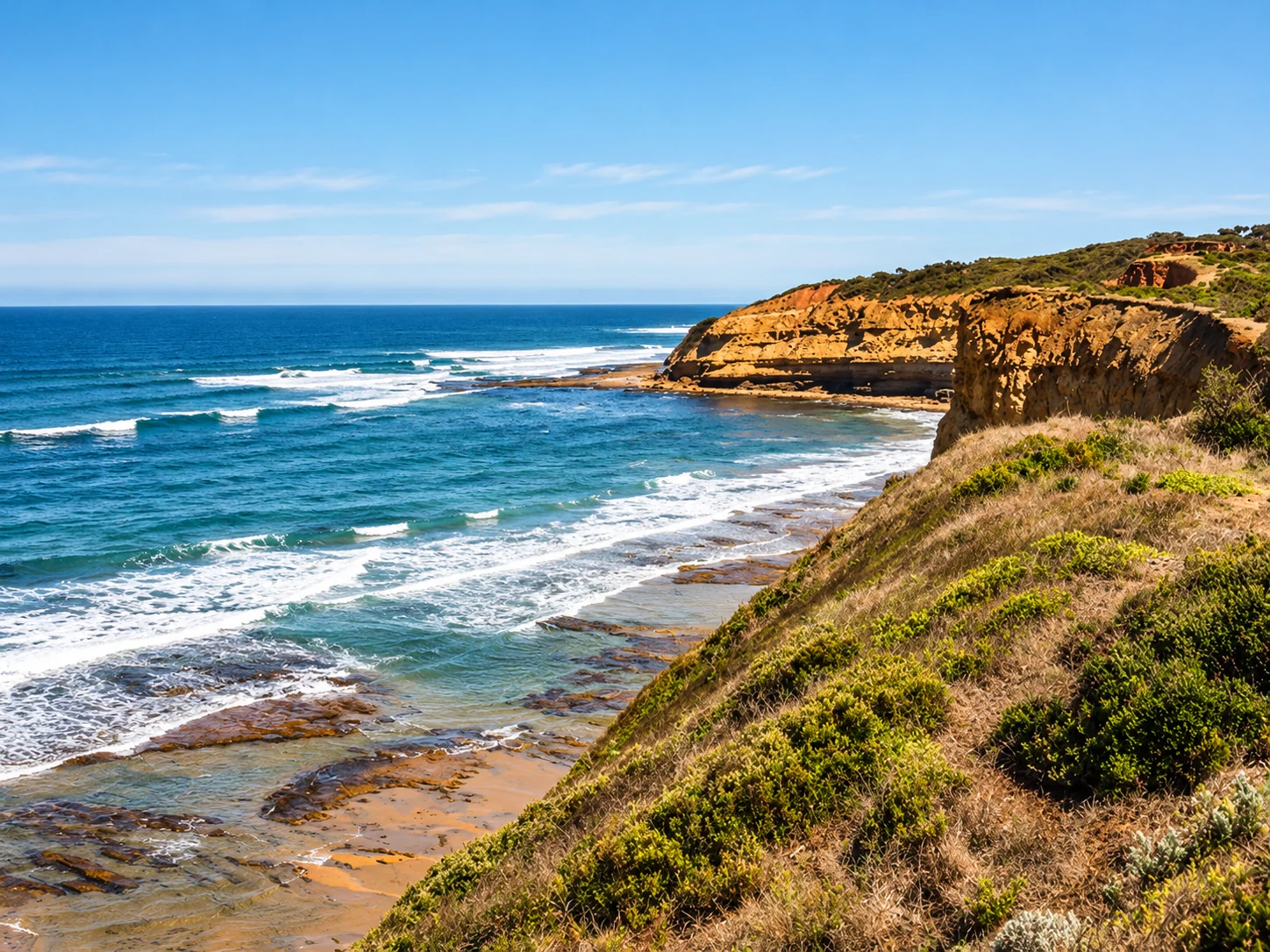
The Torquay Surfing Academy says Jan Juc works best in 1 to 4 ft of swell. At 1 to 3 ft it suits beginners and intermediates building confidence, and as swell grows the waves get faster and more powerful. The school suggests mid to high tide and winds from the north-east through to the west. The area near the main car park gets busy.
Point Addis is a scenic left and right break, best for intermediate to advanced surfers.

Advanced surfers
Bells Beach is about 6 km south-west of Torquay, a famous reef break with a cliff-top viewing platform. It suits intermediate surfers and above, and swimming access is not available. The beach is roughly 300 m long between limestone headlands, and swimming is not recommended because of a strong undercurrent. One tour operator describes a heavy right-hand point break for confident riders, and another says waves can reach over 1.5 m over a right-hand reef and point break. Non-surfers can watch from the viewing platform.

Swimming safely and lifeguard cover
Lifesavers are on duty only when red and yellow flags are displayed, so swim between the flags at any patrolled beach. The flags are moved regularly to follow safe swimming conditions, and the patrolled stretch runs from Torquay Front Beach to the rocks at Point Danger.
Torquay has two kinds of cover. For the Torquay beaches, volunteer lifesavers patrol on weekends and public holidays from November to April, and paid lifeguards cover weekdays from December to February. Cosy Corner has paid lifeguards on weekdays in December and January. The patrolled beaches are Torquay Back Beach, Jan Juc Beach, Cosy Corner and Fishermans Beach, as set out on the patrolled beaches page.
At Jan Juc, the 2026/27 season runs from Saturday 21 November 2026 to Sunday 11 April 2027. Volunteers patrol on Saturday afternoons, Sundays and public holidays except Christmas Day. Paid lifeguards add midweek and Saturday morning cover from 27 December to 25 January. Life Saving Victoria provides the professional lifeguards at Jan Juc during the peak summer period (27 December to 25 January). The Jan Juc SLSC volunteers patrol the rest of the season. Check exact dates and conditions at Beachsafe, which the Shire names alongside Life Saving Victoria as the place to confirm beach closures and shark safety.
The Shire’s beaches page also carries a current notice that H5 bird flu cases have been confirmed in Surf Coast Shire. Visitors should avoid sick or dead birds and wildlife and report them to Agriculture Victoria.
Surf lessons and board hire
Front Beach offers beginner lessons, and the Torquay Surfing Academy runs lessons at Torquay, Jan Juc, Bancoora, Point Addis and Lorne. Boards can be hired from a surf academy near Torquay Surf Beach. Beginners do best at Front Beach or Fisherman’s Beach, where waves are smaller. Once you can stand and ride confidently, Torquay Surf Beach is the next step before Jan Juc.
Shopping at Surf City Plaza and Baines Court
Surf City Plaza is the main precinct, devoted to surf brands, with Rip Curl, Quiksilver, Strapper, Gash and Rojo. The official name is Surf City Plaza, though some people call it Surf Coast Plaza. The precinct has factory outlets with discounts on current and past seasons, plus smaller boutiques for beachwear, jewellery and surf-inspired gifts, and sales run through the year.
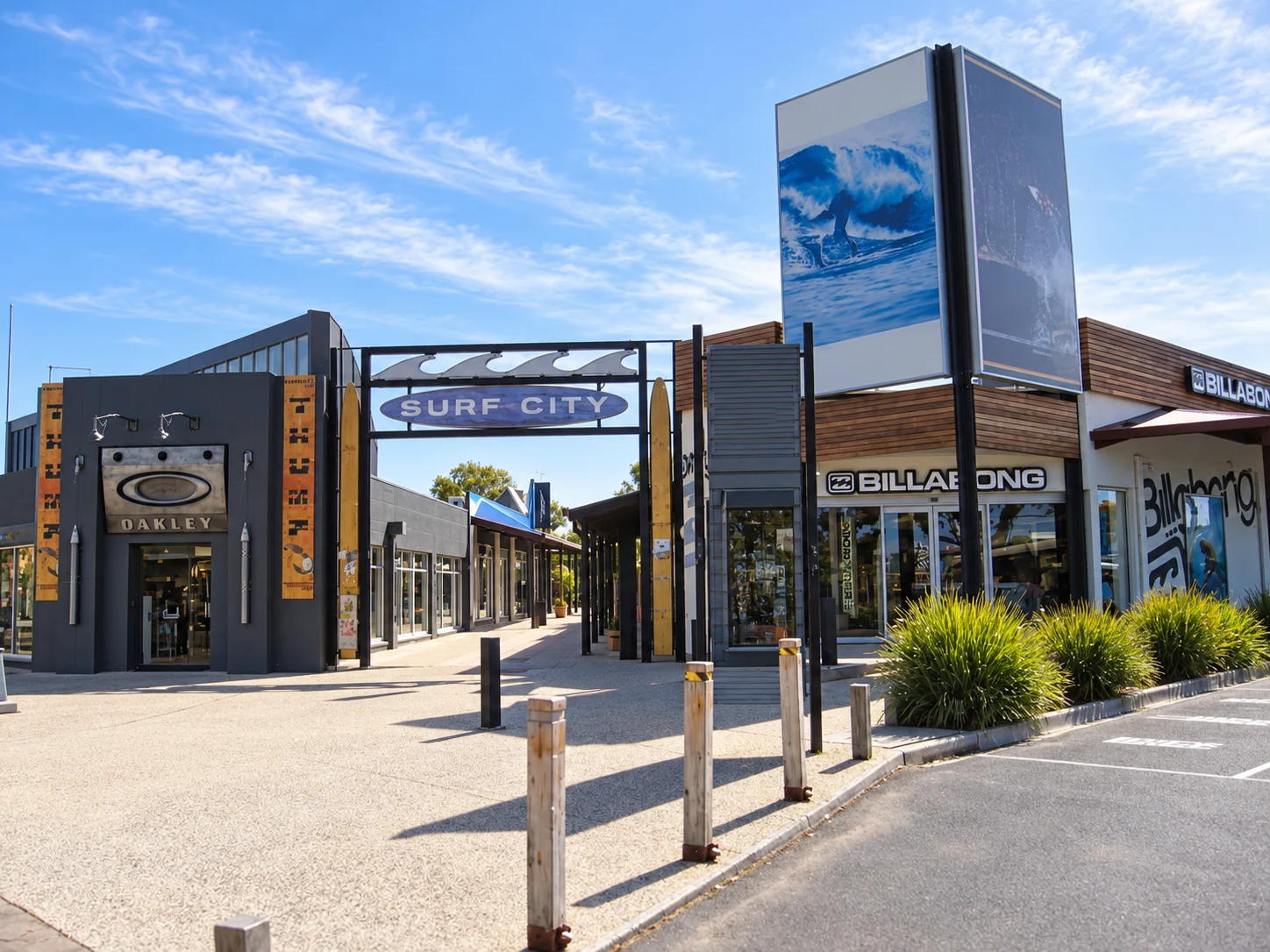
Baines Court is around the corner from Surf City Plaza and has surf seconds outlets selling bargains. The RACV describes Torquay as a haven of surf shops, boutique clothing and curated homewares, with flagship stores selling full-price items alongside the Rip Curl and Quiksilver outlets. If you want current-season stock at full price, go to the flagships. If you want a discount, go to the outlets and seconds stores.
Torquay Village is a smaller precinct with specialty homewares stores. It is about a kilometre from the Surf Coast Highway, so it needs a short detour. The Torquay Farmers Market runs every Saturday with food stalls, and Torquay Books stocks coastal and coffee-table books.
The surfing museum and Bells Beach events
The Australian National Surfing Museum is at 77 Beach Road, Torquay, Victoria 3228 (phone 03 5261 4606). It opens daily from 9:00am to 5:00pm and is closed on 25 December 2026. Full-price admission is $12, concession is $8, and a family ticket (two adults and up to three children) is $25. A child price of $8 is also listed, and group prices are available. Entry is self-guided with no time limit. The museum holds surfboards, historic photographs, interactive displays, the Australian Surfing Hall of Fame and a "Waves and Wheels" exhibition. Confirm hours and prices on the Visit Victoria listing.

Torquay is also the birthplace of Rip Curl and Quiksilver. The outlets cluster here. Bells Beach hosts the Rip Curl Pro, a World Championship Tour event that draws elite surfers over Easter, and it has been held at Easter since 1962. Easter is the time to see elite surfing at Bells.
Snorkelling, walks and local events
Snorkelling around Point Danger Marine Sanctuary is a recommended activity, and the area has shops, cafés and the town pub nearby. The Surf Coast has clifftop vantage points and sandy beaches beneath towering cliffs, which are easiest to see on a section of the Surf Coast Walk. A Surf Coast tour operator, SeaEarth Adventures, has run tours since 1993.

Local events include surfing carnivals through summer, the Australian Strongman Triathlon in February and the High Tide Festival in December, as listed in a regional guide. Check dates with the organisers before planning around them.
Getting to Torquay
By car: Torquay is about one hour fifteen minutes from Melbourne, via the Princes Freeway to Geelong and then the Surf Coast Highway south.
By train and bus: V/Line trains run from Southern Cross Station to Geelong about every 30 minutes, taking about an hour. From Geelong, the Great Ocean Road V/Line bus, run by McHarry’s, goes to Apollo Bay via Waurn Ponds, Torquay and Lorne. The timetable effective 23 August 2026 lists Torquay stops at Wombah Park (Surfcoast Highway at Merrijig Drive), Torquay 1 (Geelong Road at Grossman’s Road) and Torquay 3 (Bell Street at Munday Street, Park Lane). The Mount Duneed Surfcoast Highway outbound stop is permanently closed.
A Friday late-night service leaves Geelong at 9:10pm without stopping at Waurn Ponds and reaches Lorne at 10:58pm. The return leaves Lorne at 11:18pm, stops at Bell Street at Munday Street in Torquay, and arrives in Geelong at 1:09am Saturday.
Route 53 runs from Geelong station to Torquay Bell Street via the Surf Coast Highway. Weekday departures from Torquay Road and Spring Street in the 23 August 2026 timetable include 8:18am, 9:19am, 9:55am and 11:23am. On Saturdays the first inbound service leaves Bell Street at Munday Street at 6:38am and reaches Geelong station (Bay 4) at 7:24am. Route 51 runs between Geelong and Jan Juc via Marshall, the Surf Coast Highway and Torquay, and Route 50 follows a similar path via Wombah Park. Route 52 links Jan Juc and Marshall via Torquay, Mount Duneed and Armstrong Creek. Use the operator’s current timetable for departure times.
By air: Avalon Airport is the closest airport, about 35 minutes’ drive from Torquay and about 45 minutes from the Melbourne CBD. It currently has Jetstar flights to and from Sydney, the Gold Coast and Adelaide, so check schedules before booking.
When to visit
Torquay is a year-round destination and is busiest in the hot summer months. The population roughly triples between January and the end of February, when school holidays end, and the town also hosts schoolies celebrations with Lorne. Book accommodation early for January and February and for Easter.
Summer suits swimming and beginner lessons, with warmer weather and smaller waves, from November to March. Bigger waves and colder weather run from April to October, and one forecasting site rates Bells intermediate to advanced from May to October. One tour operator gives sea temperatures of 13°C in winter to 19°C in summer, swell of 1 to 3 m at most beaches and 4 to 5 m at Bells, and says the best conditions come with a light north-north-east offshore wind. Winter, from June to August, is generally the best period for Bells. Check current conditions on Beachsafe before you enter the water.
