
The Red Centre is the desert heart of the Northern Territory, built around three points: Uluru and Kata Tjuta in the south-west, Kings Canyon (Watarrka) in the west, and Alice Springs in the north. Uluru is the famous rock, and Kata Tjuta is the group of domes nearby. Both sit inside Uluṟu-Kata Tjuṯa National Park, which is owned by its Aṉangu Traditional Owners and jointly managed with Parks Australia.
Distances are long, so plan three things first: where to fly in, where to sleep, and whether to drive between sights. Flying is the quickest way in, and most visitors land at Ayers Rock Airport near Yulara or Alice Springs Airport. The sections below cover the walks and drives in each area, then the best season, how long to stay and the logistics.
Towns and areas
Yulara is the nearest town to Uluru and the base for most visitors to the national park. The town is also known as Ayers Rock Resort. Accommodation there includes Lost Camel, Sails in the Desert, Desert Gardens, Emu Walk, Outback Pioneer and Ayers Rock Campground. Lost Camel is a boutique hotel with Aboriginal-style touches. Sleeping in Yulara puts you minutes from the park gate, which matters for sunrise starts and for walking the base early in hot months.
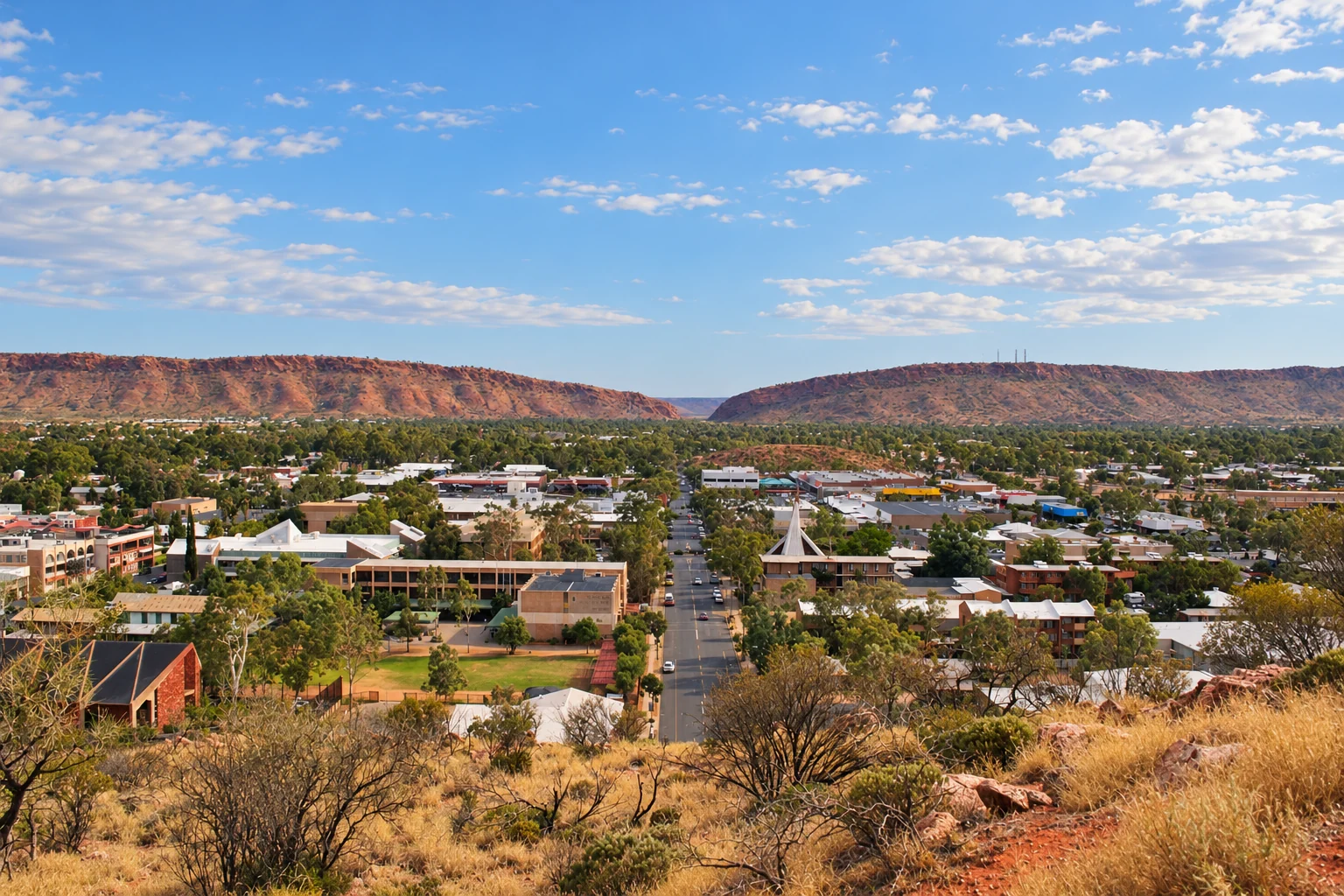
Alice Springs is the regional hub, with an airport and a wider range of services than anywhere else in the region. Tourism Australia covers it under "Alice Springs and Surrounds". The Alice Springs Visitor Information Centre also sells Mereenie Loop permits, so it is the natural stop before driving to Kings Canyon. It suits visitors arriving by The Ghan or on a road trip, and anyone building a longer loop through the region.
Kings Canyon sits in Watarrka National Park at the western end of the George Gill Range. The Luritja people have lived in the area for at least 20,000 years. Kings Canyon Resort is a permit point and a source of road updates, and coach services connect Alice Springs, Kings Canyon and Uluru. Most visitors treat Kings Canyon as an overnight stop between the other two bases rather than a base in its own right.
Uluru and Kata Tjuta
Park pass and entry
The pass covers Uluru and Kata Tjuta, and children and teenagers under 18 go free. Parks Australia lists the following fees:
- Adult pass (18 and over): $38, valid for 3 days
- Adult annual pass: $50
- NT-registered vehicle annual pass: $109, covering the driver and all passengers (tour and hire vehicles excluded)
The pass is valid only for Uluṟu-Kata Tjuṯa National Park, so Kakadu needs its own. A quarter of pass revenue supports Aṉangu homelands and training and business development. Passes can be bought online for quicker entry, which helps because queues form at the entry station at peak times. Gates open before sunrise and close after sunset. Check the official page for current fees before you travel, as some tour prices include the pass and others do not.
The pass also covers free ranger-guided walks and cultural talks when they are running, plus park information, maps and the Cultural Centre.
Uluru climb closure
Climbing Uluru closed permanently on 26 October 2019. The park’s Board of Management, which has a majority of Traditional Owners, made the decision in 2017. The date marks the anniversary of the 1985 handback of the park to its Traditional Owners. In 2010 the Board had set three criteria for closing the climb, and one was that the share of visitors climbing fell below 20%. The Board judged the criteria met and committed to give the tourism industry at least 18 months’ notice. Visitors had climbed since the late 1930s, and the first section of the climb chain went in during 1964.
Base walk, Mala Walk and Kuniya Walk
The base walk is about 10 km on dirt track around the Rock. It is the main way to see Uluru up close. Parts of it close on summer afternoons because of heat, and operators advise walking early in the morning between November and March. Several areas around the base are closed or have photography restrictions, so follow the signs.
For a shorter introduction, the Mala Walk and Kuniya Walk are the recommended starting points. The Mala Walk follows the north-western base past caves, rock formations and places associated with the Mala story. It ends at Kantju Gorge, where sheer walls rise above a quiet waterhole.
Sunrise, sunset and cultural experiences
Sunrise and sunset viewing areas give views of both Uluru and Kata Tjuta. The Uluru and Kata Tjuta Cultural Centre is a common first stop and sets up the stories behind what you walk past later. In Yulara, visitors can watch Aboriginal artists make dot paintings at the cultural centre. Other activities offered in place of the climb include skydiving, camel riding and cycle touring.

Walkers wanting more can look at a five-day trek through the park with nights spent in it.
Drive to Kings Canyon
Mereenie Loop road and permit
The Mereenie Loop is the unsealed section of the Red Centre Way between Alice Springs and Kings Canyon. Tourism Central Australia gives the unsealed stretch as 160 km of heavily corrugated road, recommends 4WD only, and allows roughly 3 hours to cross, depending on conditions. The route is about 332 km in total.
A sealed alternative runs via the Stuart Highway, Lasseter Highway and Luritja Road and takes about 5 hours without stops. It suits 2WD vehicles. If you hire a car, check whether the rental company permits unsealed roads before committing to the loop. Caravans and camper trailers need off-road-rated equipment.
The loop crosses Aboriginal land, Luritja country, so a permit is required. It is valid for three days from purchase, and the fee has been about $6 per vehicle (2024), so confirm the current price when you buy. Permits are sold at the Alice Springs Visitor Information Centre, Kings Canyon Resort, Hermannsburg, Glen Helen Lodge and the Central Land Council.
Keep these rules in mind on the loop:
- There is no fuel or facilities along the loop, so fill the tank before you start.
- Camping is not allowed, and stops are for breaks only.
- Alcohol may be carried if sealed but not consumed on the loop.
- Check the Northern Territory Government Road Report before and during travel for current conditions.
Kings Canyon (Watarrka)
The canyon is about 5 hours from Alice Springs and about 4 hours from Yulara by road, and roads around the national park and Kings Canyon Resort are sealed. A Parks Pass has been required for Watarrka since 3 April 2023, so check the current arrangement before you travel. Wildlife is active on roads at dawn, dusk and night, so avoid driving then. The Kings Canyon Rim Walk is recommended for May to September, when the temperatures suit a long walk.

Uluru to Kings Canyon is 306 km, about 3.5 hours, from Ayers Rock Resort. This is the most common link between the two parks, and it is fully sealed.
Getting there
Flights from Australia’s eastern and western cities take about three hours, and two airports serve domestic flights. Alice Springs Airport (ASP) is 14 km outside the town centre. Ayers Rock Airport (AYQ) is 8 km outside Yulara. Qantas, Virgin Australia and Jetstar fly to Ayers Rock Airport. Fares vary with origin, date and booking time, so compare both airports. Flying into one and out of the other avoids doubling back over the same road.
Overland, Uluru to Alice Springs is 465 km, about 4.5 hours on sealed road. Coach and shuttle services cover the same run in about 6 hours. A 2026 listing shows Alice Springs pickups at about 7 am from March to November and 8 am from December to February, arriving at about 12:30 pm or 1:30 pm. One-way shuttles include two 15-minute roadhouse stops. Check the operator for current timetables and fares.
You can also add the Red Centre to a road trip or ride The Ghan through Red Centre towns between Adelaide and Darwin.
Getting around
At Ayers Rock Airport, Ayers Rock Resort provides a complimentary shuttle to Yulara accommodation. Rental cars are available from Hertz, Avis and Thrift. A hire car gives the most freedom for sunrise and sunset starts, but guided tours remove the driving if you only plan to see the park.
At Alice Springs Airport, an Alice Silver Passenger Services shuttle has been priced at $20 per person and a taxi at about $45 to $50, so confirm current prices on arrival. Car hire, transfers and taxis operate at both airports.
Driving between the three bases is straightforward on sealed roads. The one road that needs preparation is the Mereenie Loop, covered above.
Best time to visit
Ayers Rock Resort describes May to September as the milder period, with daytime temperatures of about 20–30°C. August and September are the most likely months for wildflowers. October to March is the hottest stretch, with daytime temperatures often above 35°C. January is the wettest month with around 40 mm of rain, and summer storms can fill waterholes and produce waterfalls.
The Northern Territory Government gives averages by season:
- Summer (December to February): 20–35°C, with some rain from December to March
- Autumn (March to May): 12–27°C, described as one of the best times to visit Alice Springs
- Winter (June to August): 3–20°C, with overnight temperatures that can fall below freezing
April to September suits visitors sensitive to extremes, and spring and autumn give the most balanced temperatures. Winter days are comfortable, but the nights need warm layers. In summer, some operators report temperatures often above 40°C, so plan early starts and carry plenty of water. Parts of the Uluru base walk close in summer afternoons, which makes dawn the practical time to walk.
How many days to plan
If you fly directly into Ayers Rock Airport, plan at least three days at Uluru. That matches the three-day park pass and leaves time for a sunrise and a sunset, the base walk, the Mala Walk and the Cultural Centre without rushing. With less time you can fit in only the base walk and one viewing.
Adding Kings Canyon needs at least one more night, because the drive from Yulara takes about 4 hours. A trip that links Uluru, Kings Canyon and Alice Springs by road suits about a week, with extra time if you take the Mereenie Loop at a slower pace or want the multi-day walking options. Alice Springs and its surrounds fill a day or two. Visitors short on time do best by flying into Ayers Rock Airport and out of Alice Springs, or the reverse.
Food and drink
Dining is concentrated in Yulara, where Ayers Rock Resort runs the main options. Its multi-course Tali Wiru dinner runs from April to October only, so it affects the dates you can book. Coach services sometimes include a stop for morning tea, such as at a camel farm, at the traveller’s own expense.
On the road, carry food and water for the Mereenie Loop, because it has no facilities, and keep alcohol sealed while on it. Stock up at Alice Springs or Kings Canyon Resort before leaving either end.
Summary
- Buy the park pass online before arriving: It costs $38 for 3 days for adults, children under 18 go free, and it covers Uluru and Kata Tjuta only. Confirm fees on the Parks Australia page.
- Plan the Uluru base walk around the heat: The climb has been closed since 26 October 2019. The base walk is about 10 km and sections close on summer afternoons, so walk early between November and March.
- Choose the milder months when you can: May to September gives daytime temperatures of about 20–30°C, and August and September are best for wildflowers. From October to March, temperatures are often above 35°C.
- Prepare properly for the Mereenie Loop: The road has 160 km unsealed. It needs a permit and a 4WD, has no fuel and does not allow camping. The sealed route takes about 5 hours and suits 2WD.
- Stay in Yulara for Uluru and in Alice Springs for the wider services: Yulara is the closest town to the park, and Alice Springs has the wider range of services. Uluru to Alice Springs is 465 km, and Uluru to Kings Canyon is 306 km.