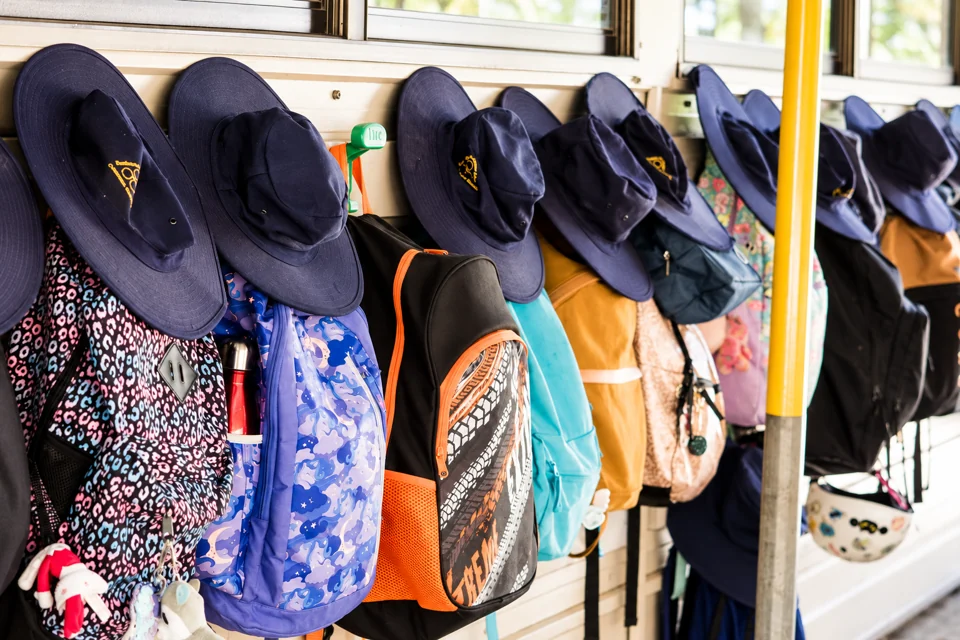
Private schools in Australia are non-government schools that charge tuition. There are two main types: independent schools, which are run by their own governing bodies, and Catholic systemic schools, which belong to Catholic school systems. About 63% of students attend government schools, almost 20% attend Catholic schools and almost 17% attend independent schools, so private schooling is a common choice for many families.
Four checks shape most decisions: whether the school is registered, which Year 12 certificate it offers, the full yearly cost, and, if your child is a temporary resident, which fees and visa rules apply. Fee figures below are for 2026 unless stated. Each school publishes a current fee schedule, which is the figure to use.
What counts as a private school
A private school is any registered school outside the government system. Independent schools range from small community and faith-based schools to long-established city grammar schools. Catholic systemic schools are generally cheaper because the Catholic system shares costs across its member schools. Catholic independent schools, such as those run by Jesuit and Marist orders, price closer to the independent sector.
Schooling in Australia runs for 13 years. Primary school takes seven or eight years, secondary school three or four years, and senior secondary two years (Years 11 and 12). Secondary starts at Year 7 or Year 8 depending on the state. Compulsory schooling runs from age 6 to 16, although requirements for the final years differ by state, as covered in the visa section below.
How registration works
State and territory governments register non-government schools, and a school must be registered before it can operate. Requirements cover education quality and curriculum, child safety and welfare, staff suitability, governance and financial viability, and buildings and facilities. Disability obligations under the Disability Discrimination Act 1992 (Cth) and the Disability Standards for Education 2005 also apply to all educators. The details differ by jurisdiction.
Australian Capital Territory
The Minister for Education and Early Childhood approves registration. The ACT reports 47 registered non-government schools: 18 independent and 29 Catholic systemic. A school must be a corporation and a registered not-for-profit entity. It must report annually on compliance, publish an annual statement of compliance, and publish its policies on enrolment, complaints and student behaviour. Its educational program must meet registration standards covering curriculum and how student performance is assessed, recorded and reported. Schools must also follow the National Principles for Child Safe Organisations and Working with Vulnerable People registration requirements.
Northern Territory
Under section 125 of the Education Act 2015 (NT), non-government schools must be accountable for safe, legal and financially viable operation. Under section 4(1)(h), all NT schools must apply the 10 principles of the National Principles for Child Safe Organisations. The NT registration standards also require distance education teachers to be registered with the Teacher Registration Board of the NT.
New South Wales
The NSW Education Standards Authority (NESA) handles registration. A new school receives provisional registration for one calendar year, and every registered school must display its Certificate of Registration in a prominent place. Teaching staff need suitable experience and qualifications, and everyone working at the school must be fit and proper. An approved auditor, such as one recognised by CPA Australia, Chartered Accountants Australia and New Zealand, or the Institute of Public Accountants, must complete the school’s financial audits.
Western Australia
Registration in WA requires a satisfactory standard of education, satisfactory care for children, fit and proper members of the governing body, and a satisfactory constitution.
Victoria
Registered Victorian schools operate in normal school hours for children aged six to seventeen. Registration requirements cover policies, curriculum, staffing, enrolment, student relations and security, and schools must promote the principles and practice of Australian democracy.
Queensland, South Australia and Tasmania also register non-government schools under their own state rules.
How to check a school
Ask the school for its registration status and confirm it with the state regulator. The ACT keeps a searchable online register, and in NSW the certificate must be on display at the school. Ask also for the school’s child-safety policy and, if your child has a learning need, how the school meets its disability obligations.
Curriculum and Year 12 certificates
The Australian Curriculum is maintained by the Australian Curriculum, Assessment and Reporting Authority (ACARA). Each state and territory sets its own curriculum, assessment and certification for senior secondary (Years 11 and 12), and private schools must meet the registration standards for their educational programs. The Year 12 certificate your child earns therefore depends on the state where the school is located.
| Jurisdiction | Year 12 qualification |
|---|---|
| ACT | ACT Senior Secondary Certificate (ACT SSC) |
| NSW | Higher School Certificate (HSC) |
| NT | NT Certificate of Education and Training (NTCET), administered by SACE |
| Queensland | Queensland Certificate of Education (QCE) |
| South Australia | South Australian Certificate of Education (SACE) |
| Tasmania | Tasmanian Certificate of Education (TCE) |
| Victoria | Victorian Certificate of Education (VCE) |
The first six rows come from the University of Sydney’s list of recognised qualifications, and the VCE is Victoria’s certificate.
The International Baccalaureate
Some schools offer the International Baccalaureate (IB) instead of, or alongside, the state certificate. Directory listings name Norwood International High School in Adelaide, Presbyterian Ladies’ College Perth and Presbyterian Ladies’ College Melbourne as examples. Some schools overseas license the ACARA framework for primary and lower secondary and then offer the HSC pathway or the IB Diploma, so always ask which senior pathway a particular school delivers.
The ATAR and university entry
Most Australian universities admit school leavers using the Australian Tertiary Admission Rank (ATAR). The ACT Board of Senior Secondary Studies describes it as a rank that compares a student’s overall performance with their age cohort rather than ranking individual subjects. ATARs run from 30.00 to 99.95, and an ATAR of 80.00 puts a student in the top 20 per cent of the age cohort. In the ACT, a student must complete the broader ACT SSC requirements, including a minimum of 20 unit credits, to receive an ATAR.
Most universities do not require a separate entrance exam, although some courses add a personal statement, portfolio, audition, interview or test. International students on an Australian senior secondary certificate are assessed for university entry in the same way as domestic students. Each university publishes the ATAR required for each course, so check your child’s target courses early.
What tuition costs
Australian private school tuition is uncapped. Schools set their own fees, and Victorian independent tuition rose by an average of 15% between 2021 and 2024, roughly 3.75% a year. Application fees average $156 in Victoria and $197 in NSW, and range from nil to $650.
The averages below suit comparing sectors and states. They do not predict any one school’s price.
| Area | Primary (approx.) | Secondary (approx.) |
|---|---|---|
| National independent average | $15,500 | $27,500 |
| NSW independent | $18,500 | $32,000 |
| Victoria independent | $17,000 | $30,000 |
| Queensland independent | $14,000 | $25,000 |
| Western Australia independent | $13,000 | $23,000 |
The national and state averages come from 2026 fee guides, and the NSW secondary figure comes from a separate 2026 analysis.
Catholic schools
Catholic systemic schools are much cheaper. NSW Catholic systemic schools average about $2,800 for primary and $7,500 for secondary. Catholic independent schools such as Jesuit and Marist schools charge $8,000 to $18,000 for primary and $15,000 to $28,000 for secondary. Fee levels still vary widely within each sector, so read the school’s own schedule as well.
Top-end schools
In Victoria, the top Associated Public Schools (APS) charge $42,000 to $48,000 for Year 12, and in Queensland the Great Public Schools (GPS) charge $28,000 to $38,000. Across the country, elite schools charge $42,000 to $55,000 for Year 12, with Geelong Grammar, Scotch, Melbourne Grammar and Sydney Grammar named as examples.
Examples from individual schools
Published 2026 fee schedules show how much schools differ within one state:
- St Luke’s Grammar School (NSW, independent): Year 12 tuition is $30,270 and Year 7 tuition is $29,260.
- St Pius X College (NSW, Catholic): Year 12 is $15,939 (three terms of $5,313), Year 7 is $15,660, and a resource and ICT levy is added on top.
- Our Lady of Mercy College Parramatta (NSW, Catholic): Year 12 is $15,720 and Year 7 is $13,530.
These figures come from the Sydney school listings. In the ACT, Brindabella Christian College (independent) listed Years 11 and 12 tuition of $14,350, or $15,450 including fees and levies, on its 2025 schedule. Years 7 and 8 were $13,200 in tuition, or $14,600 including fees and levies.
Lower secondary fees are often below Year 12 fees, but the gap varies by school, as the St Pius X figures show.
Costs beyond tuition
Tuition is only part of the bill. Some private schools also charge enrolment, building, scholarship and technology fees. Before comparing two schools, list tuition, levies, devices, uniforms, camps, transport and sibling discounts for each; a school-choice checklist uses the same list.
Analysis of ACARA data shows families pay an average of about $382 a year for primary and $764 for secondary at public schools in contributions, and about $7,413 for primary and $13,115 for secondary at independent schools. Do not add these averages to the tuition averages above, because they measure something different.
Over a whole K to 12 education, a mid-range independent school costs $300,000 to $450,000 in fees plus $70,000 to $120,000 in extras. Multiply by the number of children, and the sibling discount can change the total by a large amount.
Boarding costs
Boarding adds an estimated $25,000 to $45,000 a year on top of day fees, and total costs at boarding schools overall are estimated at $50,000 to $95,000 a year. Boarding widens your options beyond the schools you can reach each morning, which matters for families outside the big cities or relocating mid-career, but the cost lifts a school’s price well above its day fee. Ask each boarding school what its boarding fee covers and what it bills separately.
How government funding shapes fees
Governments fund private schools, and the formula explains why fees differ so much. The Schooling Resource Standard (SRS) is the Department of Education’s estimate of the public funding a school needs. It has a base amount plus up to six needs-based loadings, is recalculated each year under the Australian Education Act 2013, and follows recommendations from the 2011 Review of Funding for Schooling led by David Gonski AC. The 2026 base amounts are $14,509 per primary student and $18,233 per secondary student.
For non-government schools, the Commonwealth provides 80% of the SRS and state and territory governments provide the remaining 20%, or a lower share agreed under bilateral agreements. The Department estimates total recurrent funding of about $33.3 billion in 2026: about $12.7 billion to government schools, $11.1 billion to Catholic schools and $9.5 billion to independent schools.
The Capacity to Contribute (CTC) score measures how much a non-government school community can contribute to running costs, based on the median family income of students’ parents using tax data, averaged over the previous three years. The score sets a discount of between 10% and 80% on the Commonwealth’s SRS base amount. It does not reduce needs-based loadings, and it does not apply to special schools, special assistance schools, Majority Aboriginal and Torres Strait Islander schools, sole-provider schools or government schools.
For parents, the result is that a school’s fee level does not change its government funding; the funding depends on its parents’ income. The more parents earn, the less government funding an independent school receives, so schools in wealthier communities rely on fees.
Moving to Australia with school-age children
Visa-holding families have specific rules on attendance, fees and paperwork, and the details differ by state.
Who must attend school
Attendance rules vary:
- ACT: Children must attend school from age 6 until they complete Year 10. After that they must be in full-time education, training or employment until Year 12 or age 17, whichever comes first, according to the ACT Government.
- Victoria: Children aged 5 to 18 brought on a Student (subclass 500) visa must enrol in a Victorian school, according to Study Melbourne.
- Queensland: The University of Queensland advises that a visa condition requires children aged 5 to 18 to attend school full-time if they stay in Australia for three months or more.
Private or state school
Dependent children can enrol in a state or private school, and families pay fees whichever they choose. In Western Australia, both public and private schools require payment of fees. Private schools operate independently and their tuition is generally higher, so a private place for a visa holder’s child is the more expensive route.
Who counts as a dependant
A dependant is a spouse or de facto partner and unmarried children under 18. Parents, siblings, grandparents and other relatives cannot accompany a subclass 500 holder. Every family member must be listed in the visa application, even those who will not travel at first. Some visa subclasses cannot enrol a dependant at all, and the ACT list includes subclass 590 (student guardian), so check the ACT’s list of eligible subclasses before applying.
Fees for visa-holder children
The ACT Government publishes annual tuition for the children of temporary residents, excluding uniforms, books and excursions:
| Level | Annual tuition |
|---|---|
| Preschool | $4,200 |
| Primary (Kindergarten to Year 6) | $11,100 |
| High school (Years 7 to 10) | $14,500 |
| College (Years 11 and 12) | $16,200 |
The ACT also charges an application administration fee of $265. Fee-paying students pay the first year of tuition when they return the signed enrolment form, though a payment plan may be arranged. The ACT says these fees may change. Applicants whose situation has changed significantly since the visa was granted can seek a fee waiver.
In Victoria, the visa financial calculation for subclass 500 applicants includes an allowance for school fees for each school-aged child. The school then issues an offer letter and invoice, payable within 14 days, followed by a Confirmation of Placement letter, as Study Melbourne explains.
In Western Australia, a rule change starts on 30 November 2026. From then, dependants of Master by Coursework students (subclass 500) no longer qualify for the international tuition fee waiver at WA Government schools and must enrol as full fee-paying students. Eligibility depends on the date the Department of Education issues the Confirmation of Placement. Existing waivers continue for as long as the parent’s Master by Coursework studies last, and siblings with existing entitlements keep them.
For other states, visa-family fee guides show that annual fees per child vary widely by state and school type. South Australia charges about $6,700 a year for primary and $7,900 for high school, and the same guide says Queensland and Tasmania exempt children of subclass 482 holders. Confirm the current figure with the state education department, since these amounts change.
Fee exemptions
Children on asylum seeker, refugee, temporary protection and safe haven visas pay no tuition in the ACT, and families can contact the International Education Unit at ieu@act.gov.au. Subclass 500 exemptions in the ACT depend on sector and scholarship status: higher education and postgraduate research students can apply, but VET students on AusAid scholarships cannot. At UWA, master’s and PhD students (subclasses 500, 573 and 574) whose scholarship also sponsors dependants must pay the mainstream overseas fee.
Financial requirements and paperwork
The student visa financial calculation includes living-cost amounts for the primary applicant, a partner and each dependent child. The child living-cost figure measures a different thing from Victoria’s school-fee allowance, so do not add them together.
Family members must be covered by the student’s Overseas Student Health Cover (OSHC) for the whole stay, and the student contacts the OSHC provider to add them. For children over 5, [proof of enrolment in an Australian school goes with the visa application](https://studymelbourne.vic.gov.au/study-with-us/enrolments-and-student-visas/bring-your-family). If the other parent stays behind, that parent may need to sign a consent form for the child to travel. ACT dependant applications require proof of medical insurance, proof of ACT residence and visa details.
Southern Cross University advises students to provisionally enrol their children before leaving home, and fees are normally paid 12 months in advance. Budget for that up-front payment.
Children with learning needs
A child with a disability or learning difficulty may need a specialised school, and disability support fees can be significant. UWA advises disclosing needs before arrival so the school can plan, and the disability support guidance is worth reading before choosing a school.
Choosing a school step by step
Work through these checks in order, because each one can remove a school from the list:
- Confirm registration on the regulator’s register or the displayed certificate.
- Confirm the senior pathway: the state certificate, the IB, or both.
- Compare total costs from the school’s current fee schedule, including levies, devices, uniforms, camps, transport and sibling discounts.
- Compare the sector. Catholic systemic schools are usually cheaper than independent schools, but prices vary within each.
- For visa families, confirm the visa-holder fee, the Confirmation of Placement timing and any state waiver rules.
- If university in Australia is the goal, check the ATAR requirements for your child’s chosen courses with each university.