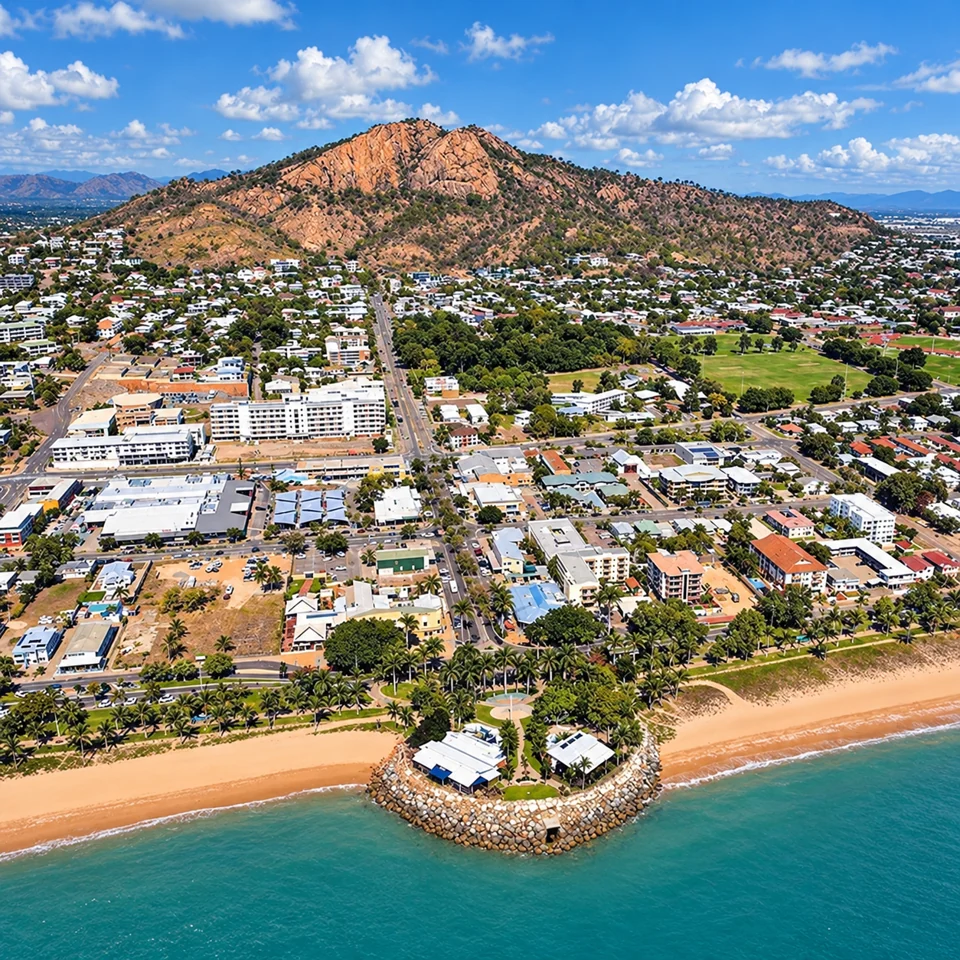
Townsville is a coastal city in North Queensland, well north of Brisbane, with an estimated resident population of 206,260 in 2025. It is the largest city in regional Queensland outside the south-east corner. The city is hot, with a wet summer and a dry winter. Rents are lower than the regional Queensland average, but vacancies are scarce. The main employers are hospitals, government, defence, education and research, and the port.
Housing, buses, schooling and health care in Townsville follow Queensland rules. Renters deal with the Residential Tenancies Authority (RTA), the state body that holds rental bonds. Public transport runs on Translink, the state public transport brand, and state schools follow Department of Education enrolment procedures.
Climate: hot all year with a distinct wet season
Townsville has a tropical savanna climate, so the year has a wet half and a dry half. The Bureau of Meteorology’s Townsville Aero station records an annual mean maximum of 29.0 °C, an annual mean minimum of 19.9 °C and 1,164.7 mm of rain a year. Daytime highs stay warm in every month, even in winter.
| Month | Mean max (°C) | Mean min (°C) | Mean rainfall (mm) |
|---|---|---|---|
| January | 31.5 | 24.4 | 274.4 |
| February | 31.2 | 24.2 | 312.9 |
| July | 25.2 | 13.9 | 15.5 |
| September | 27.9 | 17.5 | 9.9 |
Most rain falls from about December to March. February is the wettest month on average, and January and February together deliver more than half of the annual total. From June to October, monthly rainfall averages stay below 25 mm, so winter and spring are reliably dry. Winter nights are cool for the tropics, with July averaging a minimum of 13.9 °C, but daytime temperatures stay mild at around 25 °C. Weather2Travel puts the average at about 8 hours of sunshine a day.
For newcomers, summer is the hardest season. Daily highs sit above 30 °C from November to March, nights stay above 23 °C, and humidity and heavy rain arrive together. When you inspect a rental or house, check the air conditioning, shade, ceiling fans and roof insulation. Heavy summer downpours also make drainage and flood exposure worth checking before you sign a lease or buy.
Townsville also sits in Australia’s tropical cyclone region, and the cyclone season runs from November to April. The Bureau of Meteorology publishes cyclone information for Australia, including warnings. Newcomers should learn how the warning system works and know where their home sits relative to flood-prone ground before the first wet season.
What it costs to rent or buy
The City of Townsville’s housing profile, which draws on Australian Bureau of Statistics data, gives a median house rent of $580 a week and a median unit rent of $450 a week for the December 2025 quarter. A "median" is the middle price: half of the rentals cost more and half cost less. The same profile lists regional Queensland medians of $680 for houses and $650 for units, so Townsville is cheaper than the regional average, especially for units.
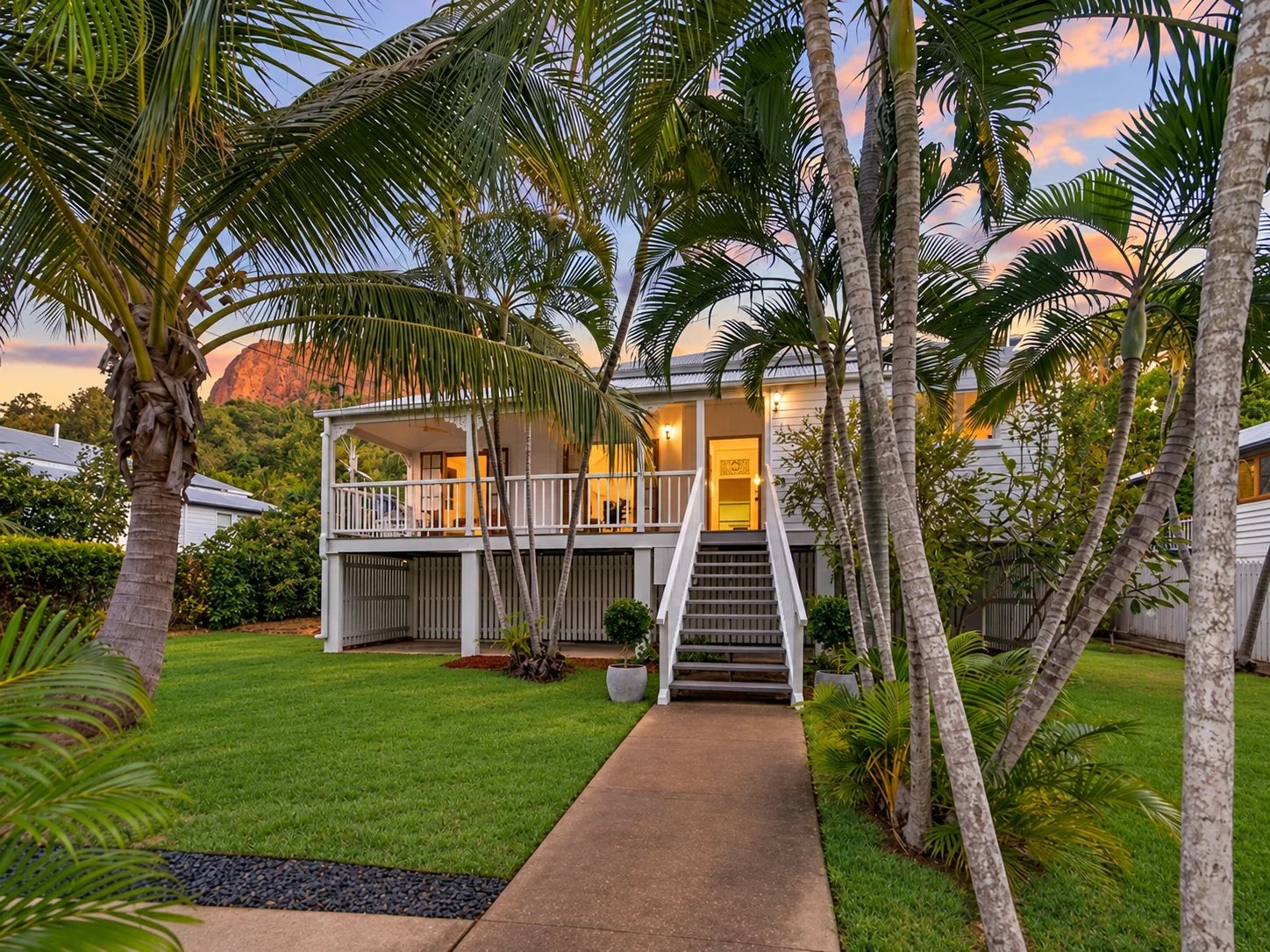
Other rent measures give slightly different numbers because they cover different areas and periods. RentSmart reports a median of $550 a week for houses and $390 for units in postcode 4810 (the central area) for the fourth quarter of 2025, with rents up 11.1% over the year. An agent’s suburb data for 4810 shows $581 for houses and $522 for units as at 1 June 2026. House rents of roughly $520 to $620 a week cover most of these readings, and unit rents depend heavily on which suburbs are counted. Individual suburbs close to the university, the hospital or the Strand waterfront will not match the citywide median, so compare current listings for the suburbs you are considering.
The bigger challenge is availability. Most agent and commercial figures put vacancy below about 1%, and RentSmart’s figure for 4810 is 2%. Vacancy is the share of rental properties empty and available at a given time, and a rate this low means several applicants compete for each listing. If you are moving from interstate or overseas, apply early, arrange references and proof of income in advance, and consider temporary accommodation while you search in person. The housing profile also finds that 4,112 households (5.9% of all households) in the City of Townsville need affordable housing, and only 18.2% of rentals were affordable to low-income households in the 12 months to December 2025. Lone-person households are the group most in need, with 1,176 households.
Buying is a larger commitment. The same housing profile puts the median house price at $680,000 and the median unit price at $452,375 as at December 2025. FPW Group, citing Opteon data for the first half of 2026, gives about $700,000 for houses in the Townsville City local government area. For a household moving from Brisbane, Sydney or Melbourne, these prices can look low. Against regional incomes, though, they are substantial. Renting first lets you learn which suburbs suit you, and how exposed they are to flooding and wind, before you buy.
Queensland renting rules that apply in Townsville
Queensland law sets out what a landlord or agent can charge and how long they can hold your money. The Residential Tenancies Authority says the maximum bond for a general tenancy is 4 weeks’ rent. The RTA states that from 30 September 2024 this cap applies regardless of the weekly rent. Taking more than the maximum is an offence. Combined deposits count toward the cap, so a security, key and cleaning deposit that together exceed 4 weeks’ rent is too much, because 4 weeks’ rent is the most you should be asked to pay as bond.
The landlord or agent must give you a receipt and lodge the bond with the RTA within 10 days. Bonds can be lodged online through RTA Web Services or by post using Bond Lodgement Form 2, but tenants with a bond loan must lodge by post. Once the payment clears, the RTA sends an acknowledgement to the bond contributors and the property manager or owner. Keep that document as proof that the state holds the money.
Bond increases and rent increases are both limited. A bond can only go up if at least 11 months have passed since the last increase or since the tenancy started, and the owner or manager must give written notice with a payment date. Rent can be increased no more than once every 12 months under rules that started on 1 July 2023. With Townsville rents rising quickly in the data above, that limit matters when you review a renewal.
At the end of the tenancy, the bond is normally refunded in full unless there is damage or unpaid rent. The RTA’s online refund service works best when both parties agree on the split before anyone lodges a request. If there is a disagreement, either party can dispute the refund through the service and request the RTA’s free dispute resolution. Since 30 September 2024, a landlord making a claim must give the tenant supporting evidence within 14 days. To protect your own refund, photograph every room on move-in day and keep copies of the condition report and any repair requests.
Getting around by bus and car
Townsville’s buses are run for Translink by Kinetic Townsville. Under Queensland’s 50-cent fares policy, single public transport fares are a flat 50 cents across all zones and modes, including Townsville’s regional urban bus services, but a daily ticket costs $1.00 and a weekly ticket costs $5.00. The flat fare applies whether you pay with a go card (Queensland’s reloadable travel card), a credit or debit card, or a paper ticket. Standard concession discounts do not apply while the flat fare runs, since everyone pays the same. Children aged 5 to 14, school and tertiary students, seniors, pensioners, veterans, job seekers and asylum seekers each pay 50 cents per journey, and children aged 4 and under travel free.
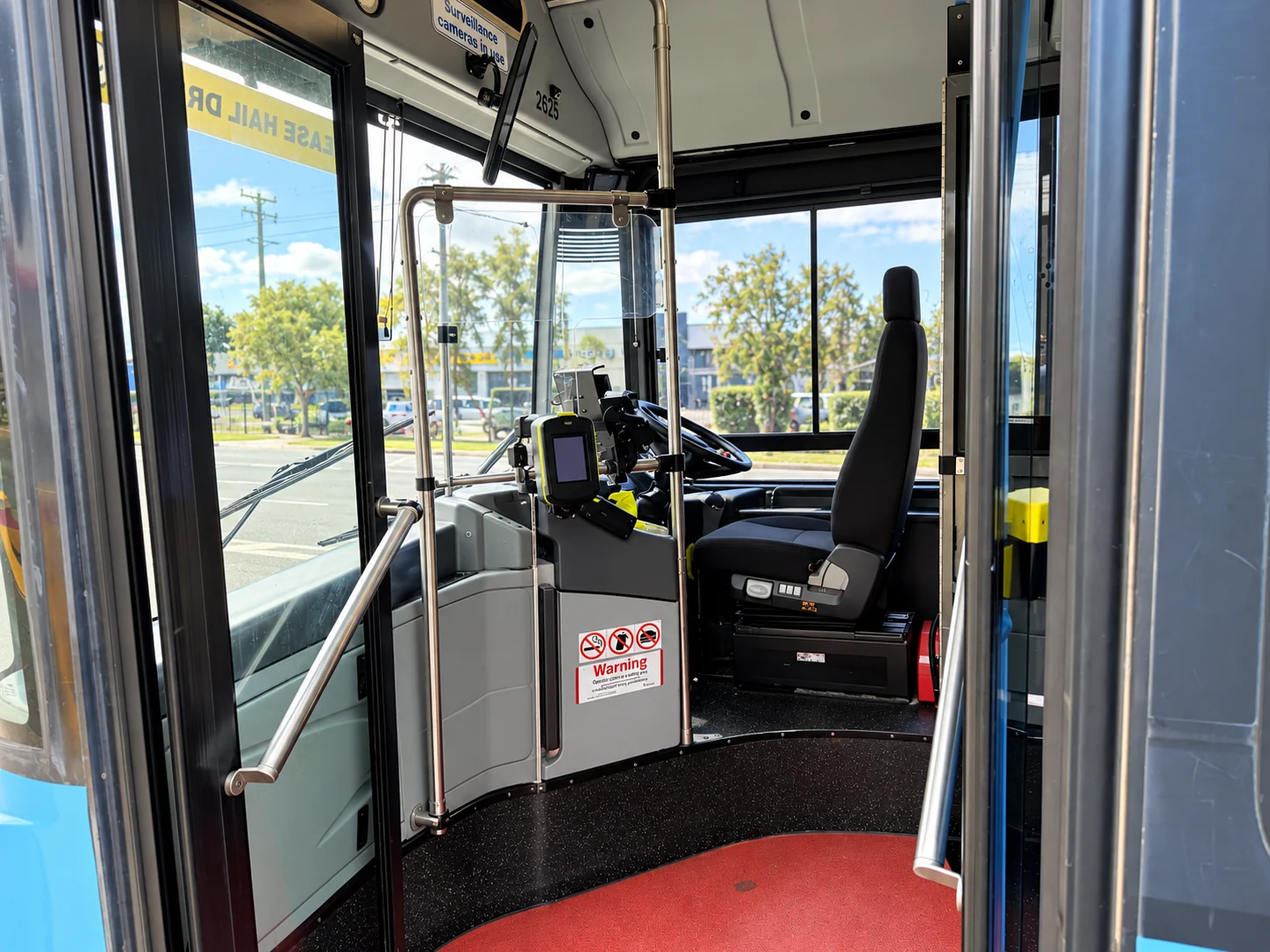

You can pay in cash onboard, though drivers ask for the correct fare or small change. Cash also tops up a go card at fare machines at bus and train stations or at go card retailers. For questions about tickets, the Translink Townsville fares page lists a contact line on 13 12 30, which operates 24 hours a day. Confirm the current fare before you travel, since it depends on a state policy that the Queensland Government can change. The City bus hub connects with Stockland Townsville, and the Translink timetable shows routes to suburbs including Castletown, Heatley, Mt Louisa and Domain. That timetable is from April 2020, so use the Translink journey planner for current routes and frequencies.
Many residents still own a car, and the licence rules depend on your visa and your home country. A visitor with a valid overseas licence in English can generally drive in Queensland, and Drive says visitors can use an overseas licence for up to three months. An International Driving Permit is recommended if your licence is not in English, and disqualified or suspended drivers cannot use an international licence. Permanent residents generally have 3 months to switch an overseas licence to a Queensland one, after which the overseas licence is no longer valid for driving in Queensland.
Whether you must sit tests depends on your country. Queensland groups licence holders into New Zealand, "recognised country or jurisdiction" (for example Canada, the United Kingdom and Singapore) and "experienced driver recognition country or jurisdiction" (for example Bulgaria, South Korea and Taiwan). Holders from recognised countries may be exempt from testing depending on licence type, while those from other countries must pass a written and a practical test. Bring your original licence (photocopies are not accepted), proof of identity, proof of Queensland residency such as a utility bill or rental agreement, and an English translation by a NAATI-certified translator if the licence is not in English. Applicants over 75 must provide a medical certificate. Confirm the current rules with the Department of Transport and Main Roads before your deadline.
Enrolling children in a state school
Queensland’s enrolment procedure entitles eligible children to 26 semesters of state education, including Prep, the first year of school. A student can apply to any state primary or secondary school unless the school has an Enrolment Management Plan (EMP) or Enrolment Eligibility Plan. An EMP is a plan that prioritises students who live inside the school’s catchment, which is the geographic zone around the school. Under the EMP procedure, a school moves onto an EMP when it reaches 80% utilisation or higher and the trend is upward, and the plan is rescinded at 70% or lower and trending downward.
The address you choose therefore affects your child’s schooling in Townsville. A student whose principal place of residence is in the catchment is entitled to enrol. Out-of-catchment enrolment is not guaranteed and is possible only if capacity remains after in-catchment needs and projected in-catchment growth are reserved. Waiting-list applications are recorded in order of receipt and stay current only for the school year applied for. Principals must also limit out-of-catchment places in the entry year, which is Prep or Year 7.
Check catchments before you sign a lease. Queensland’s EdMap tool shows school catchment boundaries, and the school can confirm whether an EMP applies. Pimlico State High School in Gulliver has about 1,700 enrolments, roughly half of them from outside its catchment, and it has an EMP. William Ross State High School in Annandale had 975 students in 2023.
The enrolment steps are straightforward. Contact the school first and ask whether an EMP applies. Then collect the application form, the enrolment agreement, the Student Code of Conduct and the dress code. Complete every mandatory question, with at least one parent or carer signing. At a child’s first enrolment in a state school, you show a birth certificate or passport, and the school does not keep copies. Where an EMP applies, you also provide proof of residency. Students who are not residents or citizens are referred to Education Queensland International, where visa restrictions and fees may apply. Moving between Queensland state schools needs no transfer note because the data sits in OneSchool, but a move from a non-state school within Queensland needs one, and interstate moves use an interstate transfer note.
Compulsory school age runs from at least 6 years 6 months until under 16, and a child is no longer of compulsory school age after completing Year 10. For early entry to Prep, the child must turn 5 by 31 July in the year of attendance, and the principal must judge the child ready.
Health care and everyday services
Townsville has a large regional hospital and several GP clinics that bulk bill, which means the clinic bills Medicare directly and you pay nothing out of pocket. The Townsville Medicare Urgent Care Clinic opened on 18 December 2023 at Eastbrooke Family Clinic on Thuringowa Drive. It offers walk-in care for urgent but not life-threatening needs, with extended hours seven days a week. The clinic is fully bulk billed, and residents need only their Medicare card. The Commonwealth announcement noted that more than 35% of Townsville University Hospital presentations are for non-urgent or semi-urgent care, which is the pressure the clinic is meant to relieve. For emergencies, call 000.
Among GP practices, the Northern Beaches GP Superclinic at 12 Deeragun Road, Deeragun (07 4751 4000) says all its GPs are fully bulk billing from 1 November 2025 for patients with a current Medicare card. It opens 7:00am to 5:30pm on weekdays and 8:00am to 1:00pm on weekends and public holidays. The Townsville GP Super Clinic at 87 Charters Towers Road, Hyde Park (07 4753 0888) mainly bulk bills but privately bills some consultations, including walk-ins without a concession card, patients over 16, telephone appointments and work-related or insurance consultations. Its standard consultation fee starts from $88, and after-hours consultations from $130. Other practices that say they bulk bill eligible Medicare patients include Health and Wellbeing Wulguru and Healthlink Family Medical Centre in Cranbrook. Ask any practice about its billing policy and opening hours when you book, since both vary.
Work is the other main concern for newcomers. Townsville is the main centre for government administration outside Brisbane. Its research institutions include James Cook University, the Australian Institute of Marine Science, the Great Barrier Reef Marine Park Authority and CSIRO, and the Australian Defence Force has large army and air force bases in the area. Council economic statistics show Health Care and Social Assistance is the largest industry. The Queensland Rail network and the Port of Townsville form a transport hub for mining and agriculture, with local operators including the Xstrata Copper Refinery and the Sun Metals Zinc Refinery.
In the 2021 Census, the employment rate was 94.9%, up from 91.1% in 2016, and 93,983 residents were employed. A July 2023 council release listed projects such as the Lansdown Eco-Industrial Precinct, the Port Expansion and CopperString 2032 and reported net growth of more than 5,000 jobs from 2020 to 2022.
Who Townsville suits
Townsville suits people whose work matches its biggest employers. Nurses, doctors, teachers, public servants, defence personnel, researchers, and workers in mining, the port and transport will find an established local labour market. The city’s university hospital, university campus and research agencies mean a specialist can often build a career without relocating to a capital city.
It also suits people who want a tropical climate and are comfortable with a wet summer. Dry, mild winters with plentiful sunshine make outdoor life easy for half the year, while the months from December to March bring heat, humidity and heavy rain. Households that want an inexpensive way to get around will find the 50-cent bus fare helpful, although most residents will still want a car for flexibility.
Townsville is a harder fit for anyone who needs a deep rental market with plenty of choice, since vacancy sits at or below about 1% to 2%. Families who need a guaranteed place at a particular state school outside its catchment should also plan carefully, because such places are never guaranteed. The best preparation is to choose a suburb with the catchment in mind, arrange temporary accommodation for the first weeks of your search, and apply for rentals and school places as early as possible.
Key Takeaways
- Plan for a tight rental market: Vacancy sits at or below about 1% to 2%, so arrange references and proof of income before you arrive and consider temporary accommodation while you search.
- Budget from current medians: The City of Townsville’s median house rent is $580 a week and unit rent is $450 (December 2025 quarter), and the median house price is $680,000.
- Check the school catchment before you sign a lease: Schools with an Enrolment Management Plan prioritise students who live in the catchment, and out-of-catchment places are not guaranteed.
- Know your bond rights: Queensland caps a general tenancy bond at 4 weeks’ rent, and the landlord or agent must lodge it with the RTA within 10 days.
- Prepare for the wet season: Most rain falls from December to March, when daytime highs stay above 30 °C, so check air conditioning, drainage and flood exposure before you commit to a home.
- Confirm your licence deadline: Permanent residents generally have about 3 months to convert an overseas licence, and the testing required depends on your country.