
Kakadu National Park, a World Heritage-listed park in the Northern Territory, has three kinds of places to stay. Lodges and hotels sit in and around the township of Jabiru and at Cooinda near Yellow Water. Commercial caravan parks and campgrounds run by those same resorts take powered and unpowered sites. Parks Australia, the government agency that manages the park, runs its own campgrounds, and most of them need no booking at all.
Where you sleep affects what you can do the next morning. Jabiru is the main base for northern Kakadu and has the widest range of beds. Cooinda, about 50 km south of Jabiru, puts you next to Yellow Water cruises. Park-run campgrounds near Ubirr, Burrungkuy (also called Nourlangie) and the Mary River region suit campers who want to be close to rock art and waterholes.
Several of Kakadu’s best-known sites are closed. As of the access report updated on 2 November 2026, Jim Jim Falls, Twin Falls and Karnamarr campground are closed for all of 2026. Maguk is closed to visitors, and Gunlom is scheduled to close for the wet season from 11 November 2026. Check the status of any site before you commit to a booking.
How booking and fees work for each site type
Park-managed campgrounds are first come, first served. The official FAQ states that managed campgrounds need no booking, and a campground manager collects the fee on site. The Visitor Guide adds that fees vary with the level of services and amenities. You cannot book a spot in advance, so if you arrive late in peak season, you take whatever site is left.
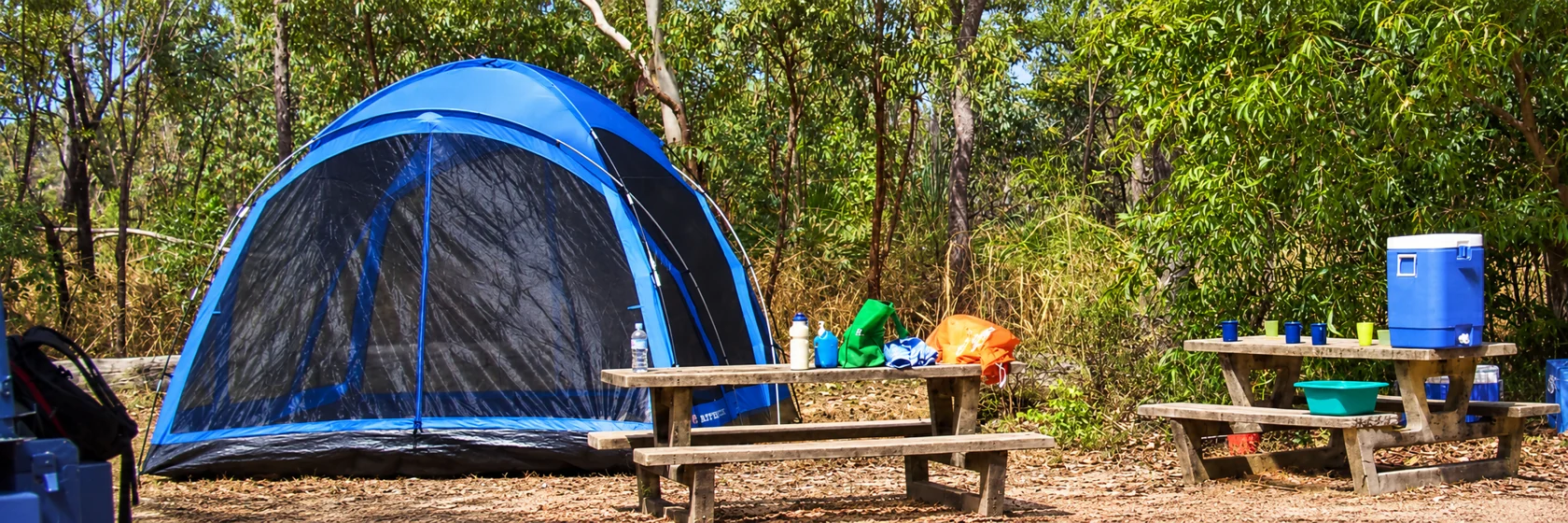
Bush campgrounds sit at the basic end. They have simple toilets, no drinking water and no staff. Some are free and others take a small fee, which you pay by putting cash in a collection box at the site. The Kakadu camping and caravans page describes both types. Bring your own water, a fuel stove and a way to carry out your rubbish.
Commercial campgrounds and lodges work differently. The FAQ says you book these directly with the resort or operator. Cooinda’s campground and Aurora Kakadu Lodge’s caravan park are both operator-run, so their prices and policies come from the operator, not Parks Australia. The reservation information conflicts for at least one of them (see the Jabiru section), so phone the operator before you arrive.
Camping is allowed only in designated campgrounds. The Visitor Guide says you need a permit for overnight bushwalking or camping outside designated sites, so you cannot camp wherever you like along a track.
Campground fees are separate from the park pass. Gunlom shows how the fees work: the official Gunlom listing gives $15.00 per adult, $7.50 per child and $38.00 per family per night, and says it suits tents, caravans and camper trailers. The Visitor Guide gives no dollar amounts for other park-run campgrounds. Treat any older per-person figure you find online as out of date, and expect to pay at the campground or its collection box.
Pay the park pass before you arrive. The park pass page says passes are valid for seven days, but they are not required to be bought online: they can also be bought at Bowali Visitor Centre and Cooinda Lodge (online is recommended as quickest). The pass covers Kakadu only, so Uluṟu-Kata Tjuṯa needs its own. Northern Territory residents get a pass free with proof of residency. The 1 November to 14 May rates, which apply now, are:

- Adult (16 and over): $25
- Child: $12.50
- Family: $65
- Concession: $19
From 15 May to 31 October the adult pass is $40, and the other categories rise as well. A June 2026 announcement reduced pricing for part of the dry season, but that window has ended.
Jabiru: the widest choice for northern Kakadu
Jabiru is the park’s only town and the practical base for Ubirr, Burrungkuy and the East Alligator region. The Visitor Guide describes it as a small retail hub with a service station, supermarket, travel agent, medical centre and chemist. The medical centre’s number is (08) 8979 2018. Three operators run accommodation here, and the choice comes down to whether you want a room or a site.
Aurora Kakadu Lodge on Jabiru Drive covers the full range. Its official listing shows self-contained air-conditioned studios, one- and two-bedroom cabins and lodge rooms, along with 186 powered caravan and campsites and 100 unpowered campsites. The operator’s caravan park page lists a camp kitchen, barbecue and laundry facilities for campers, a community grey water dump (a point where you empty waste water from a caravan) and a tour booking desk. The park is open all year, and the shops, bank and post office are within walking distance. A lagoon-style pool and the Poolside Bar and Bistro sit alongside.

The operator says all Kakadu tours pick up and drop off at the lodge and recommends staying two nights or more. That suits first-time visitors without a vehicle for rough roads, because the tours handle the driving. Phone (08) 8979 2422 or email klodge@kl.auroraresorts.com.au to ask about rooms or tours.
Camping at Aurora needs a phone call before you travel. The operator’s page states, "We do not take reservations for caravans or camping," yet the Parks Australia listing carries a "Book now" button. Plan on turning up without a booking and confirm with the lodge beforehand. The operator’s high-season rates, for 1 May to 31 August 2026, were:
- Powered site: $50.00 for one person or $68.00 for two. Each extra person over 12 pays $10.
- Unpowered site: $20.00 per person aged 18 and over. Extra people aged 12 to 17 pay $10.
- Children: $2.00 for ages 5 to 11, free under 5, on both site types.
Rates outside that high-season window may differ, so check them when you call.
Mercure Kakadu Crocodile Hotel on Flinders Street suits travellers who want a conventional hotel. The Visitor Guide lists air-conditioned rooms, a restaurant and a pool, and recommends reservations on (08) 8979 9000. The building has rooms on two floors, and some are a long walk from reception, so mention mobility needs when you book. That guide quotes about $180 in the wet season and about $350 at high season. Rates move with demand, so compare the current price on the hotel’s own channels.
Anbinik Kakadu Resort sits between the two. The Visitor Guide describes bush bungalows, cabins and air-conditioned rooms, and recommends reservations on (08) 8979 3144. Its mix of bungalow and room styles makes it a reasonable choice for a family wanting something less formal than a hotel room.

Jabiru is also the easiest base for a caravan or campervan on sealed roads. If your hire contract is standard, Jabiru’s parks and lodges keep you within it as long as you stay on sealed roads to the main sites.

Cooinda and Yellow Water
Cooinda is the base for the Yellow Water wetlands, where boat cruises run through a floodplain with saltwater crocodiles, birds and lilies. It sits roughly 50 km south of Jabiru, so a stay here splits the park in two: Ubirr and Burrungkuy to the north, Yellow Water and the Mary River region to the south.
Cooinda Lodge Kakadu has motel rooms, budget rooms, tent sites and powered van sites according to the Visitor Guide. It was formerly called Gagudju Lodge Cooinda and is managed by Accor. The Visitor Guide gives (08) 8979 1500 as the number, and the official Cooinda campground listing gives reservations@yellowwater.com.au. The campground staff can advise on Yellow Water cruises and seasonal 4WD tours.
Cooinda is more self-contained than Jabiru. The Tripadvisor listing shows two shaded swimming pools, indoor and alfresco dining, a fuel station, a general store, the Warradjan Cultural Centre, self-serve laundry and an ATM. The Visitor Guide confirms the store sells petrol and diesel. That fuel and food matter, because Jabiru is the only other place nearby to refuel and restock.
Rooms cost more than the cheapest Jabiru options. Tripadvisor’s 2026 page shows rooms from AU$202 per night, and standard rooms generally fall between AU$198 and AU$395. Reviewers rate the location at 4.5 out of 5 but value at 3.2, and the overall score is 3.8 from 1,421 reviews. Guests praise the staff and the position, and some say the restaurant’s choice is limited and the dinner queue long. If you stay in a room, consider eating some meals at the store or cooking at the campground to cut costs.
Campers have two park-run alternatives close to Yellow Water. Mardukal is a managed campground with showers, toilets and a generator zone, but the water there is not suitable for drinking. Jim Jim Billabong is a bush campground with basic toilets, a collection box and no drinking water. The Visitor Guide’s accessibility list also includes Yellow Water’s Ngurrungurrudjba campground.
Yellow Water cruises leave from Cooinda, so staying at the lodge or its campground saves an early-morning drive. If the cruise is your priority, Cooinda is the sensible choice.
Camping near Ubirr and Burrungkuy
Ubirr, in the East Alligator region, is known for its rock art and a lookout reached by a moderately steep 250 m climb. The Visitor Guide gives hours of 8:30 am to sunset from April to November and 2:00 pm to sunset from December to March. The art site itself is flat and wheelchair accessible. Burrungkuy (Nourlangie) has gates open daily from 7:00 am to 7:00 pm, with paved wheelchair access to the Anbangbang gallery.
Merl is the managed campground in the East Alligator region. The Visitor Guide lists showers, toilets and a generator zone, and fees are collected on site. It says to check seasonal access, which matters because the road to this area crosses Cahills Crossing, where water levels change quickly. Check the NT Road Report before you drive over.
In the Burrungkuy area there are two options with very different comfort levels. Djarradjin (Muirella Park) is managed, with showers, toilets and a no-generator zone, so campers get quiet evenings. Fees are collected on site, and the guide again says to check seasonal access. Sandy Billabong (Djirrilba) is a bush campground with basic toilets, a collection box and no drinking water. The Visitor Guide recommends 4WD for it. Sandy Billabong suits experienced campers with a vehicle that can handle the track.

Two more bush campgrounds sit in the Jabiru region: Malabanjbanjdju and Burdulba. Both have basic toilets, no drinking water and a collection box, and both carry the "check seasonal access" note. They put you near Jabiru’s shops while keeping the bush setting.
Camping near Ubirr or Burrungkuy brings you close to the park’s main rock art sites, but it also puts you in saltwater crocodile country. The Visitor Guide says crocodiles have attacked and killed people in Kakadu. If there is no warning sign near the water, assume crocodiles are present. It also says to camp at least 50 metres from the water’s edge. Use gas or fuel stoves, light fires only in the fireplaces provided, and collect only dead, fallen wood from roadsides.
Many park-managed campgrounds suit caravans, but no maximum caravan length is given for Ubirr, Merl or Burrungkuy. If you tow a long rig, phone Bowali Visitor Centre on (08) 8938 1120 and ask about the specific campground. Dry-season Bowali hours are 9:00 am to 4:30 pm (April to October). In the wet season (November to March) they are 10:00 am to 4:00 pm.
Mary River region and outside the park
The Mary River region in the south has the park’s gorges and plunge pools, and it is where the closures bite hardest. Check current conditions before you choose a campground here.
Gunlom is a managed campground with showers, toilets, a generator zone and barbecues in the day-use area. The Visitor Guide describes the road as gravel and notes that the campground closes seasonally. The access report says Gunlom is "scheduled to seasonally close from Wednesday 11 November 2026, subject to change depending on weather conditions." Third-party guidance also describes Gunlom Road as high-clearance 4WD only, while other travel writers describe it as passable in a 2WD with deep corrugations. These accounts conflict, so ask at Bowali about conditions on the day. Access to the bottom Gunlom plunge pool is prohibited while crocodile management continues, according to the same sources.
Maguk remains closed. The access report says it "remains closed to visitors for safety with crocodile management activities continuing in the area." Maguk, Gungurul and Kambolgie are all bush campgrounds with basic toilets, barbecues, picnic tables, a collection box and no drinking water, but Maguk cannot be used at the moment.
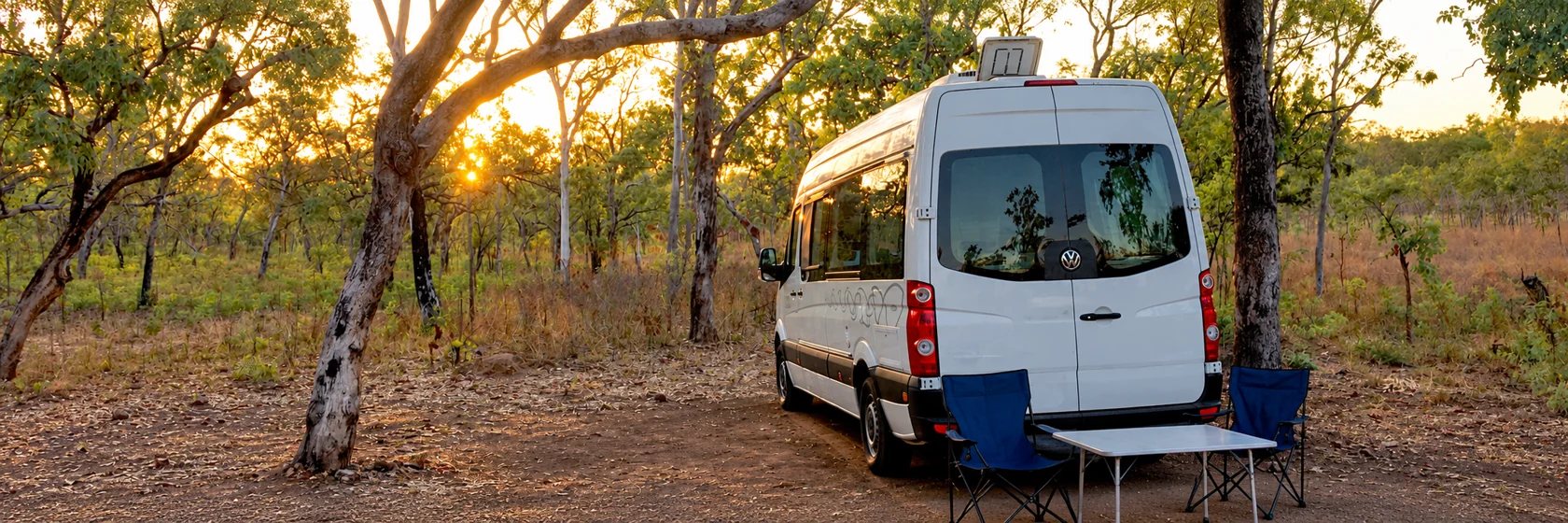
Gungurul is the dependable choice for a caravan. The Visitor Guide says it is accessible all year to 2WD vehicles, caravans, campervans and coaches. The guide makes this claim for no other bush campground, so Gungurul is the safest choice for someone without 4WD heading south. Kambolgie is the third bush campground in the group, with the same basic facilities.
Jim Jim and Twin Falls are out of reach in 2026. The closure notice covers Jim Jim Falls, the Twin Falls gorge and escarpment walk, and Karnamarr campground, which has showers and toilets but no generators. Parkwolf’s Parks Australia data says cyclones damaged the road and Traditional Owners asked for the closure until upgrades are complete. Upgrades are expected to finish by December 2026, ahead of the 2027 dry season, which is the earliest a reopening is likely.
Mary River Roadhouse, just outside the park, offers an alternative. Northern Territory tourism listings show cabins, powered and unpowered sites and backpacker accommodation. A roadhouse is useful when the park-run campgrounds are closed or full. These listings are undated, so confirm rates and availability with the operator. Further out, Corroboree Park Tavern on the Arnhem Highway has a camping ground and caravan park, about two hours from the park.
Matching a site to your vehicle
The vehicle you drive sets your choices more than your budget does. The Visitor Guide and access report sort the park into sealed-road sites, gravel sites and 4WD-only sites.
For a 2WD car, campervan or caravan, the best bets are Jabiru’s lodges and the Aurora caravan park, Cooinda’s powered and tent sites, and Gungurul in the south. Merl and Djarradjin are managed campgrounds that suit a standard vehicle, but both say to check seasonal access. A caravan is easiest in Jabiru, where facilities are adjacent and the roads are sealed.
For 4WD, Sandy Billabong needs a 4WD according to the Visitor Guide, which recommends it. The Jim Jim and Twin Falls tracks need 4WD when they reopen. The Visitor Guide puts Jim Jim Falls at 50 km by 4WD, with soft sand over the last 10 km, and says Twin Falls needs a high-clearance 4WD with a snorkel. Old Jim Jim Road is limited to 4WD light vehicles under 4.5 tonne GVM (gross vehicle mass, the maximum a vehicle can weigh when loaded).
Rental contracts add a further limit. Carhire.global says a rental agreement must permit the track, and Kakadu Guide says many 2WD hire contracts prohibit unsealed roads. Read your agreement before you drive Gunlom Road or any gravel track, because breaching it can void your insurance cover.
Generator rules also affect where a camper van or caravan fits:
| Campground | Type | Generators | Notes |
|---|---|---|---|
| Merl | Managed | Zone provided | Showers, toilets |
| Djarradjin (Muirella Park) | Managed | Not allowed | Showers, toilets |
| Mardukal | Managed | Zone provided | Water not for drinking |
| Gunlom | Managed | Zone provided | Seasonal closure from 11 November 2026 |
| Karnamarr | Managed | Not allowed | Closed for all of 2026 |
If you rely on a generator to run an air-conditioner, pick Merl, Mardukal or Gunlom (while it is open). If you want quiet, Djarradjin’s no-generator rule works in your favour.

Checking access, water and heat before you book
Closures change faster than guidebooks, so read the Parks Australia access report on the day you book and again before you leave home. It lists closures such as Jim Jim and Twin Falls, and it links to the NT Road Report for regional roads. For updates during operating hours, phone Bowali Visitor Centre on (08) 8938 1120.
The track and walk closures run beyond the big-name sites. Parkwolf’s alerts, drawn from Parks Australia data (updated 5 November 2026), show several walks shut:
- The Barrk sandstone walk, closed at Traditional Owners’ request
- The Badbong Wodjmeng sandstone river walk, closed while site assessments continue
- The Manngarre rainforest walk, Yilikadjarr walk and Giyamungkurr (Black Jungle Springs), all closed
- The Bubba wetlands walk, partly open because of soft surface conditions
- Waldak Irrmbal (West Alligator Head), closed because the road is inaccessible
The West Alligator Head bush campground is in that same area, so assume it is unreachable until the road reopens.
A park pass does not reopen a closed road. Kakadu Guide makes that point directly, and the same logic applies to campgrounds: a valid pass gives no entitlement to a closed site. If you hold a booking with a commercial operator for a site that depends on a closed track, ask for a refund or change before you travel.
Carry your own drinking water. The Visitor Guide says tap water at campgrounds is not suitable for drinking, and every bush campground lacks drinking water entirely. The same guide says to carry at least 1 litre per person per hour of activity, and most people need 4 to 8 litres a day. It describes temperatures of 36°C or above as extreme, and the build-up (Kunumeleng, October to December) and monsoon (Kudjewk, December to March) seasons bring heat and humidity. Emergency call devices stand at Ubirr, Burrungkuy, Gunlom and other sites.
Timing affects access as well. Kakadu Tourism says road access is nearly impossible during the wet, usually July through September for the wettest stretch of the southern tracks and June to October for Jim Jim, though the Parks Australia reports take precedence over those general ranges. Because the wet season floods low crossings such as Cahills Crossing, lodges and sealed-road campgrounds in Jabiru and Cooinda are the dependable options from November onward.
Key Takeaways
- Check closures first: As of the 2 November 2026 access report, Jim Jim Falls, Twin Falls and Karnamarr campground are closed for 2026, Maguk is closed, and Gunlom closes seasonally from 11 November 2026.
- Book by site type: Park-managed campgrounds are first come, first served with fees paid on site, while lodges and commercial campgrounds are arranged directly with the operator, so phone Aurora about camping before you arrive.
- Choose Jabiru for range and Cooinda for Yellow Water: Jabiru has lodge rooms, cabins and both powered and unpowered sites at Aurora alone, and Cooinda sits about 50 km south beside the Yellow Water cruises.
- Match the site to the vehicle: Gungurul is open all year to 2WD vehicles, caravans, campervans and coaches, while Sandy Billabong and the Jim Jim tracks need 4WD, and your hire contract must allow unsealed roads.
- Carry your own water: Campground tap water is not suitable for drinking, bush campgrounds have none, and the Visitor Guide says most people need 4 to 8 litres a day.
- Buy the park pass online: The 7-day adult pass is $25 until 14 May, and campground fees are charged separately.