Hervey Bay is a beachside town on the Fraser Coast, the stretch of Queensland coastline north of Brisbane that also takes in Maryborough and K’gari. A direct flight from Brisbane takes under an hour. Visit Fraser Coast calls the town the stepping-off point to World Heritage-listed K’gari, the sand island many people still know as Fraser Island. Humpback whales also stop in the bay to rest on their migration, so the town is one of Australia’s best-known whale-watching bases.
The town suits a relaxed trip. The beaches are calm, the main street of activity runs along a foreshore path, and most excursions leave from the marina at Urangan or the ferry terminal at River Heads. You need to decide three things: when to go (whale season runs from mid-July to October), how to get onto K’gari (by self-drive 4WD or on a guided tour), and how many nights to book. Four to five days covers the town, the island and a whale cruise comfortably.
The town, beaches and where to stay
Hervey Bay is a string of seaside suburbs rather than a single centre. Pialba, Scarness, Torquay and Urangan sit along the waterfront, and the Esplanade foreshore links them over about 16 km. Experience Hervey Bay, a locally owned visitor information and booking service, describes the area as relaxed and family-friendly, known for calm beaches, fresh seafood, waterfront dining, Urangan Pier and coastal walks.
K’gari lies across the bay and blocks open-ocean swell, so the beaches are sheltered. Visit Fraser Coast calls them "arguably the safest, family friendly beaches on the Queensland coast" and counts five safe-swimming beaches along the Esplanade. Scarness Beach is popular with swimmers and has a jetty used by anglers and a timber boat ramp. Point Vernon Beach has tidal rock pools, birdlife and off-leash dog areas. yTravelBlog also names Dundowran Beach and the Point Vernon Coastal Walk. There are no surf beaches here. The draw is calm, shallow water for swimming, paddling and boating.

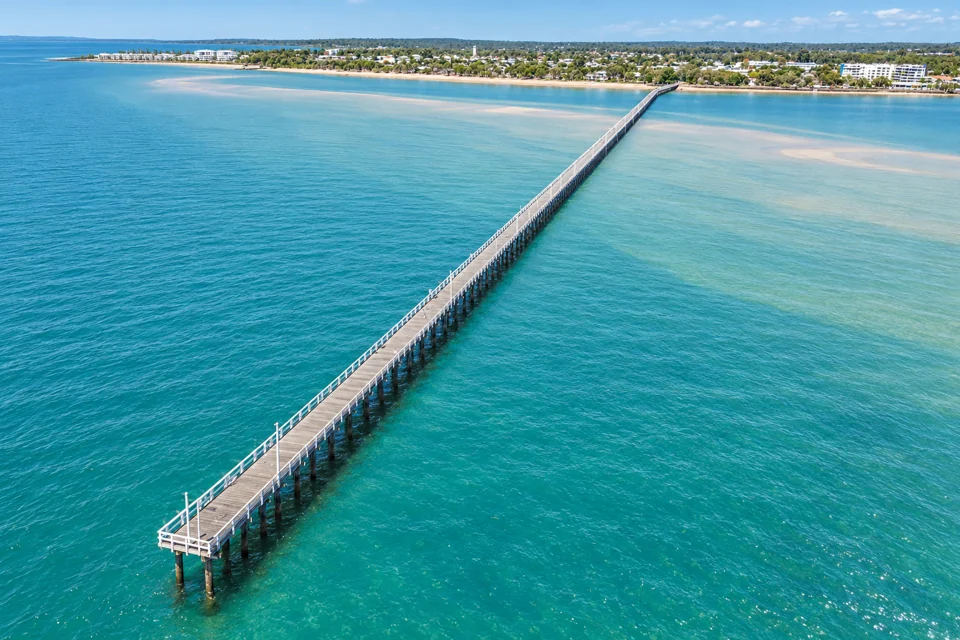
Urangan Pier is the best-known landmark. Visit Fraser Coast describes it as a historic pier where dolphins are often seen, with fish and rays visible in the water below. It works well as a sunrise or late-afternoon walk and costs nothing.
The foreshore suits walking and cycling. The Hervey Bay Recreation Pathways run along the Esplanade, so you can take a flat bike ride or a barefoot beach walk without planning a route. Visit Fraser Coast links the lifestyle here to bike rides by the ocean and takeaway fish and chips, which matches a typical afternoon.
When the weather turns, Visit Fraser Coast lists indoor and paid options by name: Reefworld Aquarium, the Hervey Bay Regional Gallery, Boat Club Cinema, WetSide Waterpark and Arkarra Lagoons and Tea Gardens. Freedom Park and Dayman Park suit picnics and playgrounds. Divers have two local sites, the HMAS Tobruk wreck and the Roy Rufus artificial reef. yTravelBlog adds the Hervey Bay Botanic Gardens and Orchid House and the Hervey Bay Historical Village for a slower half-day.
Wildlife extends beyond whales. Visit Fraser Coast lists humpback whales, turtles, dolphins and dugongs, which visitors see on organised tours or from the shore or a boat. Experience Hervey Bay highlights cruises to the sand islands of the Great Sandy Strait, the sheltered channel between K’gari and the mainland. These cruises suit travellers who want to see the island’s coast without taking a vehicle across.
Seafood and waterfront dining are the main food themes. Visit Fraser Coast names Enzo’s On The Beach, Odyssey Bistro and Goody’s on the Beach as places to eat. Others include Bayaroma, Planet 72 Icecreamery, and Aquavue, a watersports business at Torquay. yTravelBlog adds EAT in the Bay and Badger and Brown’s Burgerie, and mentions the Relish Food and Wine Festival for visitors timing a trip around an event. Hervey Bay is better known for seafood and casual dining than for vineyards, so wine drinkers should expect a glass with dinner rather than a winery tour.
For accommodation, Visit Fraser Coast lists The Grange Resort among its hotels and motels; Quarterdecks Retreat, Akama Resort, Oaks Hervey Bay Resort and Spa, and Mantra Hervey Bay among its apartments and hostels; and Colonial Village Resort and Woolshed Eco Lodge among its resorts and retreats. The area has many caravan parks and camping grounds.
Choose a base by what you plan to do. Pialba, Scarness or Torquay puts the beach, cafes and bike path close by. Urangan suits whale watchers because the marina and the pier are there. Visitors catching an early ferry to K’gari should stay near River Heads or book a taxi. Experience Hervey Bay calls the town an ideal holiday base. Rates vary by season and property, and whale season is the busiest period, so compare prices for your dates.
Whale season, booking and when to go
Humpback whales use Hervey Bay as a rest stop on their migration. Queensland.com says around 7,000 humpbacks and their calves stop in the bay each year. July to October is the best window, with September and October especially good for mothers and calves. The state tourism body gives the wider season as June to November, with most sightings from July to October.
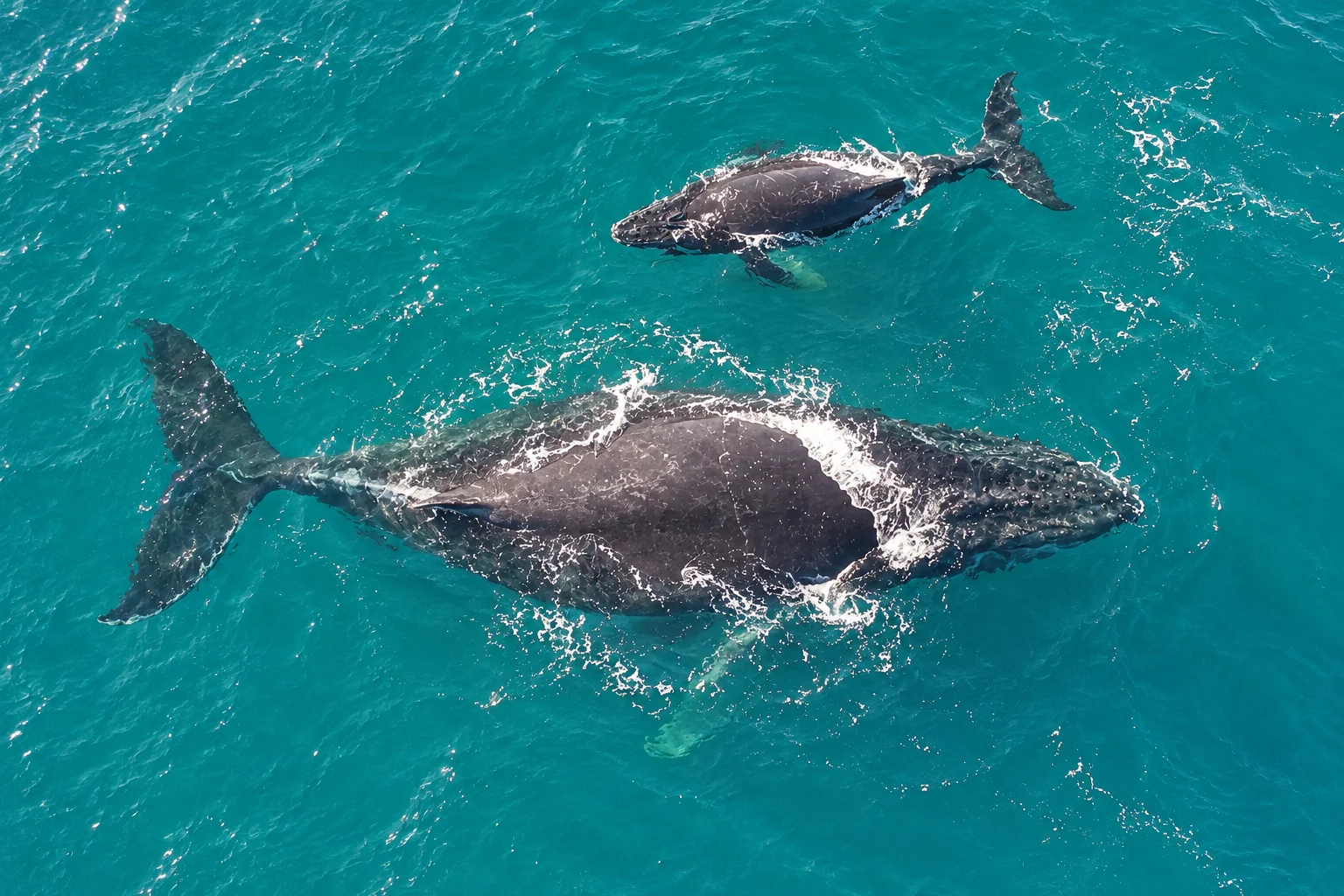
Operator dates matter when you book. Spirit of Hervey Bay gives the 2026 season as 12 July to 31 October, with August and September the peak months. Vila Paus says the Blessing of the Fleet marked the 2026 season opening at Urangan Harbour on 10 July, and that most operators’ sighting guarantees run from 12 July to 12 October. Tours outside those dates run without the formal guarantee. A sighting guarantee usually means a free repeat trip if no whales appear. Terms differ between operators, so read the conditions before paying.
Hervey Bay has formal recognition for its whale tourism. Queensland.com describes it as the world’s first official Whale Heritage Site, designated in 2019, and Visit Fraser Coast says the region is accredited as a Whale Heritage Site.
Boats leave from Hervey Bay Marina and Urangan. The Tour Specialists lists half-day, full-day and eco-certified options. Queensland.com names Tasman Venture as a whale-watching operator and Hervey Bay Dive Centre as a swim-with-whales operator. WWF Australia lists Hervey Bay among the places offering guided swims with humpbacks. A half-day cruise gives a first-time visitor a good look at the whales, and a full day suits anyone who wants more time on the water.
Book early. Queensland.com advises booking ahead for July to October, particularly weekends and school holidays. Spirit of Hervey Bay says peak dates, especially the August and September school holidays, can fill four to six months in advance. Visit HB advises arriving the day before a cruise where possible and allowing a check-in buffer at the marina. A morning departure straight after a flight leaves little room for delays.
Weather also affects when to go. The Bureau of Meteorology’s climate statistics for Hervey Bay (1999 to 2026) give mean maximum temperatures of 30.3 °C in January and 21.8 °C in July, with an annual figure of 26.5 °C. Mean minimums are 22.0 °C in January and 10.1 °C in July. Annual rainfall averages 1052.6 mm. The wettest months are March (151.8 mm) and December (137.2 mm), and September is the driest at 33.4 mm, with 4.0 rain days on average. The statistics page carries a notice that the product has problems and is being fixed, so treat the numbers as a guide. Sea temperature peaks around 27 °C in February and falls to about 20 to 21.5 °C in July and August. That is cool enough that most visitors in whale season swim briefly or wear a wetsuit for snorkelling.
Taken together, September and October bring mild days, the driest weather of the year and the best chance of seeing mothers with calves. July and August are colder but comfortable by day, and they are the busiest months for bookings. Experience Hervey Bay describes April to October as mild and comfortable, and December to February as warmer and better for beaches and island tours. Summer suits beach holidays and Lady Elliot Island turtle nesting, but the weather is hotter and wetter, and the whales have gone.
K’gari: ferries, permits and tours
K’gari is the island visible from the Esplanade. Sealink describes it as the world’s largest sand island and World Heritage-listed. K’gari is the traditional Butchulla name, which Australia Destinations says means "paradise". Most visitors cross from River Heads, south of central Hervey Bay, so allow extra transfer time on the morning of a ferry.
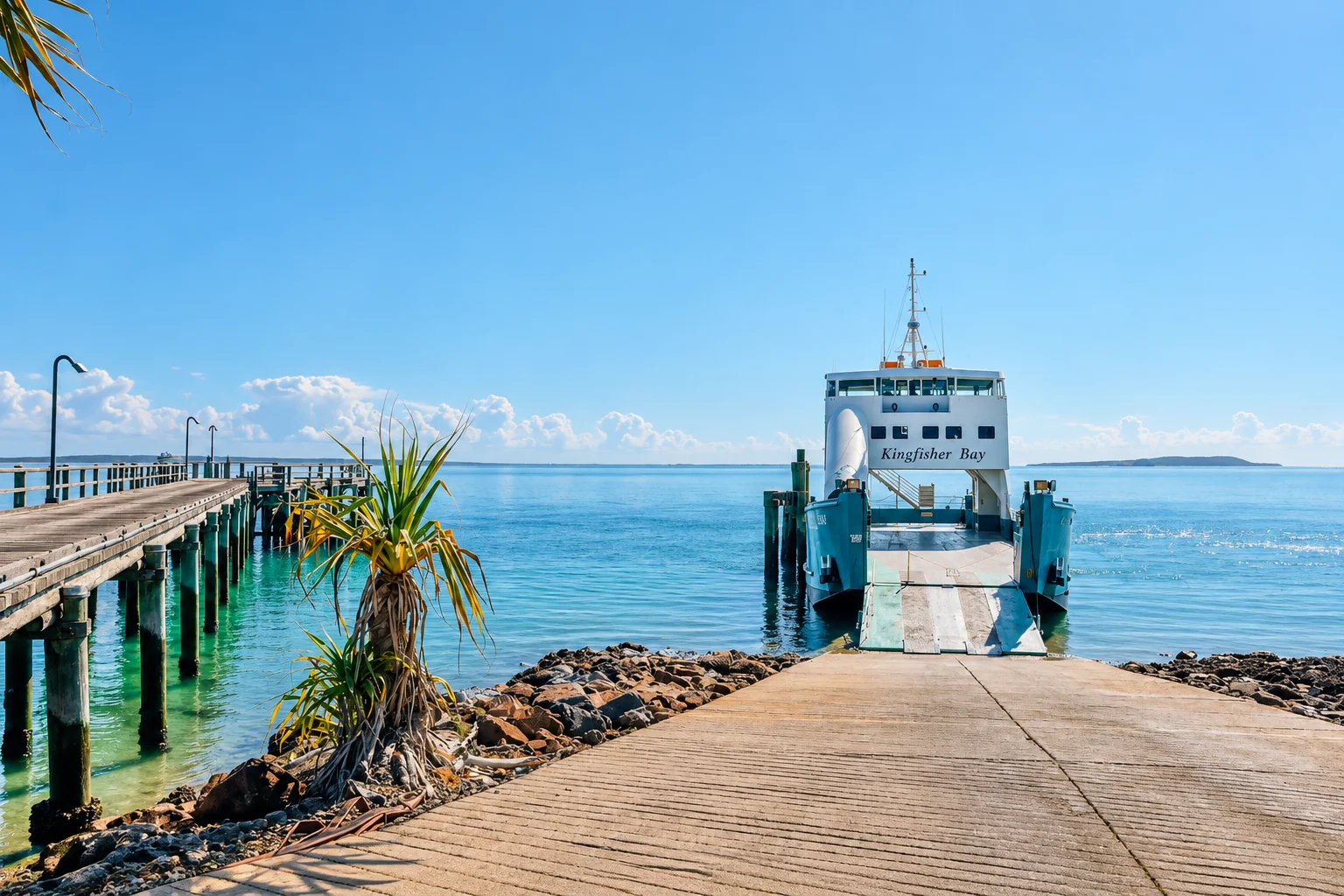
Sealink runs the crossing from River Heads to Kingfisher Bay Resort in about 50 minutes, with vehicle fares starting from $135.30 per 4WD. A 4WD (four-wheel drive) is a vehicle with drive to all wheels, built for soft sand. Kingfisher Bay Resort publishes its own fares: walk-on one-way is $50 for adults and $30 for children, and return is $85 for adults and $48 for children. A vehicle one-way starts from $123, plus $5 per extra passenger, and trailers or caravans up to 5 m start from $89.40. These fares are dated, so confirm them when you book.
Driving on the island has rules that catch first-timers out. A vehicle access permit is required before driving on K’gari, and it must be attached to the lower left of the windscreen. Permits are sold online and at Queensland Parks and Wildlife Service (QPWS) offices in Brisbane, Hervey Bay, Maryborough, Bundaberg and Rainbow Beach. Cameras check number plates against the booking system, so the registration on the permit must match the vehicle. Prices vary by validity period, so check the current QPWS booking site. Camping needs a separate permit for every night. Schnerp gives the rate from 1 July 2026 as $7.75 per person per night, or $31 per night for a family of one or two adults with children under 18, up to eight people. Children under five camp free.
Vehicle type matters too. Australia for Beginners says QPWS permits only high-clearance 4WDs in low-range gear and prohibits AWD, SUVs and 2WD. Kingfisher Bay Resort’s getting here page says standard vehicles can take the barge and use the resort but are not suitable beyond the resort perimeter. The only sealed roads on the island are inside the Kingfisher Bay Resort and K’gari Beach Resort grounds. Kingfisher also rents 4WDs, and its 4WD hire page says refuelling carries additional fees.
Visitors without a suitable vehicle have an easier option. Australia for Beginners gives a guided day tour from Hervey Bay from around $139 per adult, which includes the ferry, national park fees, lunch and a guide. The route covers Lake McKenzie, 75 Mile Beach, Eli Creek and the SS Maheno wreck. The same guide lists River Heads ferry departures at 9:00 am, 1:00 pm and 3:45 pm, and puts a taxi from the Hervey Bay CBD to the ferry at about $30 to $40. Sealink also runs guided 4WD tours from Kingfisher Bay Resort.
Day trips and how long to stay
Lady Elliot Island is the other big excursion from Hervey Bay. The Lady Elliot Island Eco Resort describes it as the southernmost coral cay on the Great Barrier Reef. A coral cay is a small island built from reef sand and rubble. Experience Hervey Bay lists access to the resort from the town. Wildlife timing follows a calendar: May to August is peak manta-ray season, November to January is turtle nesting, and April is turtle hatching.
Maryborough, the heritage town on the road in from Brisbane, makes a good half-day trip. Visit HB cautions that a full walking tour turns the drive into a travel day, so treat it as a stop on the way or a short outing. Bundaberg is about 1 hour 30 minutes south by road, according to Discover Hervey Bay, and Experience Hervey Bay mentions easy road access to the Sunshine Coast via Bundaberg.
Whale cruises, K’gari and Lady Elliot Island each need a full day, so visitors who want all three need at least four days in town. Experience Hervey Bay’s sample itinerary runs four to five days: one day on the town and foreshore, one or two days on K’gari, one day for whale watching or cruising, and one day on Lady Elliot Island. That is the operator’s typical plan rather than an official recommendation, but it fits the geography. Visitors with only two nights should pick one big trip, either a whale cruise or a K’gari day tour, and spend the rest of the time on the Esplanade. A week allows a slower pace and a weather buffer, since boat trips sometimes get cancelled in poor conditions.
Getting there and getting around
By air. Hervey Bay Airport has direct flights from Brisbane. Visit HB says QantasLink serves the route in about 50 minutes, and Qantas lists schedules and fares by date. Experience Hervey Bay also gives a direct Sydney flight of about 90 minutes. Council is upgrading the terminal in stages. The work is expected to finish by the end of 2028, subject to conditions, and the airport stays open throughout. Works may change pedestrian routes, set-down areas, rental-car access or temporary facilities, so check before you travel.
By coach. Greyhound runs three daily buses from the Brisbane Coach Terminal at Parkland Crescent, next to platform 10 at Roma Street station, to Stocklands Hervey Bay on Central Avenue. Departures run from 8:30 am to 2:00 pm. The trip takes several hours, and fares start from about $54 in two tiers, Early Bird and Flexible. Coaches have reclining seats, toilets and air conditioning, and e-tickets on a phone are accepted with photo ID. Atkinson’s Specialist Shuttles also publishes three pre-booked door-to-door returns each day between Hervey Bay and Brisbane.
By train. Hervey Bay has no station on the main line. Queensland Rail itineraries use Maryborough West and connect by road coach to Hervey Bay, so search the through journey as one itinerary. Wide Bay Transit’s RailBus meets Rockhampton and Bundaberg Tilt Train services at Maryborough West and runs to its standard Hervey Bay stop at Stockland. Call 07 4121 3719 to confirm connections.
By car. Visit HB covers the drive from Brisbane via the Bruce Highway and from the Sunshine Coast. Many visitors drive, and a car makes it easy to reach River Heads, the marina and the beaches at your own pace.
Around town. Wide Bay Transit runs the local buses. Urban buses are cash-only and charge 50 cents per journey, so bring the right change. Route 705 runs Maryborough to Hervey Bay seven days a week, and Route 716 runs Pialba to Boat Harbour Monday to Saturday, with public-holiday exceptions. Many services use low-floor wheelchair-accessible vehicles, but Visit HB advises contacting the operator if low-floor access is essential. Visit HB also says to check taxi availability for late coach arrivals. Visitors without a car can still manage the Esplanade, the marina and organised tours, and a car-free guide covers the practical routes. For help on arrival, the Hervey Bay Visitor Information Centre is on 1800 811 728.
Key Takeaways
- Plan around whale season: Humpbacks are in the bay from roughly mid-July to October, with September and October best for mothers and calves, so book cruises and rooms months ahead for school holidays.
- Choose how to reach K’gari before you arrive: Self-driving needs a high-clearance 4WD, a vehicle access permit and a ferry booking from River Heads, while a guided day tour from around $139 handles all of it.
- Allow four to five days: That covers the town and Esplanade, a whale cruise, a K’gari day and Lady Elliot Island, with a spare day if weather cancels a boat trip.
- Pick your transport early: QantasLink flies Brisbane to Hervey Bay in about 50 minutes, coaches take several hours from about $54, and there is no train station in town.
- Expect calm, family-friendly beaches: The five safe-swimming beaches along the 16 km Esplanade are sheltered by K’gari, so the draw is swimming, walking and cycling rather than surf.