Christmas in Australia falls in midsummer, so the holiday is built around heat, daylight and the outdoors. Christmas Day (25 December) is a public holiday in every state and territory, which means most shops, schools and many businesses close. Families gather for a long lunch that is increasingly cold meats, seafood and salad instead of a hot roast, and plenty of people spend the day at a beach or park. The day after, Boxing Day (26 December), is the other public holiday and the start of the big post-Christmas sales.
A first-time visitor needs to know a few things before arriving. Public holiday dates differ by state, and shops that are open in one city may be shut in another. Beaches draw big crowds, so it pays to understand the flag system that lifesavers use to mark safe swimming areas. Outdoor carols and concerts run through December, and public transport changes on Christmas Day. All dates below are for 2026.
Which days are public holidays in 2026
Each state and territory sets its own public holidays, so the dates around Christmas differ across the country. The Fair Work Ombudsman’s 2026 list shows Christmas Day on Friday 25 December as a holiday in all eight jurisdictions (the six states plus the Australian Capital Territory and the Northern Territory). Boxing Day falls on Saturday 26 December, so the holiday arrangements around it vary more.
| Date (2026) | Holiday | Where it applies |
|---|---|---|
| Thu 24 Dec | Christmas Eve, part-day | Northern Territory and South Australia from 7pm; Queensland from 6pm |
| Fri 25 Dec | Christmas Day | All states and territories |
| Sat 26 Dec | Boxing Day | ACT, NSW, NT, Queensland, Victoria, WA |
| Sat 26 Dec | Proclamation Day holiday | South Australia (in place of Boxing Day) |
| Mon 28 Dec | Additional public holiday | ACT, NSW, NT, Queensland, SA, Victoria, WA |
| Mon 28 Dec | Boxing Day holiday | Tasmania |
| Thu 31 Dec | New Year’s Eve, part-day | Northern Territory and South Australia from 7pm |
When Boxing Day lands on a Saturday, most jurisdictions add a substitute day on Monday 28 December so workers still get a weekday off. Tasmania has no holiday on the Saturday, and its Boxing Day holiday itself moves to Monday. South Australia replaces Boxing Day with Proclamation Day, a holiday named for the proclamation that established the colony, although Wikipedia notes that the date is kept at 26 December for uniformity with the other states.
Visitors who work while in Australia, or residents with casual shifts, should know that all employees have a right to be absent on a public holiday. Working one can bring extra pay, an extra day off or minimum shift lengths. The holiday that applies is the one where the employee is based, not where they happen to be working that day.
Many businesses close for longer than the public holidays. Schools typically finish the week before Christmas and return in late January or early February, and many workplaces close between Christmas and New Year. Expect the country to run at half speed from about 24 December until the first week of January, and book restaurants, tours and accommodation well ahead.
What is open on Christmas Day and Boxing Day
Trading hours are set by each state and territory, which is why the answer to "is the supermarket open?" depends on where you are. The Australian Capital Territory and the Northern Territory do not regulate trading hours, while the other states restrict trading on certain days, mainly for larger shops.
On Christmas Day, assume that most shops are closed and plan for it. Coles supermarkets are closed on Christmas Day, and so are BWS and Dan Murphy’s liquor stores apart from a few in Victoria and Tasmania, and Officeworks. Buy food, drinks and sunscreen by Christmas Eve. Several large Melbourne-area shopping centres open from 8am on 23 December until 6pm on Christmas Eve, according to Absolutely Australia, so the last shopping days are busy.
Boxing Day varies more by state:
- Victoria: Christmas Day is a restricted trading day, but Boxing Day is not, so shops are free to open.
- New South Wales: Trading is restricted on both Christmas Day and Boxing Day, except in certain areas.
- Queensland: Trading days and hours are restricted and depend on location. Brisbane’s CBD and tourist areas usually open early on Boxing Day, and some regional centres open later.
- Western Australia: Perth shops are usually open on Boxing Day, but regional hours and rules differ by shop type and locality.
- South Australia: Rules split by CBD tourist precinct, metropolitan area, proclaimed shopping district and shop category, so Boxing Day trading is allowed but opening times can be shorter. Some Coles and Woolworths stores in Adelaide stay closed.
Petrol stations and convenience stores are reliable all day on Boxing Day, which matters if you are driving between towns and need fuel, water or snacks. Opening hours change from year to year, so check the websites of the specific stores in your city a few days beforehand rather than relying on a general rule.
Christmas Day lunch, lights and Santa in shorts
The traditional Christmas meal came to Australia with British settlers: roast meats, heavy fruit cake and steamed pudding. The pudding often had a coin inside and was once doused in burning alcohol, according to Timeanddate. Those dishes still appear on some tables, but the heat has pushed the menu towards lighter food. Typical Christmas Day lunches now include prawns, oysters, decorated hams, roast turkey or chicken, salads and roast vegetables. Crackers (paper tubes that bang when two people pull them apart) are pulled before eating.
Dessert is where winter and summer meet. Plum pudding with brandy butter, mince pies and trifle share the table with pavlova, a meringue base topped with cream and fresh fruit, plus berries and kiwifruit. A visitor invited to a family lunch can expect a slice of pavlova and a paper hat, and cold seafood is often the centrepiece. Many people skip the dining room altogether for a beach barbecue or a park picnic.

Decorations go up from November and are common by early December. Some houses are covered in hundreds of lights, some regions draw crowds with large displays, and some councils run street-light competitions and publish maps of the best streets. Driving or walking through a suburb to look at the lights is a popular December evening outing. Timeanddate also lists Australian touches on the usual baubles and tinsel: bilbies, koalas, king parrots and waratah flowers, along with native animals in Santa hats. Santa appears in two versions, the red-suited figure with reindeer and one in shorts and a bright shirt on a sleigh pulled by six white kangaroos.
Native plants join in as well. Christmas bells, Christmas bush, Christmas tree and Christmas orchid are all plants with "Christmas" in their names that usually flower around this time. In the garden or on a bushwalk in December, you may see them in bloom.
Gifts follow the usual pattern: children write letters to Santa and find presents in stockings or under the tree. Christmas cards are widely posted. Postal Christmas stamps cost less than a standard letter if the envelope is marked "card only." Church services run too: Catholics often attend midnight mass, and other denominations hold daytime services on 25 December. Television is quieter than in the northern hemisphere, because summer schedules are mostly repeats, although the Royal Christmas Message is carried by all networks.
Beaches, flags and sun protection
The beach is the most distinctive part of an Australian Christmas, and also where visitors face the highest risk. Surf Life Saving Australia runs Beachsafe, a national initiative with an app that finds the nearest patrolled beach and gives advice on flags, signs, rips and waves. The core message is to swim at a patrolled beach and stay between the red and yellow flags. Lifesavers put those two flags up to mark the safest area, and the Study Australia beach safety guide says that if no red and yellow flags are flying, no lifeguards are on duty and you should avoid swimming.
Patrol hours depend on the local council or surf club branch and change with the season. On the Sunshine Coast in Queensland, volunteer lifesavers patrol every weekend and public holiday from 7am to 5pm in summer, extended to 6pm through the Christmas period. On the NSW North Coast, most beaches are patrolled from 9am to 3pm, with hours extended to 5pm in the hotter months and during daylight saving. Lifesavers set out the flags each morning after checking conditions. Before you swim, check the Beachsafe app or the local council site for that beach’s hours, and arrive early if you want to be well inside the patrol window.
Rip currents are fast channels of water flowing out to sea and are a leading hazard at surf beaches. The government guidance says to swim with someone else and to swim in daylight. It also says to learn to spot a rip. Surf Life Saving SA adds: obey the safety signs, never run or dive in, and wait after meals before swimming. If you are caught in a rip, stay calm, raise one arm and float so a lifesaver can see you.
Sun protection matters as much as the water. The Study Australia guidance recommends:
- a water-resistant SPF50+ sunscreen, put on 20 minutes before going out and reapplied after swimming;
- a hat and UV-protective sunglasses;
- regular water, and the UV index on the SunSmart app to decide when to cover up.
The sun is hottest between 10am and 4pm, and you can burn on a cloudy day. Surf Life Saving SA sums this up as "slip, slop, slap, seek, slide" (slip on a shirt, slop on sunscreen, slap on a hat, seek shade, slide on sunglasses) and suggests reapplying sunscreen every two hours. A fair-skinned visitor from a northern winter should treat the first day outdoors as a high-risk day for burning.
Bondi in Sydney is a popular Christmas Day beach, and St Kilda in Melbourne is a favourite for a swim and a fish-and-chips lunch. Popular beaches get crowded on 25 December, so bring your own shade and expect to look for parking.

Carols, concerts and December events
Outdoor carols on warm summer evenings are the main community tradition. Families bring picnic rugs and food, and the big concerts are televised or draw tens of thousands. The listings below are from 2025, so check organiser pages for 2026 dates and ticket prices, but the pattern repeats each year.
In Melbourne, Vision Australia’s Carols by Candlelight at the Sidney Myer Music Bowl is the best known. In 2025 it was held on Christmas Eve, 24 December as a fundraiser for the charity’s children’s services. Gates opened at 4pm and the performance ran from 8pm to 10pm. Ticket prices ranged from $53 to $277, with general admission adult at $86 and reserved B-stalls adult at $200. Channel Nine broadcast the show live. Tickets are limited, so book early. Smaller community carols run through December in the suburbs, such as Manningham on 12 December and Melton on 13 December in 2025. In the city, Fed Square ran a Christmas Square from 29 November to 31 December 2025, and Melbourne Town Hall had nightly projections from 30 November to 25 December.
Sydney’s headline event is Carols in the Domain, run by the Salvation Army. It was held on 20 December 2025 and is described as the biggest carols event in the country, with a giant stage and fireworks. The suburbs run their own: Carols on the Common in North Ryde, which ended with fireworks, and a family-friendly Carols by Candlelight at Fagan Park in Galston with food trucks. Sydney also has beach carols, including Carols by the Sea at Bondi and Brighton-Le-Sands and Carols by the Beach at Dee Why. A White Bay Christmas in the restored White Bay Power Station added a Sydney Philharmonia carols concert and more than 90 stalls, and free pop-up choirs sang on CBD streets nightly from 1 to 24 December.
Other cities have their own versions. In 2025, Adelaide held Carols by Candlelight at Elder Park on 13 December. Darwin held its Christmas Pageant on 15 November and Carols by Candlelight on 7 December, earlier than the southern capitals.
Most carols are in the lead-up to Christmas, not on the day itself, because that is when families are free. If you arrive on 24 or 25 December, only a few events will be on, so plan ahead.
Boxing Day: sales, Test cricket and the Sydney to Hobart
Boxing Day, the day after Christmas, is the biggest shopping day of the summer. Retailers advertise large discounts, and some centres extend hours in the first days of the sales. Because trading rules vary by state, the experience differs from city to city. Victoria’s shops are open under normal rules, while NSW and South Australia limit trading in some areas. Check the specific store or centre before heading out, and allow time for traffic and parking at big shopping centres.
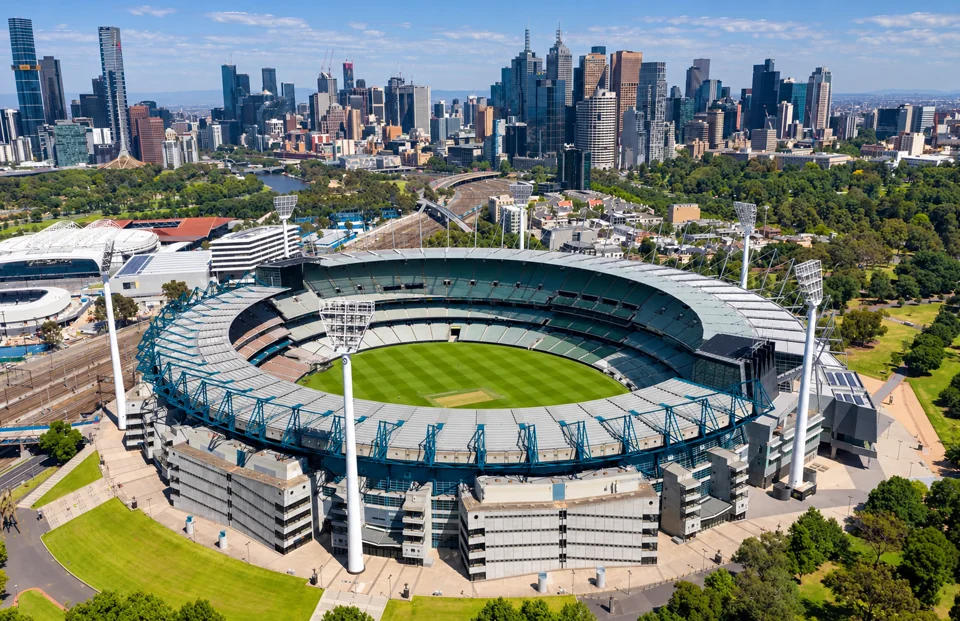
Boxing Day is also a sporting date. The Boxing Day Test is the cricket match at the Melbourne Cricket Ground (MCG) that begins on 26 December, and the Sydney to Hobart yacht race starts from Sydney Harbour on the same day. Both are accessible to visitors. The yacht race can be watched for free from the harbour foreshores, and many people spend the day on the water or on the shore watching the fleet head out. Basketball fans can also look for National Basketball League games, which are played on Christmas Day.

Outdoor games are part of the culture. Street cricket and swimming are popular on Christmas Day itself, and visitors can usually join in on a beach or in a park without being asked twice.
Getting around and where Australians spend the holiday
Public transport changes on Christmas Day, and the rules depend on the city. Sydney’s public transport is free on Christmas Day with a limited holiday timetable, and extra services are usually added before big events. Melbourne offers free fares from 3am on 25 December to 3am on 26 December, according to Tickets Melbourne, while Miss for Melbourne also reports free travel and a reduced timetable. Reports differ on whether trains, trams and buses run to a Sunday or a weekday-evening schedule, so check the official timetable for the day you travel. SkyBus airport services run regularly on Christmas Day. Nationally, some public transport shuts down and some runs limited services, and all schools and many businesses are closed.
For a first trip, a few decisions save trouble. If you plan to be in a regional area, book accommodation and rental cars early, because the holiday falls in the summer school break and many Australians travel. Many Australians celebrate away from home in holiday parks, at campsites or at relatives’ houses. Popular coastal towns fill up. Book flights and domestic transport well in advance, and avoid assuming a taxi or ride-share will be quick on Christmas night.
If you are in the country without family, you have choices. Many restaurants and hotels offer Christmas lunch, but book weeks ahead. Beaches and parks are open to everyone, so a picnic with seafood and fruit from a Christmas Eve shop is easy to organise. Churches welcome visitors to services, and the evening carols are open to anyone with a ticket or a rug. Most Christmas Days in Australia involve a lot of time outside, so pack a hat, reef-safe sunscreen and a refillable water bottle.
Key Takeaways
- Check state holiday dates first: In 2026, Christmas Day is Friday 25 December everywhere, but Boxing Day moves to Monday 28 December in Tasmania and becomes Proclamation Day in South Australia.
- Shop before Christmas Eve ends: Most shops, including Coles and liquor stores, close on Christmas Day, and Boxing Day opening hours differ by state, while petrol stations and convenience stores stay open.
- Swim only between the red and yellow flags: No flags means no lifeguards, and patrol hours differ by beach, so check the Beachsafe app before you go.
- Wear SPF50+ and a hat from 10am to 4pm: Reapply sunscreen after swimming, and remember that you can burn on cloudy days.
- Book carols and travel early: Events such as Melbourne’s Carols by Candlelight sell limited tickets. Christmas Day public transport runs reduced or free services that vary by city.