Australian slang is informal, mostly spoken vocabulary used among friends, colleagues and neighbours. The ABC’s English-learning guide describes it as very informal language tied to a particular context or group, and says it differs somewhat from American slang. Charles Darwin University gives ‘Strine’ as the name for Australian slang.
Visitors and new residents meet it at the first greeting. Most terms are shortened words ending in ‘-o’ or ‘-ie’, and most mean what the context suggests. A few phrases mislead newcomers: ‘How are you going?’, ‘gas’, ‘bring a plate’ and ‘root for’ are covered below. Accent varies little across the country, while vocabulary shifts from state to state. The second half therefore covers footy codes, swimwear and beer glasses by state and territory.
How Australians use slang
According to the ABC, slang is used mostly among friends in informal settings. IDP IELTS Australia says it turns up across the country in everyday conversation, in shops, workplaces and universities, and in social settings. A shop assistant, a supervisor and a classmate may all say "arvo" in the same day.
Australian English is informal in register as well. YHA notes that it often includes swear words and phrases that some visitors find vulgar. Charles Darwin University adds that Australians tend to speak quickly and are down-to-earth, and that a speaker will usually repeat or explain a term if you look puzzled. Wikitravel advises that most Australians are used to a range of accents, so clear speech is enough. You do not need to imitate the slang to be understood.
Teasing is common. "Having a lend of me" means someone is telling a white lie or exaggerating, according to the ABC. Wikitravel warns that telling someone to their face that they are "taking the piss" can cause offence.
Shortened words and "-o" endings
The signature pattern is abbreviation. The ABC guide describes one group formed by dropping the end of a word and adding "-o": servo (service station), doco (documentary), arvo (afternoon), journo (journalist), ambo (ambulance), compo (compensation), dero (derelict) and vego (vegetarian). A second group ends in an "-ie" or "-y" sound: brekkie (breakfast), barbie (barbecue), deli, footy, rellie (relative) and sunnies (sunglasses). Scape points out that Australians add "o" even when it makes a word longer.
Once you know the pattern, many unfamiliar words can be decoded by guessing the full form. "Bottle-o" is a bottle shop, meaning a liquor store, and "rego" is vehicle registration.
Greetings and everyday courtesy
"G’day" is a shortened "good day" used as an informal greeting, per the ABC and Charles Sturt University. Australia Travel Guide says it can be used at any time of day.
"How you going?" and "How’s it going?" are greetings that sound like "how ya goin" when spoken quickly. The Australian Immigration Agency explains that the phrase means "how are you" and says nothing about your travel or location. Australia Travel Guide says the expected reply is short and positive.
"Mate" is the everyday word for a friend and applies to any gender, says the ABC. Wikitravel adds that it is also a form of address for strangers.
The Australian Immigration Agency says "no worries" can mean "you’re welcome", "that’s okay" or "there’s no problem". It gives "good on you" and "good on ya" as ways of saying well done or thank you. Insider Guides describes "ta" as a very informal thank-you, best kept for people you know well. "Catch you later" is an Australian goodbye, according to the ABC.
Food, drink and social invitations
"Bring a plate" confuses newcomers most. It means bring food to share rather than tableware, according to Studies in Australia and the Australian Immigration Agency. "BYO" means bring your own, typically drinks or food. "Barbie" is a barbecue, and "gas" in that setting means LPG for the barbecue, as Charles Sturt University explains. It does not mean petrol.
Other food and drink words include:
- Brekky or brekkie: breakfast.
- Chook: chicken.
- Esky: an insulated cooler.
- Coldie: a cold drink, usually a beer.
- Smoko: a work break, traditionally taken with a cigarette and a snack or drink.
- Cordial: a flavoured syrup diluted with water.
- Maccas: McDonald’s.
Australian coffee is espresso-based, and Cooee Tours gives "flat white" and "long black" as local terms to order by.

At festivals and beer gardens, YHA advises thinking carefully before accepting a "shoey" (drinking from a shoe).
Work, time off and money
"Chuck a sickie" means taking a day off work when you are not sick, as Charles Sturt University notes. Saying it about yourself in front of a manager is a joke, so it suits friendly workplaces better than formal ones. "Flat out" means busy, and "hard yakka" means hard work. "Touch base" means to have a brief check-in. "Show you the ropes" means showing someone how things are done, and "bail" means to cancel plans, per Charles Darwin University.
"Arvo" comes up often in workplace conversation. Insider Guides advises calling "ambo" only in emergencies.
"Battler" carries more weight than the others. The Australian National Dictionary Centre says the word acquired distinctively Australian connotations at the end of the 19th century. It defines a battler as a person with few natural advantages who works doggedly for little reward and displays courage. Used as praise, it means something close to "admirable underdog".
Places and everyday objects
A "servo" is a petrol station, and the "boot" is a car’s trunk. "Rego" is vehicle registration, the "footpath" is the sidewalk, and a "brolly" is an umbrella. Australia Pathways points out that "thongs" are flip-flops. "Sunnies" are sunglasses, and "cozzie" is a swimsuit. According to Scape, "woop woop" is the middle of nowhere, and to be "within cooee" is to be within shouting distance. "Chokkas" describes somewhere very crowded or full, per Budget Travel with Gabby.

People and character
"Bloke" is a man and "sheila" a woman, according to Charles Darwin University. Wikitravel describes "sheila" as informal and somewhat dated, so "bloke" is the safer word to use. "Cobber" means a very good friend, and "old mate" is a dismissive reference to an older man seen as useless or foolish. Australia Travel Guide defines "larrikin", "drongo", "legend", "dag", "bogan" and "stickybeak" briefly.
Among these, "legend" is a compliment, and "drongo" is an insult for a fool. "Stickybeak" describes a nosy person. "Dob in" means to inform on or report someone, and "shoot through" means to leave quickly, per italki.
Feelings, emphasis and idioms
Several everyday words for states and feelings differ from American usage. "Knackered" means very tired and "crook" means ill. "Legless" means very drunk, and "cranky" means irritable. Australia Travel Guide lists "chuffed" (proud), "gutted" (very sad), "stoked" (very happy), "keen" (eager) and "rapt" (delighted). "Chuck a wobbly" means to have a tantrum, and "fussed" means bothered, as in "I’m not fussed", meaning "I don’t mind".
A few idioms need explaining:
- Fair dinkum: the ABC says it expresses surprise or asks whether a story is genuine.
- Sweet as: awesome, with "as" adding emphasis.
- Yeah nah: a polite or hedged disagreement. Scape says it signals that the listener heard you but does not agree.
- Nah yeah: YHA says it signals the speaker is being won over but needs more convincing.
- Buckley’s chance: no chance.
- Cracker: great, as in "What a cracker of a day".
- Reckon and heaps: to think, and a lot.
"She’ll be right" and "she’s apples" both mean everything will be fine. The ANDC says "apples" was first recorded in the 1920s, and that it began as rhyming slang ("apple and spice" for "nice") before detaching from that origin.
Phrases that mislead visitors
Four traps are worth knowing in advance.
- "She’ll be right" is a casual reassurance. The Australian Immigration Agency says it should not be used to brush off serious visa, legal or safety issues. Those need proper attention.
- "Root" has a vulgar sexual meaning, and italki adds that "rooted" can mean broken or exhausted. Supporters of a team "barrack for" it. The ANDC explains that "barrack" originally meant to jeer in the 1880s, and the phrase "barrack for" then turned jeering into cheering. Saying you "root for" a team in Australia invites laughter.
- "Ambo" is for emergencies only, per Insider Guides.
- "Gas" means barbecue LPG and not fuel for the car.
First recorded uses of Australian words
The Australian National Dictionary Centre at the ANU keeps an A to Z index of Australian words with meanings and etymologies, along with collections of colloquialisms and slang. Its index gives dated first citations:
- "Put the acid on" (to pressure someone) comes from "acid test", a gold-testing method. The earliest citation is in the Sydney Stock and Station Journal of 9 October 1903.
- "Acca" (an academic, or sterile academic writing) first appears in Meanjin in 1977. The Age has a citation dated 24 December 1993, and the index says evidence for the word has become less frequent.
- "Aerial ping-pong" is a derisive name for Australian Rules football, used largely in states where Rugby League is the major code. The earliest citation is in the West Australian of 22 April 1947.
- "Akubra" is a wide-brimmed hat, often of felted rabbit fur. It is now a proprietary name, with a 1920 advertisement in the Northern Star (Lismore) as the earliest evidence.
On "bogan", Australian Geographic reports that the earliest print appearance the ANDC has found is from Western Australia in 1983. It also says the ANDC chose "kwaussie", a person who is part Australian and part New Zealander, as its 2017 Australian Word of the Year.
The Australian National Dictionary records 16,000 words, phrases and meanings, according to Wikipedia, and its second edition was edited by Bruce Moore in 2016. The Macquarie Dictionary was first printed in 1981, and the National Museum of Australia says its inclusion criteria were "methodical but informal" and based on current use rather than print frequency.
Accent versus vocabulary
Macquarie University’s linguistics pages say Australia has little regionally based accent variation compared with most other world Englishes, but many vocabulary differences. They point readers to the Macquarie Dictionary’s Australian Word Map for regional words and expressions.
Vocabulary was long assumed to be uniform. Pauline Bryant’s 1997 dialect survey of the lexicon, published in English World-Wide, is described as the first study of regional variation in Australian English vocabulary. It mapped regional names for 67 items and identified four major dialect regions, two of which have sub-regions. It also found two minor sub-regions and several local regions, each defined by one or two words.
Slang by state and territory
Differences cluster around sport, swimwear, beer and local nicknames. The state-by-state examples below are common tendencies, and speakers within each state vary in how they use them. The word "footy" is used everywhere but points to different codes: it means Australian Rules, rugby league or rugby union depending on region, according to Charles Sturt University.
Victoria
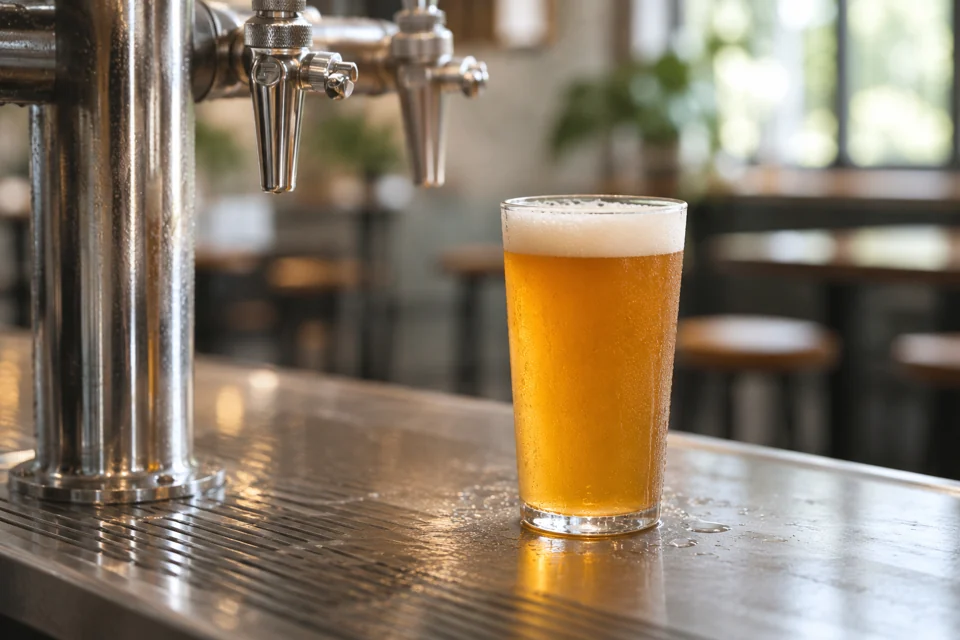
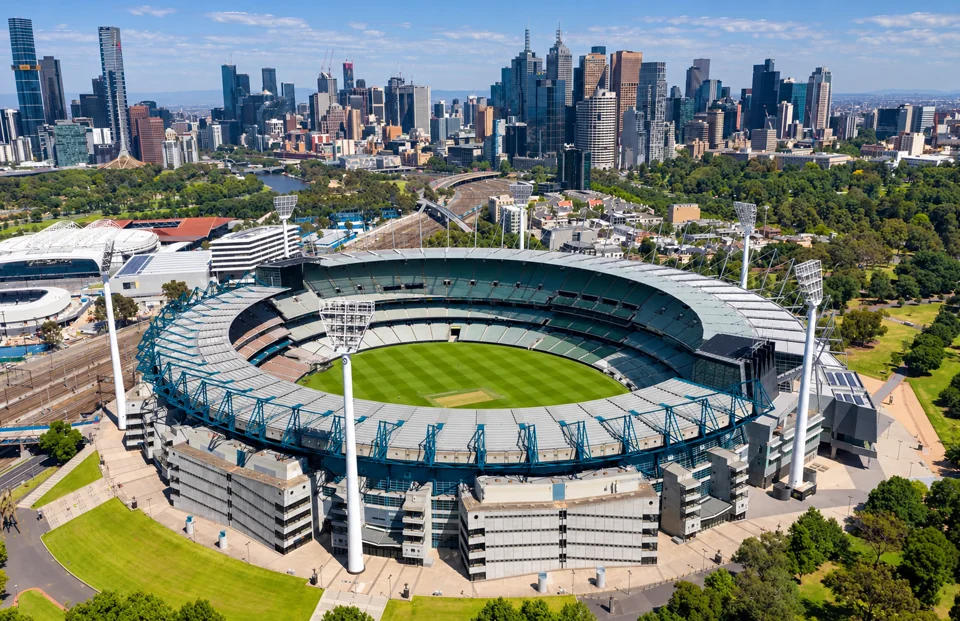
In Victoria, "going to the footy" defaults to AFL (Australian Rules). Swimwear is "bathers", a term also reported by Australia Pathways. A small beer is a "pot" (285 ml). "Grouse", meaning excellent, is distinctively Victorian, and Vidalingua says it is heard mostly around Victoria. The chicken parmigiana, shortened to "parma", is a dish treated with seriousness in the state. Farewells lean towards "catch up soon", per Cultured Wanderer. "Flat" is the more common word for an apartment in Victoria and New South Wales, according to a guide to apartment terms.
Pronunciation also varies. Macquarie University says that for many young Victorian speakers the vowels in "salary" and "celery" are the same, and for some older Victorian speakers both sound like "celery".
New South Wales
"Footy" in New South Wales usually means rugby league, and swimwear is a "cossie". A "middy" is 285 ml, shared with Western Australia, and a "schooner" is 425 ml. In Sydney, a "westie" is a person from the western suburbs, described as a New South Wales variant of "bogan". Cultured Wanderer says locals favour present-focused farewells such as "enjoy your day". "Flat" is the usual word for an apartment, with "unit" increasingly used across Australia, especially in real estate.
The vowel differences Macquarie University describes come up here: centring diphthongs (the vowels in "fear", "beard" and "air") may sound more like a single vowel in eastern-state speech, a comparison it draws between Western Australia and New South Wales.
Queensland
Queenslanders say "togs" for swimwear and are nicknamed "cane toad", a reference to the species introduced in Queensland in 1935 to control sugarcane beetles. For farewells, Cultured Wanderer says "see ya" or "cya" is typical. In a state where rugby league is a major code, "aerial ping-pong" is the kind of jibe an Australian Rules game attracts.
Western Australia
A small beer in Western Australia is a "middy" (285 ml) or, only in WA, a "bobbie" (170 ml). Cultured Wanderer says "Good on ya" doubles as a farewell. The West Australian of Perth carries the 1947 citation of "aerial ping-pong", and the earliest print appearance of "bogan" found by the ANDC is also from Western Australia. Macquarie University compares Western Australian pronunciation of centring diphthongs with that of New South Wales.
South Australia
South Australia has its own beer glass, the "butcher" (170 ml), which is used only in that state. Macquarie University notes that L-vocalisation, as in "hurled", is more common in South Australia than in other states. South Australian speakers often use the "cart" vowel rather than the "cat" vowel in words such as "chance" and "plant".
Tasmania
According to Australia Pathways, many national words apply in Tasmania, including "chook", "esky" and "thongs". In parts of the state, some Tasmanians say "cooler" for "esky".
Australian Capital Territory
In the Australian Capital Territory, a 285 ml beer is a "ten". In Canberra’s real estate market, "unit" and "apartment" are used as they are elsewhere, as Australia Travel Guide and Cultured Wanderer describe.
What to remember
- Treat "How you going?" as a hello. Answer briefly and positively, and do not describe your trip.
- Decode shortened words by adding the likely ending. Arvo, servo, brekkie, bottle-o and rego follow the "-o" and "-ie" patterns.
- Learn the five phrases that cause confusion. "Bring a plate" means food, "gas" means barbecue LPG, "barrack for" replaces "root for", "ambo" is for emergencies, and "she’ll be right" never excuses ignoring visa, legal or safety problems.
- Expect vocabulary to change by state while accents hold steady. Footy codes, swimwear (bathers, cossie, togs) and beer glass names are the clearest markers.
- Use informal slang with people you know. Terms such as "ta" and "chuck a sickie" suit casual settings, and clear speech is understood everywhere.